

Left foot hard on the brake. Right foot flat on the throttle. Wait for the revs to build and stabilise, then release. What follows is not something you forget quickly. The G-forces arrive immediately, pinning you back into the seat as the 911 GTS rockets forward, the PDK gearbox firing through ratios with a precision that borders on violent. Triple-digit speeds arrive almost before you have processed what has happened. And yet, through all of it, there is no sensation of chaos. Just controlled, focused ferocity, delivered with the kind of mechanical confidence that makes you understand, very quickly, why this car has the reputation it does.
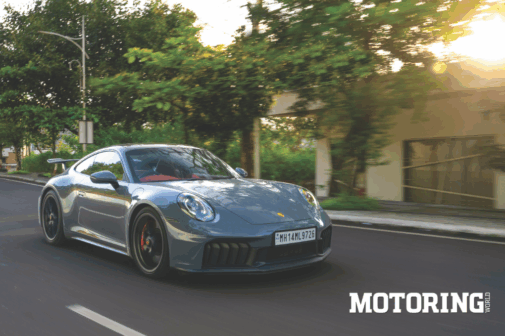
That is launch control on the Porsche 911 Carrera GTS, and it is about as good a starting point as any for understanding what this car is.
The GTS sits at the sweet spot in the 911 range, above the standard Carrera, well short of the stripped-out GT cars, and it occupies that ground with complete conviction. The 3.0-litre twin-turbocharged flat-six produces 473 bhp, 0-100 kph comes up in just over three seconds, and 0-200 kph is dispatched with an ease that feels mildly antisocial. The numbers are serious. How those numbers are delivered is the more interesting conversation.
Slide into the seat, and the first thing you notice is the position. Low, properly low, with the car built around you rather than the other way around. The steering wheel sits just right, perfectly weighted, perfectly sized. There is a toggle-style starter now, where the key slot used to be, a departure from the traditional ignition to the left of the column that was Porsche’s nod to Le Mans heritage. It works perfectly. You will still miss the old way for a moment. Then the flat-six fires up behind you, filling the cabin with that unmistakable note, and the moment passes entirely.
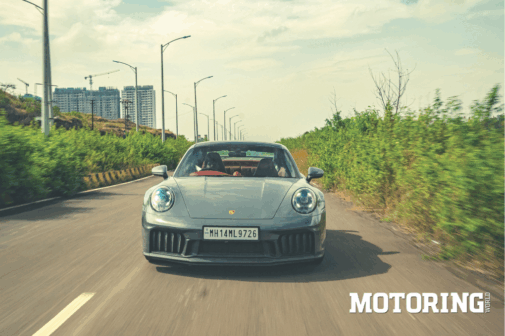
Out on the road, the 911 GTS does something that catches you off guard the first time. In the city, in traffic, at low speeds, it is entirely manageable. The steering lightens up, visibility is reasonable for a sports car, and the whole machine settles into a kind of composed civility. There is no drama, no constant sense that the car is straining against its own performance. It simply gets on with it. This is not a car that demands to be driven hard at all times. It waits, and when you ask, it delivers.
Indian roads present their own particular challenges to a low-slung sports car, and Porsche has addressed this with a nose-lift system accessible via a physical button on the dashboard. More usefully, it geotags locations. Approach the same ramp a second time, and the car raises itself automatically. A detail, yes, but a genuinely practical one on roads where the alternative is a very expensive scrape.
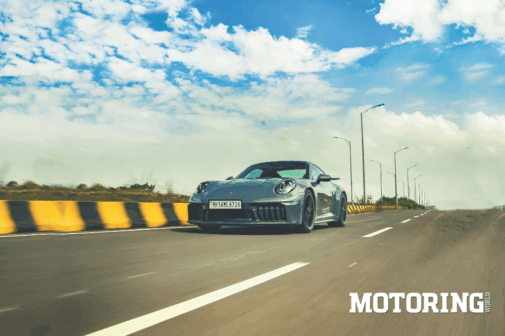
Find an open stretch, or better still, a set of twisty back roads, and the car transforms. The steering is the first thing you reach for as a reference point, and it is outstanding. Precise and direct, with a quality of feedback that tells you exactly what the front tyres are doing at any given moment. Turn in, and the response is immediate. No delay, no vagueness, just the car going exactly where you pointed it. The rear-engine layout, once the source of the 911’s notoriously unpredictable handling, has been developed over decades into something that now inspires complete confidence. The grip is immense, the balance is neutral to gently encouraging, and the car flatters the driver without being dishonest about what is happening underneath.
The suspension is firm, as expected, but not punishing. Porsche has calibrated it to absorb most road imperfections without losing its composure, which means you can use this car daily without arriving at your destination needing physiotherapy. Large potholes will still make their presence felt. This is, after all, a low car on wide tyres. But the overall ride quality is far more usable than the performance figures suggest it has any right to be.
The PDK gearbox deserves its own paragraph. In automatic mode, it is smooth and unobtrusive. Pick up the paddles, and it becomes something else entirely: crisp, instantaneous, each shift landing with exactly the right amount of mechanical punctuation. The gear selector itself has been reduced to a small toggle, which is a minor ergonomic loss, but the paddles render it largely irrelevant.
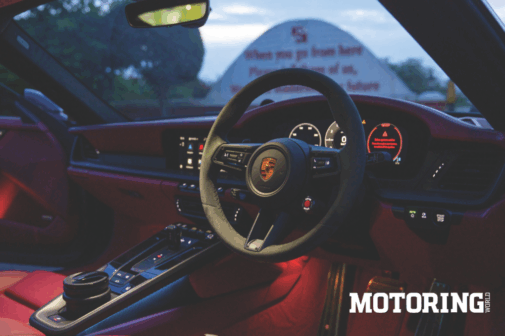
Inside, the cabin is clean and driver-focused without being Spartan. There is a mix of digital and physical controls, and Porsche has retained enough analogue elements to keep the environment feeling connected rather than remote. The Sport Chrono clock on the dashboard is a small, well-judged touch. The seats are supportive and comfortable across a long journey and a spirited one, which in a car like this is not a given. The driving position is spot on, with the distinctive front haunches visible in the periphery, a constant reminder of the width and intent of what you are sitting in.
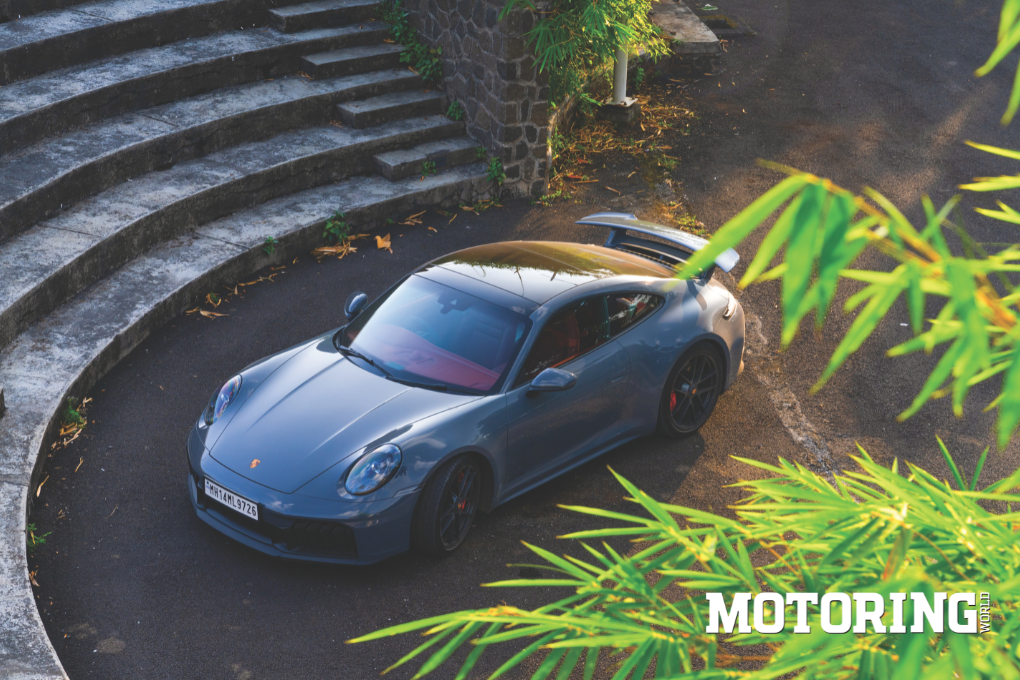
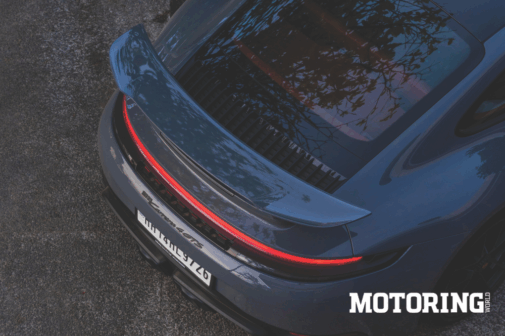
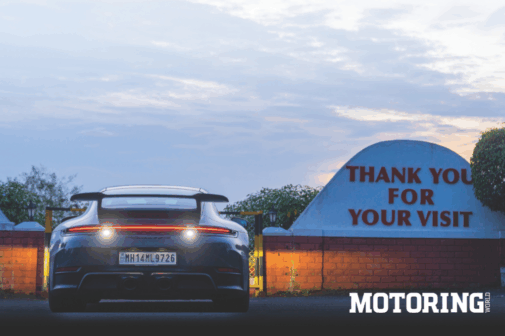
The exterior does the car justice. The front is familiar: round headlamps, clean bodywork, the proportions that have defined the 911 across generations. The rear is where the GTS makes its clearest statement. The wide stance, the LED light bar spanning the full width, the subtle spoiler, and the 911 Carrera GTS badging across the tail. Nothing is overstated. Nothing needs to be.
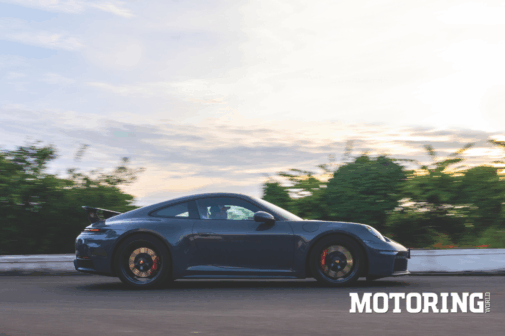
The 992.2 generation has grown, as each generation has, to meet safety and regulatory requirements. The overall silhouette remains instantly recognisable, which, after sixty years of continuous production, is either a triumph of design discipline or the most successful piece of brand conservatism in automotive history. Probably both.
At Rs. 2.75 crore approximately ex-showroom, the 911 GTS is not a casual purchase, and nor should it be. What you are buying is a car that operates at a high level across a remarkable range of conditions. Fast enough to embarrass almost anything on a back road, composed enough to use in city traffic without incident, practical enough in the Indian context to navigate the infrastructure with the geotag nose-lift doing quiet, useful work in the background. The GTS asks for very little in the way of compromise. It adapts to the situation rather than demanding that the situation adapt to it.
That rear-mounted flat-six at full chat, the steering loading up through a corner, the PDK snapping into the next gear precisely when you ask: this is where the 911 GTS justifies everything. Not in a straight line, where the numbers are almost too efficient to feel real, but in the places where the road bends, and the car has to think. It thinks faster than you do, and the conversation between driver and machine is direct enough that you always feel like a participant rather than a passenger.
Some cars at this price point are fast. The 911 GTS is fast and sorted, which is a considerably harder thing to achieve.