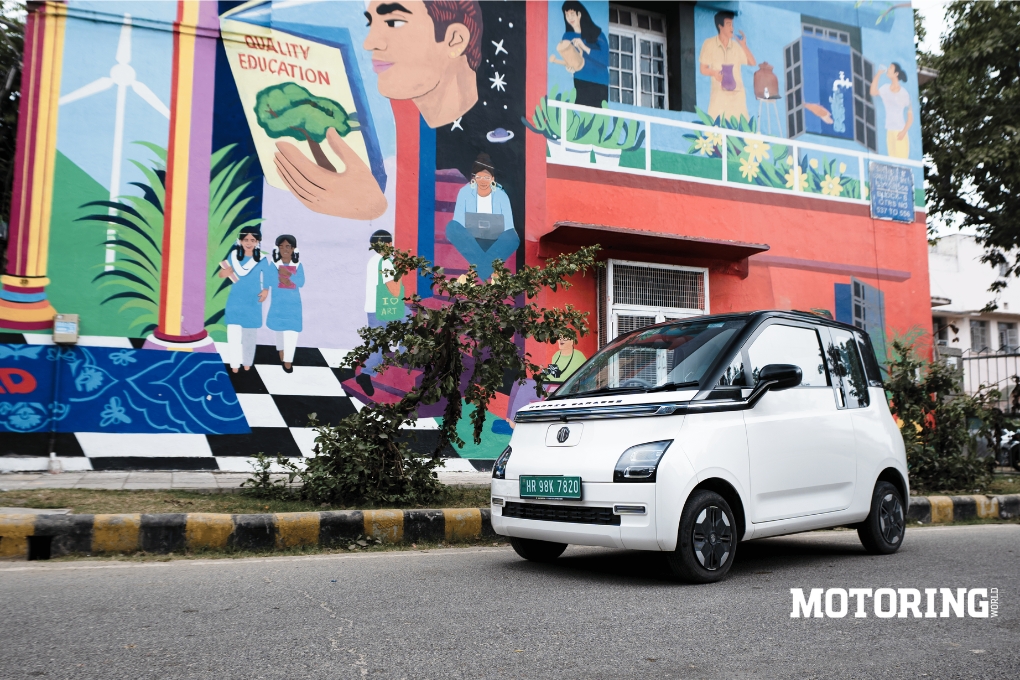


On World Environment Day, conversations often drift toward big-picture climate goals, cleaner air, lower emissions, and a gradual shift away from fossil fuels. But the real shift is happening much closer to home: in monthly budgets, fuel bills, and long-term ownership costs. The MG Comet EV makes that connection particularly clear, showing how going electric is not just an environmental choice, but also a financial one that quietly compounds over time.
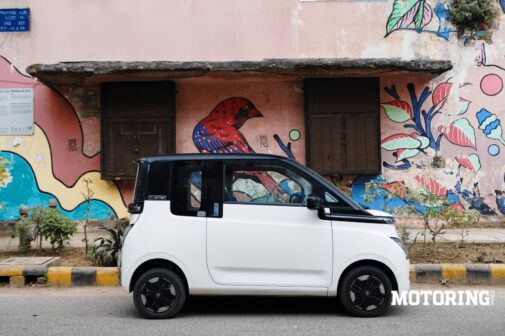
Take a typical ownership scenario. The Comet EV is purchased at an approximate cost of ₹10 lakh. At first glance, that sits comfortably within the entry EV space, competing with small hatchbacks and compact urban runabouts. But the real story begins once you factor in running costs.
In a petrol equivalent scenario, monthly fuel expenses for a small city car doing similar usage can touch around ₹7,800. The Comet EV, by contrast, brings that figure down dramatically to roughly ₹720 per month in charging costs. That difference—about ₹7,080 every month—doesn’t feel dramatic on a daily basis, but over time it becomes substantial. Over five years, the cumulative savings on energy alone amount to approximately ₹4.24 lakh.

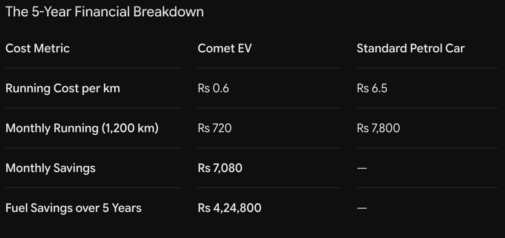
That’s where the economics of EV ownership start to reshape themselves. Unlike internal combustion cars, where fuel is an unavoidable and ever-escalating expense, EVs convert that recurring cost into a fraction of its former value. And importantly, this saving is predictable. It does not fluctuate with petrol price spikes or seasonal volatility.
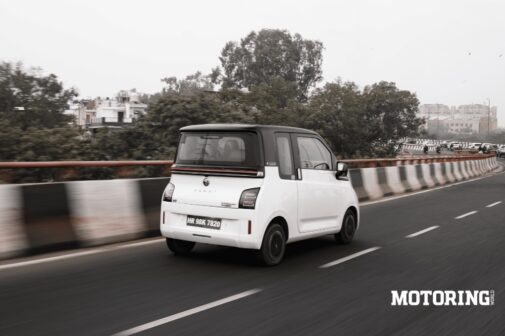
But the financial advantage doesn’t stop there. EVs today are also beginning to hold stronger residual value propositions as the market matures. In the case of the Comet EV, a projected buyback value of around 50 per cent after five years translates to roughly ₹5 lakh. This is significant in a segment where small cars traditionally see steep depreciation curves.
Additionally, EV-specific incentives and lower depreciation risk, estimated here at around 40 per cent benefit compared to conventional vehicles, add another layer of retained value, roughly ₹4 lakh in this ownership model.
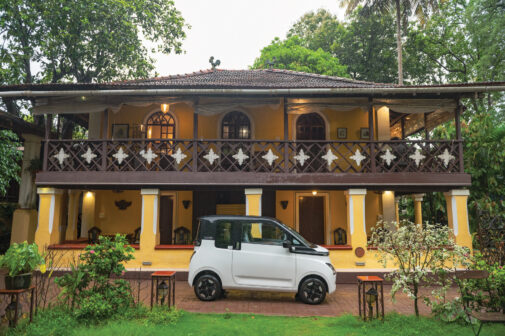
When all of these factors are combined, fuel savings of ₹4.24 lakh, depreciation advantage of ₹4 lakh, and a projected buyback value of ₹5 lakh, the total retained value and savings over five years climb to nearly ₹13 lakh. In simple terms, a ₹10 lakh purchase effectively returns more value than its initial cost when viewed through the full lifecycle lens.

This is where World Environment Day becomes more than symbolic. The narrative around EVs is often framed as an environmental sacrifice or a premium choice made for sustainability. But the Comet EV flips that perception. Reducing emissions also means reducing dependency on petrol, reducing running costs, and increasing long-term savings.

In other words, helping the environment doesn’t have to come at the cost of your wallet. In fact, in cases like this, the two are aligned. Lower emissions, lower fuel bills, and higher retained value come together to form a rare automotive equation where responsibility and rational economics meet halfway.
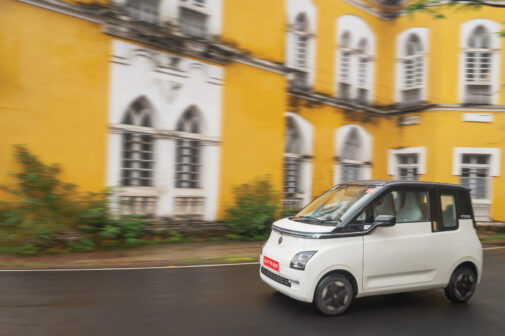
As cities grow denser and fuel prices remain unpredictable, that equation is only going to get more relevant. The Comet EV is not just a city runabout; it is a small but clear indicator of where personal mobility is heading: cleaner for the planet, and surprisingly kinder to your finances.