

History has a peculiar sense of humour. BSA helped write some of motorcycling’s earliest scrambler folklore, through riders who stripped Gold Stars down, lightened them, and threw them at mud, gravel and dust with with glorious recklessness. In the age of scrambles, before the word became a lifestyle category, these were working motorcycles used by people who wanted to go places roads couldn’t reach.
Decades later, BSA has returned to that genre with the Scrambler 650. At least, that’s what the badge says.
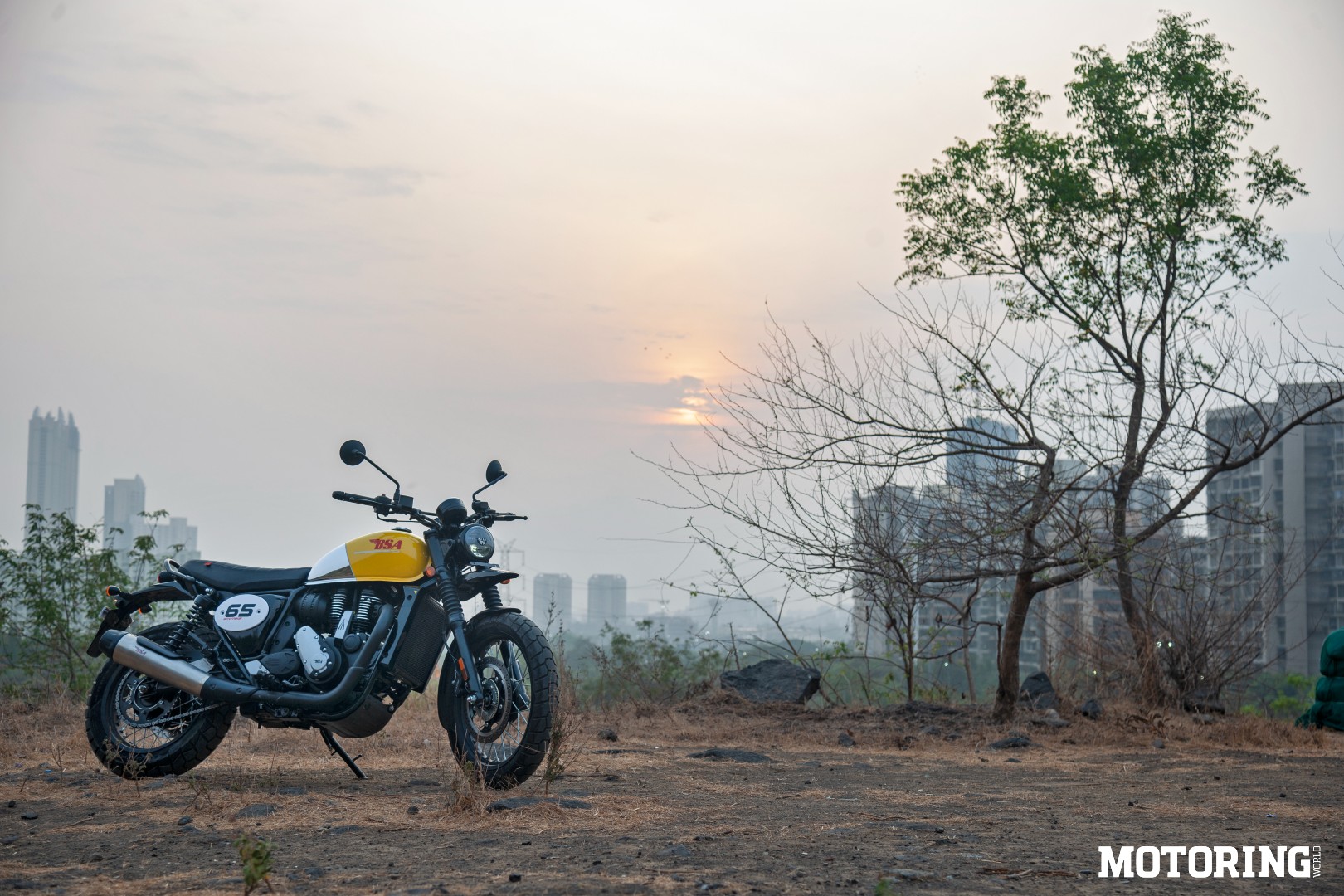
Standing beside it, the visual argument is convincing. Tall stance, wire-spoke wheels, an upswept exhaust, a race-plate-style side panel, a wide handlebar with a cross-brace. In Victor Yellow with a half-chrome tank, it has genuine presence. Look more carefully, though, and small contradictions appear. The high-mounted front fender is a styling gesture — a full-size fender sits hugging the 19-inch wheel beneath it, doing the actual work. The headlight is small to the point of looking misplaced, and almost certainly shared with the Yezdi Scrambler 350 from the same stable. These aren’t dealbreakers, but they suggest a bike assembled with one eye on heritage and one eye on the parts bin.
Swinging a leg over resolved most of that scepticism quickly. The footpegs met my feet naturally, the handlebar sat well within reach, and the seat was immediately comfortable. For my 5ft 11in frame, a slightly taller bar would have been preferable, but the overall riding position felt settled rather than compromised. The Rotax-derived 652 cc single fired with a thump that carried genuine character, the kind of sound that makes the morning feel more purposeful than it probably is.
The first twist of the throttle confirmed what the sound had suggested. The engine pulls hard from low down, with 5.5 kgm of peak torque available from 4,000 rpm, and that accessibility is what defines the riding experience. The first gear is hilariously short — the bike surges forward with an urgency that catches you out until you recalibrate — but above that, the delivery is strong and progressive. Threading through city traffic, making fast progress on open roads, pulling past lorries on the highway: the Scrambler managed all of it without needing to be worked hard. At 218 kg, it is a heavy motorcycle, and the engine carries that weight without apparent effort.
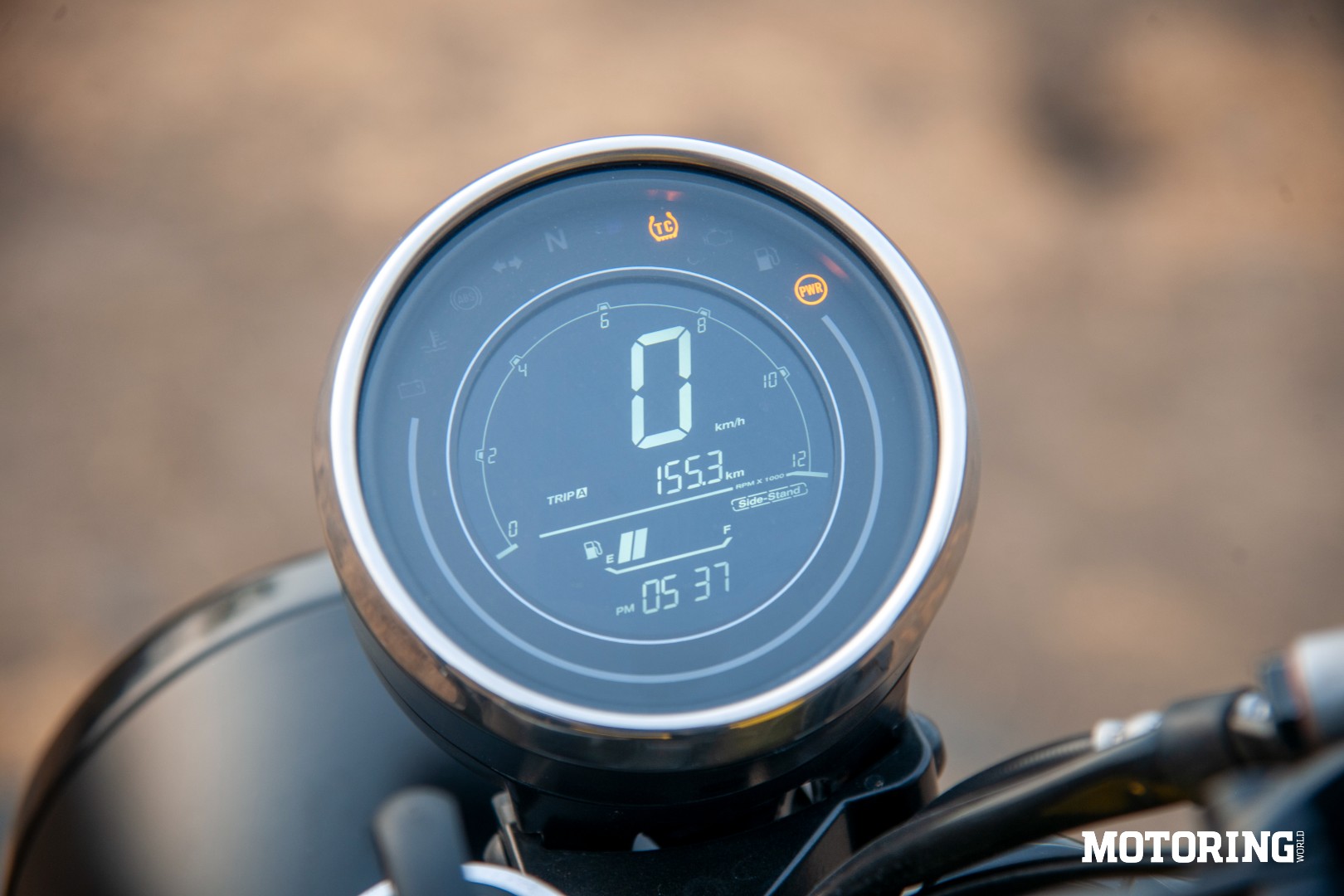
The switchgear is carried over from other Classic Legends bikes, which creates a specific frustration. Traction control is present and can be disabled, which is welcome. Finding the right button sequence to do so is not so straightforward; it requires pressing one of the unlabelled arrow keys, and the on-screen feedback is inconsistent enough that the process involves some trial and error. On the test bike, a persistent metallic clacking accompanied every bump, most likely the side stand contacting the guard plate over the coolant reservoir. It wasn’t loud enough to be alarming, but consistent enough to be distracting, and on a motorcycle at this price it shouldn’t be there.
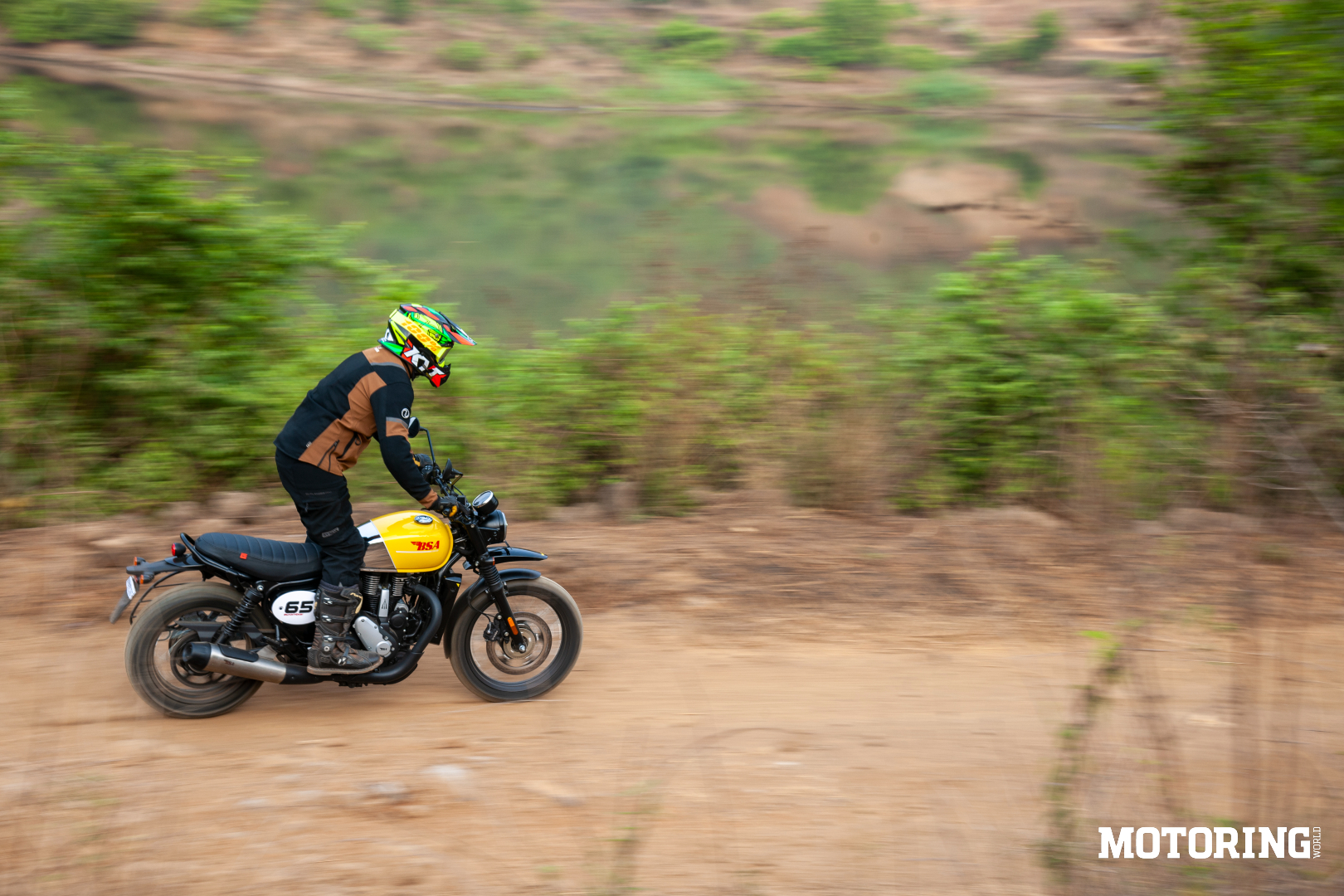
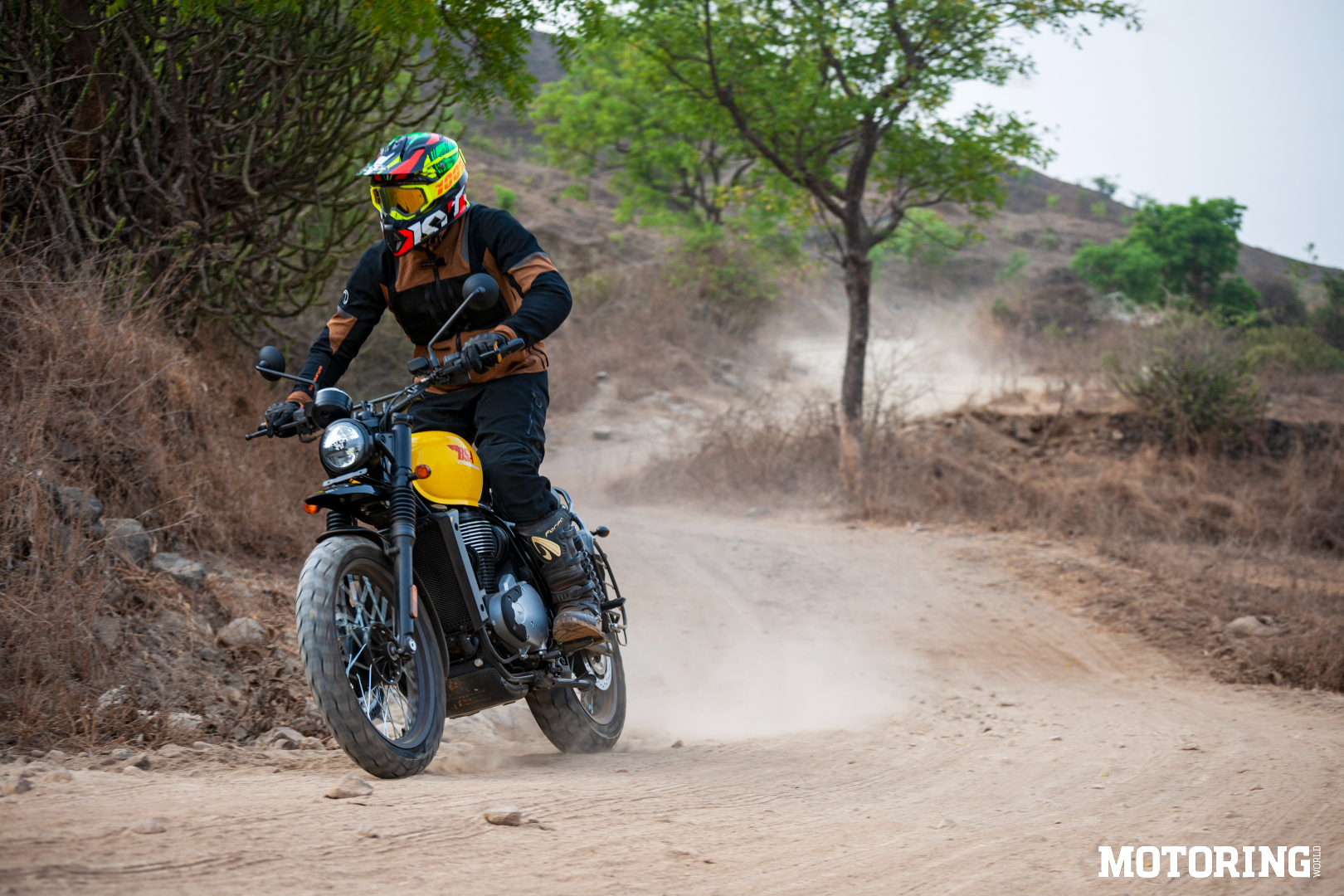
The suspension is where the Scrambler 650 makes its clearest compromise. With 138 mm of travel at the front and 127 mm at the rear, the numbers are closer to a road bike than anything intended for broken ground. Dialling the preload to its softest setting helped on patchy tarmac, but on genuinely rough roads the forks bottomed out with regularity, and the dual shocks transferred impact directly upward. The seat’s padding absorbed some of what the suspension didn’t, but push the pace on broken ground and the bike will make clear it has reached its limits.
This matters because Classic Legends, which owns and operates BSA, has already demonstrated it knows how to build a scrambler with more honest off-road intention. The 2026 Yezdi Scrambler — smaller, lighter, cheaper — handles rough terrain with considerably more composure. Riding the two back to back clarifies the BSA’s character quickly: the Scrambler 650 is built around tarmac performance dressed in scrambler clothing, where the Yezdi is the reverse. Knowing CLPL can get the balance right on one makes the BSA’s suspension choices feel like a decision rather than a limitation.
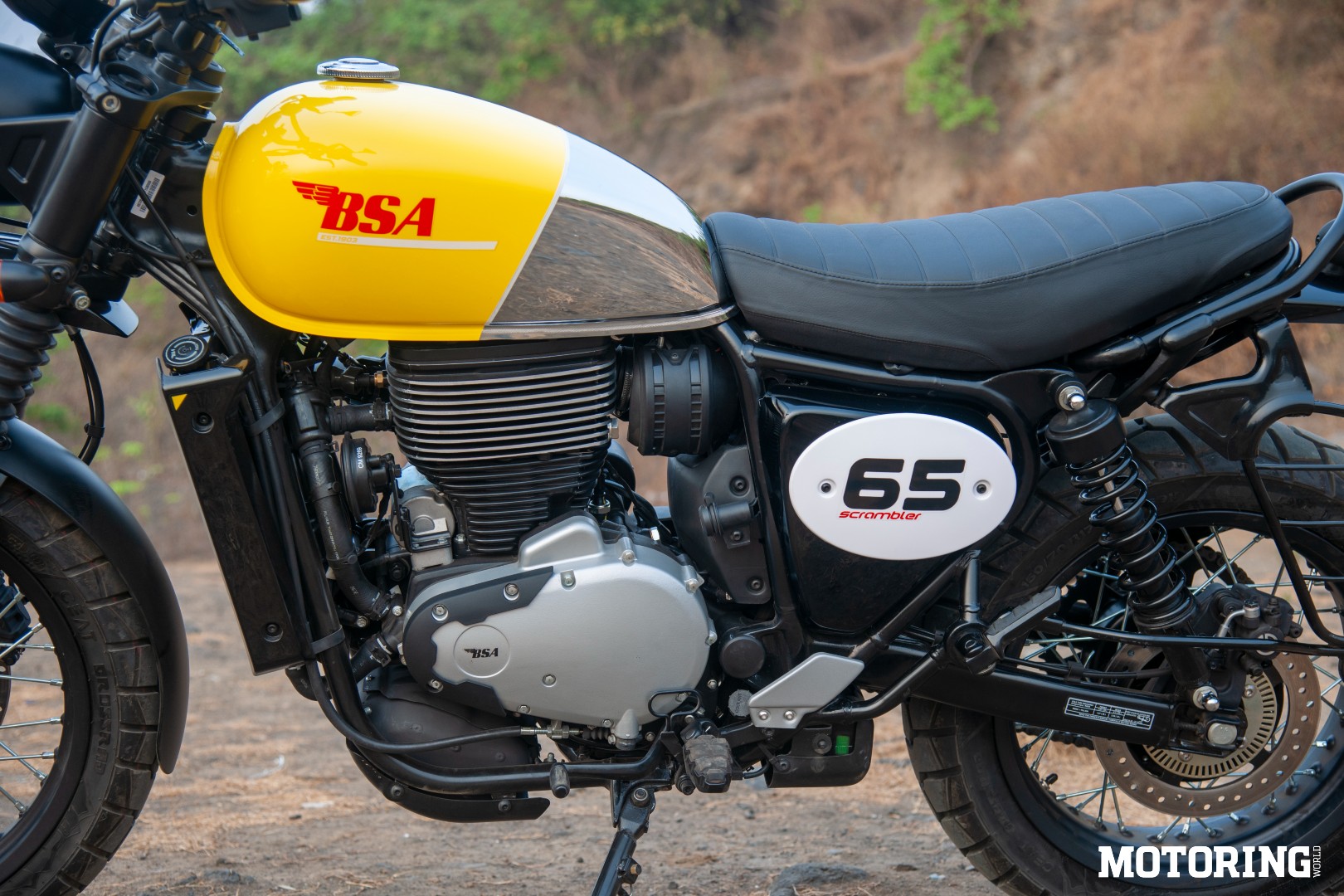
On sealed roads, the picture is considerably better. The Ceat Crossrad dual-purpose tyres — India doesn’t receive the Pirelli Scorpion STR fitted on other markets — perform adequately on dirt, but are more at home on tarmac, which suits the bike’s actual character. The 19/17-inch wheel combination tips into corners willingly, and the road-biased suspension tune that hinders off-road use actually aids engagement on smooth surfaces. The bike changes direction quickly for its size and weight, and the brakes provide enough feel and progression to build confidence. The engine pulls cleanly to 120 kph, and will go beyond that, though vibration through the seat and footpegs above 110 kph suggests that is a more comfortable ceiling for sustained riding.
So what is the Scrambler 650, exactly? The hardware answers the question honestly, even if the badge implies something broader. It is a large, charismatic, visually convincing single-cylinder roadster that is at its best on smooth tarmac, and manageable on moderately rough surfaces. It is not a machine for serious off-road use, and its suspension travel and tyre specification make that plain. The high fender and the upswept exhaust are period references rather than functional choices.
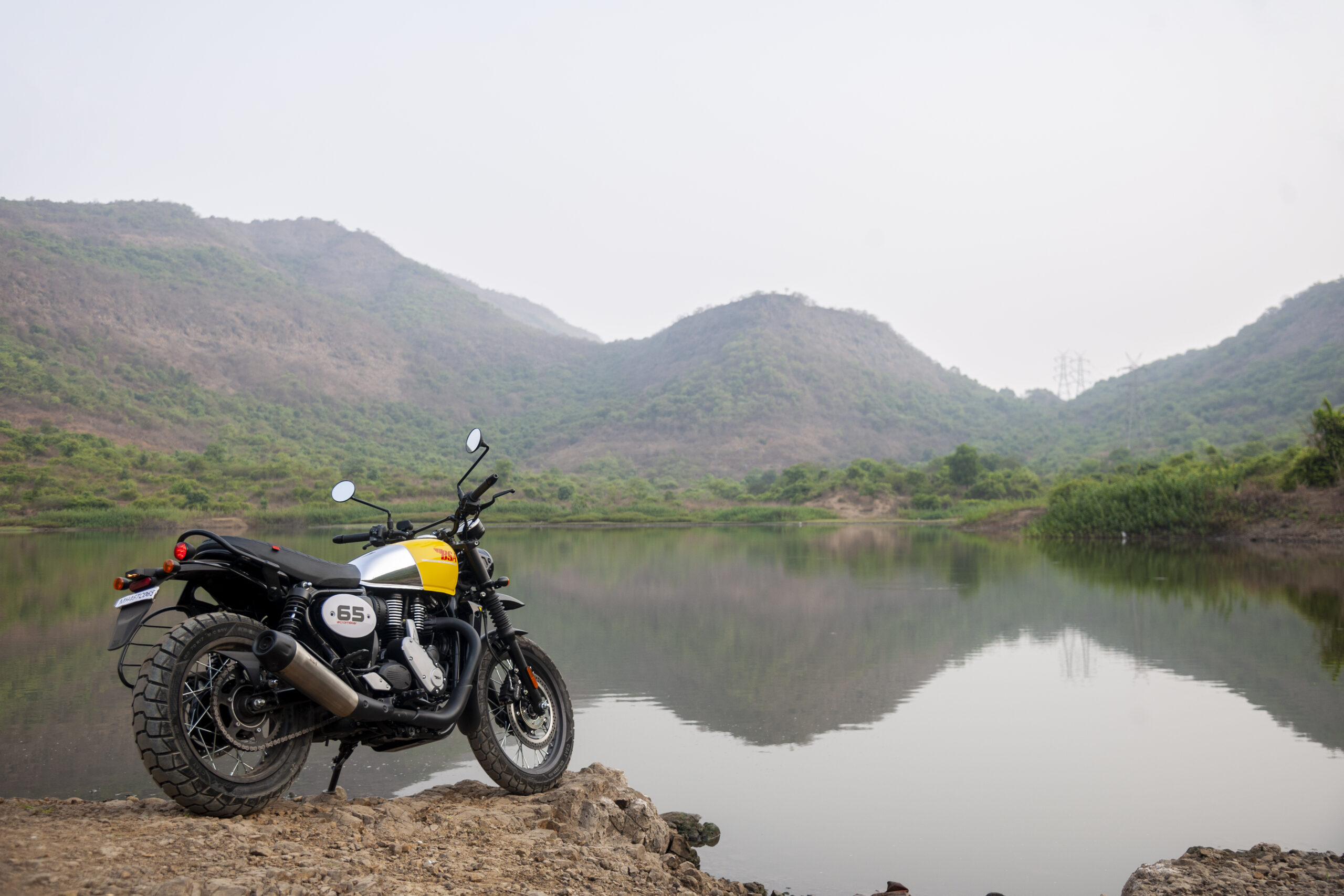
None of that makes it a bad motorcycle. The engine has real character, the road manners are engaging, and the presence it commands — in Victor Yellow especially — is considerable. But the scramblers that built BSA’s reputation were defined by what they could do, not what they looked like. The Scrambler 650 inverts that priority. Whether that bothers you depends on what you were hoping to find when you read the name on the tank.
History has a peculiar sense of humour, after all.