

Scramblers were born out of necessity, not nostalgia. Riders stripped roadsters down, lightened them, modified them, and pointed them at whatever terrain was available. The brief was simple: go anywhere, look like you mean it. The Yezdi Scrambler has always understood this aesthetically and in spirit. The 2026 update, though, goes further — and interestingly, it does so by following the same logic those original riders used, which is that it got better by taking things away.
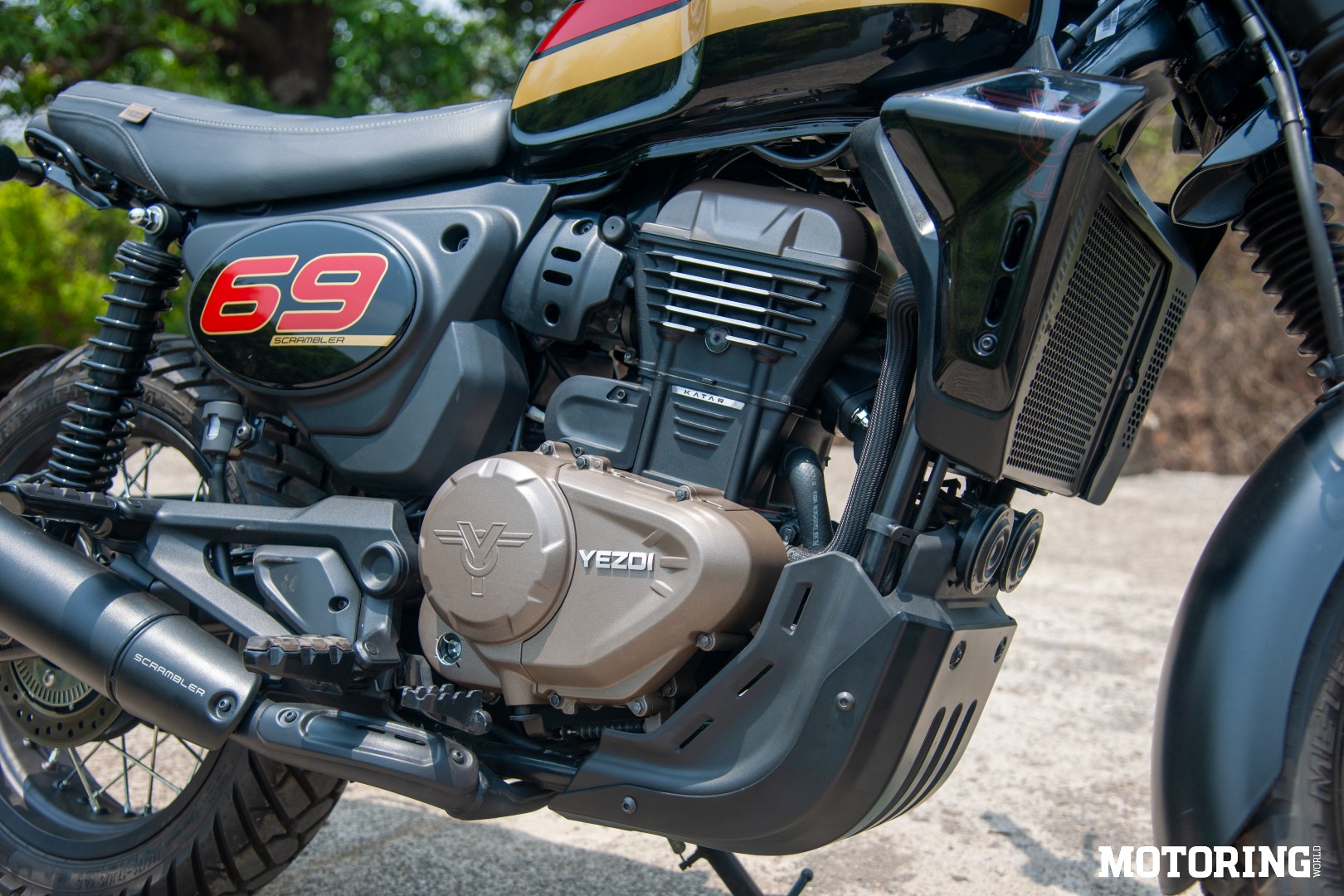
The visual changes are subtle enough that a quick glance won’t catch them, and deliberate enough that a longer look reveals something meaningfully different. The most significant departure is the engine itself. The updated 334cc liquid-cooled single-cylinder — Yezdi calls it the Katar mill — looks thoroughly modern, unencumbered by the styling that made the previous unit look like a bridge between the brand’s past and present. The second exhaust pipe is gone too, replaced by a single unit, and the horizontal radiator with its neatly finished side fins gives the front end a cleaner, more purposeful appearance. This bike is no longer making references to old Yezdis. Rather, it’s making a case for what the brand could become.
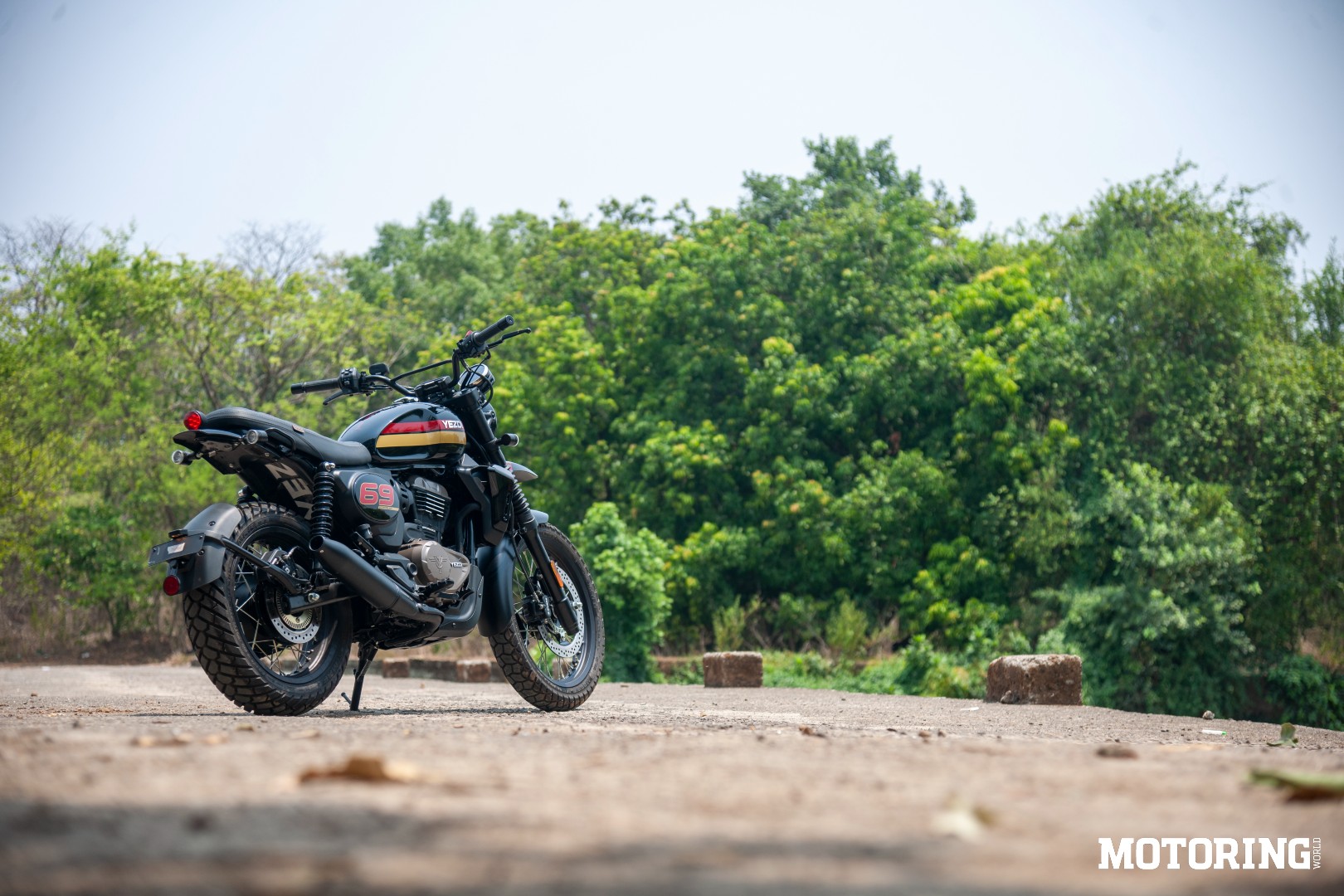
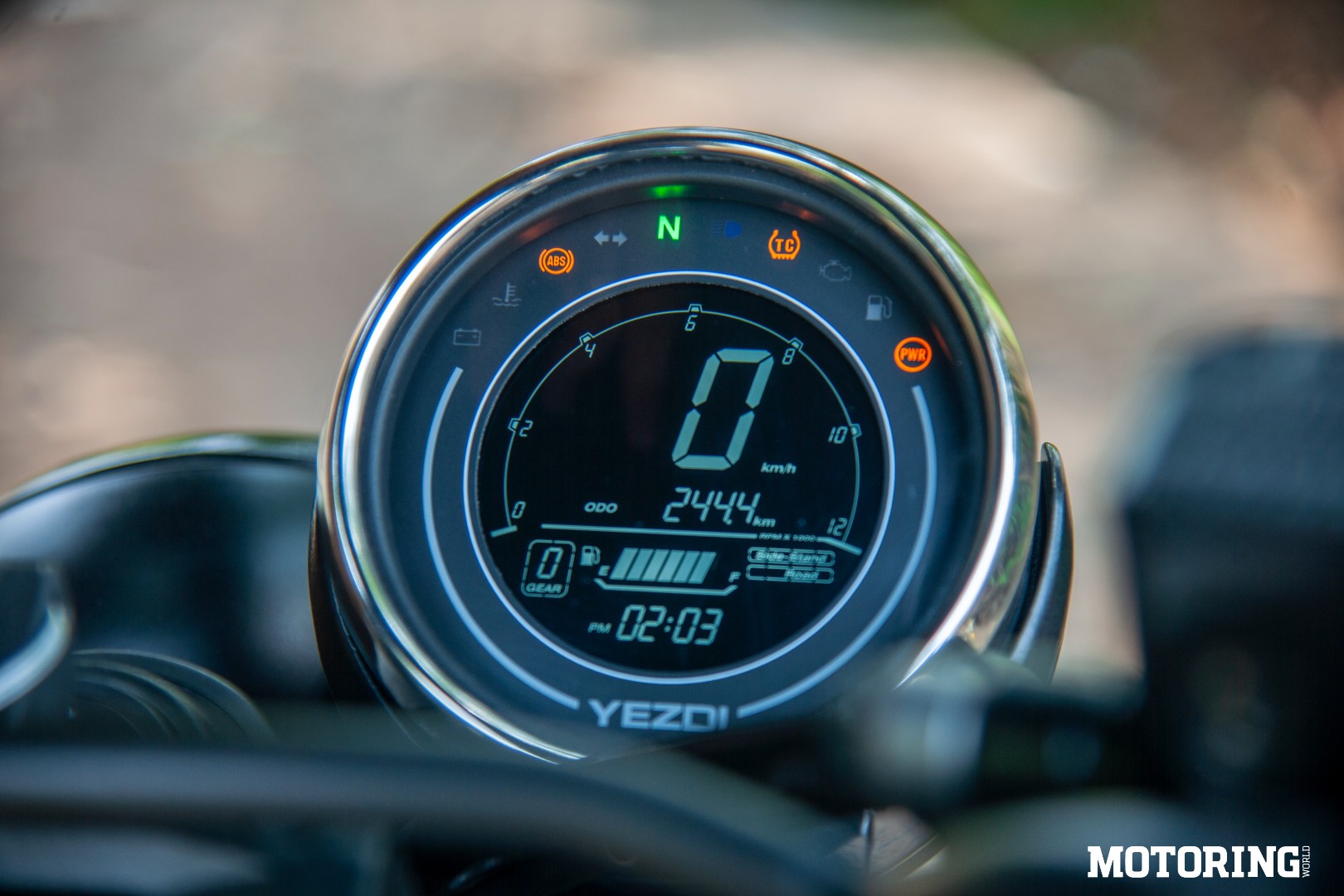
The seat height has gone up by 13 mm to 813 mm. In practice this registers less than the number suggests; the wide handlebar pulls you into a natural stance, and the overall riding position feels settled rather than stretched. The switchgear and LCD console are carried over from the previous model, which is mostly fine, though the console’s readability in bright daylight remains a problem. Repositioning the pod would cost little and make a meaningful difference to usability.
The electronics are where the update is most significant, and where the execution is most uneven. Three riding modes — Rain, Road, and Off-road — are now available, each with variable traction control intervention. The hardware addition is welcome; the interface around it is not. There is no dedicated or clearly labelled mode button. Navigation requires a long press on the unmarked down arrow to cycle through settings, and the screen feedback is inconsistent — during testing, switching from Road to Off-road mode worked once, then the same input refused to reverse the selection. Traction control ended up switched off entirely, where it stayed for the remainder of the ride. For a feature being introduced to broaden the bike’s capability, the controls need to be more intuitive and reliable before this can be recommended with confidence.
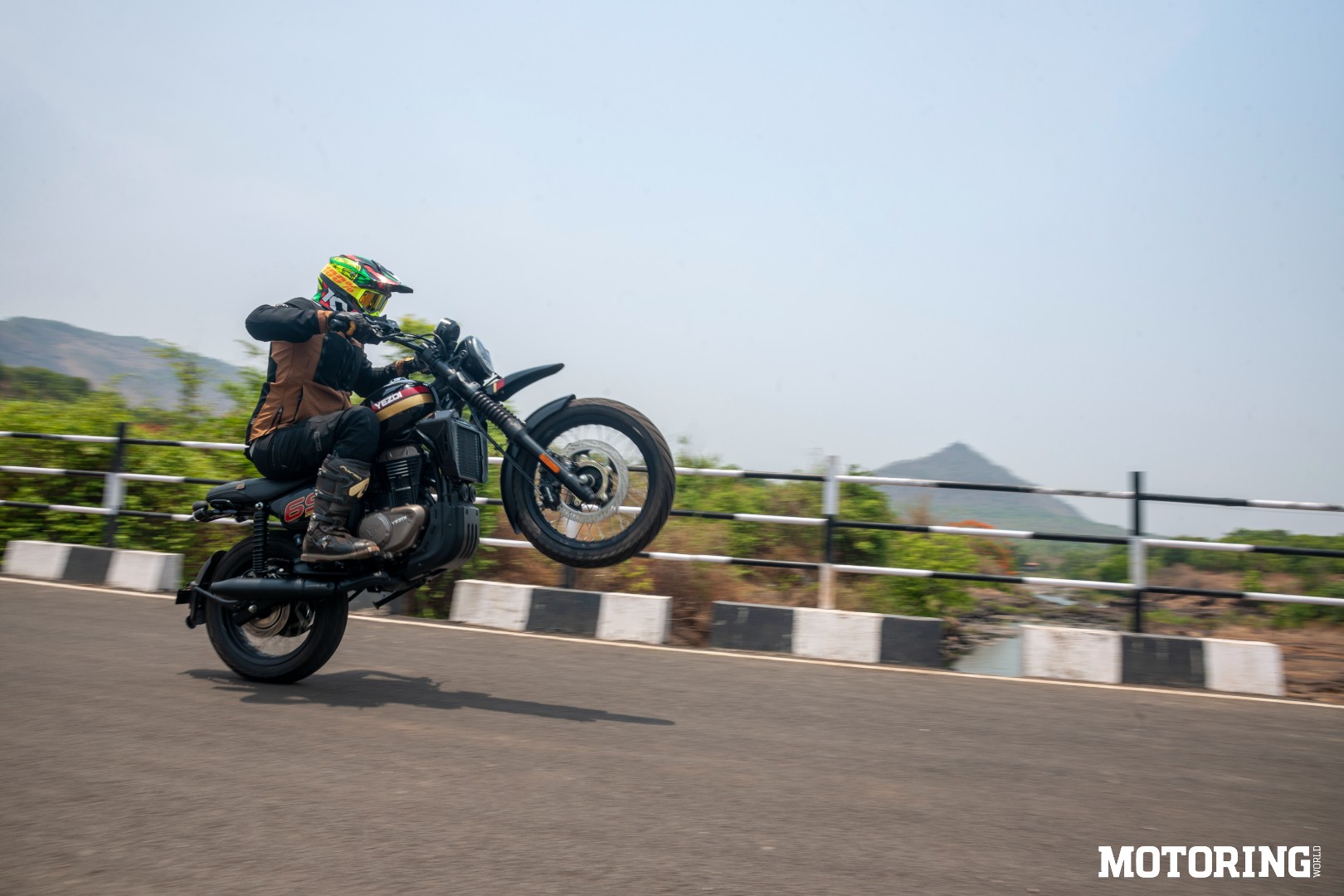
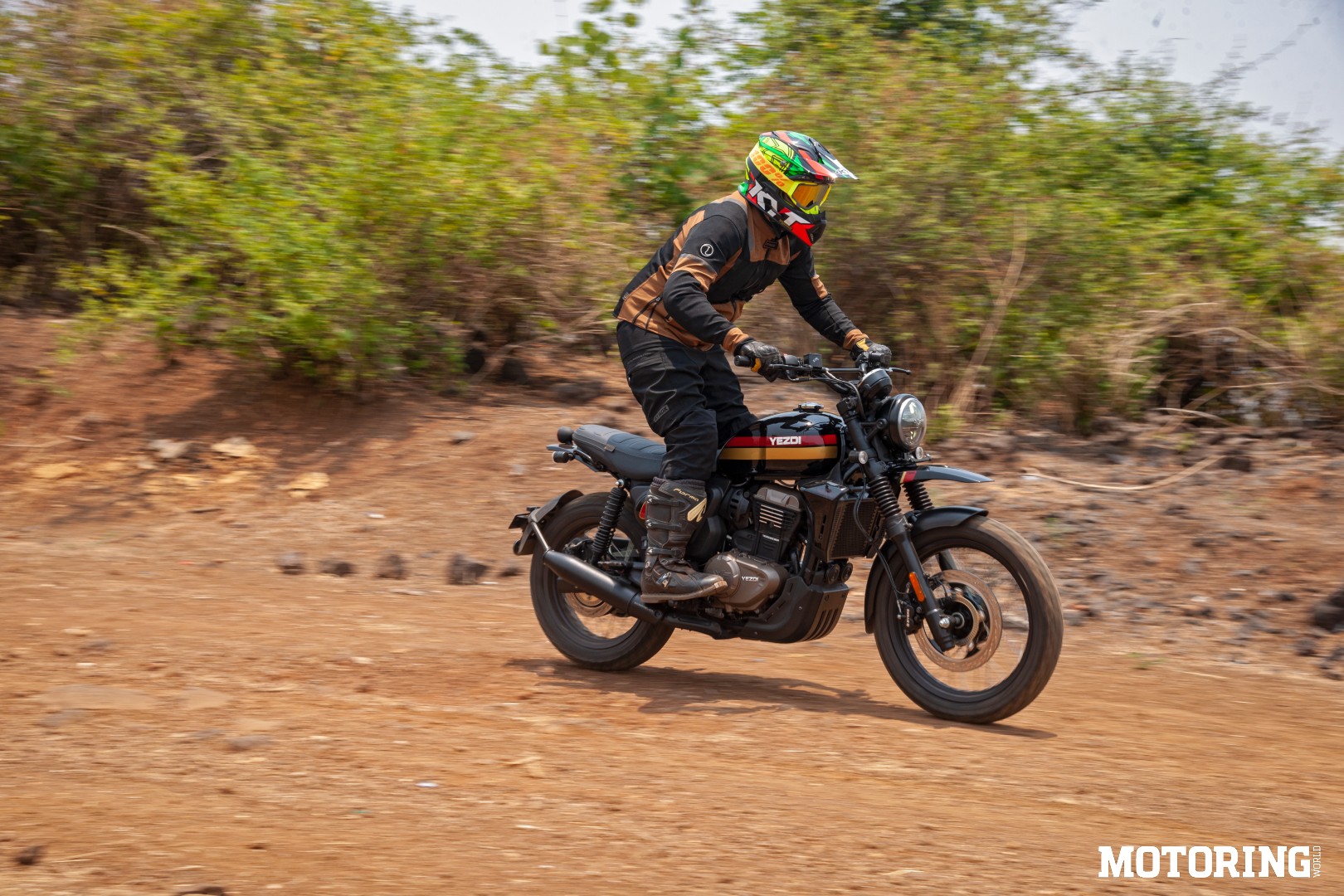
As it turned out, riding without traction control in off-road conditions suited the bike well. The updated engine’s character is the most compelling reason to buy this Scrambler, and it benefits from not being managed too firmly. The power and torque figures are marginally up on the previous version, but the numbers don’t fully communicate the change. The engine feels freer and more responsive across the range — first gear will produce a power wheelie without much provocation, the low-to-mid-range punch is strong enough to make loose surfaces genuinely entertaining, and the top end doesn’t drop away the way small singles often do when pushed. Refinement is better than expected. There is a mild buzz through the footpegs above 4,000 rpm, but it stays in the background. More usefully, the engine is flexible enough in the city that frequent gearbox work becomes optional rather than necessary.
Suspension behaviour is tied to pace. The Scrambler’s setup rewards momentum; carry enough speed into a rough section and it irons things out with reasonable composure. Drop below that threshold on bad roads and the harshness comes through more directly. The seat’s soft foam helps absorb some of what the suspension doesn’t, but this comes at a cost on longer rides. After an extended stint in the saddle, the support diminishes noticeably. The new race-plate-style side panels present a separate issue, because they sit wider than before, and riders using enduro or tall adventure boots will find them catching regularly. It’s a detail that likely looked resolved on paper and revealed itself in use.
The MRF MoGrip Meteor tyres are a reasonable fit for a bike that needs to function on both surfaces. They claw through loose dirt and dust with enough grip to feel trustworthy, and on tarmac they perform adequately for dual-purpose rubber. The concern is puncture repair. Given how widely tubeless spoked wheel technology has spread across this segment and price point, the Scrambler’s tubed setup feels like an oversight. A puncture off-road becomes a considerably bigger problem than it needs to be.
At Rs. 2 lakh ex-showroom, the Scrambler makes no claim to comprehensiveness and doesn’t need to. There is no TFT display, no Bluetooth connectivity, no rider aids beyond the newly added traction control. The LCD console, already mentioned, could be better positioned. The mode button labelling should be clearer. These are real criticisms, but none of them undermine what the bike fundamentally is. At this price, in this category, buyers are not choosing the Scrambler for its electronics package.
They are choosing it because it looks the part without resorting to anything OTT. The engine now has the character to match the styling, and because it is the kind of motorcycle that rewards riders who are willing to ride it with some commitment rather than those who prefer to stay within clearly defined boundaries. The flaws are real but they are also, in the context of the machine, beside the point.
Scramblers were never refined objects. They were useful ones; rough where they needed to be, capable enough for riders willing to improvise. The 2026 Yezdi Scrambler understands this. It no longer feels like a motorcycle performing the idea of a scrambler. It feels like one.