

Some SUVs want to look sporty. Others want you to believe they could outrun a hot hatch. The new Hyundai Tucson N Line makes its intentions rather clear: it wants the looks, the attitude and the big wheels, but without sacrificing the school run, the holiday luggage or the comfort of the people sitting behind you. With up to 288 bhp from its plug-in hybrid powertrain, it certainly has the numbers to get attention, even if the N Line badge is primarily about looking the part.
Hyundai has unveiled the all-new Tucson N Line at the 2026 Paris Motor Show, adding a sportier design package to its recently revealed SUV. The N Line combines the new Tucson’s technology, comfort and practicality with more aggressive styling inside and out. It will be available with petrol mild-hybrid, hybrid and plug-in hybrid powertrains. However, this is not a full-fat performance model. Think of it as the Tucson wearing its trainers and a slightly more expensive jacket, rather than preparing for a track day.
Sharper looks, bigger wheels
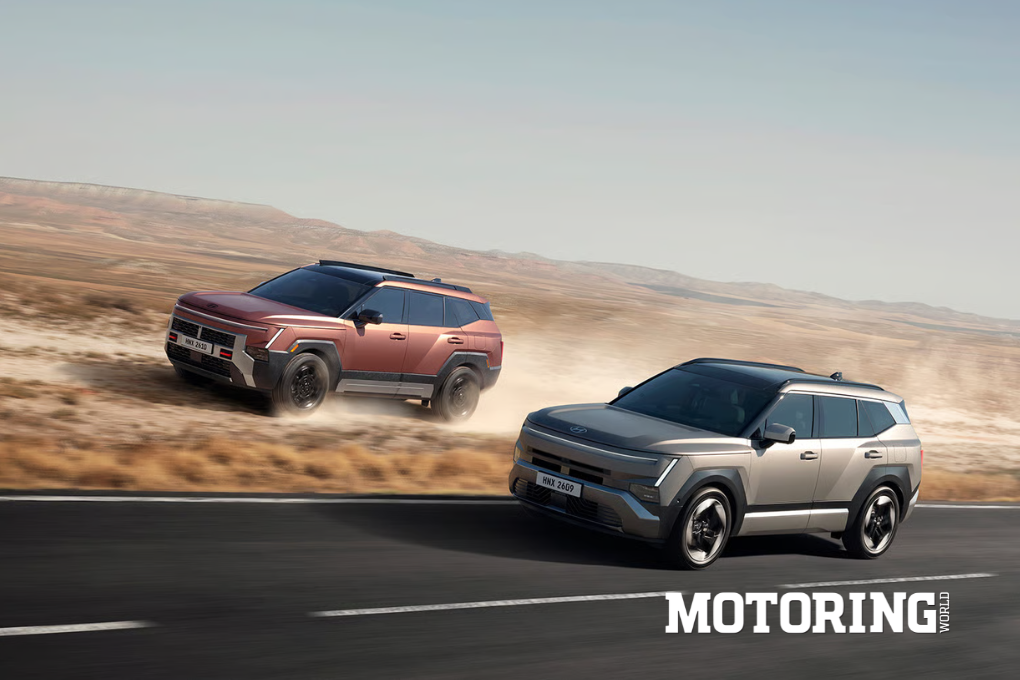
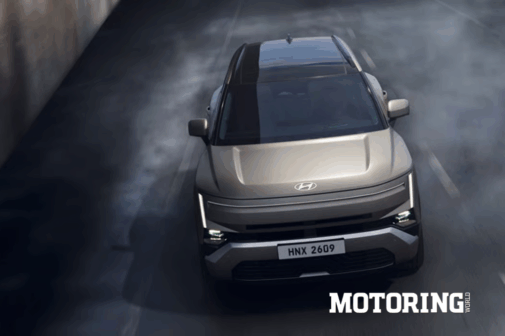
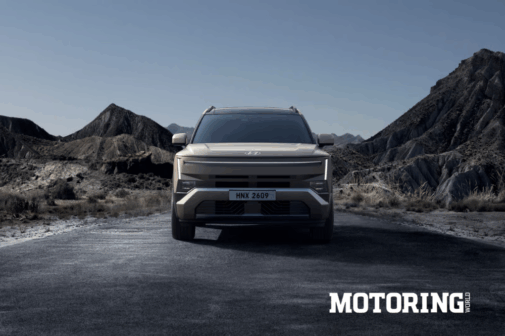
The Tucson N Line builds on Hyundai’s Art of Steel design language, retaining the standard model’s muscular proportions while adding a collection of sportier details.
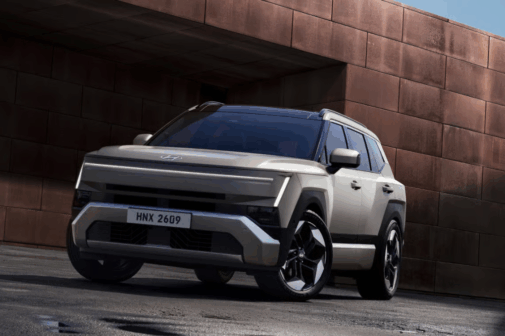
At the front, a more angular bumper features a pronounced chin spoiler and satin-black aero ducts. Muscular side skirts, body-coloured lower door trims, slimmer wheel-arch cladding and gloss-black door mirrors give the SUV a more purposeful stance.
At the rear, a sculpted bumper incorporates diffuser-style detailing, while twin exhaust outlets with sporty brightwork add to the visual theatre. N Line badges on the front fascia and front wings make sure nobody mistakes this for the regular Tucson.
The biggest talking point, quite literally, is the set of model-exclusive 20-inch alloy wheels. They help give the SUV a lower, sharper appearance, complemented by gloss-black C-pillar inserts.
The familiar H-Edge lighting signature and sculptural Prism Rear Lamp remain part of the design, ensuring that the N Line looks like a sportier interpretation of the new Tucson rather than an entirely different car.
A darker cabin with a sporty streak
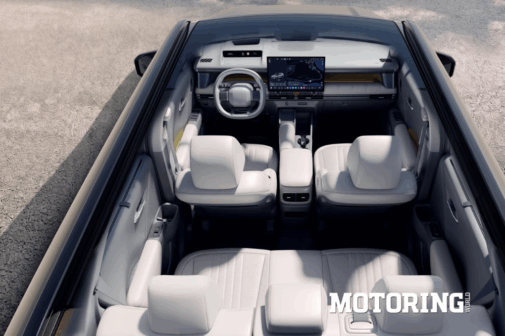
Inside, Hyundai has gone for a black monotone theme, enlivened by red stitching and contrasting accents across the seats, doors and dashboard. The sport seats combine leather and textile suede, while the N steering wheel gets perforated leather grips, red stitching and dark-metal inserts. Metal pedals, a matching footrest and N Line scuff plates complete the performance-inspired treatment.
The cabin retains the practicality of the standard Tucson, including generous passenger space and up to 613 litres of boot capacity. The rear bench folds in a flexible 4:2:4 split and can slide by 150 mm, making it easier to balance passenger comfort against luggage requirements. Rear occupants also get two 100 W USB-C ports, because keeping everyone’s devices charged is now an essential part of family peacekeeping.
Three powertrains, one sporty look
The entry point is a 1.6-litre T-GDi petrol engine with a 48-volt mild-hybrid system, producing 148 bhp. It drives the front wheels through a seven-speed dual-clutch transmission. The full hybrid pairs the 1.6-litre petrol engine with a 1.49 kWh battery, delivering a combined 241 bhp. A six-speed automatic transmission sends power to either the front wheels or all four wheels, depending on the variant.
At the top of the electrified line-up is the plug-in hybrid, which produces a combined 288 bhp. Its 17.1 kWh battery offers an electric driving range of up to 67 km, even with the N Line’s 20-inch wheels. Front-wheel-drive and all-wheel-drive versions will be available. Hyundai has not announced acceleration, top speed or torque figures for these N Line powertrains in the release. Final performance and efficiency figures are also subject to homologation.
More than just a pretty face
The Tucson N Line retains the wider model’s extensive technology package. Depending on specification, features include a 17-inch infotainment display running Pleos Connect, based on Android Automotive OS, AI-enhanced Gleo voice recognition, over-the-air software updates and a 12-speaker Bang & Olufsen sound system. Other available equipment includes Digital Key 2.0, dual Qi 2.0 wireless charging, an Ergo Motion driver’s seat, relaxation seats, Multi-Air Mode climate control and Remote Smart Parking Assist.
Safety systems include Forward Collision-Avoidance Assist 2.0, Highway Driving Assist 2.0, Parking Collision-Avoidance Assist and Child Presence Detection. Hybrid models also feature Stay Mode, allowing a quieter, more electric-like experience when stationary. For those who plan to tow, the hybrid is rated for up to 1,910 kg, while the plug-in hybrid can tow up to 1,810 kg.
Is it coming to India?
Hyundai has not announced Indian pricing or a launch timeline for the new Tucson N Line. For now, the reveal concerns the European-market model, and specifications may vary between markets. The important distinction is that the N Line is a styling-led variant, not a separate high-performance Tucson N. It offers a more assertive appearance, a sportier cabin and a choice of electrified powertrains while retaining the comfort and versatility expected of a family SUV.
And that may be precisely the point. Not everybody wants an SUV that behaves like it has something to prove. Some simply want one that looks a little more mischievous in the car park, carries the family in comfort and still has enough power to make an overtake feel satisfyingly effortless.