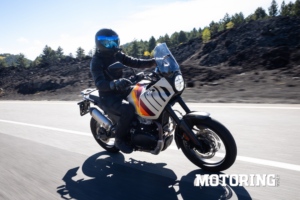


It was 2018. I still remember the day Dad said I could start looking for a motorcycle. Naturally, my eyes went straight to the Triumph Thruxton 800. That gorgeous British Racing Green, Bonneville-based café racer had me completely smitten. There was, however, one small problem: my father wasn’t keen on handing an 18-year-old novice the keys to an 800cc motorcycle. Sensible man.
That was the beginning of a long love affair with the Bonneville family. These motorcycles always appealed to me. Their charm was minimal bodywork, a torquey engine, beautifully sculpted exhausts and a note that could turn heads without shouting. They had an old-school appeal few motorcycles could replicate. Fast-forward to 2026, and Triumph’s partnership with Bajaj has given us an interesting range of motorcycles. The 400cc family now covers several flavours of modern classic: the Speed, Scrambler, Thruxton, Tracker and, finally, the Bonneville. The name that started it all has arrived in the smaller-capacity line-up.
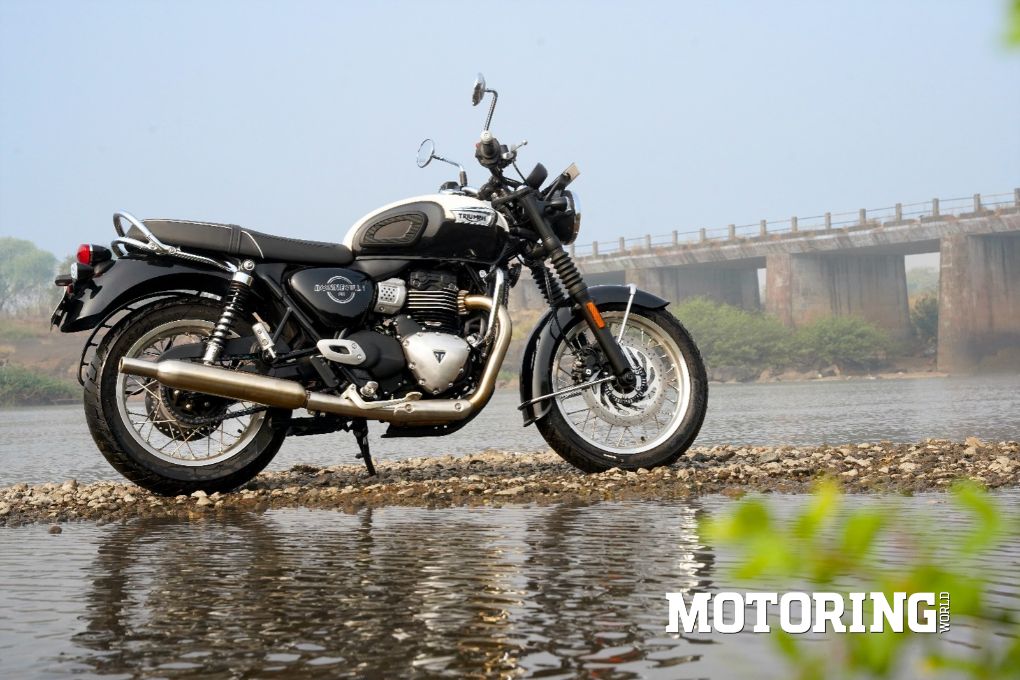
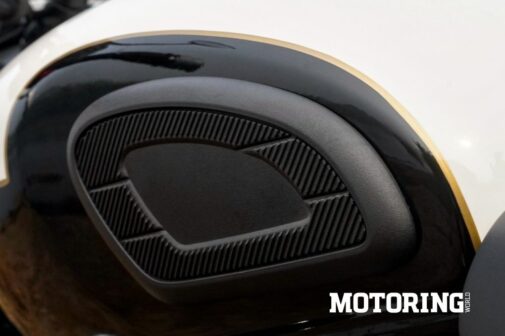
You might think the Bonneville T40 is simply a Speed 400 in a fancy suit. You’d be wrong, and not just because the Bonneville would have something to say about your fashion choices. It uses the familiar 349cc, liquid-cooled, single-cylinder engine, but Triumph has made meaningful changes to give it a character of its own. Revised cam profiles, a new exhaust system and different headers accompany an engine retune. The result is 29 bhp and 31 Nm. The tubular steel frame is shared with its siblings, but the subframe has been revised to accommodate twin rear shocks in place of the monoshock used on the other 400s. The bodywork makes a difference, too. Where its siblings use plenty of plastic, the Bonneville gets metal mudguards and a substantial metal fuel tank. Only the airbox covers are plastic. It may sound like a small distinction, but it changes the way the motorcycle looks and feels. Park it beside the other 400s and the T40 could pass for a scaled-down Bonneville T120. That’s a very good thing.
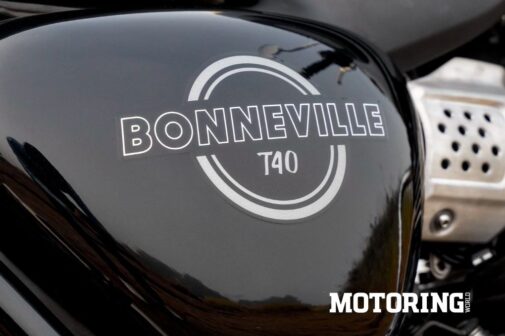
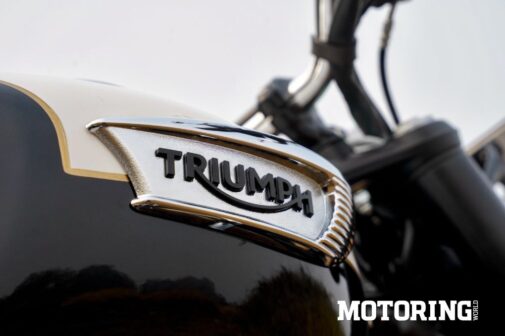
Triumph has kept its iconic dual-tone paint schemes for the T40, while the entry-level T4 gets simpler single-colour options. There’s also a handsome black version, finished in matte grey and black with a brown leather seat. The detailing is thoughtful, and the whole motorcycle has a convincing sense of occasion. There’s also a nice visual balance to the proportions. The tank has enough volume to anchor the motorcycle, while the slim rear section and twin shocks keep the silhouette clean. The chrome and paintwork catch the light without becoming gaudy, and the exhausts sit just right. More importantly, the metal parts feel like they belong there, rather than being added to create a retro effect. The riding position helps; nothing feels forced, and the controls fall naturally to hand from the moment you set off. For all its period charm, the T40 is very much a 2026 motorcycle. It gets traction control, cornering traction control, ABS, cruise control, multiple riding modes and a six-axis IMU. That’s quite a collection of electronic assistance for something that looks as though it has rolled out of a photograph from the 1960s. The trick is that none of it overwhelms the Bonneville’s character.
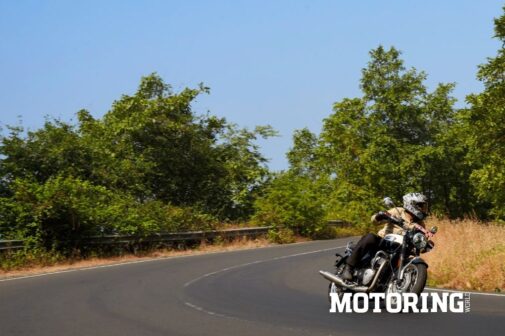
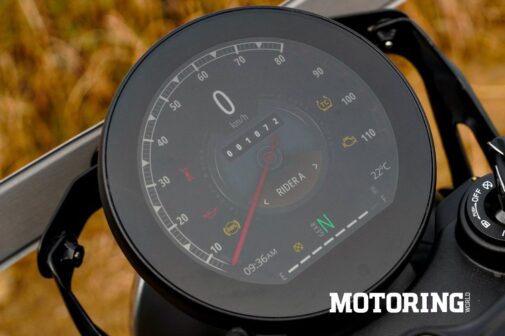
The real test, of course, is what happens when you swing a leg over and ride away. The first thing I noticed was the weight. Compared with the other 400s, the Bonneville feels noticeably heavier. It doesn’t have the Speed’s light, playful demeanour, but I rather like the reassuring heft. It feels substantial, like a proper motorcycle. The switchgear feels premium, and the digital display is neatly designed, even if I would have preferred something less modern-looking on a motorcycle with this much retro appeal. The finish is impressive, right down to the pea-shooter exhaust. It looks lovely, but the revised system has a job beyond decoration: it lowers the idling rpm and gives the engine a deeper, fuller note. It sounds like a Bonneville should. The clutch is light, the gearbox smooth and everyday usability is excellent. The gearing is largely unchanged, apart from the final-drive ratio. The engine’s character, though, is where the biggest difference lies.
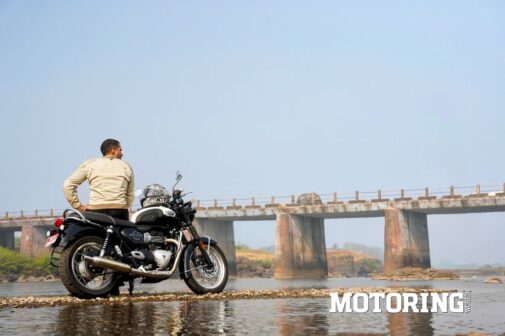
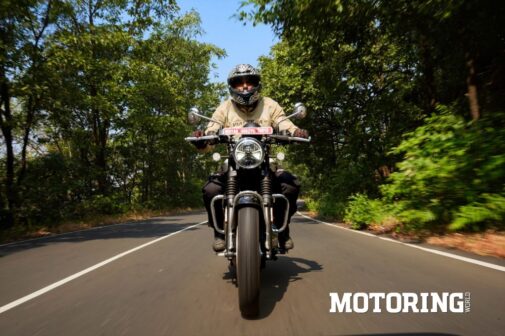
Unlike the Speed 400 or Scrambler, the Bonneville doesn’t encourage you to chase the redline. Its power delivery is relaxed, with torque doing most of the work. Peak torque arrives at around 5,500 rpm, but there’s little need to go that far. By 4,000 rpm, there’s enough grunt for most situations. It pulls cleanly, gathers speed without fuss and is equally happy pottering through town or cruising along an open road. Work it harder and the single-cylinder nature becomes apparent. Vibrations creep in beyond 5,500 rpm and are more noticeable through the handlebars by 6,500 rpm. It isn’t unpleasant, but it makes clear where the T40 is happiest: at an unhurried pace. This is a motorcycle that encourages you to enjoy the ride rather than watch the clock. We discovered that at Tamhini Ghat, our very own desi Isle of Man. The roads may not have the reputation of the famous British circuit, but the twists, elevation changes and occasional questionable patches of tarmac are enough to keep any motorcycle honest.
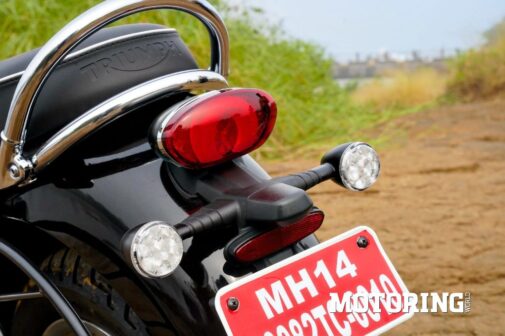
The Bonneville was a hoot. It isn’t particularly nimble, nor does it change direction with the urgency of its lighter siblings. You need to think a little further ahead, choose your line and carry the right momentum. Do that, and it handles far better than its relaxed appearance might suggest. The chassis feels composed, while the twin-shock setup keeps things balanced. The suspension strikes a sensible compromise: supple enough to absorb imperfections, controlled enough to remain planted when the pace rises. The T40 doesn’t reward aggression, but it doesn’t discourage enthusiasm either. Once you find its rhythm, it becomes a thoroughly enjoyable companion through a series of bends. You start taking the longer route, leaning into corners and wondering whether you really need a faster motorcycle after all. The electronics are well judged. ABS intervention is unobtrusive, and traction control behaves sensibly whether accelerating upright or leaning into a corner. The six-axis IMU gives the safety systems the information they need without making their presence felt. It’s a comprehensive package, but one that leaves the rider to get on with riding. By the time we finished at Tamhini, I had developed a soft spot for the T40. not because it was the fastest, sharpest or most technologically advanced motorcycle there, but because it seemed to understand something that performance figures can obscure. Riding is also about enjoying the machine beneath you.
The T40 feels like a proper Triumph. Build quality is excellent, the metal bodywork lends it substance, and the details have been carefully considered. It has the presence of a larger motorcycle, the accessibility of a 400 and a personality distinct from its siblings. The Bonneville name has always stood for a particular kind of motorcycling: one that doesn’t need outrageous performance, complicated electronics or carbon-fibre everything to make an impression. Sound, feel and the connection between rider and machine matter more. The T40 retains much of that philosophy in a more accessible package. It isn’t a Speed 400 in different clothes, nor is it trying to be a café racer or an adventure bike. It knows what it is, and that’s a strength. Triumph has an interesting opportunity here. The T4 could give the Royal Enfield Classic 350 a serious run for its money, while the T40 could make life more interesting for the Honda CB500. They’re different motorcycles and propositions, but the Bonneville has enough character to make those comparisons worthwhile.
I still remember that Thruxton 800 from 2018, and how badly I wanted a Bonneville-family motorcycle of my own. Nearly a decade later, I rode one of its younger siblings along Tamhini’s winding roads. It isn’t the motorcycle I imagined back then, but it has brought back that same feeling. Perhaps that’s the T40’s greatest appeal. It doesn’t need to be the fastest thing on the road. Give it a good stretch of tarmac, a little sunshine and a few corners, and it makes a compelling case for taking the long way home. Some motorcycles are bought with your head, others with your heart. The Bonneville is firmly in the latter category. And, for a few hours at least, it made me feel 18 again.