


The Indian motorcycling scene has changed enormously over the last three decades. We’ve gone from treating a two-wheeler as a way to get from A to B to seeing it as something worth spending money on simply for the pleasure of riding. Today, we have motorcycles that make our hearts skip a beat, machines that leave us giggling inside our helmets and the occasional one that makes us question our life choices when the fuel bill arrives. It is, in other words, a great time to be a motorcyclist in India.
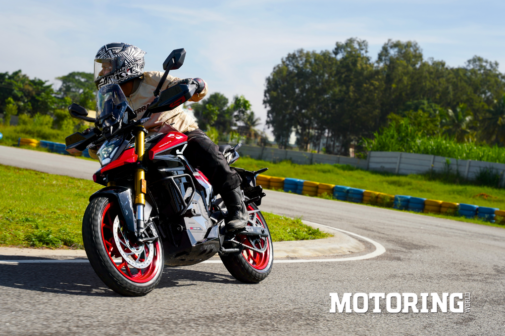
One of the more interesting contributors to this change has been Ultraviolette. India has no shortage of electric vehicle manufacturers, and keeping track of the launches can feel like a full-time job. Yet few have pushed the boundaries quite like UV. The company has consistently looked beyond our shores, with the ambition of putting Indian electric motorcycling on the global map. The F77 was an important first step. Now, with the X47 Venom, UV is revisiting an existing product and making substantial improvements to it.
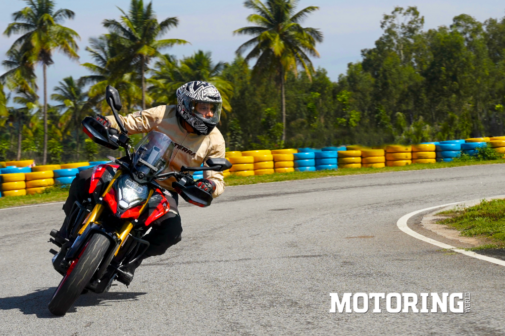
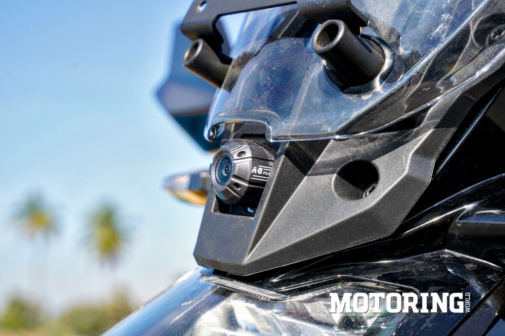
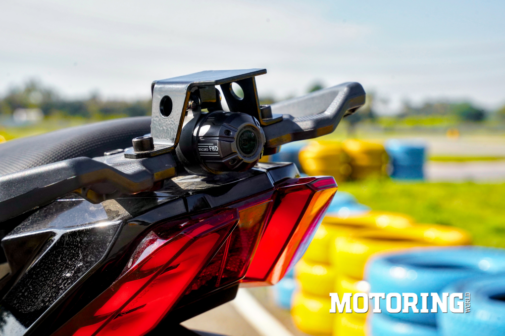
Launched last year and based on the F77 platform, the X47 has received a significant update. This is considerably more than a cosmetic refresh. UV has revised the motor, battery management system, controllers and cooling, while managing to shed 20 kg. The entire weight reduction comes from the powertrain; the frame, brakes and suspension remain unchanged. That’s no small achievement, particularly on an electric motorcycle, where the battery and associated hardware account for so much of the weight. The update also brings a seven-inch Qualcomm-powered touchscreen, twin cameras, radar-based assistance systems and more range. It’s a substantial list of changes, and one that gives the X47 a stronger technological proposition.
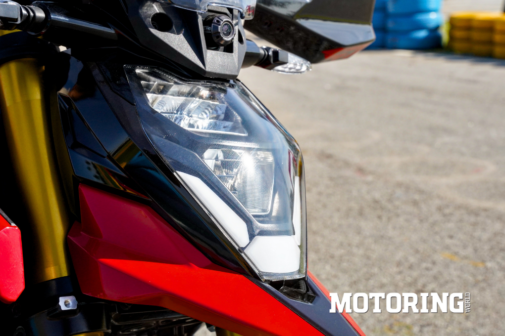
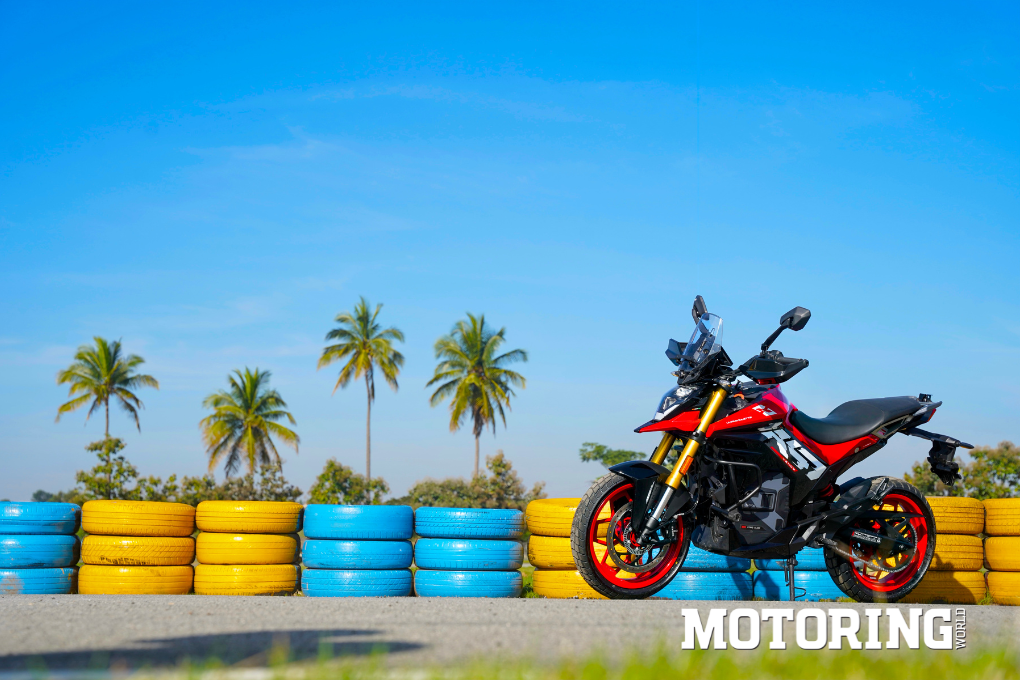
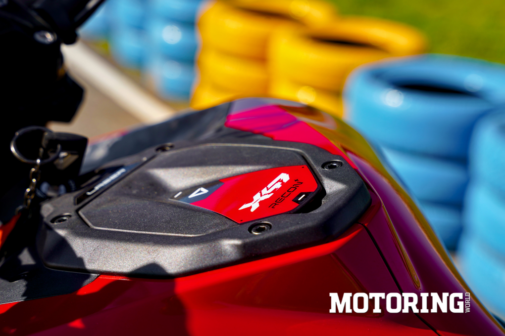
I never thought the X47 was a bad-looking motorcycle to begin with. Its Hypermotard-like proportions work well, with sharp bodywork, a marquise-shaped headlamp, golden forks and coloured six-spoke wheels, depending on the variant. The bodywork is relatively minimal, which I appreciate. There’s enough visual drama to make it stand out, but it doesn’t look as though the design team has emptied an aftermarket accessories catalogue onto it. The colours are vibrant, and the overall design has a distinct personality.
Swing a leg over and the X47 feels comfortable straight away. The tall handlebar and mid-set footpegs create an upright riding position that should suit longer journeys. The tank section is broad enough to provide support without feeling cumbersome, and the riding triangle is approachable. That’s important for a motorcycle intended to do more than commute.
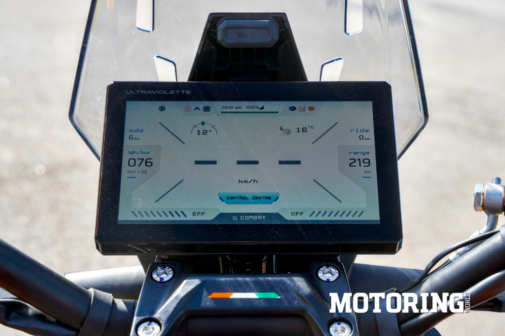
The new seven-inch display is a major part of the update. There’s plenty of information on offer, but the interface is sensibly organised. The touchscreen is responsive, the graphics are crisp and navigating the menus is straightforward, even with gloves on. ADAS functions, dashcam settings and other features are accessible through the screen. Most settings can only be changed while stationary, which is sensible. You don’t want to be fiddling with a touchscreen while approaching a corner. Regenerative braking and riding modes, however, can be adjusted on the move.
Time was limited, and we had several surfaces to sample, including a go-karting circuit. An upright electric crossover on on/off-road tyres might not sound like an obvious track weapon, but this is India. Give us a surface and we’ll find something to ride on it. The go-kart circuit at Velocity in Bengaluru became my playground.

The first lap was a little odd. With the battery at 100 per cent, regenerative braking wasn’t operating at full capacity, which made the initial throttle response feel unnatural. Once the charge dropped to 99 per cent, I set regen to level five of nine, selected Combat mode, essentially the X47’s Sport mode, and got going. The motorcycle began to make much more sense.
The figures are 90 Nm and 40.5 bhp. Those numbers might not sound remarkable alongside a conventional motorcycle, but the X47 has instant electric acceleration and weighs 180 kg. The combination is properly impressive. There’s no waiting for an engine to reach its sweet spot, no gearbox to work through and no rev counter to keep an eye on. Twist the throttle and it goes, immediately.
There is a slightly unusual sensation around the centre of the motorcycle, though. The battery’s weight distribution makes it feel as if there’s a fair amount of mass sitting beneath you. Changing direction requires some physical effort, and the X47 isn’t as eager to flick from corner to corner as a lighter conventional naked. The acceleration helps compensate, allowing you to carry speed between bends without much fuss. The brakes are excellent. Electronic intervention is so well calibrated that it is barely noticeable on track. Nothing feels artificial or intrusive, and the motorcycle remains predictable when pushed. The initial bite is strong, progression is reassuring and there’s enough confidence to explore the limits.
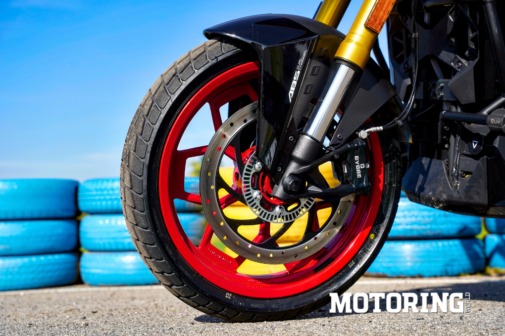
The tyres are less convincing. As grip levels approach their limit, the current rubber doesn’t inspire quite the same confidence as the rest of the package. A more road-biased set of Apollo Alpha or TVS Eurogrip Pro Torq tyres could make a difference to the experience. The suspension, on the other hand, feels well controlled on track. It’s on the firmer side, keeping pitch and dive in check. That may translate into a slightly harsh ride over India’s rather inventive road surfaces. I happen to like a firm setup, but not everyone wants to feel every pothole.
At ₹2.65 lakh, the X47 Venom occupies an interesting position. It is well equipped, brings meaningful engineering improvements and has an interesting battery warranty proposition. But it also faces established names and increasingly capable 450cc motorcycles. Persuading someone to spend this much on an electric motorcycle won’t be easy, particularly when the alternatives offer the familiar appeal of an engine, a gearbox and an exhaust note.
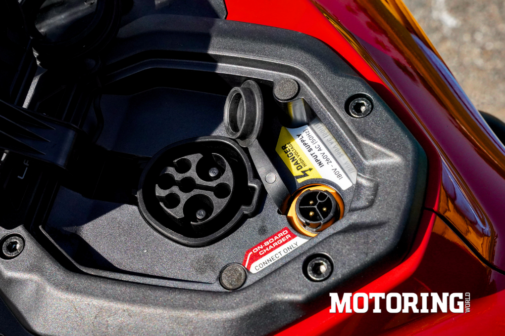
That is the X47’s biggest hurdle: perception. For many riders, a motorcycle is an emotional purchase, and much of that emotion comes from the sound, vibration and mechanical character of an internal combustion engine. Replacing that experience with a silent electric motor requires a bigger conversation than quoting torque figures and charging times.
Motorcycling has always evolved, though. Disc brakes, fuel injection and liquid cooling were once novelties that needed convincing. Today, they’re taken for granted. The X47 won’t convert every traditional motorcyclist, and it doesn’t have to. What it does demonstrate is that Indian engineering can take a different approach to performance and produce something genuinely interesting.
That’s what I find most encouraging about this motorcycle. Ultraviolette is a company born here, willing to experiment, improve its products and challenge established ideas in a segment where the rest of the world is watching. I still love the sound of a good engine, the satisfaction of a downshift and the feeling of a motorcycle coming alive beneath me. I suspect I always will. But the future of motorcycling needn’t sound like its past. If the X47 is any indication of what’s ahead, there’s plenty to look forward to.