

I’m older than the Ducati Monster. Not by much, but enough to hold it over the bike. Thirty-three years after its birth, I’ve finally had a chance to find out whether the Monster has aged better than I have.
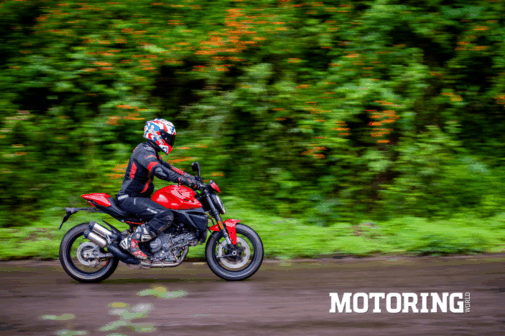
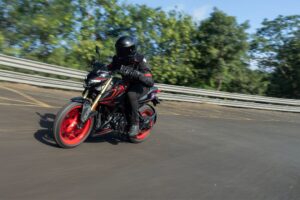
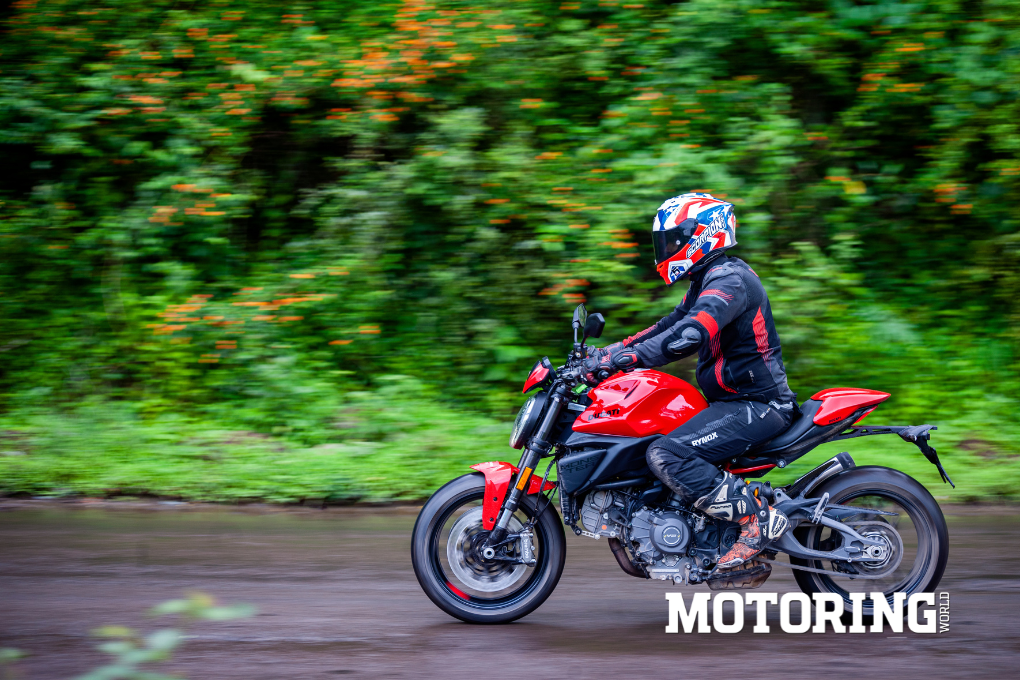
When I first saw the Monster+ in the flesh, I was instantly reminded of the Monster 821. It looked as though that poster had come to life, with enough modernity to keep it current. I wasn’t particularly fond of the previous-generation Monster’s appearance, but this one looked like a Monster again. The beefy 14-litre tank, familiar round headlight, sinister DRL surround and twin exhausts with mesh covers give it the visual menace the name deserves. The Plus also gets a seat cowl and flyscreen, and together they finish the bike nicely.
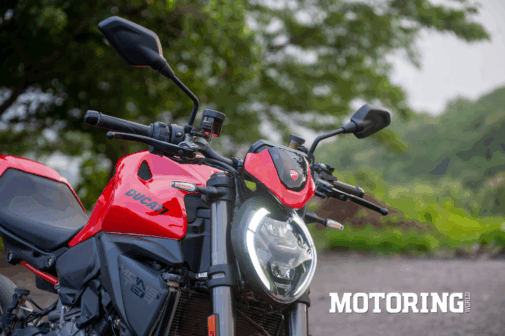
Then I swung a leg over it and discovered how compact it feels. The bike sits snugly between your legs, while the tall, wide handlebar gives you plenty of leverage when you want to hustle it through town. Our market gets the 795 mm saddle, which left me sitting more in the bike than on it. I prefer the latter, but the low seat does make the Monster very approachable. Ducati has always positioned it as a gateway to its more serious machinery, and that still feels appropriate. Taking it out of the parking lot reinforced that impression. It felt like a much smaller motorcycle than its engine capacity suggests, and I could imagine a rider with relatively little experience getting comfortable on it quickly. Despite this being my first proper ride on a Monster, the controls and dimensions felt familiar quickly.
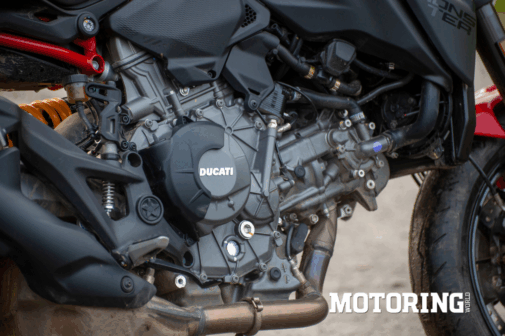
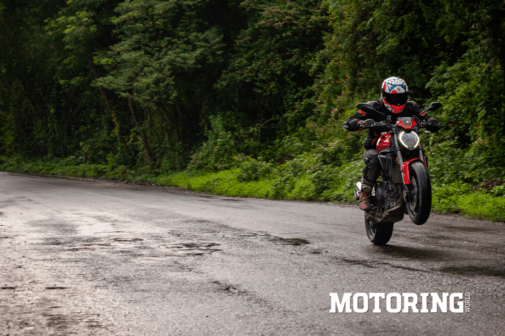
That made Sport mode rather irresistible. The new 890cc V-twin makes slightly less power and torque than the engine it replaces, but its delivery is what matters. Ducati says 70 per cent of the 91 Nm peak torque is available from 3,000 rpm, with 80 per cent spread between 4,000 and 10,000 rpm. Intake Variable Timing helps create that broad spread, and the effect is obvious when you open the throttle. The mid-range has a serious punch, and triple-digit speeds arrive with very little effort. Overtaking is particularly easy, because there is always useful shove available. Switch off the wheelie control and there is enough torque to lighten the front wheel while passing traffic, although that’s probably better left to an empty road. What I liked more was how readily it could settle down afterwards. Leave it in Road mode with the standard settings, and the throttle becomes much calmer, making everyday riding straightforward while retaining plenty of performance. Sport mode changes the character considerably. The response sharpens and the bike becomes eager enough to encourage the sort of behaviour that can turn a quick ride into an unnecessarily long one.
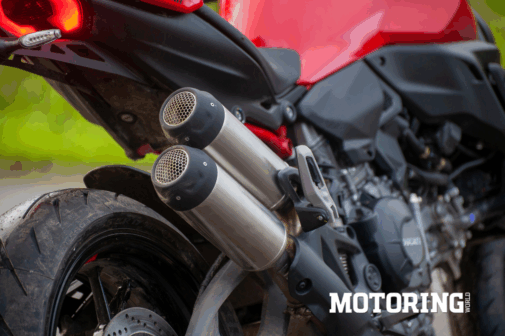
The soundtrack helps. Downshift a few gears while slowing down and the exhaust answers with pops and crackles. Roll off in first and there is another raspy response from the twin. The sound will probably be one of the things I remember most about this bike. There is, however, an irritating side effect to all that mechanical enthusiasm. The engine sends plenty of heat towards your right leg, in traffic. Keep moving and it is manageable, but prolonged stops make the temperature difficult to ignore. The hydraulic clutch can also feel heavy when you’re repeatedly pulling away and stopping in dense traffic. It isn’t a deal-breaker, but your left hand will eventually notice.
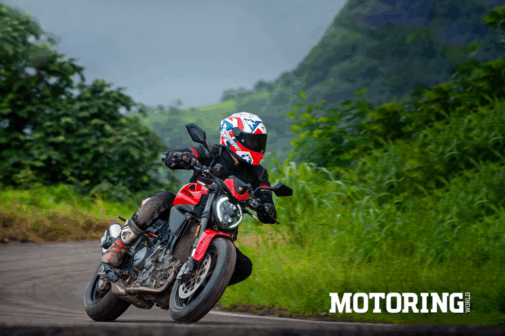
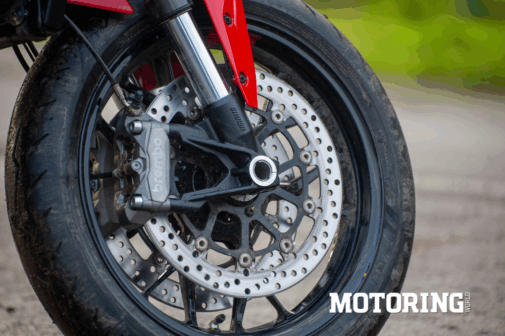
Once the road opens up, the Monster feels more at home. At 175 kg, it is 4 kg lighter than before, and that reduction is obvious as soon as you start changing direction. It has the agility of a much smaller naked motorcycle, responding quickly to inputs without becoming nervous. The Pirelli Diablo Rosso IVs add plenty of confidence on dry surfaces, with strong grip when the road starts to get interesting. The wet weather prevented me from exploring the chassis properly, but even at a sensible pace, the Monster remained predictable. More surprising was the suspension. The non-adjustable Showa units dealt with potholes and broken surfaces far better than I expected, giving the bike an ability to cope with Indian roads that isn’t immediately apparent from its sporting appearance. The Brembo M4.32 brakes are equally convincing. The lever remains easy to modulate, so you can brake hard without making the process feel abrupt. They suit the Monster’s performance well.
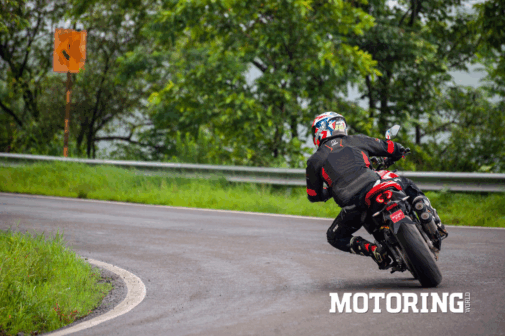
The 795 mm saddle is more complicated. It makes the bike accessible to shorter riders, but the distance between the seat and footpegs feels tight on a longer ride. I found myself cramped after spending more time aboard it, and I would happily choose the 815 mm seat if I intended to spend a full day riding the Monster. For someone who prefers sitting on a motorcycle rather than feeling tucked inside it, that extra height should make a meaningful difference.
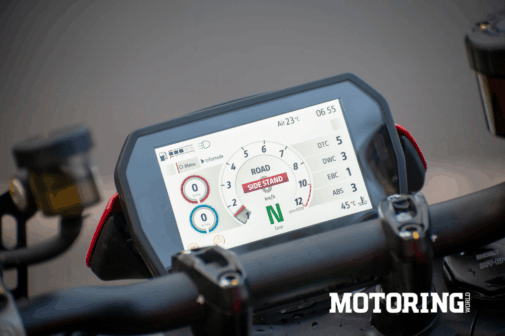
The electronics are another reason the Monster is so easy to live with. Engine braking, traction control, wheelie control and ABS can all be adjusted, while the system generally stays out of your way when you don’t need it. On dry roads, I often forgot the electronics were there. In the wet, the traction-control warning appeared frequently enough to remind me that the bike was keeping track of my enthusiasm. The controls are straightforward, too. The TFT is clear, the switchgear is easy to understand and the quickshifter adds a little extra enjoyment when the road opens. None of it requires much thought, which is exactly what you want when the motorcycle itself is demanding your attention.
Thirty-three years is a long time to grow up. I’ve spent mine becoming somewhat more sensible, hopefully more measured, and considerably less convinced that every empty road requires an enthusiastic demonstration of my driving or riding ability. The Monster has followed its own version of that journey. It is more sophisticated and easier to use than the original, yet the essential character remains intact. That balance is what makes the current Monster work. It can potter through town without making every journey feel like an event, but the moment you find a good road and give it some throttle, the old instincts return. The engine responds, the chassis shrinks around you and the exhaust starts making suggestions that sensible people should probably ignore.
I suppose that’s why I don’t mind the fact that both of us have mellowed with age. There is still something slightly irresponsible lurking underneath the sensible exterior, waiting for the right road and the right mood. These days, I know when to put it away. The Monster seems to have learnt the same trick. So, has it aged better than I have? Probably. It has lost some of the rough edges that once defined it, gained a considerable amount of sophistication and become easier to live with, while retaining enough character to remind you why the name became famous in the first place. I can live with that. After all, neither of us needs to behave badly all the time.