

Ground Reality & Adoption
- Field agents in villages often struggle with tech. How do you make it easy for them?
Field adoption has been one of our biggest focus areas from day one. Many dealership teams, especially field staff and on-ground executives, are not deeply tech-oriented, so the product was designed with a very simple and intuitive user experience. Most actions can be completed in just a few taps, which keeps the learning curve minimal even for first-time users.
Beyond the product itself, we work very closely with our customers during onboarding and day-to-day operations. Our support team stays actively available to assist dealership staff whenever required, ensuring smooth adoption and quick issue resolution. The goal is to make technology feel natural to use rather than something teams have to struggle with.
- WhatsApp is the default sales tool in India. How do you get teams to switch without friction?
We understand that WhatsApp is deeply embedded into dealership operations today, so our approach is not to force behavioural change overnight. Instead, we focus on fitting naturally into existing workflows and reducing operational friction step by step. The product is designed in a way that makes coordination, tracking, and follow-ups significantly easier, which gradually drives adoption across teams. - When sales reps go offline in remote areas, how does Trackaroo keep data synced?
A large part of the Indian automobile market operates in areas with inconsistent connectivity, so reliability in such environments was considered from the beginning while designing the platform. We have built the system to ensure that dealership operations continue smoothly even in challenging network conditions, while maintaining data consistency across teams.
The AI Layer
- What specific action does your AI automate entirely?
Our AI layer is primarily focused on reducing repetitive operational work inside dealerships. It automates routine follow-ups, task reminders, workflow escalations, and status coordination between teams, which traditionally happens through calls, WhatsApp messages, and manual tracking.
One of the biggest efficiencies it creates is reducing duplicate data entry across multiple systems. Instead of teams repeatedly updating information in different places, workflows are synchronized automatically in the background, helping reduce manual effort, errors, and delays. The larger goal is to allow dealership staff to spend less time coordinating operations manually and more time focusing on customers and business growth.
- How does the AI handle different buyers, like a premium Ather EV customer versus a truck fleet owner?
Different customer segments behave very differently, so flexibility and contextual workflows are important. Our AI layer is designed to adapt to different dealership processes, customer journeys, and operational requirements across vehicle categories, allowing teams to manage interactions more efficiently without adding operational complexity. - How does the system catch unauthorized discounts or loan risks in real time?
The platform continuously monitors operational workflows and predefined approval conditions in real time. If certain actions fall outside expected business rules or thresholds, the system can automatically flag them, trigger escalations, or route them for approval before the process moves forward.
Growth & Scaling

- You built Trackaroo while you were still in college- what problem did you identify so early, and what pushed you to start solving it?
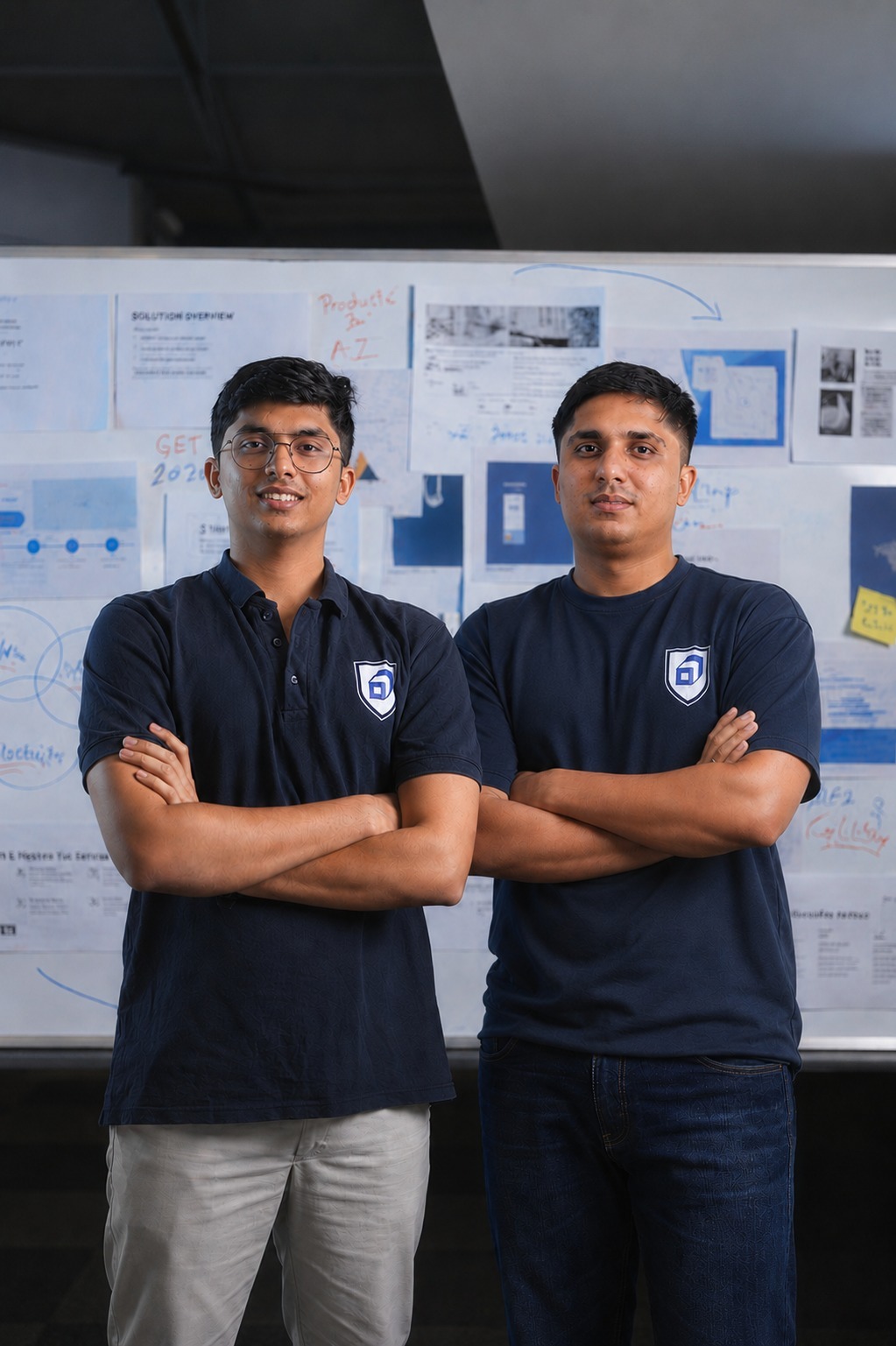
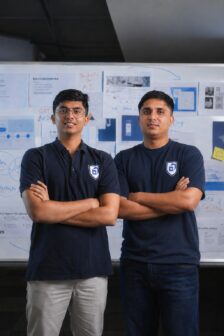
I think the biggest thing we identified early was that dealerships did not actually have a “software problem”, they had a coordination problem. When we started visiting dealerships and observing operations closely, we noticed that most teams were already using multiple tools. CRM was in one place, approvals somewhere else, accounts in another system, while a lot of communication still happened through WhatsApp calls and spreadsheets.Field sales teams travelling across villages and semi-urban areas had very little operational visibility. Managers spent a huge amount of time manually coordinating between departments instead of focusing on decision-making. Leads were missed, approvals got delayed, and simple workflows became unnecessarily complicated because none of the systems were connected properly. What pushed us to solve it was seeing how normalised this chaos had become. From the outside, dealerships looked smooth and organised, but behind the scenes there was massive inefficiency.While studying at Scaler School of Technology, I was constantly exposed to first-principles thinking and real-world problem solving. That made us approach the situation differently. Instead of building another standalone software tool, we wanted to create a unified operating system that could simplify how dealerships actually function day to day. That is how Trackaroo started.
2. You hit ₹50 Lakh ARR via word-of-mouth. What single feature made dealers recommend you?
One of the biggest drivers of referrals has been SanjAI, our conversational AI layer for dealerships. Traditionally, dealership owners depend on multiple people, Excel sheets, and constant follow-ups to get basic operational answers. With SanjAI, they can simply ask questions in plain language and get instant insights about sales, P&L, team performance, pending tasks, or operational bottlenecks.
For many dealers, this was the first time they felt they had real-time visibility into their business without needing to call someone or wait for reports. That experience created strong word-of-mouth within dealer networks, where recommendations travel very quickly.3. Car factories have rigid, mandatory software. How does Trackaroo work alongside OEM systems?
OEM software is primarily designed for the automobile manufacturers, not for the dealerships themselves. Its main purpose is to handle reporting, compliance, schemes, inventory visibility, and standardized processes required by the OEM. However, the day-to-day operational reality inside dealerships is far more dynamic and operationally heavy.
As a result, most dealerships still rely on Excel sheets, WhatsApp groups, calls, and multiple disconnected tools to manage approvals, follow-ups, HR, coordination, and workflow execution internally. Trackaroo is designed to work alongside existing OEM systems rather than replace them. We focus on solving the operational layer that dealerships still manage manually today, helping teams improve visibility, coordination, and efficiency without disrupting their existing OEM workflows.4. At 19, how do you build trust and close deals with older, traditional dealership owners?
Initially, our age was something dealership owners were sceptical about. The automobile industry is relationship-driven, and most dealership owners have decades of operational experience. What helped us build trust was focusing less on selling and more on solving real operational pain points they faced every day. A major turning point for us was working with Shobit Miglani, a 25-year veteran of the automobile retail industry and a multi-OEM dealership owner. He became one of our earliest customers and started using the platform within his own operations. Over time, after seeing the impact firsthand, he came on board as a Strategic Advisor. Having someone with deep industry credibility validate both the product and workflows gave other dealership owners confidence that Trackaroo was built with a real understanding of dealership operations, not just as another software product from outsiders.