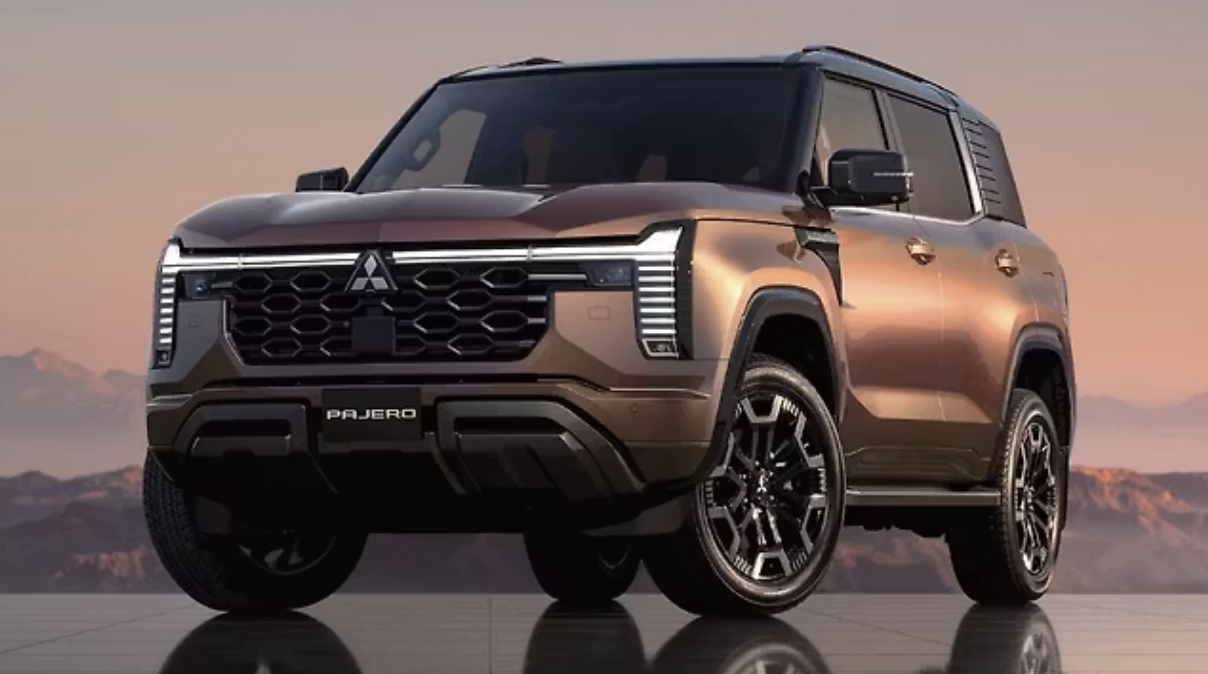


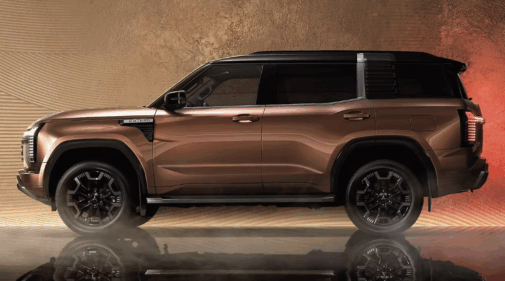
After a five-year hiatus, Mitsubishi has officially revived its flagship cross-country SUV with the unveiling of the all-new, next-generation Pajero. Resisting the trend of transforming rugged icons into soft-edged crossovers, the new Pajero sticks firmly to its roots: a traditional ladder-frame chassis, a punchy turbo-diesel engine, proper four-wheel-drive hardware, and an unapologetically upright, squared-off silhouette.

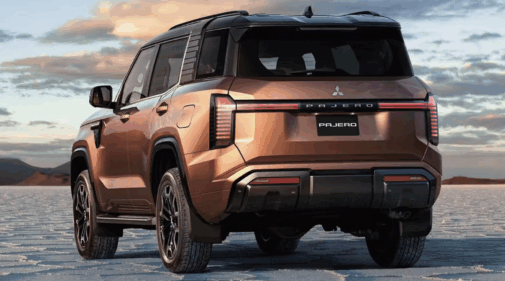
Measuring 4,920mm long, 1,925mm wide, and 1,910mm tall with a 2,870mm wheelbase, the SUV rides on a heavily revised Triton-derived platform. Off-road credibility remains paramount, highlighted by 230mm of ground clearance, a 30.4-degree approach angle, and a 25.8-degree departure angle. Visually, the design pairs rugged nostalgia with modern flair, incorporating T-shaped LED lighting, an imposing grille, a C-pillar inspired by the original roll bar, and a hexagonal rear motif paying homage to the classic tailgate-mounted spare.

Under the tall bonnet sits a 2.4-litre turbo-diesel unit generating 48.94 kgm of torque through a variable-geometry turbocharger. It channels drive through a newly developed eight-speed automatic gearbox paired with Mitsubishi’s Super Select 4WD-II and Super-All Wheel Control systems.
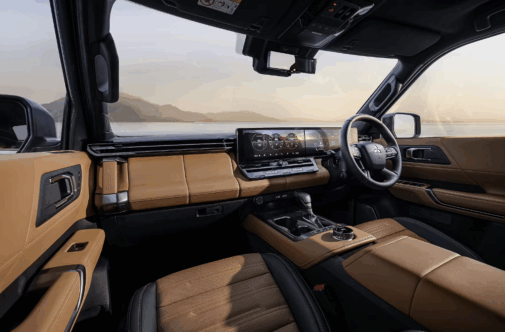
Inside, the cabin takes a massive leap into modern luxury. The horizontal dashboard hosts dual 14.3-inch displays, ventilated seating, three-zone climate control, and a 12-speaker Yamaha Ultimate audio system. The three-row layout features a sliding second row with 150mm of travel, while safety gear includes eight airbags, Mitsubishi’s debut front-centre SRS airbag, full ADAS, and a 3D Multi Around Monitor that visualizes terrain directly under the chassis.
The new Pajero will roll out initially in Thailand, expanding to Japan and Australia during fiscal 2026, before reaching around 100 markets across ASEAN, the Middle East, and Latin America by fiscal 2027.
However, an Indian comeback remains virtually out of the question. Mitsubishi’s passenger vehicle operations in India faded during the BS6 transition after years of dwindling sales networks and declining volumes. While the new Pajero’s diesel powertrain, three-row practicality, and genuine 4WD hardware make it an ideal challenger to segment heavyweights like the Toyota Fortuner, the economic realities stand in the way. Importing it as a fully built unit would push prices into prohibitive territory, while local assembly demands massive capital investments in tooling, supply chains, and retail networks. For Indian off-road enthusiasts, the legendary nameplate’s revival remains a tempting case of the right machine arriving without a roadmap home.