

Speed is a temptation I understand all too well. I know how it can end, with just one mistake, one variable I didn’t account for. Still, I go for it. My vision narrows, and for a stretch of road, nothing else exists.
On the Ducati Multistrada V4 S, that temptation is easier to give in to than on almost anything else I’ve ridden. The strange part is that it never feels that way while it’s happening. The world doesn’t blur and accelerate the way it does on other fast bikes; if anything, it seems to settle. Roads feel wider, and corners come at a pace I can read. There’s a sense of room that, rationally, shouldn’t be there at these speeds, on roads like these, on a motorcycle this size.
I only understand what’s actually happening when I reach my destination a full hour ahead of schedule, with no memory of urgency, no residual tension in my hands. The Multistrada had been moving fast the entire time, but I just hadn’t noticed.
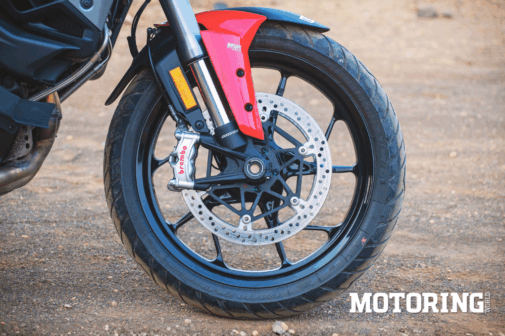
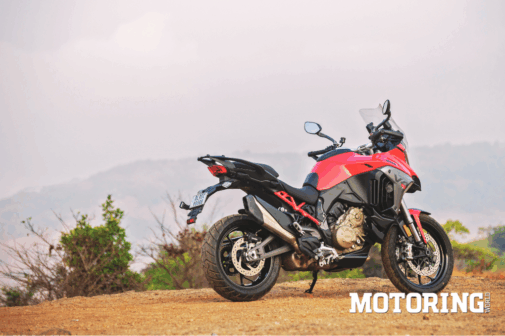
The bike doesn’t announce this. Visually, the update is restrained — the silhouette is familiar, the ADV stance unchanged on its 19-inch front and 17-inch rear wheels. Look more carefully, though, and the surfaces are tighter, the detailing more resolved, the whole thing carrying itself with a coherence that the previous version didn’t quite have. The bodywork panels sit with more precision, and the overall impression is of something that has been slightly edited. At a standstill, the suspension drops its preload and lowers the seat height automatically, something that shifts the relationship immediately. This is a large motorcycle that makes a deliberate effort to feel manageable, before you’ve even pulled away.
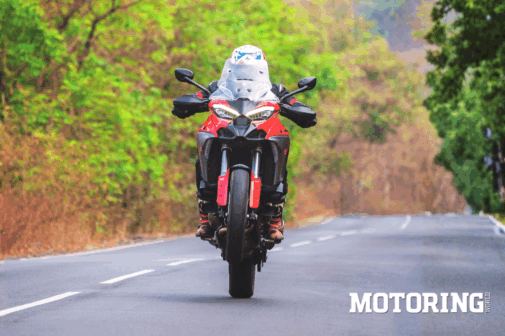
Once moving, the 1,158cc V4 Granturismo engine sets the tone, with 170 bhp and a torque spread wide enough that you rarely need to work for drive. What’s notable is how little aggression it projects; the power is substantial, but it builds in a way that feels controlled rather than sudden, and the six-speed gearbox keeps the delivery smooth across the rev range. Pull away gently in traffic and it behaves. Open it up on a clear stretch and the same engine reveals an entirely different character, with a directness that makes the gap between thought and acceleration feel very short indeed.
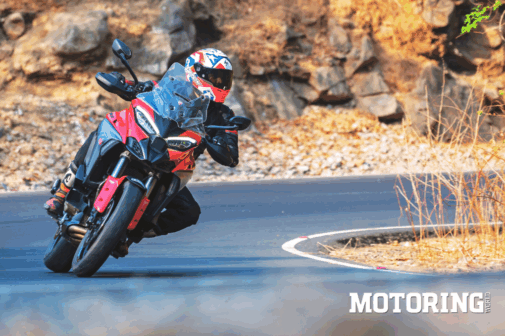
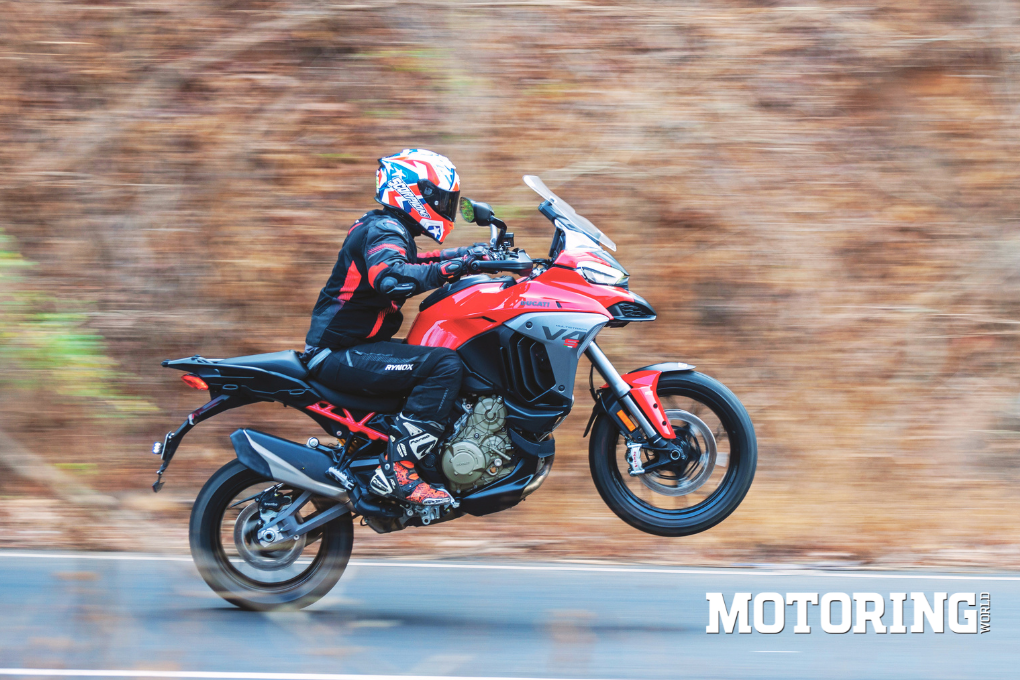
In Touring mode, the overall effect is almost sedating. The pace feels measured, and it’s entirely possible to ride very quickly without any sensation of effort. Switch to Sport and its character shifts; mainly, the front wheel shows more inclination to lift under hard acceleration, and you become more aware of the 232 kilograms beneath you. Corners that felt relaxed now feel like decisions. The eagerness is genuine, and it keeps you honest in a way that Touring mode, for all its competence, does not.
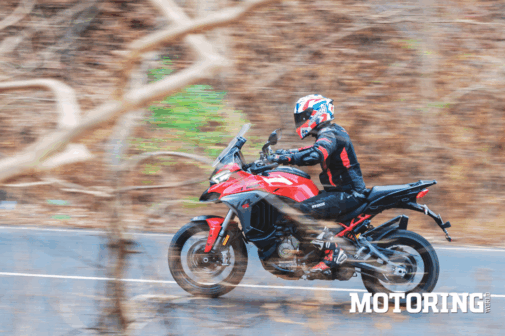
Keeping all of this in order is what Ducati calls the Vehicle Observer, a processing system that draws on inputs from across the bike — including the inertial measurement unit — to continuously adjust traction control, wheelie control, and cornering ABS in real time. The experience of it is not something you notice directly. There’s no intrusive sensation of intervention, no moment where the electronics visibly take over. What you notice, simply, is the absence of problems. Mid-corner bumps that would ordinarily break your line don’t. A patch of rougher surface through the exit of a fast right-hander that should have demanded a correction — the kind of thing that, on a less sophisticated bike, would have had me sitting up and reassessing — registers as almost nothing. The chassis stays settled on surfaces that, on another bike, would demand constant small inputs. It’s only afterwards, piecing together what the road was actually like, that you appreciate how much work was being done while you were busy thinking about the next corner.
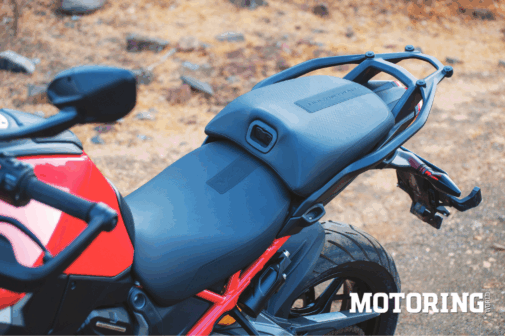
The semi-active suspension contributes to this considerably. It reads changing road surfaces and responds quickly enough that the bike rarely presents you with the harshness you’d expect from riding at this pace. What impresses is not just the speed of the response but the quality of it; there’s no nervous, over-damped quality to the ride, no sense of the system working too hard. It just keeps the tyres in contact with the road and the chassis where it should be, and gets out of the way. Confidence builds naturally, and with it the tendency to carry more speed into corners, brake a little later, open the throttle a little earlier. The bike accommodates all of this without complaint. The large windscreen absorbs the worst of the wind load, the aerodynamic package manages airflow over the fairing and around the engine, and the 22-litre fuel tank means stops are infrequent.
This is where the Multistrada makes its real argument. There are faster Ducatis — the Panigale and Streetfighter, with their Desmosedici Stradale engines, are sharper and more immediate in every way. Ride either one hard and they reward you completely, but they’re unambiguous about their very stringent terms, and concentration is non-negotiable. The Multistrada’s pace is just as serious, but the experience of sustaining it is not. You step off after a long, fast ride and feel none of the accumulated strain you’d expect. You could, if needed, do it again.
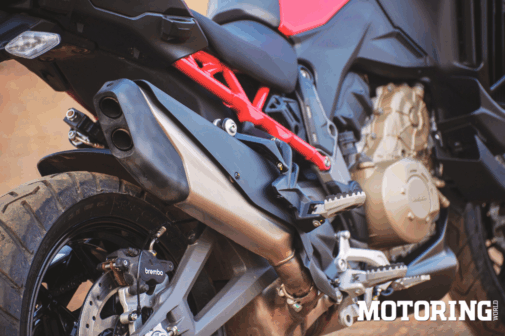
That’s the real trick of the thing, and it’s a subtle one. Speed on most motorcycles carries weight; a sense of consequence, of risk management. On the Multi, that weight lifts. The faster you go, the more natural it feels, and the further you ride, the more you find yourself trusting the bike’s judgement over your instinct to hold back. Entries get faster, your braking points shift, and the pace that felt ambitious in the morning feels ordinary by afternoon.
Which brings me back to where I started. On most machines, speed is something I keep at arm’s length. On the Multistrada, it stops feeling like a choice and becomes what’s happening. Before long, I’m not resisting it at all