

Last updated: June 2026
If you are simply picking the lowest IDV to trim your premium, that might not be the best decision for you. The right figure is the one closest to your bike’s current market value, the most you can get back at a theft or total-loss claim.
What Market Value is Right for Your Motorcycle?
The right IDV is the current market value of your motorcycle, which is the most an insurer will pay if it is stolen or damaged beyond repair. IDV stands for Insured Declared Value. It applies only to comprehensive or own-damage two wheeler insurance, not to a third-party policy.
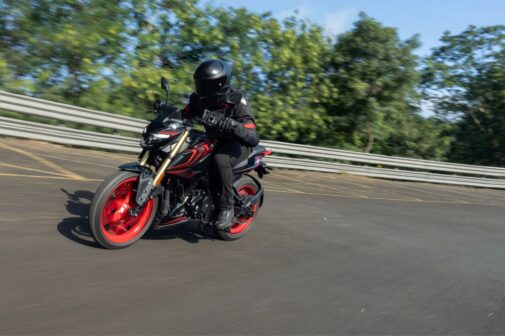
You agree on this market value when you buy the cover, and again at each renewal. Because it is the ceiling on a total-loss or theft claim, the figure you pick decides how much money actually reaches you.
What is the Right IDV Based on Depreciation?
The right IDV is the bike’s listed price minus a set amount for its age, called depreciation. The insurer starts from the listed showroom price for your model, then cuts it by a fixed percentage that rises as the bike gets older. These percentages follow the schedule set under IRDAI rules, shown below.
-
Age of the bike Depreciation cut Up to 6 months 5% 6 months to 1 year 15% 1 to 2 years 20% 2 to 3 years 30% 3 to 4 years 40% 4 to 5 years 50% For example, a bike listed at ₹1,00,000 and aged two years has a 30% cut, so its IDV is about ₹70,000. Once the bike is over five years old, the insurer and you agree on a fair value together.
Is a Higher IDV Right for Your Motorcycle?
No, a higher IDV is not always right for your motorcycle, because it raises both your premium and the most the insurer will pay. It is a simple trade-off:
- A higher IDV means a bigger premium, but a bigger payout if the bike is stolen or written off.
- A lower IDV means a smaller premium, but you are under-insured and get less than the bike is worth.
- An IDV set above the real market value does not help, because your claim is still capped at the bike’s actual worth.
> If your IDV is set below your bike’s real value, your theft or total-loss payout is capped at that lower figure. The gap between that amount and a fresh replacement comes out of your own pocket.
Most insurers let you pick the IDV from a small band around the calculated value.
When Should You Adjust the IDV on Your Motorcycle?
Adjust the IDV on your motorcycle at every renewal, because it drops as the bike ages and last year’s figure is no longer right. See that it sits close to what your bike would sell for today. If it is far below the resale value, you are under-insured; if it is padded well above, you are paying extra for nothing.
On a fully online insurer like ACKO, the suggested IDV appears on the screen at purchase or renewal. You can change it within the allowed band before you pay, so set it at the figure that matches your bike.
Frequently Asked Questions
Is a higher IDV always better for a bike?
Not always. A higher IDV gives a bigger payout at total loss but costs more premium, and it cannot exceed your bike’s real market value. Match it to what your bike is worth today.
How much is the IDV after 5 years?
For a bike over five years old there is no fixed slab. You and the insurer agree on a fair figure based on the bike’s make, model, condition, and resale value in your area.
How do I find the IDV of my bike?
Use a bike IDV calculator or look at the figure your insurer shows on the quote. Both start from the showroom price for your model and subtract depreciation for its age.
Is choosing a lower IDV to cut the premium a good idea?
Usually not. A lower IDV saves a little premium now, but it leaves you under-insured, so a theft or total-loss claim pays less than your bike is actually worth.
Does IDV apply to third-party bike insurance?
No. IDV applies only to comprehensive or own-damage cover, which pays for your own bike. A third-party policy covers damage you cause to others, so there is no IDV in it.
Key Takeaways
- The right IDV matches your bike’s current market value, not the lowest figure that shaves the premium.
- IDV is the ceiling on a theft or total-loss payout, so set it too low and you carry the gap yourself.
- Depreciation sets the IDV, rising from 5% under six months to 50% at four to five years, and older bikes are valued by agreement.
- Adjust your IDV at every renewal, because it falls each year and you can change it within the allowed band before you pay.