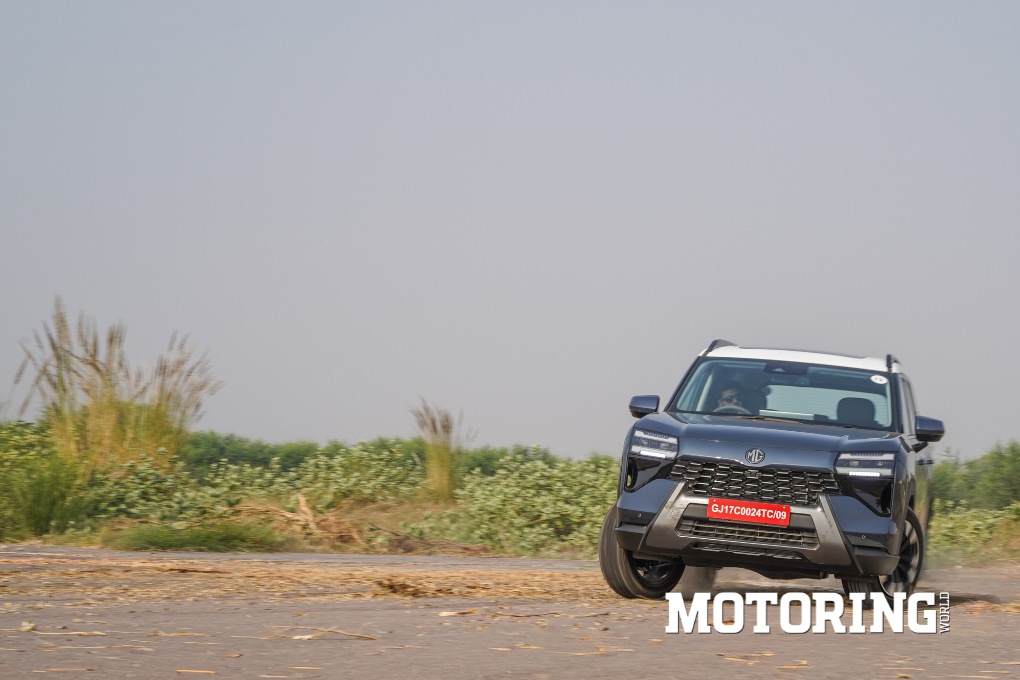


One tank of fuel, a fully charged battery and 959 km of highway ahead. That was the brief when MG handed us the keys to the new Hector Tomahawk PHEV in Ahmedabad. The plan was to drive to Jaipur, spend the night there and continue to Delhi the following morning, all without stopping for fuel. MG was confident its claimed range of over 1100 km would see us through. I was curious to see just how realistic that figure was, especially with a long highway drive ahead. But before we get to how far we made it, let’s talk about the car itself.
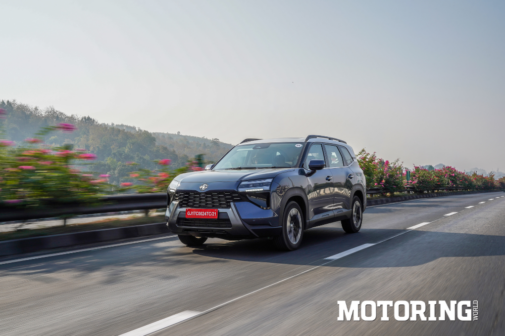
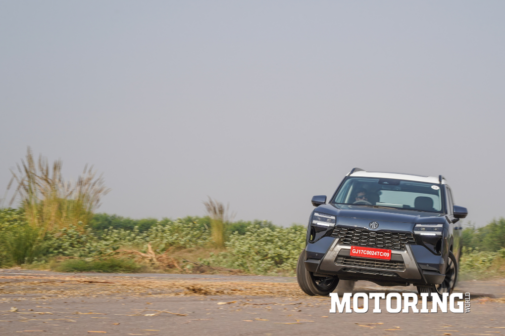
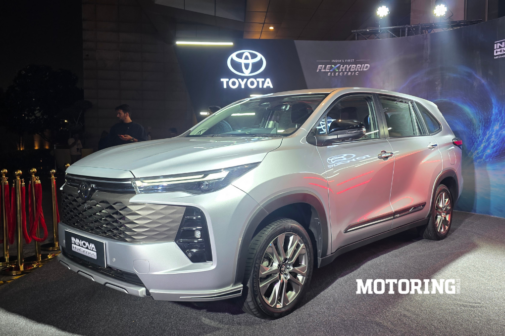
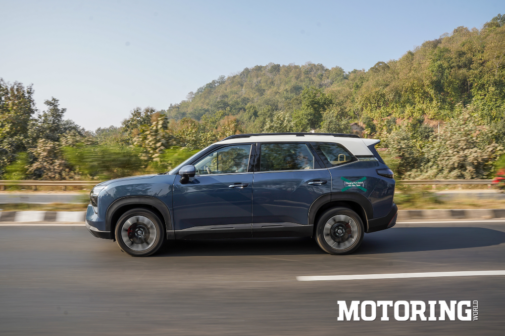
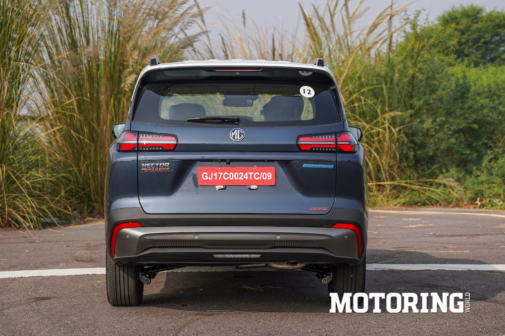
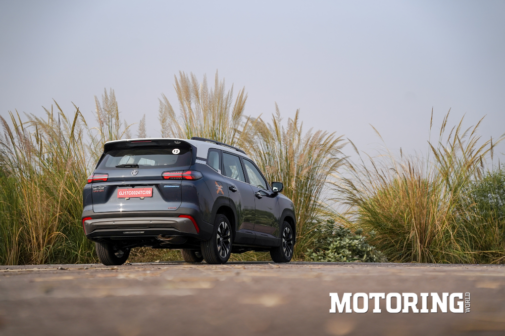
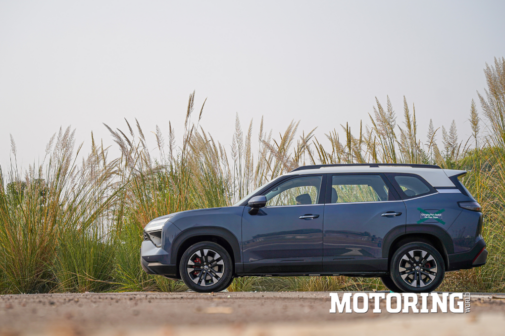
The Hector Tomahawk was unveiled in both EV and PHEV forms, and its styling certainly divided opinion. Some liked the new design, while others weren’t quite sold. Having spent time with the PHEV, though, I’m firmly in the former camp. It looks considerably better in person, particularly because it gets a proper grille up front, unlike the blanked-off face of the EV. The upright stance, flat bonnet, chunky cladding and vertical rear give it proper SUV proportions. In fact, I’d describe it as a cross between the Innova Hycross and the Scorpio-N in terms of its design. It certainly has road presence; we had plenty of people looking at it on the highway and stopping to ask about it during our breaks. The 18-inch alloys don’t look undersized, either, while the dual-tone paint and red brake callipers add a nice touch. The two horizontal lighting elements in each headlamp and the illuminated MG logo up front are neat details.
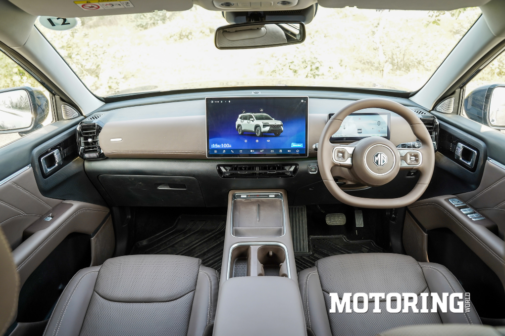
The cabin is a more minimalist affair. There’s a large 15.6-inch touchscreen taking centre stage, accompanied by an 8.8-inch digital instrument cluster. The brown-and-black colour scheme looks quite posh, and there’s soft-touch leather on the dashboard and door cards, but the overall fit and finish doesn’t feel particularly solid. It looks reasonably premium, but doesn’t quite feel it.
Equipment levels are generous. You get a panoramic sunroof, Level 2 ADAS, ambient lighting, wireless Apple CarPlay and Android Auto, wireless charging and a 10-speaker Infinity audio system that sounds rather good. There are sunblinds for the second row, roof-mounted AC vents for both rear rows, and Type-A and Type-C charging ports for second-row occupants. Storage is well thought out, too, with a large space underneath the front centre console, more storage beneath the centre armrest and sizeable door pockets. The two-spoke steering wheel is another talking point.
The third row, however, isn’t quite as accommodating as MG would have you believe. The company claims best-in-class space, but I wouldn’t go that far. It’s best suited to children or shorter adults, and the flat seat base means you end up sitting with your knees raised. For context, with two 5ft 8in adults up front and another two of similar height in the second row, leaving around four inches of knee room, the third-row occupants’ knees are likely to touch the backs of the second-row seats. The Kia Carens and Toyota Innova Hycross are definitely more accommodating here. You do get cupholders and AC vents in the third row, but no charging ports. Boot space with all three rows in use is limited, too.
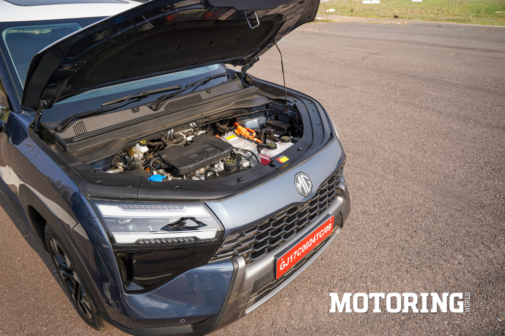
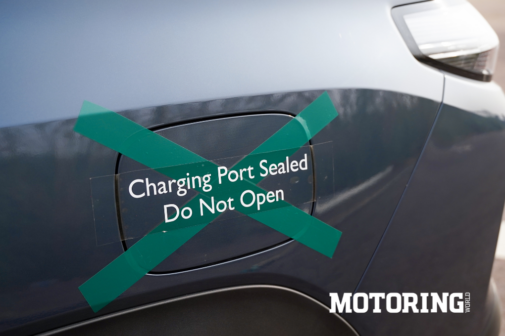
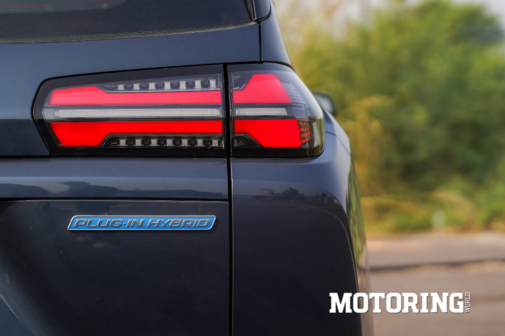
The real party trick is under the bonnet. The Tomahawk PHEV combines a 1.5-litre naturally aspirated petrol engine with an electric motor and a 20.5 kWh battery. A dedicated hybrid transmission with an e-clutch manages the power delivery, and the combined output stands at 198 bhp and 230 Nm. MG claims an electric-only range of over 115 km and a combined fuel efficiency figure of around 40 kpl. With a full tank and a fully charged battery, the claimed range exceeds 1100 km. The battery supports DC fast charging at up to 25kW, with a claimed 30 to 80 per cent charge time of around 35 minutes. You can also use a 3.3 kW AC charger, which takes approximately 7.5 hours for a 10 to 100 per cent charge.
Set off with a fully charged battery and the Tomahawk starts in pure EV mode. There’s a healthy initial shove from the electric motor, and even if you floor the accelerator, the petrol engine generally stays dormant until around 70 kph. That’s particularly useful in the city, where you can get about without waking the engine. Of course, its intervention also depends on the battery’s state of charge and how much power you’re demanding. MG says the hybrid system can operate in six different ways, but you don’t really need to concern yourself with all the permutations. What matters is how well it manages the transitions between them, and that’s where the Tomahawk impresses. The switch between EV and hybrid operation is almost seamless, with no awkward interruptions or sudden changes in power delivery. It feels quick, too, and pulls well even beyond 100 kph. Even with five people on board, there’s enough performance to make overtaking relatively effortless. What’s interesting is that you can cruise at 80-90 kph in pure EV mode, even on the highway, without necessarily waking the petrol engine. Push beyond that, and the engine gradually joins the party, helping maintain speed and replenish the battery before taking over more of the propulsion duties at higher speeds. It isn’t particularly noisy, although you can hear it when it’s working harder. Under the right conditions, covering around 100 km on electric power alone, even at highway speeds, seems entirely achievable.
Here’s where our range challenge gets interesting. Once the battery drops to around 20 per cent, the system tries to replenish it while cruising. However, at speeds of around 100-120 kph, the charging rate reduces. Despite occasional braking and regenerative charging, we didn’t see the battery climb much beyond 25 per cent. This is where your right foot starts to have a significant say in how far the Tomahawk will take you. We maintained an average speed of around 100 kph on the Ahmedabad-Jaipur leg, before setting off towards Delhi the following day. The Jaipur-Delhi stretch involved faster cruising, often at around 120 kph. The result? We managed approximately 830 km on a single tank, falling short of the 959 km required to complete the challenge. Some of the other journalists, however, did manage to make it on one tank. So, is MG’s claimed 1100 km range possible? Yes, but it is clearly sensitive to speed and driving conditions. Keep your cruising speeds in check, make the most of the battery’s electric range and the numbers become more attainable. Drive faster, and that advantage starts to disappear.
While the powertrain deserves plenty of credit, the driving experience isn’t without its flaws. The brakes, for starters, need work. They lack bite, progression and feel, and the initial response can make them feel almost like an on-off switch. The regenerative braking system doesn’t feel particularly natural either, so I’d recommend leaving it in the automatic intelligent mode rather than trying to manage it yourself. The bigger disappointment, though, is the ride quality. The Tomahawk feels busy almost all the time. It keeps moving over undulations, transmits sharp thuds into the cabin and has a tendency to ping-pong over uneven surfaces. Even at lower speeds, there’s too much longitudinal and lateral movement over bumps. It isn’t particularly composed, and that becomes more noticeable over a long drive.
The seats are reasonably comfortable initially, but could do with better cushioning and support. The second-row seat base, in particular, isn’t long enough for taller occupants. After several hours behind the wheel, you begin to feel the lack of support. For an SUV that makes such a big deal of its long-distance range, this is a rather significant miss. Handling is adequate for everyday use, and the steering is light enough to make the Tomahawk easy to manoeuvre. It could do with more feedback, but most buyers will probably be perfectly happy with it. Don’t expect it to enjoy being hustled through corners, though. It doesn’t hold its line particularly well when pushed, with the tyres seemingly contributing to the lack of confidence. The Level 2 ADAS, on the other hand, is nicely calibrated and doesn’t feel overly intrusive.
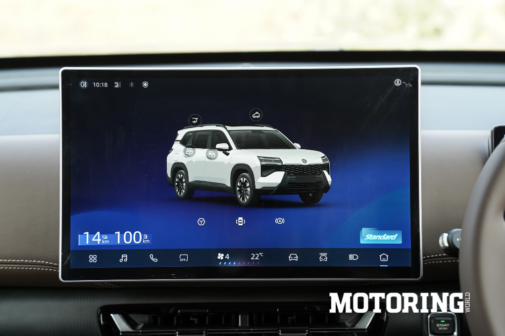
There’s also the matter of the touchscreen. The 15.6-inch unit looks impressive, but it controls almost everything, including the air conditioning. The interface isn’t particularly intuitive, and the absence of a physical volume control is irritating. Having to dive into the screen just to adjust the music isn’t ideal, especially when the front passenger wants to turn it down. A few physical controls would have made the cabin much easier to use.
Ultimately, the Tomahawk PHEV gets a lot right. Its hybrid system is impressively smooth, it has a genuinely useful electric-only range, and the ability to cover long distances without constantly worrying about charging makes it an interesting proposition. Its styling has grown on me, too, but the ride quality and overall comfort are significant shortcomings. The third row could be more accommodating, and the cabin’s touchscreen-heavy approach isn’t ideal either. The 1100 km claim makes for a compelling headline, and our experience suggests it isn’t entirely out of reach, but it does require a certain amount of restraint behind the wheel. More importantly, a long-range hybrid needs to be comfortable enough to make those long journeys enjoyable. The Tomahawk has the powertrain to do the distance; I just wish it had the ride quality to match.