

Aston Martin’s first mid-engined open-cockpit production supercar combines a 4.0-litre twin-turbo V8, three electric motors and active aerodynamics, with deliveries scheduled to begin in 2027.

Some cars are built to get you from one place to another. Others are built to make you forget where you were going in the first place. The new Aston Martin Valhalla Spider belongs firmly in the latter category. Take a mid-engined hybrid supercar, give it 1,064 bhp, remove the roof and let it do 350 kph. Because apparently, travelling at that speed with the wind in your hair is a perfectly sensible way to spend an afternoon.
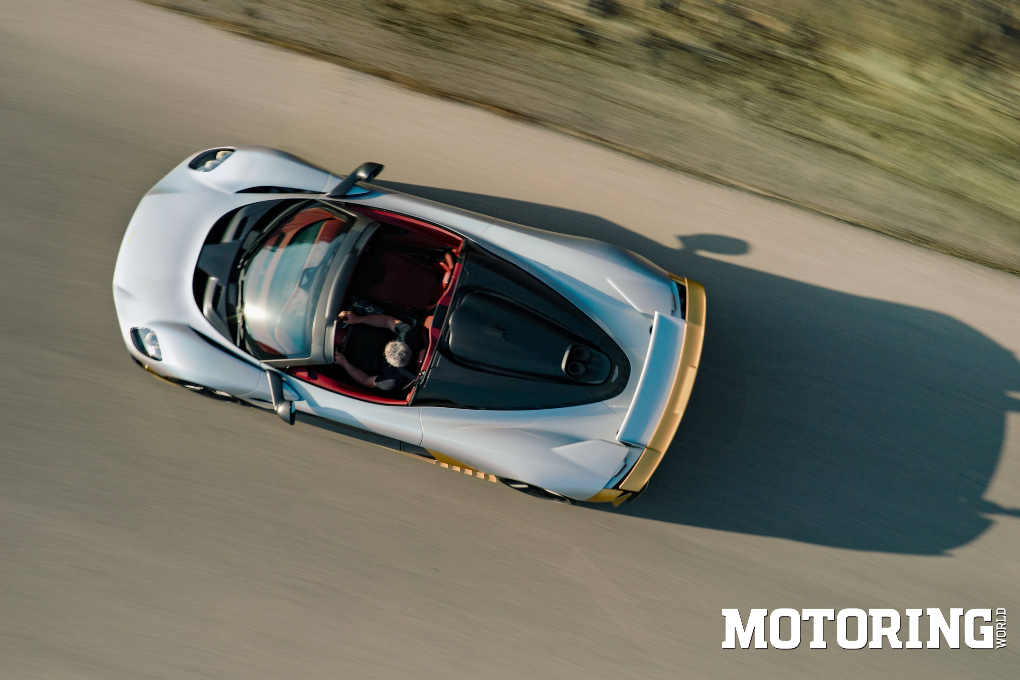
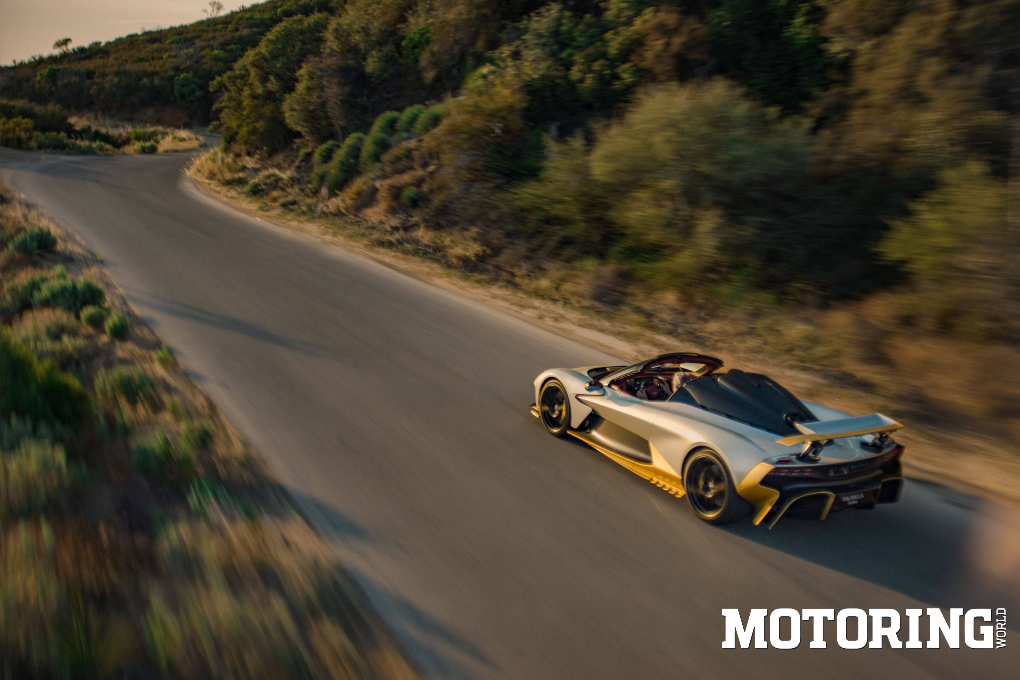
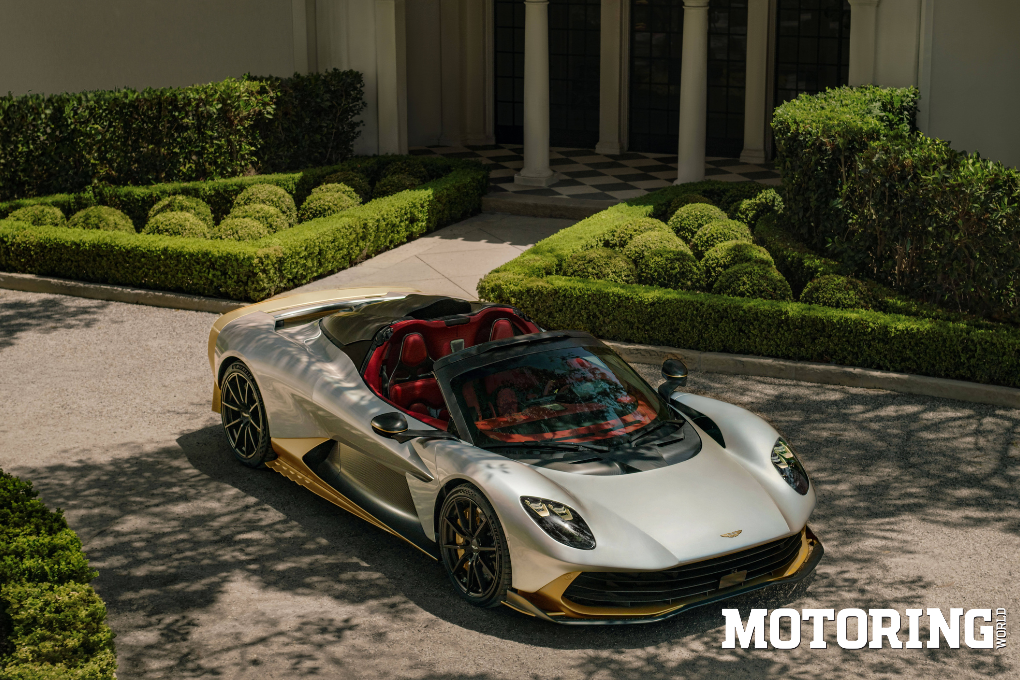
Unveiled on 28 October 2026, the Valhalla Spider is Aston Martin’s first mid-engined, open-cockpit production supercar. It follows the Valhalla Coupe, retaining its formidable performance hardware and active aerodynamic systems while adding the theatre of open-top motoring. Deliveries are scheduled to begin in the third quarter of 2027.
A hybrid heart with a V8 soundtrack
At the centre of the Valhalla Spider is a bespoke 4.0-litre, twin-turbocharged, flat-plane-crank V8 producing 828 bhp. Three electric motors contribute an additional 248 bhp, taking combined system output to 1,064 bhp and 1,100 Nm of torque.
The plug-in hybrid system sends power through an eight-speed dual-clutch transmission, with two electric motors driving the front axle and a third integrated into the transmission to assist the V8 at the rear. There is no mechanical connection between the front and rear axles, allowing the car’s Integrated Vehicle Dynamics Control system to manage torque delivery to individual wheels.
The result is all-wheel drive with electric torque vectoring, designed to improve agility and stability while keeping the driver connected to what the car is doing.
Aston Martin quotes a top speed of 350 kph, whether the roof is fitted or removed. The technical specification lists a predicted 0-100 kph time of 2.5 seconds, although the launch announcement quotes 2.9 seconds. The final production performance figure will therefore be worth watching.
Open air, full attack
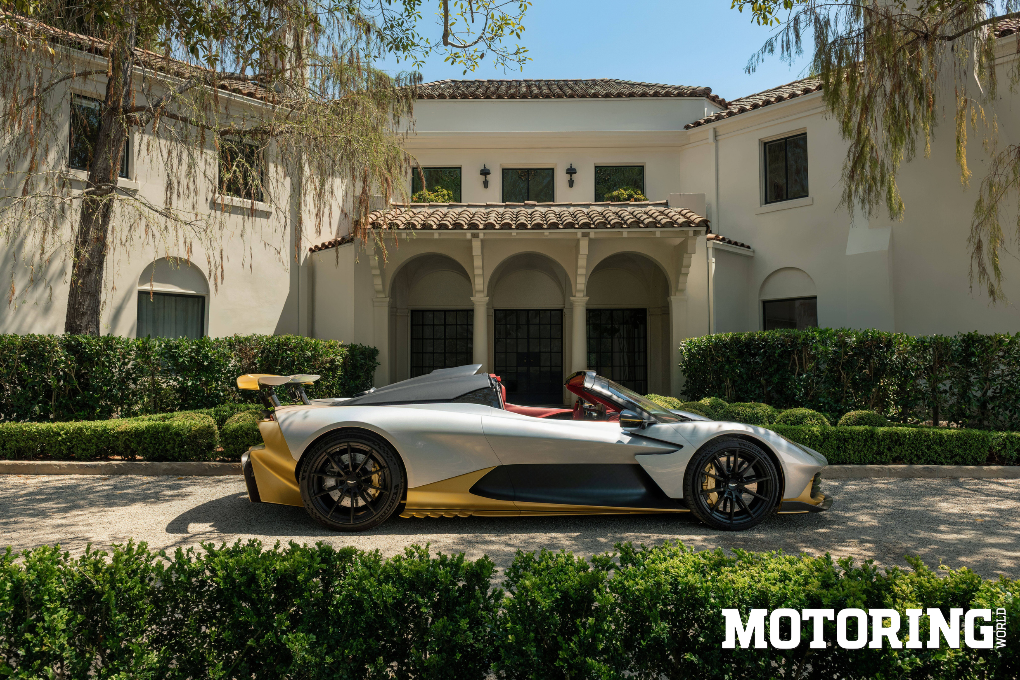
The Spider gets a removable, stowable black fabric roof as standard in most markets. With it fitted, the car can reach speeds of up to 200 kph. An optional carbon-fibre hardtop allows drivers to access the full 350 kph top speed with the roof in place. In the United States, the carbon-fibre hardtop is standard.
Naturally, removing the roof involves more than simply giving the scissors to the design department. Aston Martin has developed a dedicated wind deflector to manage airflow around the open cockpit, directing air away from occupants while helping feed cooling air towards the engine intake. The rear snorkel has also been reprofiled and raised by 35mm.
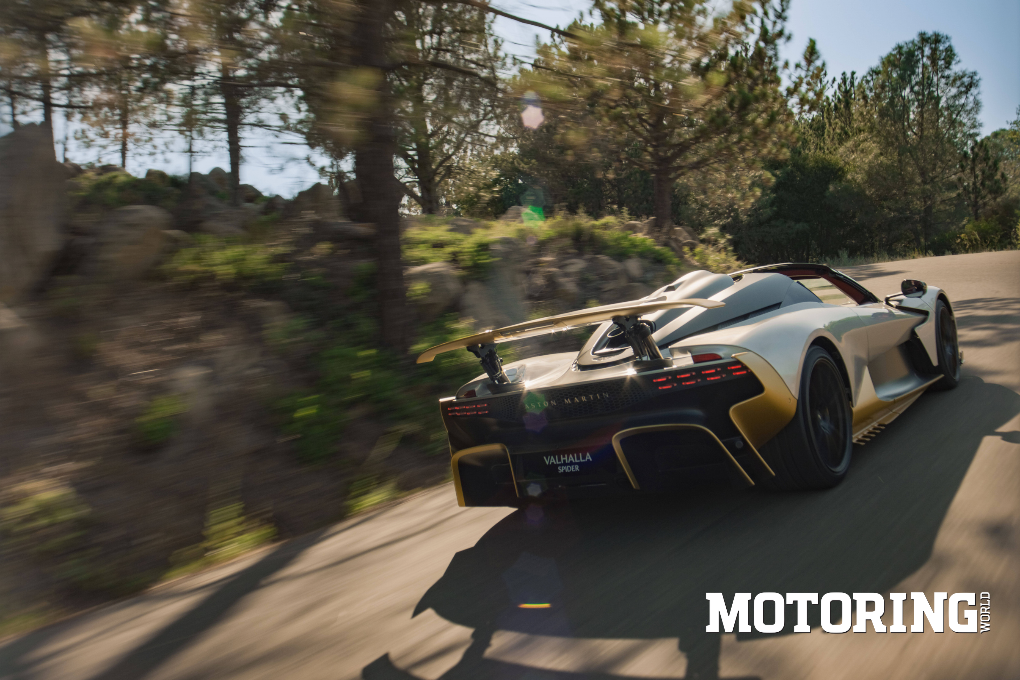
The deflector folds into three sections and can be stored in new 15-litre compartments in the sills. Revised active aerodynamics and electronic stability control calibrations help preserve the car’s balance in both roof-on and roof-off configurations.And because this is a supercar that clearly has no interest in doing things by halves, it can generate more than 600kg of downforce with the roof fitted.
Formula 1 thinking, road-car drama
Aston Martin Performance Technologies, the consultancy arm of the Aston Martin Aramco Formula 1 team, has contributed to the Spider’s dynamics, aerodynamics and materials development. The car is built around a carbon-fibre monocoque with aluminium front and rear subframes, designed to deliver structural stiffness without compromising occupant space.
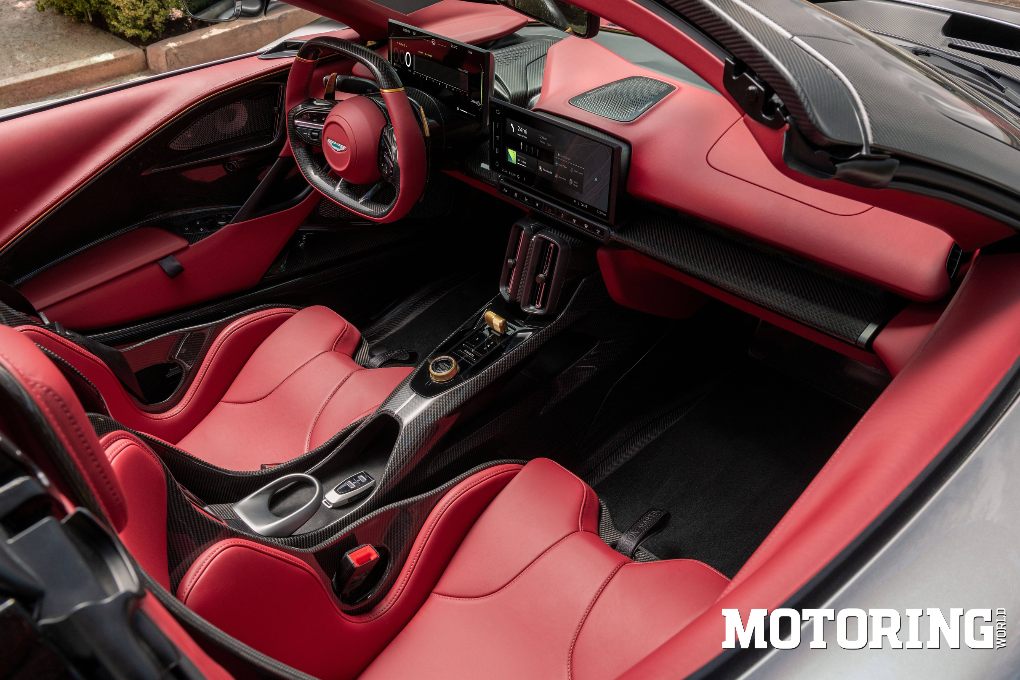
The carbon-fibre dihedral doors remain, now with refined opening kinematics and frameless glass. A new carbon-fibre Touring Seat comes as standard, although buyers can retain the Coupe’s original carbon-fibre seat at no extra cost if they prefer more support during enthusiastic driving.
Four driving modes, Sport, Sport+, Race and EV, allow the car’s drivetrain, steering and chassis systems to adapt to different demands. Carbon-ceramic brakes and forged alloy wheels, measuring 20 inches at the front and 21 inches at the rear, complete the serious hardware.
Theatre, with the roof off
The Valhalla Spider is not simply a Coupe with a removable lid. It is an attempt to preserve the original car’s road and track capabilities while adding another dimension to the driving experience.
With 1,064 bhp, 1,100 Nm and a 350 kph top speed, it certainly has the numbers. But the real appeal may be the prospect of hearing that flat-plane-crank V8 without a roof between the soundtrack and its audience.
Deliveries begin in Q3 2027. Until then, the Valhalla Spider gives us something rather wonderful to look forward to: a supercar that believes the sky should be part of the specification.