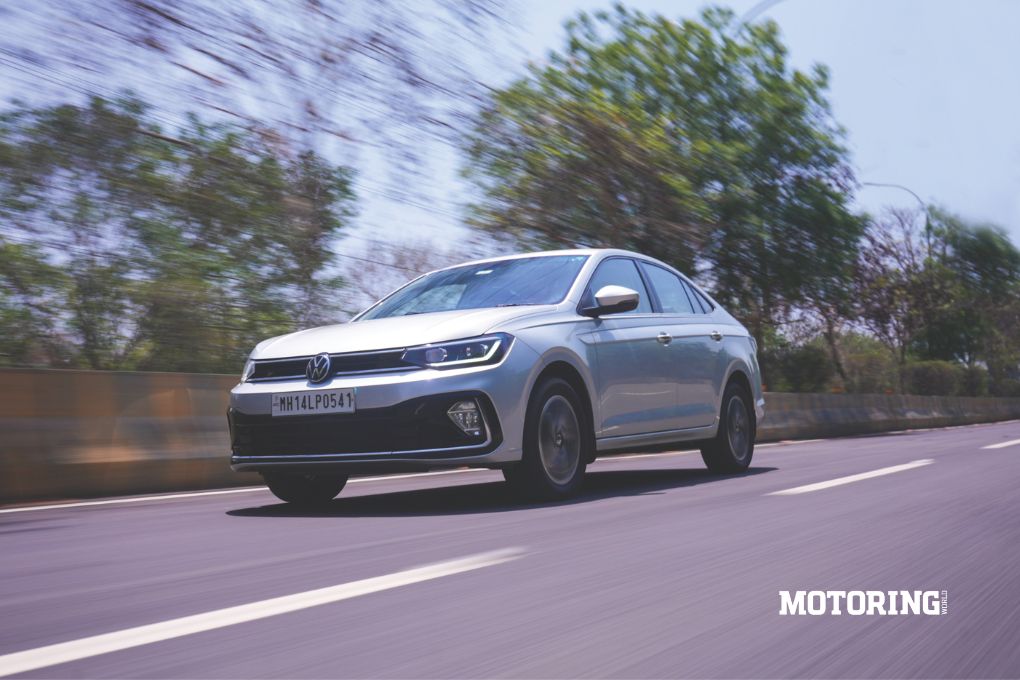


Delhi at 9 am is not a city so much as a collective act of stubbornness. Every road is a negotiation, every gap in traffic a philosophical question. I was threading the Volkswagen Virtus through the usual morning standstill on the outer ring road when my phone buzzed — a colleague, with a gift for maximum information delivered in minimum words.
“Assignment,” she said. “I’m sending you a pin. Be there.”
“What kind of assignment?”
“The endurance kind. You’ll see.”
The call ended before I could ask anything useful. I had a destination and a vague concept. The Virtus, at least, seemed unbothered.
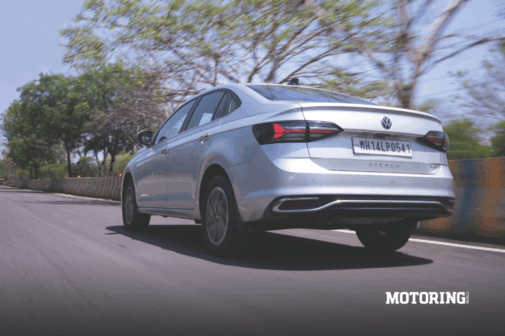
That quality — unbotheredness — is something you notice quickly in this car. In stop-and-go traffic, it doesn’t labour or lurch. It finds a rhythm and holds it, the 1.0-litre TSI pulling cleanly from low speeds without the fuss you might expect from a turbocharged engine in slow conditions. The ride is settled, the cabin insulated enough from the chaos outside that you can hear yourself think. For a car positioned as an everyday sedan, it carries itself with a quiet composure.
As Delhi thinned into the outskirts, that composure revealed a second dimension. On the open road, the Virtus stops being merely sensible and becomes something more. The steering sharpens, the engine finds its stride, and what felt like a capable city car turns out to also be a genuinely enjoyable drive. It’s the kind of dual character that doesn’t announce itself; you discover it gradually, which is perhaps the point.
The pin led me to an open ground on the city’s edge. Standing in the middle of it, in training clothes and looking entirely unimpressed by the Delhi heat, was Arif Khan.
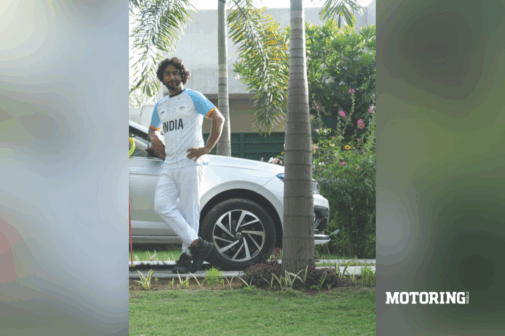
If you follow Indian sport beyond its most visible forms, you’ll know the name. Arif is the only Indian alpine skier to have competed at the Winter Olympics (Beijing 2022, Milan 2026) and has been carrying the flag for a discipline that most of his compatriots have never encountered, let alone attempted. He started skiing at four. He was competing internationally at sixteen. He’s a dual gold medallist from the 2011 South Asian Winter Games. He’s been doing the hard,
largely unwitnessed work of a sport without infrastructure, and without much of an audience — and doing it for decades.
My colleague, I was beginning to understand, had a sense of humour about
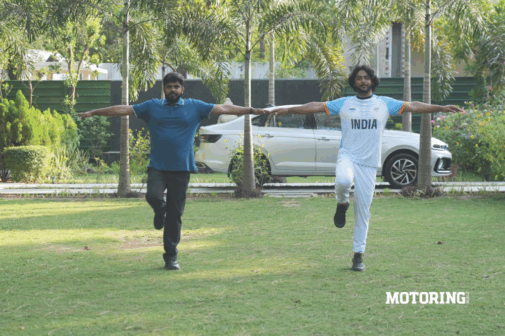
what constituted an ‘endurance assignment. Arif’s training session was not what I had imagined. There were no machines, no weights, no elaborate regimens. There was a field, the sun, and a series of exercises so fundamental — lunges, laps, controlled breathing, finding and holding a rhythm — that they initially seemed too simple to be serious.
‘Endurance isn’t built in one big effort,’ Arif said, when I made the mistake of
implying as much. ‘It’s built in thousands of small controlled ones.’
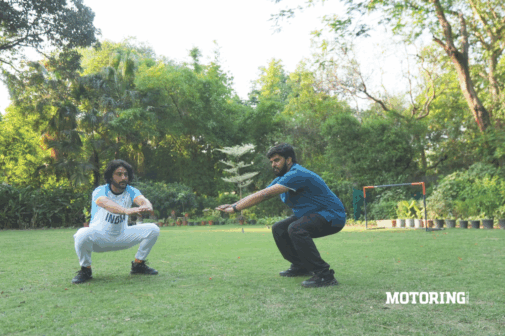
This is the insight that takes most people years to absorb and that elite athletes understand almost instinctively. Performance that collapses under sustained pressure isn’t really performance; it’s more of a highlight reel. What Arif has spent his life developing (the capacity to hold form when everything
in his body is asking him to stop) is a different thing entirely, and considerably
harder to build.
Watching and learning from him, I realised that Volkswagen built the Virtus on a similar philosophy. For it to have the perfect handling and comfort balance, rigid engineering shines the brightest here. I reminisced about the corners I attacked
with gusto in the Virtus on the way over to the training location, and the lateral stability that it offered shows the years of hard work Volkswagen has put in fine-tuning the chassis of the Virtus and its MQB-A0 platform.
By the time we finished, I was considerably more tired than I had expected from what had appeared to be a modest workout. Arif looked like he could go again.
Walking back to the car, I found myself briefly thinking about the Golf GTI. Volkswagen has insisted that performance and practicality are not mutually exclusive. The Golf GTI has been making this case since 1976: a car that can hustle on a back road and then drive you to work without complaint. It’s the template for what Volkswagen calls the ‘everyday athlete,’ and it’s the DNA that runs through the Virtus.
The parallel with Arif is not a stretch. Both are built for sustained output rather than a single impressive moment. The Virtus will not exhaust itself performing. It is engineered, in the specific Volkswagen tradition, to do the same thing well on the hundredth occasion as it did on the first.
Arif’s performance in his sport may be limited to a few days of the year, but he has to train every day to be able to perform to his maximum potential when required. Similarly, you may call upon the Virtus’ performance only on select days, but Volkswagen has ensured that you get that performance any time you need it, for as long as you need it. Be it scorching heat, freezing cold, or a heavy downpour, the Virtus is ready for any weather or terrain you encounter, every
single day.
My colleague called as I was driving back into the city.
‘Good start,’ she said. ‘More to come. I’ll send coordinates.’
Watching and learning from him, I realised that Volkswagen built
the Virtus on a similar philosophy I didn’t push for details. Some things
reveal themselves on their own schedule.
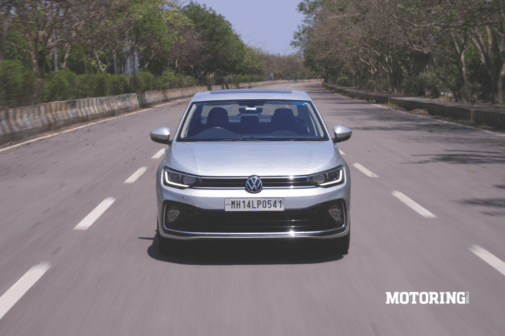
I pulled back into the Delhi traffic — horns, heat, the usual theatre — and the Virtus settled into its rhythm without complaint, the same car it had been that morning.
That, as Arif Khan would probably tell you, is exactly the point.