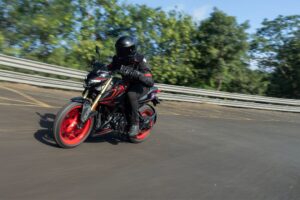
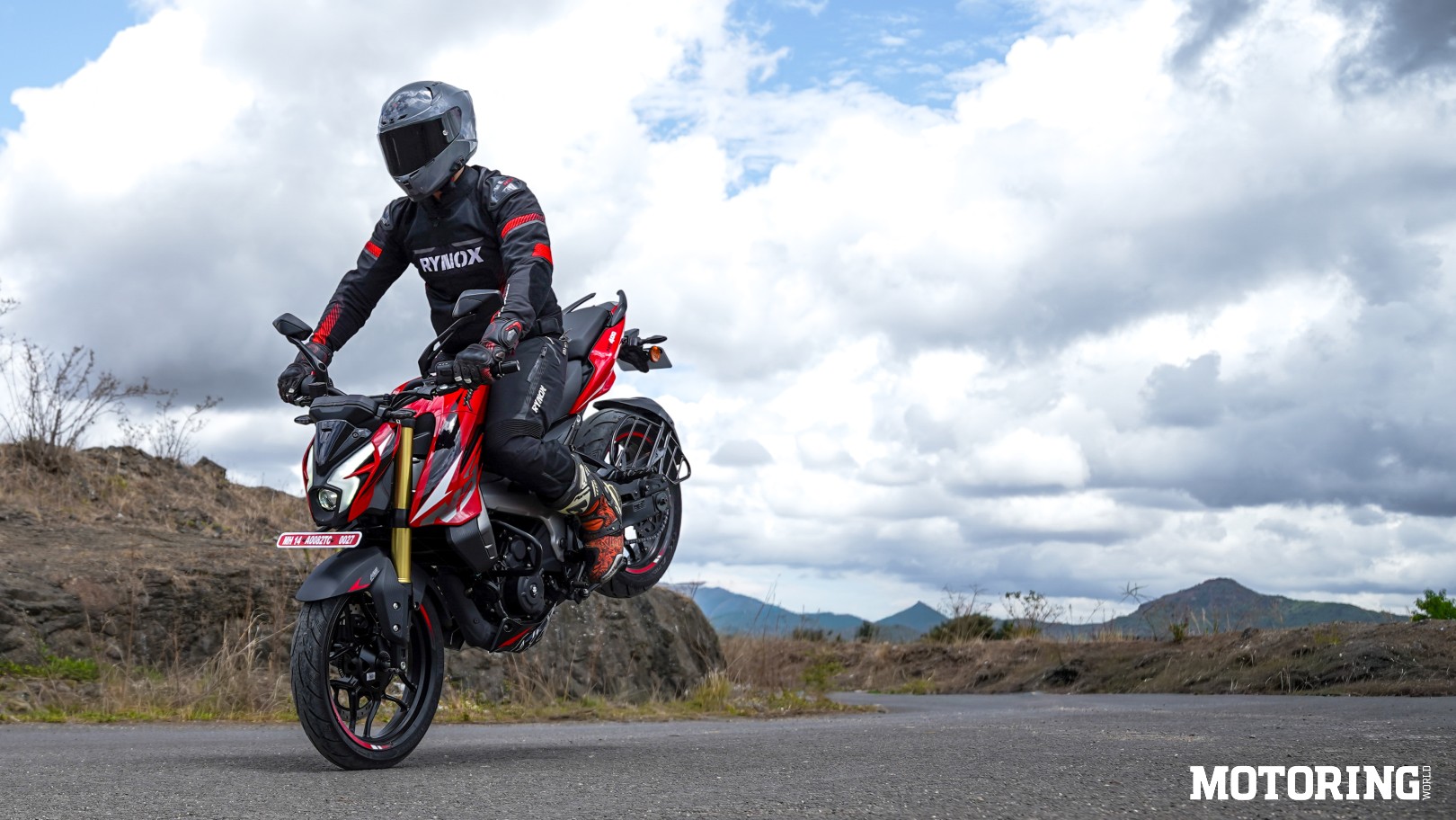


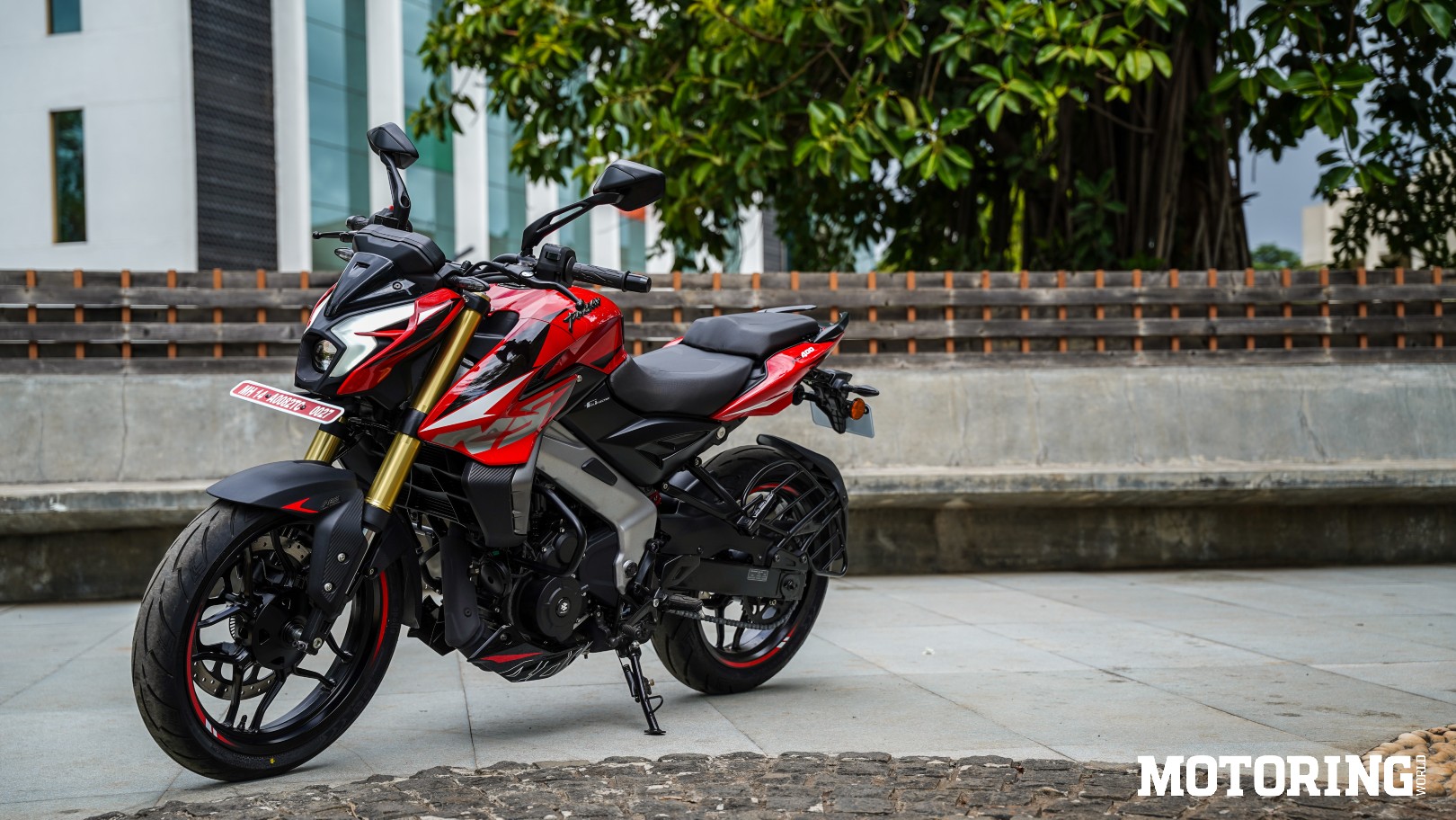
Two years ago, Bajaj introduced its biggest Pulsar yet — the NS400z. Within two months, it went on to become the highest-selling 400cc motorcycle, but that didn’t stop the Indian two-wheeler giant from updating this NS with more performance, better brakes and tyres, and improved fuelling. But with the new GST norms punishing two-wheelers above 350cc with higher tax, Bajaj chose to redo the Pulsar with a 349cc mill.
And as we have seen with other bikes from Bajaj’s stable, the downsized engine was created by reducing the stroke — 4 mm in the NS400z’s case. Just like what the company did with other bikes, the performance remained as close to the previous model as possible. So, the 40.4 bhp of peak power is around 2 bhp down from last year’s model, but almost 1 bhp up from the original model.
Yes, the shorter stroke also means it loses out a bit on low-end grunt, but to counter that, the crank and rotor inertia have been reworked with the help of a new crankshaft. Though there’s a drop by 0.12 kgm and the peak torque arrives 1000 rpm later, the engine makes up for it by feeling more rev-happy than before. More importantly, the 349cc engine still feels like it belongs in a Pulsar. There’s a slight push at 4000 rpm, but after 6000 rpm, the engine rushes to the redline with an intense urgency.
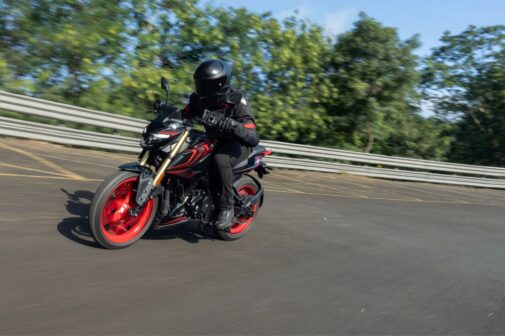
This urgency is complemented by an equally capable quickshifter. Whether it is shifting at the redline or while commuting, the quickshifter never disappoints. And that’s also what’s making up for the dip in performance — the engine is always ready to give it all. In fact, the engine felt more refined than before.
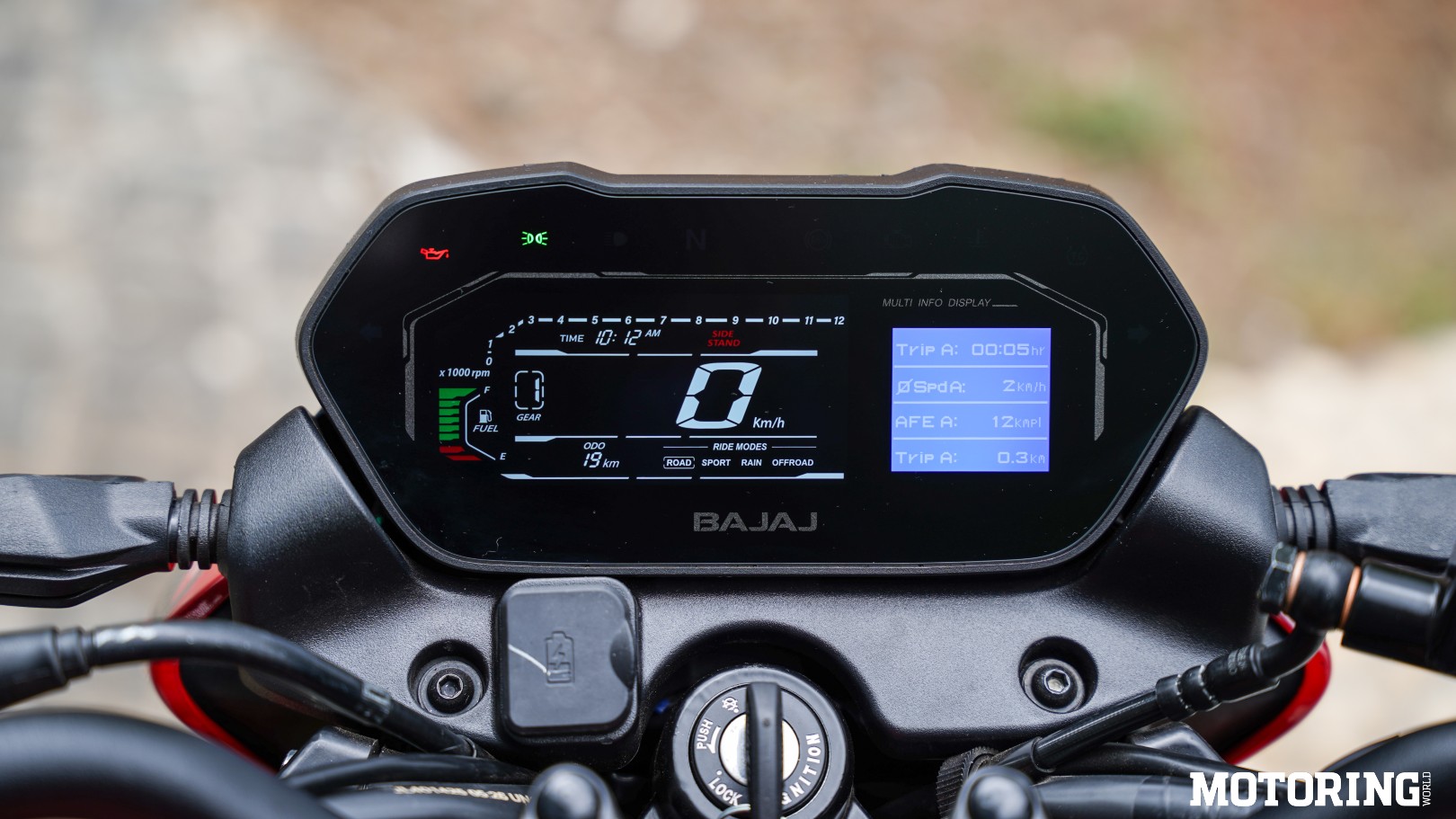
Of course, this engine is cradled in the same beautiful perimeter frame as before with the same cycle parts. So, the Pulsar is still as eager as before to attack corners and dart through traffic. In fact, if you hopped off the previous NS400z and onto this one, you would struggle to tell the difference. The steering remains quick without feeling nervous, and the chassis continues to strike a lovely balance between stability and agility.
Out on the highway, the NS feels planted even at triple-digit speeds, while in the city, its relatively compact dimensions and wide handlebar make it surprisingly easy to hustle through gaps. It still feels every bit like the hooligan of the Pulsar family.
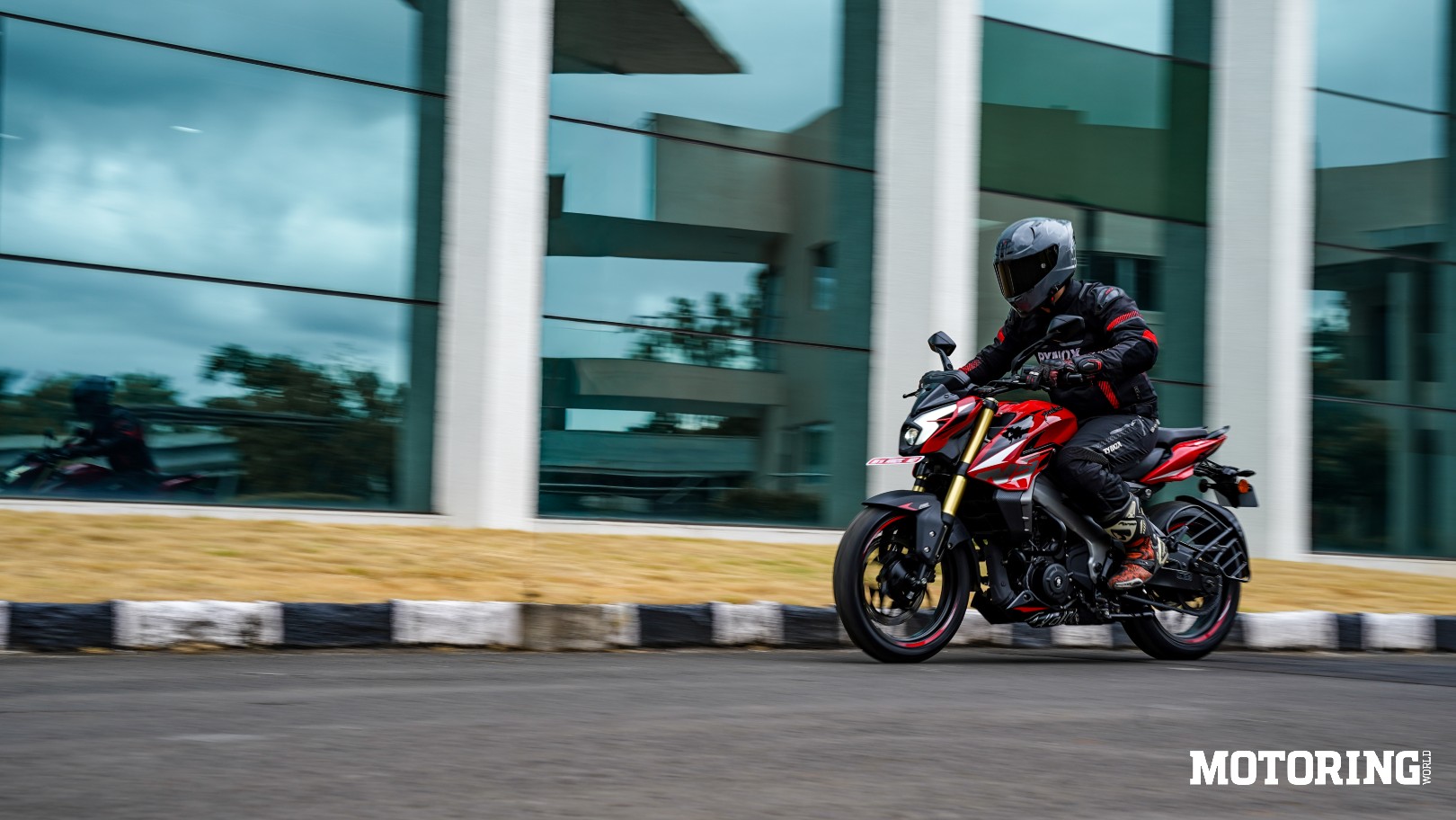
The suspension setup remains unchanged as well, and that’s mostly a good thing. The USD fork offers enough support for spirited riding while still dealing with everyday road imperfections competently. The monoshock, too, does a commendable job of keeping the bike settled through fast corners. If there’s one area that could have been improved, it is the rear shock’s rebound damping. It tends to recover a touch too quickly after sharper bumps, which occasionally unsettles the rear end. That said, it is hardly a deal-breaker and something most riders may never notice.
The braking setup is carried over too, and frankly, there was little reason to change it. The bite is strong, lever feel is excellent, and the overall calibration inspires confidence. Whether you are scrubbing off speed before a corner or dealing with an unexpected obstacle in the city, the brakes deliver exactly the reassurance you’d want from a motorcycle producing over 40 bhp.
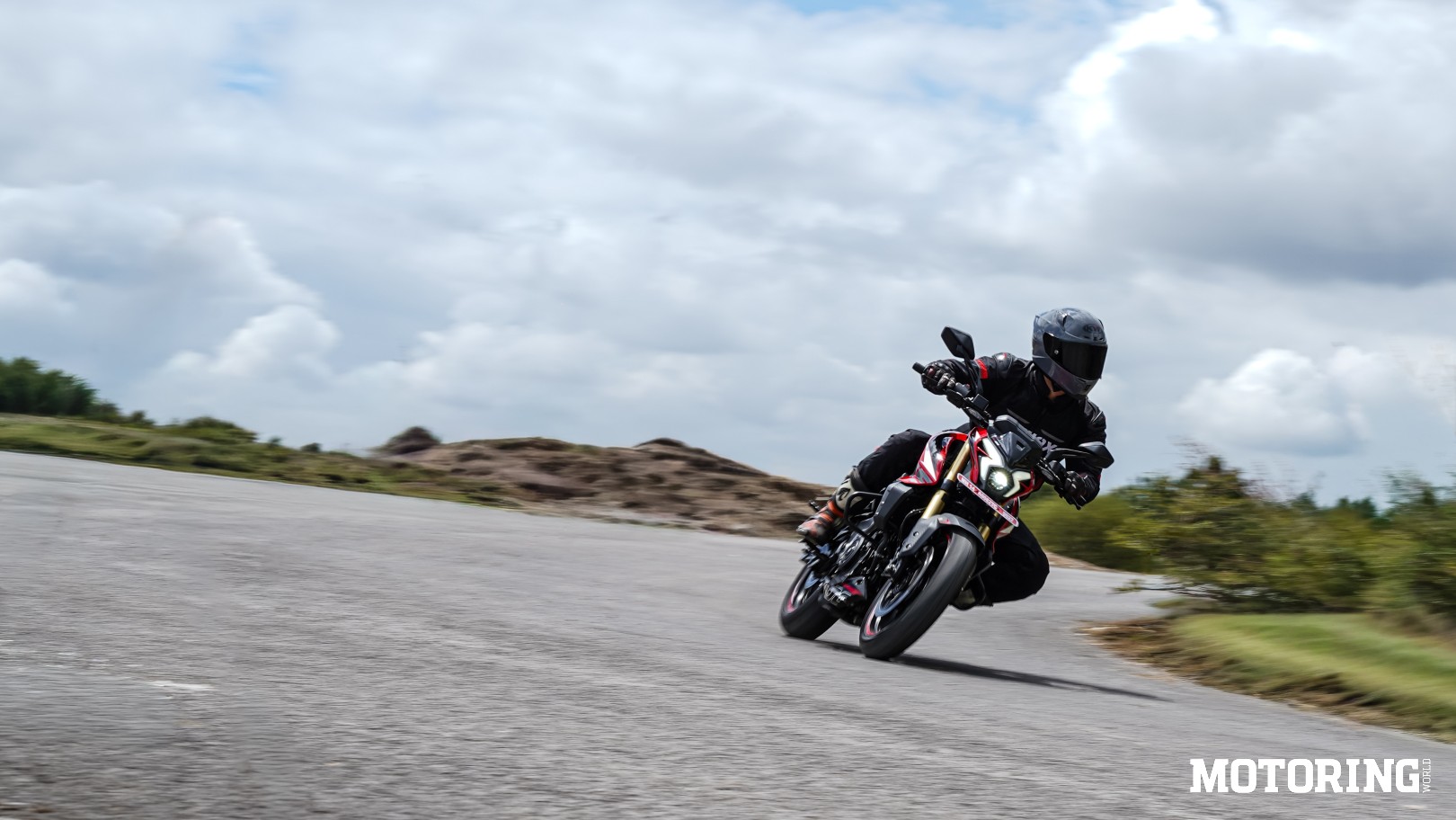
Aiding matters further are the Apollo Alpha H1 tyres. They offer impressive grip levels and, more importantly, the confidence to exploit them. The harder you push, the more these tyres seem to encourage you to keep going. Combined with the capable chassis, they help the NS400z feel far more sophisticated than its price tag would suggest.
Speaking of sophistication, refinement has taken a noticeable step forward. The engine feels smoother than before, with only a mild buzz filtering through the footpegs at certain engine speeds. It is never intrusive and certainly less pronounced than on the previous motorcycle. The fuelling, too, remains clean and predictable, making the NS just as happy crawling through traffic as it is chasing the horizon.
And that brings us to the big question: has downsizing hurt the Pulsar’s image? The answer is no.
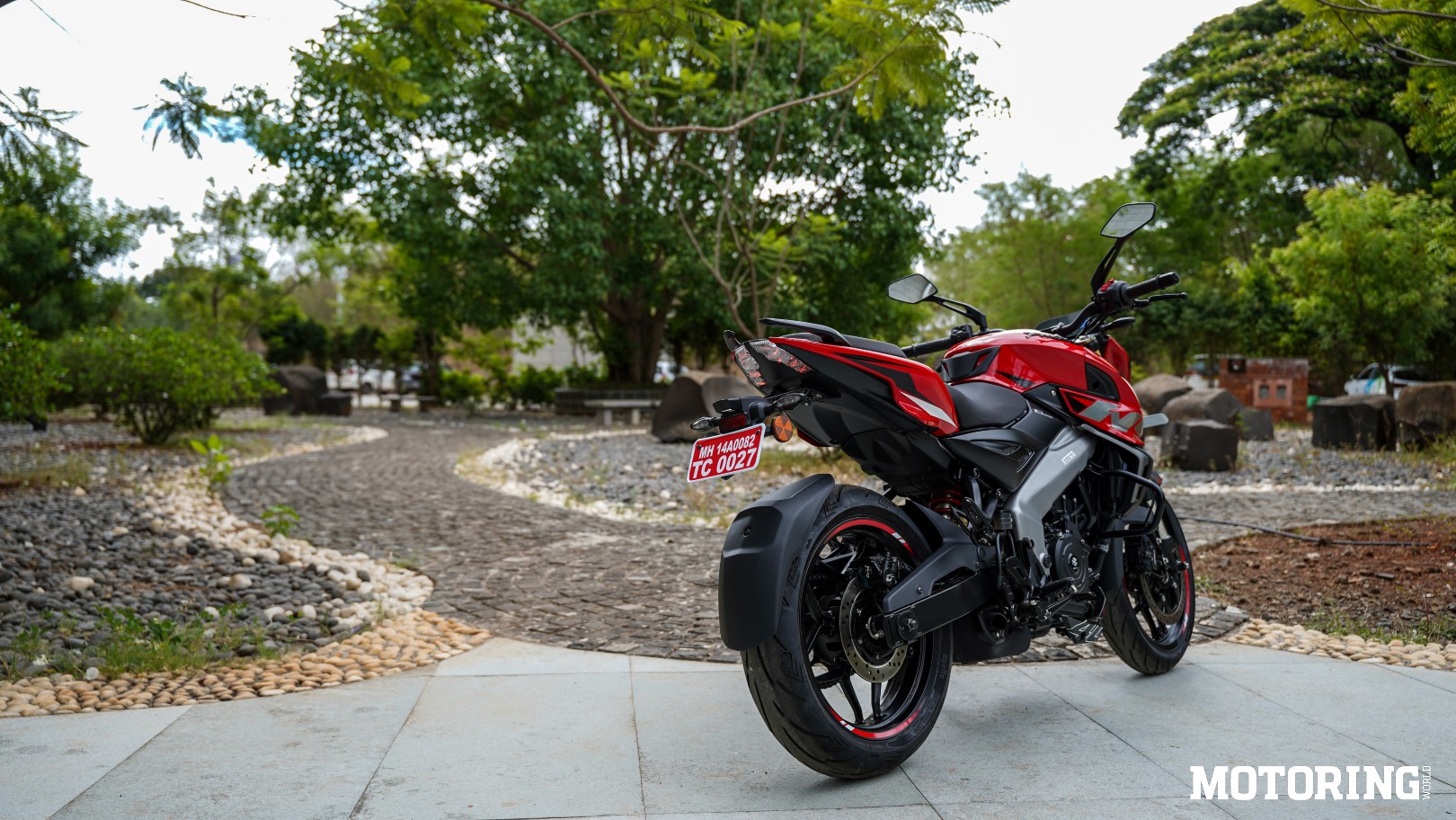
Yes, the spec sheet reveals a slight reduction in displacement, a small drop in torque and marginally slower acceleration figures. But out on the road, the differences are surprisingly difficult to detect. The claimed 0-60 kph sprint remains unchanged at 2.8 seconds, while the 0-100 kph run is slower by just 0.3 seconds. More importantly, the revised engine’s willingness to rev means it never feels short of performance. If anything, it feels more eager and more refined than before.
What Bajaj has achieved here is quite clever. Faced with tax regulations that would have significantly increased the motorcycle’s price, it has managed to engineer a workaround without diluting the essence of the product. At ₹ 1.82 lakh, the NS400z effectively saves buyers up to ₹ 30,000 compared to what a 400cc motorcycle would have cost under the revised GST structure.
The result is a motorcycle that continues to offer the same blend of performance, practicality and entertainment that made the original NS400Z such a hoot. Bajaj did what it had to do, but crucially, it did so without compromising either the Pulsar badge or the incredible value proposition that comes with it. And in a market where every rupee matters, that’s perhaps the biggest win of all.