

GLEN
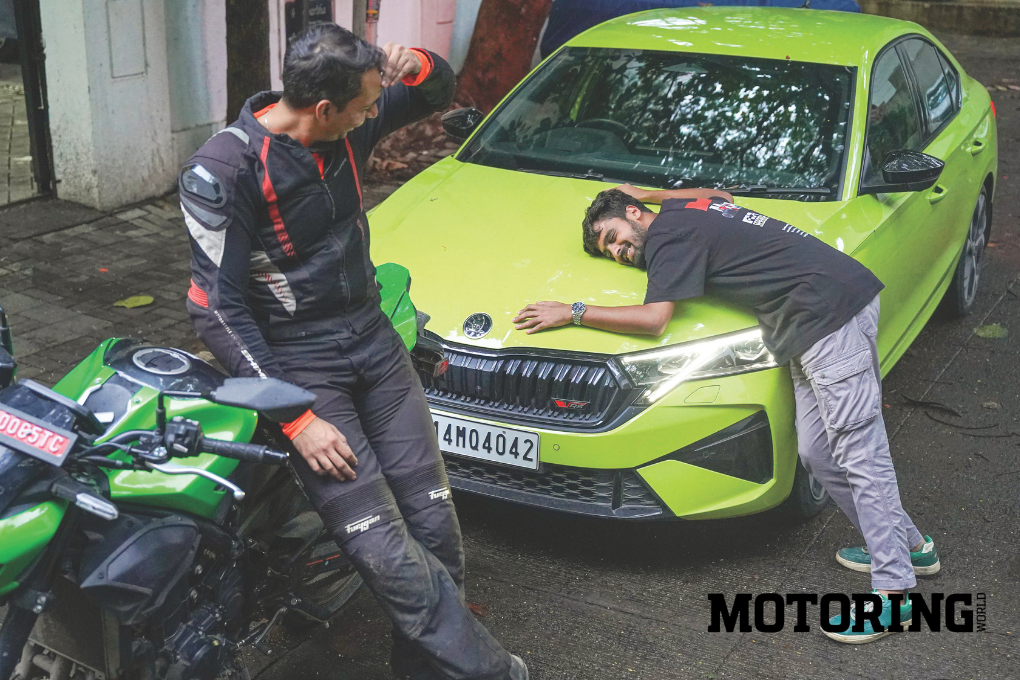
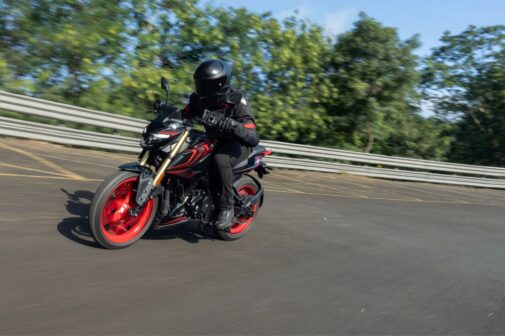
The term ‘enthusiast machine’ gets thrown around rather too freely these days. Add another few horsepower, bolt on a louder exhaust, throw in a couple of drive modes and suddenly every new launch is being hailed as the next great driver’s machine. Real enthusiasts tend to be a little harder to convince; more often than not, what wins them over isn’t headline performance, but proper engineering. That’s exactly where the Skoda Octavia vRS and the Kawasaki Z900 have built their reputations. They’ve become icons by getting the fundamentals right. Both pair smooth, characterful four-cylinder engines with forgiving chassis and enough tuning potential to keep aftermarket specialists busy for years. And perhaps most importantly, they both happen to look rather good in green. Given the sabbatical I’d taken from motorcycles, tossing me the keys to the wasnt eactl a difficult assignment. I’ve always had a soft spot for naked bikes. They’re light, uncomplicated and, unlike most supersports machines, don’t leave you hunting for a physiotherapist after every ride.
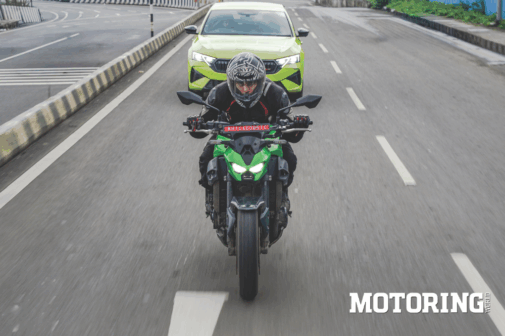
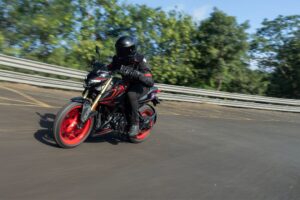
The old Z800 remains one of my favourite motorcycles. It wasn’t the lightest or the sharpest handling, but that engine more than made up for it. Silky smooth at everyday speeds, wonderfully tractable around town and gloriously eager once the rev counter swept past 8,000 rpm, it was the sort of engine that encouraged you to keep riding long after you should have headed home. The downside was its weight. Around a series of tight bends or even during something as mundane as a U-turn, you were always reminded that it wasn’t exactly a featherweight. The Z900 addressed almost all of those shortcomings. It arrived lighter, more powerful and considerably sharper, while adding electronics that enhanced the riding experience rather than constantly reminding you they were there.
MANDAR
Every enthusiast has a car that shaped their idea of performance long before they could afford one. For me, it was always the Skoda Octavia vRS. You’d spot one on the road and spend the next ten minutes talking about it. It was fast enough to embarrass cars wearing more prestigious badges, practical enough for a family holiday to Mahabaleshwar and discreet enough to disappear into an office car park Few performance cars have managed that balancing act quite so convincingly. The story stretches back more than two decades. The original Octavia vRS introduced Indian buyers to accessible turbo-petrol performance, before the Laura vRS raised the bar once again. Then came the Mk3, followed by the limited-run vRS 230 and 245, cars that disappeared almost as quickly as they arrived and have since become highly sought-after among enthusiasts. Now, the fourth generation car returns carrying more power than ever before, and plenty of expectation along with it.
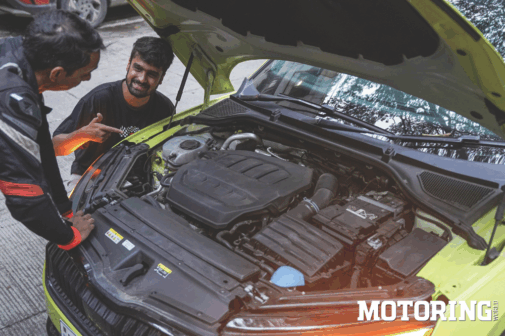
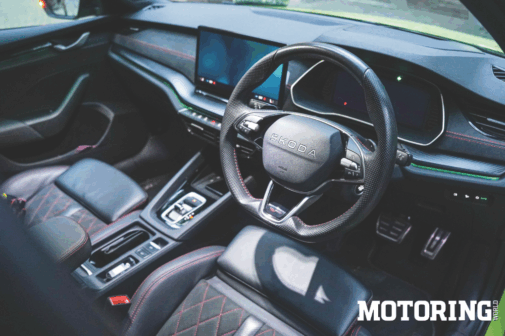
A large part of that reputation sits beneath the bonnet. The EA888 turbo-petrol four-cylinder has become one of the Volkswagen Group’s defining engines, powering everything from Golf GTIs and Golf Rs to Audi S3s and Cupras. Mention the engine code at any cars-and-coffee meet and the conversation usually turns to tuning, bigger turbos and dyno charts. Its popularity isn’t simply down to outright performance, but how The Octy’s cabin is a lovely place to spend time in willingly it responds to odifi cations Even in standard form, though, it’s easy to understand why it’s so highly regarded. Select Sport mode, mash the throttle and the response is immediate. Boost builds early, torque arrives in abundance and the engine gathers speed with an effortlessness that almost disguises how quickly you’re travelling. Rather than delivering one dramatic surge before fading away, it pulls cleanly to the red line with a broad spread of power that’s equally satisfying on a fast road or an empty expressway on-ramp.
The soundtrack won’t match the naturally aspirated engine waiting in Glen’s Kawasaki, but the induction growl, crisp DSG upshifts and faint whistle from the turbo provide more than enough character to remind you there’s something special beneath the bonnet.
GLEN
Mandar’s absolutely right about one thing: Mamba Green is the colour to have. It suits the vRS perfectly. But the similarities between these two machines run much deeper than the paintwork. The Z900 has long been the gateway into big-capacity performance motorcycling. Riders graduate through smaller KTMs, Hondas or Yamahas, and before long there’s usually a Z900 sitting in the garage. The engine is central to that appeal. The powerband is wonderfully broad, fuelling is almost faultless and the tractability borders on the ridiculous. Fifth gear at 20 kph? It’ll pull away without complaint, making you wonder whether someone’s quietly slipped a diesel engine under the tank. Then you open the throttle. Past the mid-range, the character changes completely. The induction howl hardens, the eha st finds its voice and all 120-odd horses arrive with the smooth, relentless rush that only a naturally aspirated inline-four can deli er ike the , its also an engine that rewards enthusiastic owners freer- owing ehaust, revised fuelling or a piggyback is s all enough to unlock another layer of performance, without compromising what made it so enjoyable in the first place.
What the Skoda can’t quite match, though, is the soundtrack. The EA888 has a pleasing induction growl, and the DSG punctuates each upshift with a satisfying crack, there’s something addictive about a Japenese inline-four charging towards the red line. Few engines, on two wheels or four, sound quite so eager.
MANDAR
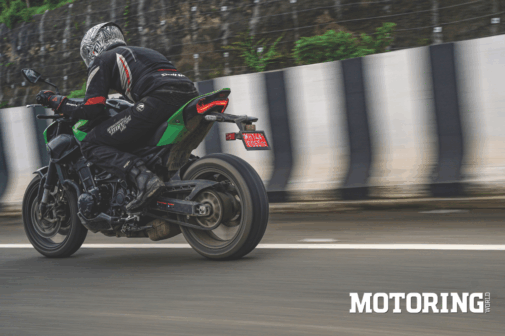
I’ll happily concede that one. The Z900’s soundtrack is difficult to argue with. But if were talking about everyday performance, the vRS has an ace up its sleeve. It delivers its pace with such polish that almost anyone can enjoy it. You don’t need to be chasing tenths on a racetrack or searching for the perfect stretch of mountain road. Whether you’re threading through traffic, joining a fast highway or simply oertaking slower traffic, the EA888 always seems to have exactly the response you’re looking for.
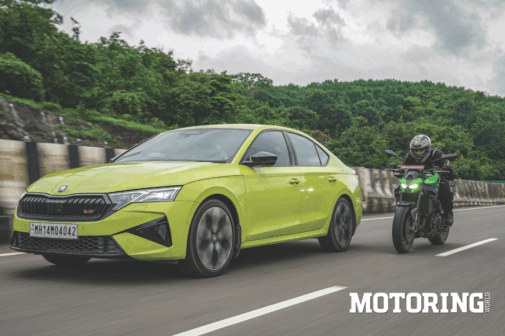
That accessibility has alwas been one of the vRS’s greatest strengths. It never feels intimidating, yet there’s enough depth to keep keen drivers entertained. The chassis is composed without being overly stiff, the steering is accurate and confidence-inspiring, and the front axle hangs on remarkably well considering how much torque is being channelled through it. Push harder and you can feel the electronic differential quietly working away, helping the car tighten its line rather than surrendering to understeer.
Like the Kawasaki, it’s a machine that flatters rather than frightens. It encourages you to drive well instead of constantly reminding you how much performance is in reserve.
GLEN
And perhaps that’s the real connection between these two. Neither chases outrageous numbers or headline-grabbing gimmicks. They simply focus on delivering an experience that leaves you wanting one more corner, one more overtake or one more excuse to take the long way home.
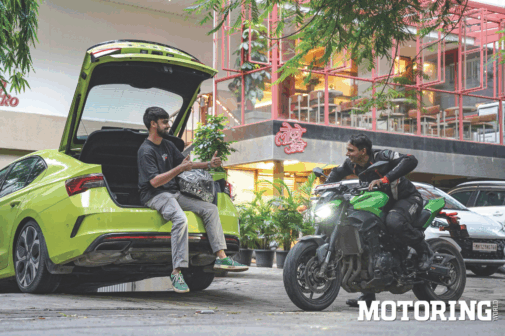
Yes, the Kawasaki would almost certainly disappear into the distance in a drag race all , d rather not attempt a family holiday on it when the Skoda is sitting nearby. Fortunately, nobody shopping for either is making that decision.
Both have earned loyal followings because they understand that performance isn’t measured purely by horsepower. It’s about how confidently you can use what you’ve got, how naturally the machine responds to your inputs and how
often it persuades you to go for an unnecessary drive or ride simply because you can.
The Octavia vRS and the Z900 arrive at that destination in very different ways, but they share the same philosophy. Neither tries too hard. Neither overwhelms you with technolog or theatre nstead, the get the fundamentals right and let the driving or riding do the talking. That’s probably why both have remained enthusiast favourites for so long — because every time you climb into one or throw a leg over the other, they remind you why you became an enthusiast in the first place.