

There are few better places to test a luxury car’s ability to make you feel insulated from the world than Mumbai. The city has a talent for putting traffic, noise, heat, dust and several thousand two-wheelers within inches of your face, so when a BMW i5 Long Wheelbase arrived at our office for 24 hours, the timing was almost perfect. We had somewhere to go, very little time to get there and a car that, at first glance, appeared to have been designed specifically to make the outside world someone else’s problem.
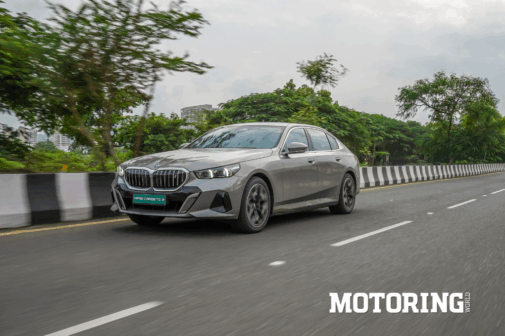
The i5 LWB is BMW’s latest attempt to occupy another corner of India’s increasingly crowded luxury market. BMW has been doing rather well here, with sales growing and its electric cars finding a surprisingly receptive audience. The recipe for this one is straightforward: take the familiar 5 Series, stretch it for India and replace the engine with an electric motor. The result is a car that sits somewhere between executive saloon and electric limousine. It costs Rs 79.60 lakh (ex-showroom) in both eDrive35L M Sport and First Edition guise. The latter is limited to 99 units and has already sold out. So if you want one, you’re essentially looking at the regular car, which is probably no great hardship.
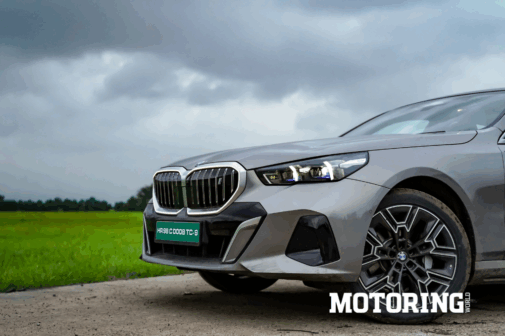
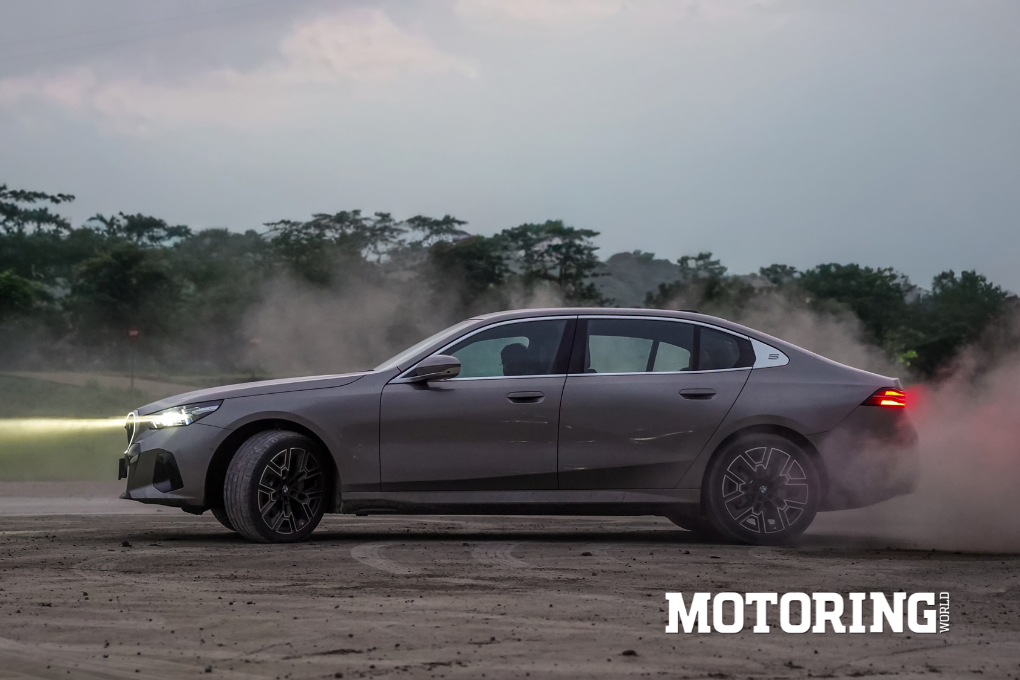
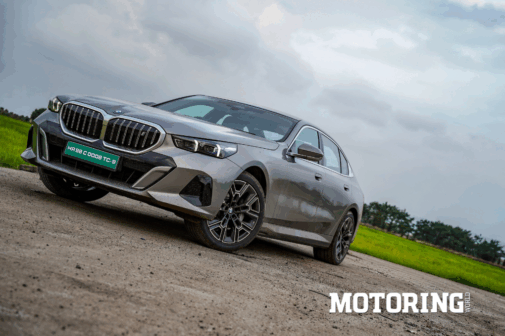
Our car was finished in Oxide Grey Metallic, one of those colours that refuses to make up its mind. Under some lights it looked grey; under others, almost champagne or gold. Parked outside our office alongside several conventional 5 Series, the differences weren’t immediately obvious. The long body, familiar kidney grille and clean surfacing give away its family connection, but there is something subtly different about the i5; it looks more substantial.
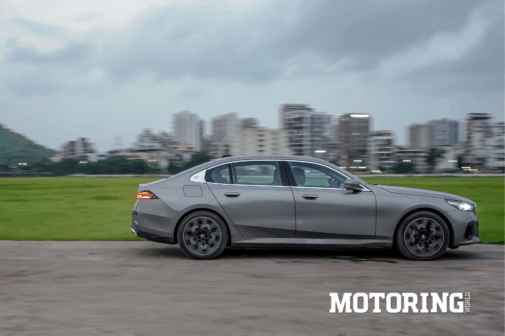
Stretched it certainly is. The i5 LWB measures 5,175 mm long and has a 3,105 mm wheelbase. It rides on 20-inch M alloy wheels and gets adaptive air suspension. The extra length is primarily for the people sitting behind the driver, which makes sense in a market where the rear seat matters more than the steering wheel. We discovered that almost immediately.
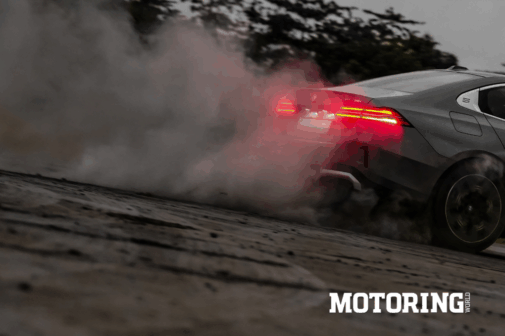
Leaving the office meant joining the usual Mumbai traffic, where progress is measured less in kilometres than in the number of traffic lights you survive before moving forward. The i5 was very well suited to it. There was no engine purring away beneath the bonnet, and very little outside noise getting through. The car simply crept along. That sounds unremarkable, until you’ve actually spent enough time in Mumbai traffic. You can inch forward with the accelerator, stop, start again and barely think about the mechanics of moving. The i5 makes the process feel almost frictionless.
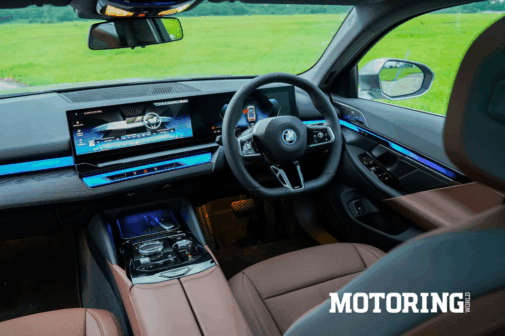
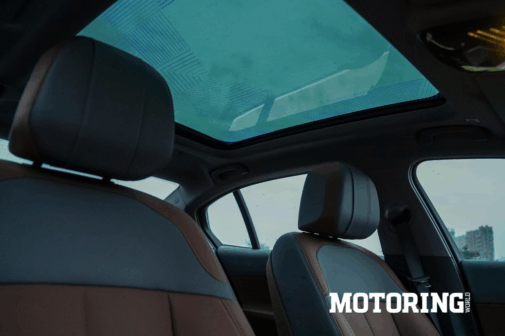
Inside, it is recognisably BMW. The curved display dominates the dashboard, combining a 12.3-inch digital instrument cluster with a 14.9-inch touchscreen. There is ambient lighting, vegan leather upholstery, four-zone climate control, active ventilation for the front seats and a panoramic glass roof. None of this is especially surprising in a BMW at this price, but the overall effect is impressively calm.
Then there are the rear seats. The long wheelbase isn’t merely an excuse to put ‘LWB’ on the boot. There is a noticeable amount of space behind the front seats, and that is where the i5 starts to feel like the sort of car that could genuinely be used with a driver. You can stretch out, settle into the seat and let someone else worry about the traffic, but I didn’t have that luxury for most of the day.
The Bowers & Wilkins sound system became my substitute. In an electric car, where there isn’t an engine droning away in the background, a good stereo has an unusually clean environment in which to work. We listened to everything from Coke Studio tracks to classic rock, and the system was consistently excellent. Bass had weight without becoming boomy, while vocals and instruments remained properly separated. It also turned the Mumbai-Pune Expressway into a rather pleasant listening room, but before we got there, I had to stop admiring the cabin and see what the i5 could actually do.
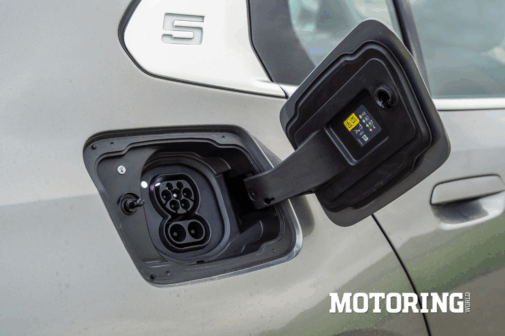
Under the floor is an 81.6 kWh battery, while the rear-mounted electric motor produces 264 bhp and 410 Nm. BMW claims 669 km of range and a 0-100 kph time of 6.7 seconds. AC charging is supported at up to 11 kW, while DC fast charging can reach 160 kW, taking the battery from 10 to 80 per cent in a claimed 33 minutes. My own experience suggested something closer to 540 km on a full charge, which is still substantial enough to make the range figure feel less theoretical than it might initially sound.
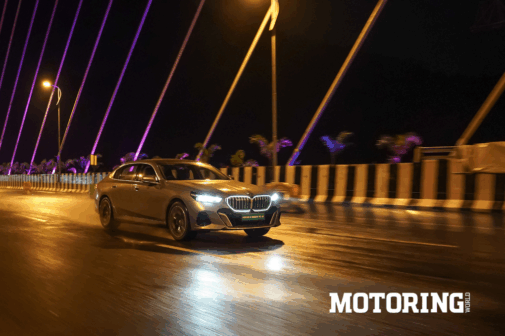
The interesting bit came when we selected Sport and pointed the i5 towards the Atal Setu. An electric car doesn’t need much encouragement to accelerate, but the i5’s response is particularly satisfying because it doesn’t feel frantic. You press the accelerator and it just moves, gathering speed with a smoothness that makes the numbers on the speedometer slightly difficult to believe. There is no great theatrical surge, just a steadily increasing sense that the road is disappearing quickly.
The Atal Setu was where the i5 began to stretch its legs, and the Mumbai-Pune Expressway gave it considerably more room. It is very easy to drive quickly in this car. Triple-digit speeds barely register, the body stays settled and the air suspension does a fine job of keeping the ride composed. The low-mounted battery helps keep the centre of gravity down, and the chassis has enough discipline to stop the i5 from feeling like a very large, heavy object being hurried down the road.
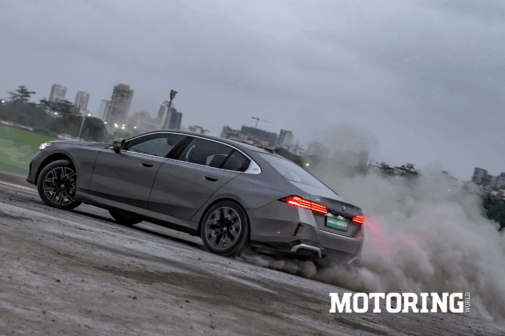
Then some trucks appeared. Anyone who regularly drives towards Pune will know the scene. The road is broad, the traffic is flowing and then a line of slow-moving trucks decides that several lanes should become its personal kingdom. In the i5, overtaking them becomes almost comically easy. Find a gap. Press the accelerator. Gone. We started counting them, partly because there were so many and partly because it was amusing to see how little effort the i5 needed to dispatch each one. The motor doesn’t seem particularly interested in whether you’re passing one truck or several. It just gives you the same clean shove every time.
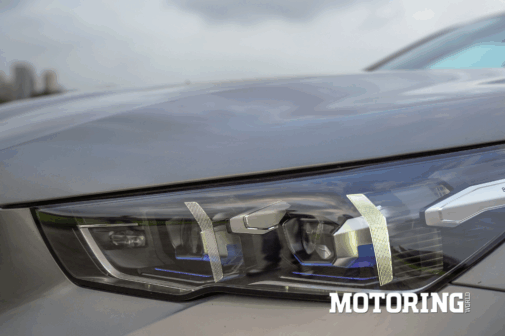
The climb towards Pune and the ghats was even more revealing. The i5 never seemed to run out of breath. There is no sensation of the motor working harder as the gradient increases, just the same smooth delivery and planted stability. It is a remarkably confidence-inspiring car at speed.
The steering has enough weight and precision to make changing direction satisfying, while the body remains controlled when you start asking more of it. You can hustle the i5 through a sequence of bends without immediately wondering why you are doing something so inappropriate in a large electric executive saloon. It isn’t an M5, obviously, but it doesn’t feel like BMW has simply bolted an electric drivetrain into a luxury car and called it a day.
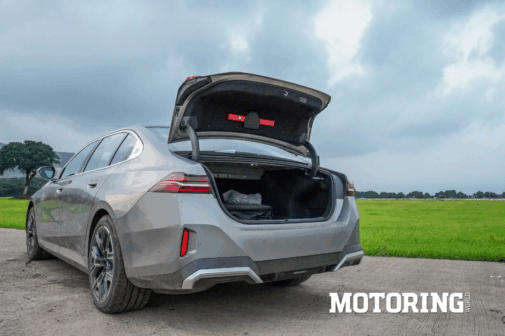
In town, the i5 feels limousine-like. It isolates you from the traffic and makes slow progress very relaxing. On the highway, it becomes a very capable long-distance machine, with enough performance to make overtaking effortless and enough composure to encourage you to keep going. The car also has a surprisingly theatrical side when you park it. The illuminated grille, light animations and long-wheelbase proportions give it plenty of presence. It doesn’t look wildly different from a 5 Series, but it has enough detail to make people stop and look twice. And Oxide Grey does the rest, changing personality depending on the light.
By the time our 24 hours were nearly over, the i5 had begun to make a convincing argument for itself. The long wheelbase gives rear passengers the space they expect. The electric powertrain makes Mumbai traffic almost enjoyable, which is quite an achievement. The quiet cabin gives the Bowers & Wilkins system room to breathe. Then, when you leave the city, the instant torque and stable chassis turn it into something very entertaining.
At Rs 79.60 lakh, the i5 LWB isn’t cheap, but it occupies an interesting position within BMW’s range. You get the size and presence of an executive saloon, the space expected by Indian buyers and an electric powertrain without having to make any enormous compromises in the way the car drives. That last part is crucial. Electric BMWs are no longer experimental oddities here. The company has built enough of a presence with its EV range for buyers to regard them as genuine alternatives rather than expensive science projects. The i5 benefits from that familiarity, and is exceptionally good at making distance disappear. Sometimes it does that by isolating you from the world, and sometimes it does it by making the road disappear beneath you at rather alarming speed. Either way, 24 hours wasn’t nearly enough.