


A road-going GT1 racer that never got to race

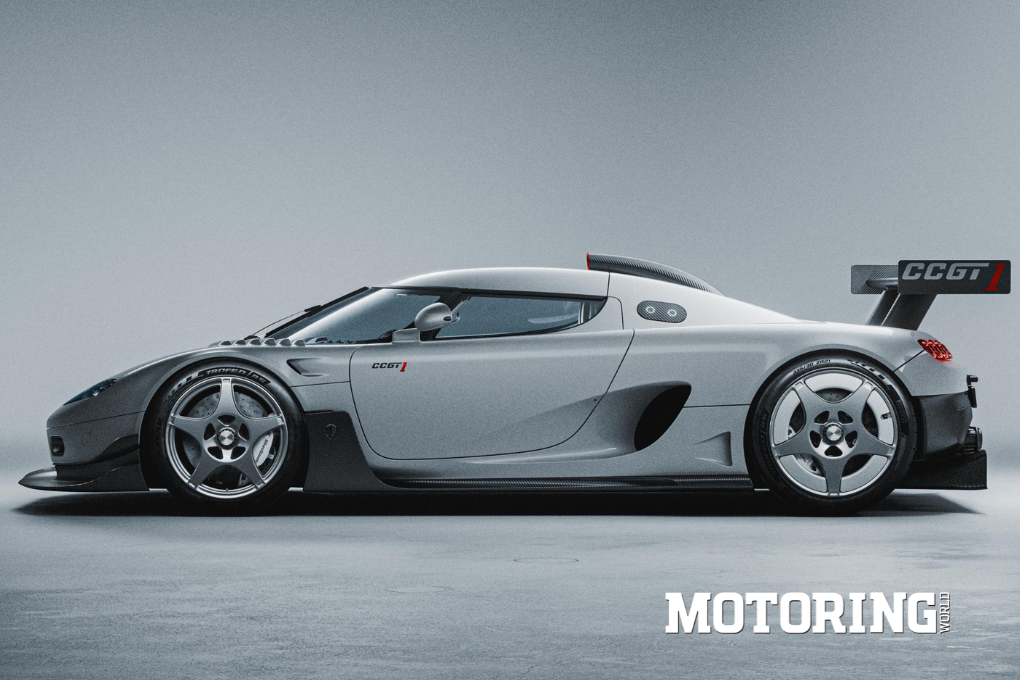
There are few things Koenigsegg enjoys more than taking an old idea, locking it in a room with a considerable amount of engineering talent and seeing what comes out the other side. The latest result is the CCGT1, a road-legal hypercar inspired by one of the strangest chapters in the Swedish company’s history.
The original CCGT was conceived to go racing in the GT1 class. Koenigsegg designed the car around the regulations of the time, but a rule change effectively killed the project before it could properly get started. The CCGT never made it onto the starting grid, despite being an extremely serious racing machine.
The new CCGT1 is, in many ways, Koenigsegg’s answer to that unfinished business. Based on the CC850, the CCGT1 is being positioned as a track-focussed, road-legal hypercar with a specification that makes it considerably more race car than road car. It gets a twin-turbocharged V8 producing 1,262 bhp on standard pump fuel, with that figure rising to approximately 1,578 bhp when running on E85. That is enough power to make most things with number plates look rather ordinary.
But the CCGT1’s party trick is not simply its engine. Koenigsegg has developed a new Koenigsegg Sequential Shiftsystem based around its Light Speed Transmission. The system uses a clutch for take-off but allows clutchless sequential shifts, giving the driver a more traditional racing gearbox experience.
There is also an alternative for those who want to make things even more theatrical. The CCGT1 can be equipped with an Engage Shift System, essentially giving it a six-speed gated manual gearbox that can also operate in automatic mode. Yes, Koenigsegg has managed to put a gated manual gearbox into a car with this much power.
The aerodynamics are equally serious. Almost every body panel is bespoke, with the CCGT1 designed around generating substantial downforce without simply turning itself into a mobile parachute. An active rear wing can alter its position through a wide range of angles, switching between low-drag, air-brake and high-downforce modes. Koenigsegg says the CCGT1 can generate up to 800 kg of downforce at 250 kph.
That is an enormous amount of aerodynamic grip, particularly when you consider that this is still a car you can theoretically drive to the circuit rather than one that needs a transporter to get there.
The car also gets a dedicated Track Package, which adds further motorsport-focussed hardware including a carbon-fibre roll cage, track-specific suspension and additional equipment intended for circuit use. Koenigsegg is even offering factory-supported track days for customers who want to find out what happens when 1,500-odd bhp meets a proper circuit.
The connection to the original CCGT runs deeper than just the name.
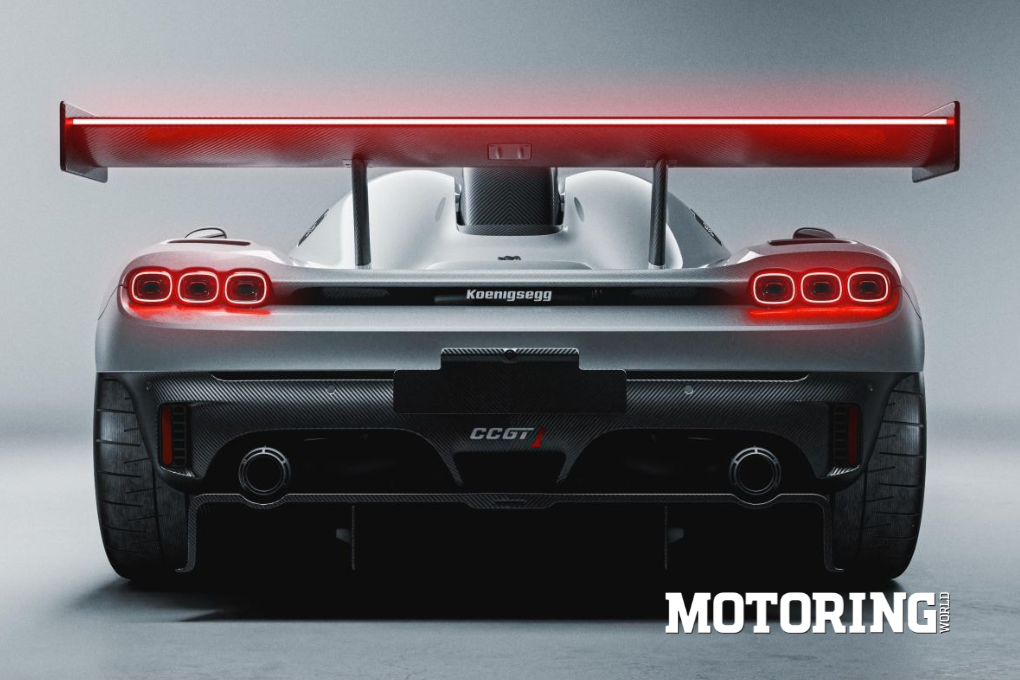
The first CCGT was created around the GT1 regulations of the early 2000s. Koenigsegg’s engineers designed it with a carbon-fibre semi-monocoque, a naturally aspirated 5.0-litre V8 and serious aerodynamic performance. It weighed under 1,000 kg without the ballast required to meet the 1,100 kg minimum weight for the category, while producing more than 600 kg of downforce.
The engine itself produced around 592 bhp, which was the maximum permitted by the regulations at the time. The CCGT was engineered to be competitive, but the rules changed shortly after Koenigsegg began shakedown testing. Carbon monocoques were banned and minimum production requirements increased dramatically, effectively bringing the programme to an end. Nearly two decades later, Koenigsegg has effectively picked up where it left off.
The CCGT1 also introduces a new material called Ghost Fibre, an aramid and carbon-based material designed to save weight while providing additional protection and sound-deadening properties. Inside, the cabin combines the sort of driver-focussed hardware you would expect from a track car with the craftsmanship and luxury normally associated with Koenigsegg’s road cars. And then there is the rather important small print.
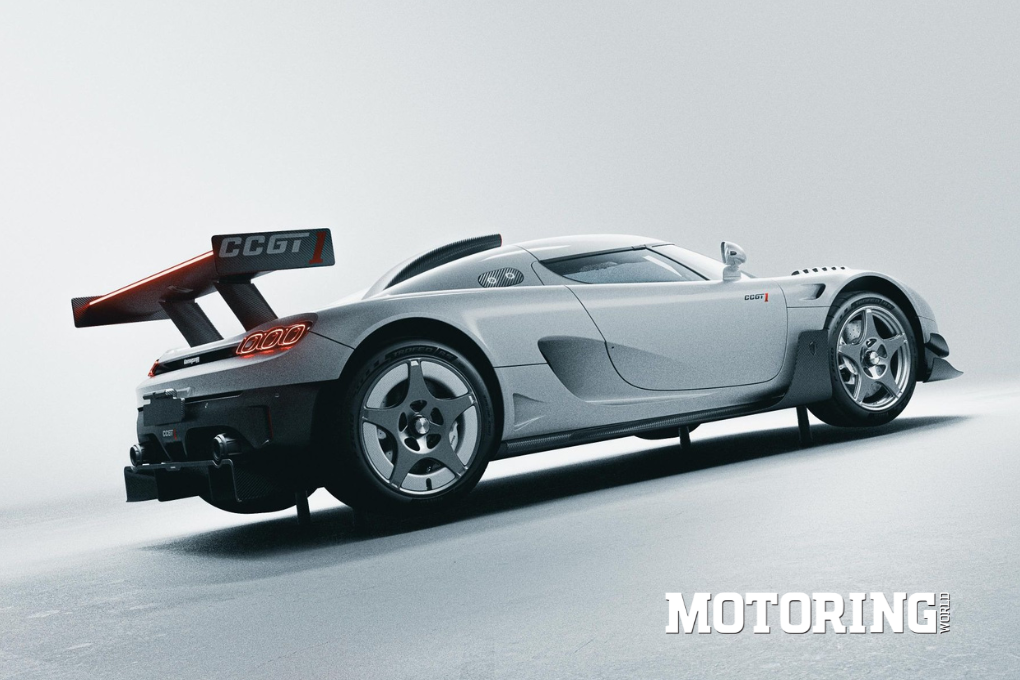
Only 70 CCGT1s will be built, and the entire production run has already been allocated. So this is not Koenigsegg suddenly deciding to go racing. It is something arguably more interesting. The company has taken a racing project that never got its chance, combined it with the technology of the CC850 and turned the result into a road-going hypercar for a very select group of customers.