

I’ve been driving things for over 30 years. Cars, motorcycles, JCBs, autorickshaws, press loaners that cost considerably more than my flat, the occasional prototype that technically didn’t exist yet; you name it, and I’ve probably pointed it in a direction and pressed the loud pedal. I’ve done track days at speeds that would make my insurance company very anxious, ridden litre-class motorcycles through monsoon rain, and on at least three memorable occasions, been the only thing standing between a very expensive car and a very solid Armco barrier. We reached an understanding each time.
None of this, it turns out, is remotely relevant on water.
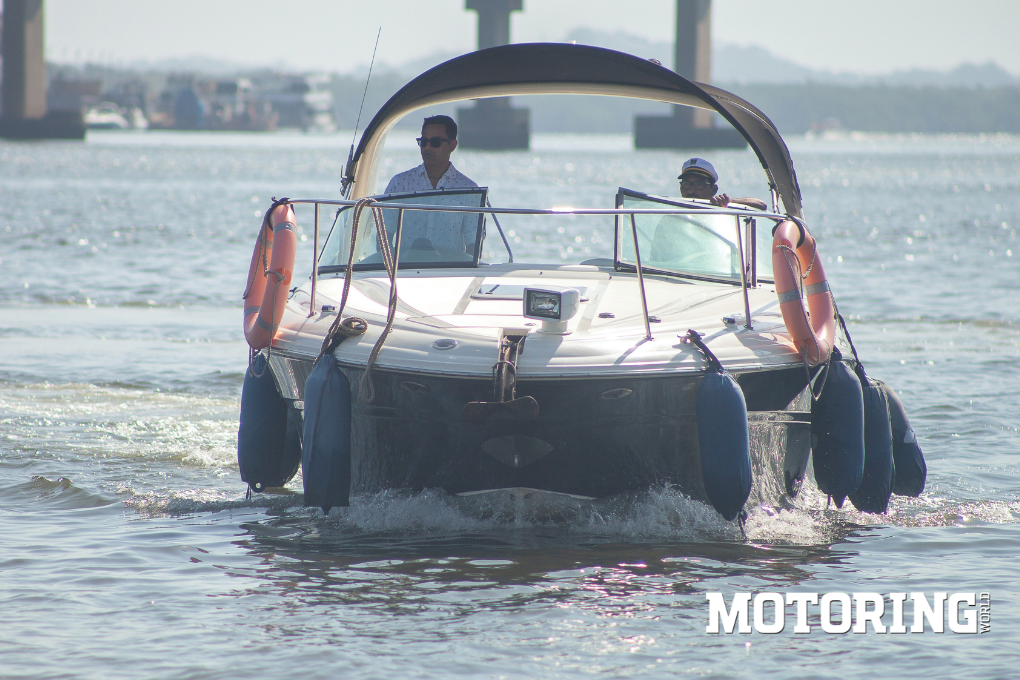
The Sea Ray 290 Sun Dancer is, by marine standards, a modest vessel. It was built between the early 1990s and 2008, and was an extremely popular model. To me, though, just under thirty feet of fibreglass, a deep-V hull, twin 5.7-litre MerCruiser stern drives churning out about 300 bhp each, and a top speed in the mid forties of knots (80 kph) is hardly modest. Think of it as the nautical equivalent of a mid-size sports cruiser; not a supercar, just extremely competent and well-sorted.
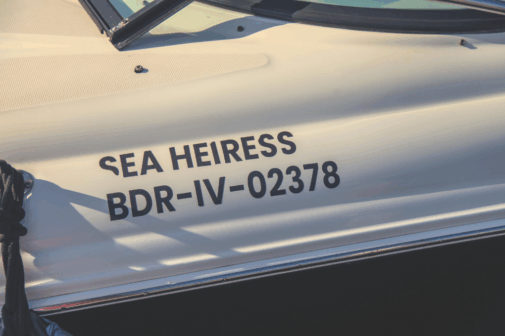
Captain Palekar, our pilot for the day, informed me (with the measured patience of a man who has dealt with overconfident landlubbers before) that this was considered ‘a good learner’s platform’ by experienced sailors. I chose to take this as encouragement, rather than a subtle warning about any humiliation that was around the corner.
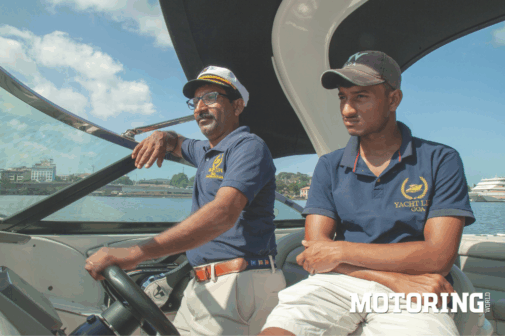
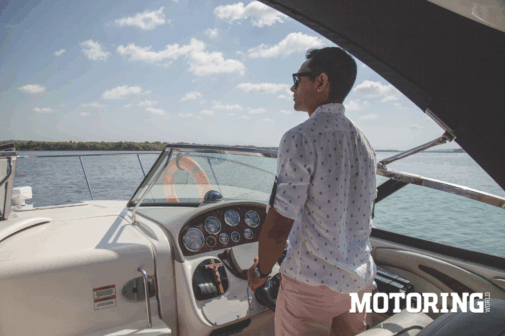
Standing at the helm before we set off, I did what any self-respecting utomotive journalist would do: I poked at everything and pretended to understand it. The wheel, reassuringly, was a wheel; I knew what those did. The throttle levers (twin, one per engine) sat to the right and operated with a satisfying mechanical click when I shifted them into forward or reverse. There was a compass, depth gauges, a VHF radio and various dials; conspicuously absent were essentials like ambient lighting, air conditioning, Sports mode, paddle shifters and Android Auto, but I let this pass.
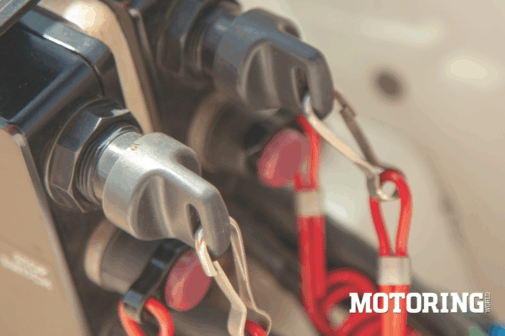
What there was, however, was something rather clever that I didn’t immediately appreciate: with twin independent engines, you steer in tight spaces not by turning the helm, but by differentially applying throttle. Port engine forward, starboard engine reverse, and the boat pivots on its own axis like a tank doing a pirouette. In car terms, this is akin to trail braking a luxury SUV into a tight hairpin using torque distribution, rather than steering lock.
This genuinely impressed me. It’s the kind of elegant mechanical solution that automotive engineers occasionally stumble upon, except that on boats, this has been standard operating procedure for centuries, arrived at not through engineering sophistication but pure operational necessity. I made a mental note to feel slightly embarrassed about being surprised by something sailors have been doing since before cars were invented.
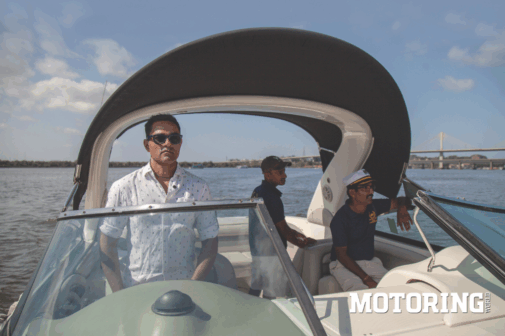
About 15 minutes into the trip, once we were clear of the jetty and into open water, with nothing immediately ahead that I could damage (Palekar’s careful route planning, I suspect), the moment arrived. He stepped back from the helm with the air of a man who has done this before and knows approximately how badly it’s about to go. I stepped forward and put my hands on the wheel.
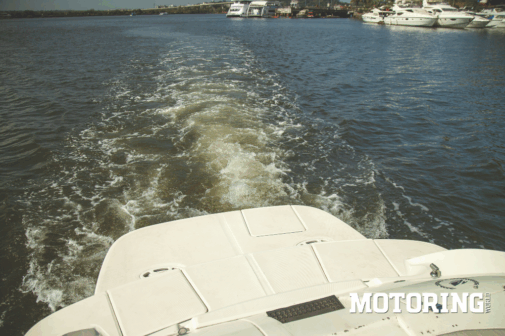
The first thing you notice – and this is going to sound painfully obvious, but bear with me – is the absence of road. Every instinct I’ve accumulated across three decades and thousands of kilometres is calibrated to a surface. A surface gives you reference points: white lines, kerb edges, the camber of the tarmac, the way the car sits relative to the lane. Remove the surface and what you’re left with is just… direction. Direction, the water ahead, and the horizon, which looks exactly the same in every direction and is therefore completely useless as a navigational reference, unless you already know where you’re going.
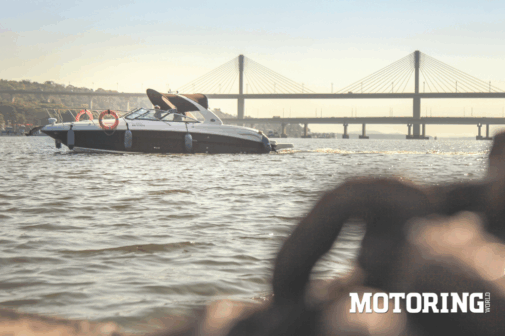
The second thing you notice is the lag. Turn the wheel of a well-sorted car and the front end responds with an immediacy that becomes part of your muscle memory. You stop thinking about it. The Sea Ray’s deep-V hull, however, is doing something rather more complex than a tyre contact patch: it’s negotiating with the water, which has very strong opinions about where things should go and isn’t shy about expressing them.
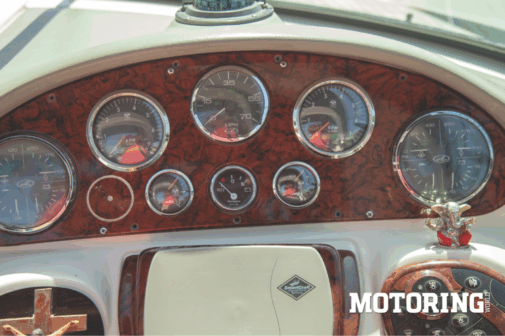
Push the throttle and the bow lifts before the speed arrives. I did this rather too enthusiastically, causing a mini wheelie by the boat and a mini heart attack in Palekar, who told me to calm down. Correct the course and the correction takes a moment to actually happen. Everything is slightly downstream of your inputs, like driving with significant lag on a video game, except the consequences are wetter and more expensive.
I over-corrected multiple times in the course of my first few minutes at the helm. Palekar, to his eternal credit, said absolutely nothing. He had the expression of a tennis coach watching a promising student completely miss the ball: not alarmed, not particularly amused, just noting. And then, something shifted.
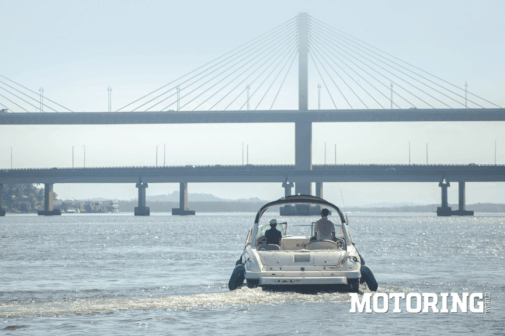
It’s difficult to describe this to someone who hasn’t experienced it, but I suspect every driver knows the equivalent: the first time a car that terrified you suddenly stopped being terrifying and started making sense. The 290’s responses aren’t slow, I realised. They’re just honest. The boat tells you, consistently and clearly, exactly what it intends to do. It doesn’t pretend to respond faster than it physically can. There’s no artificially weighted steering masking the underlying physics, no driver assistance systems trying to interpret your inputs and second guess you. What you feel is what’s actually happening, without the intermediary layer that modern cars spend considerable engineering effort providing. In automotive terms, it’s magnificently analogue. It’s like driving a Caterham or a Morgan; what you get is what’s there, unfiltered and pure.
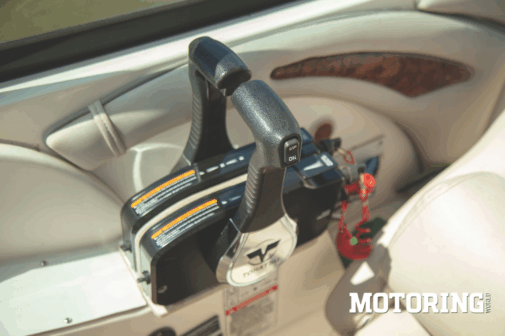
I pushed the throttle levers forward. The twin MerCruisers, which had been quietly ticking over, opened up. The bow lifted, then levelled, and the wake spread behind us in a clean white V. Speed built steadily, the way a heavy GT car builds speed – not via a dramatic surge, but an accumulation of velocity. At somewhere around 25 knots (46 kph), with open water ahead and nothing to correct for, the boat simply ran. I let it run. Palekar, at some point during this, walked aft and sat down. I chose to interpret this as professional confidence rather than exhausted resignation, though it could honestly have been either.
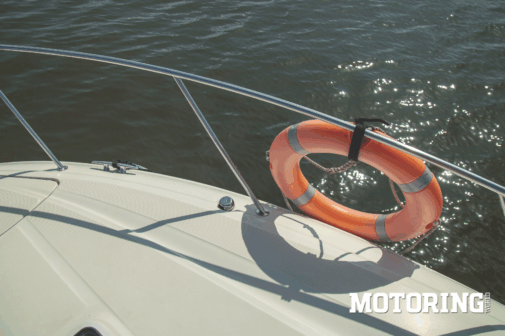
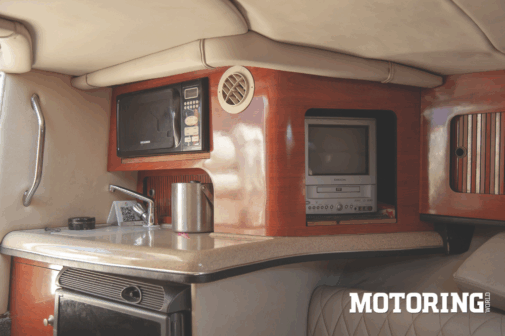
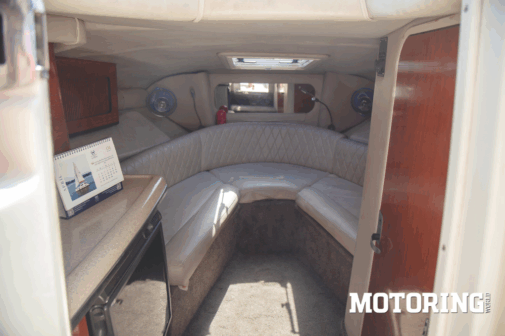
The 290 Sun Dancer is, I should mention, a genuinely accomplished piece of engineering. The deep-V hull earns its design brief in anything above flat calm: it cuts cleanly, recovers predictably, and absorbs chop without the spinal punishment that flatter hulls dish out at speed. I’ve driven cars with worse ride quality on smooth motorways. Below deck there’s a proper cabin – a galley, head (boat-speak for ‘tiny toilet’), sleeping arrangements for four – which means this isn’t a day boat wearing a cruiser’s badge. It’s the genuine article, a vessel you could take offshore for a weekend without requiring either a chiropractor or a therapist afterward (or both, which is usually the case with smaller boats).
The twin stern drives give it manoeuvrability in harbour that belies the nearly thirty feet of hull. Tight turns, precise positioning, and backing into slips become manageable in a way that shouldn’t be possible for something this large. It is, to steal a phrase I’ve used about rather different machines, more capable than it looks, and it looks capable.
I handed the helm back to Palekar after about 30 minutes. He took it without ceremony, made a small correction to the course that I genuinely hadn’t noticed was needed (slightly humbling), and then opened the throttle to a pace that made abundantly clear he’d been humouring my moderate speeds throughout. Clearly, I was the cautious learner driver on the highway, doing exactly the speed limit while everyone else was getting on with their lives.
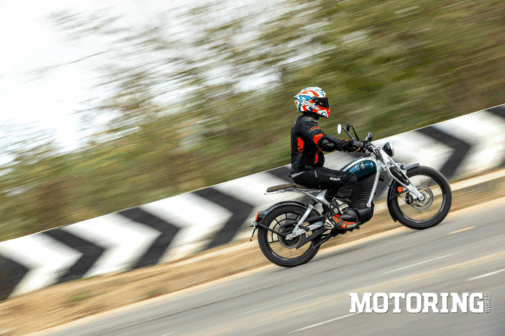
Four wheels, two wheels, and now this. I appear to be constitutionally incapable of remaining stationary, which is either a character strength or a mild pathology depending on who you ask. The water, it turns out, isn’t the alien environment I’d expected. It’s simply a different set of rules, arrived at by different physics, demanding a different kind of attention. The fundamentals remain the same: read what’s ahead, commit to your line early, trust the machine to do what it’s designed to do. The boat won’t save you from your mistakes, but it won’t lie to you about what it’s doing either. There’s something reassuring about that, especially in an era where cars are insistent on protecting you from yourself, whether you like it or not.
Would I take the Sea Ray 290 Sun Dancer out again? Absolutely. Did I occasionally miss having paddle shifters and a Sport mode button? Also absolutely. Did Palekar look mildly relieved when I handed back the helm without having collided with anything or anyone? Almost certainly. But for 30 minutes, I piloted a boat across open water without embarrassing myself too badly. In the grand scheme of things, and given my complete lack of maritime experience, I’m calling that a win. The paddle shifters are still a miss, though; I stand by that. On the plus side, virtually the whole boat is a sunroof.
We’d like to thank Leon Nicholas, the owner of Yacht Life Goa, for the generous (and trusting) offer of the Sea Ray 290 Sun Dancer. If you’re in Goa and in the mood for a cruise, contact them: +91 88309 92293