

A trip to Goa is on almost everyone’s bucket list. Add a road trip to the equation, and it becomes even more appealing. Dil Chahta Hai did a fine job of cementing that particular fantasy in our heads. So when the opportunity came up to drive across the smallest state in the country, I was quick to call dibs. Who in their right mind would pass up an opportunity like that?

This wasn’t going to be a regular road trip in Goa either. I was joining Fans of Škoda, an initiative by Škoda Auto India that brings together Škoda customers for expeditions across the country. There was another reason I was particularly keen to go: this wasn’t my first Fans of Škoda adventure. Eagle-eyed readers might remember that I joined the second leg of the North East Expedition, and I had come away from that trip with plenty of good memories and a few new friends.
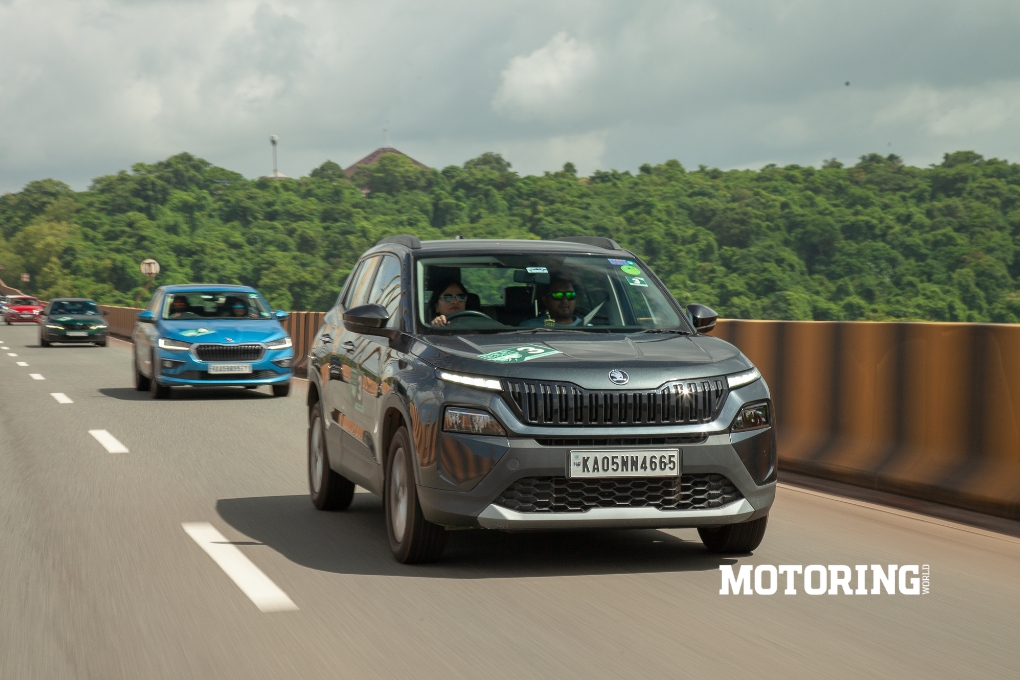
I was therefore looking forward to this one as the days drew closer, especially because I was going to spend it behind the wheel of the Kushaq. I had driven the Kylaq during the North East expedition, and this time its larger sibling was going to be my companion as we explored Goa’s coastal roads.
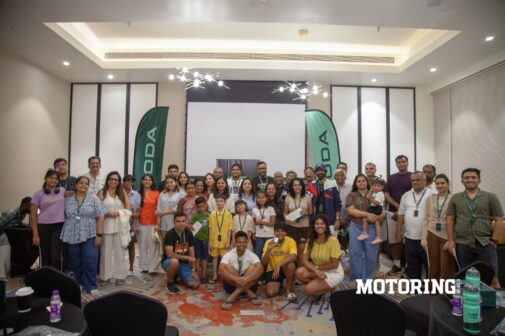
There were two things on my agenda: have as much fun as possible with the Fans of Škoda crew and make some new friends along the way, just as I had on the previous expedition.
Spoiler alert: both boxes were ticked.
Hitting the Road
The organising crew brought their A-game once again. As with any trip involving a large group of people, things didn’t always go exactly according to plan. What mattered was how quickly the team reacted when plans had to change. Their ability to improvise kept the expedition moving and, by the end of the drive, had left more than a few participants wondering what they had up their sleeves next.
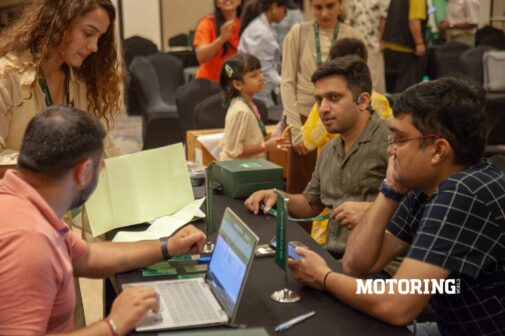
The drive began at The Westin Goa in Anjuna, following a detailed briefing and introductions. Once the cars were stickered up, radios checked and everyone was familiar with the route and convoy rules, we were ready to leave. The radio would become an important part of the drive, particularly on Goa’s narrower roads, where keeping a convoy together takes a little more concentration than it might on a wide highway.
Anyone who has driven in Goa knows that only a handful of roads offer more than two lanes. Keeping a group of cars together without losing someone to a junction, a local turning across the road or the general chaos of Goan traffic is no small achievement. The drivers deserve credit for managing it so well, with barely a stray car finding its way into the convoy.
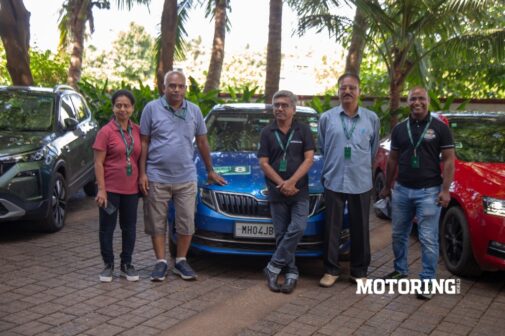
There is also something quite enjoyable about travelling through Goa as part of a convoy. On your own, it is easy to fall into the usual rhythm: beach, restaurant, hotel, repeat. A group of Škodas moving through the state changes that rhythm. Every stop becomes an excuse to wander over to another car, compare notes about the route or ask why someone had chosen a particular model. The radios kept the convoy connected while the stops gave everyone a chance to actually meet the people behind the cars.
That was particularly useful because the group had arrived from different parts of the country. There were owners from Bengaluru and Mumbai, among others, and everyone had their own reasons for signing up. Some clearly came for the driving, others for the company, and plenty seemed happy to combine the two. It gave the expedition a relaxed atmosphere rather than the feeling of being on a tightly scripted tour.
The Chariot of Choice
For me, having the Kushaq for the duration made the experience even better. The previous North East expedition had given me plenty of time with the Kylaq, so I was curious to see how its larger sibling would fit into the same sort of adventure. Goa’s roads offered a very different setting from the long, winding mountain routes of the North East, but there was still plenty of opportunity to enjoy the drive between activities.
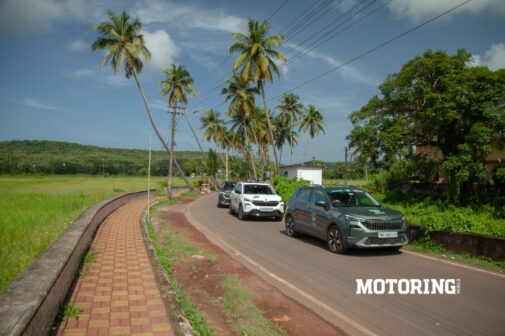
And that is probably the biggest appeal of an expedition such as this. The destinations give you somewhere to go, but the hours spent getting there are where the cars and the people really become part of the experience. You get to see how everyone drives, hear the conversations over the radio and watch the convoy gradually become less of a collection of individual cars and more of a group travelling together.
The line-up itself said quite a lot about the people who had signed up. These weren’t simply Škoda owners who happened to fancy a weekend away. They were enthusiasts, and their cars reflected that. Four Octavias joined the expedition, which was a particularly welcome sight. Two were rather special: an Octavia RS 230 from Bengaluru and a modified, Stage 3 example from Mumbai. Both had been driven all the way to Goa for the trip. That sort of commitment tells you plenty about the relationship some owners have with their cars.

There were plenty of other Škodas too, including Slavia, Kushaq and Kylaq models, along with a Rapid. It made for a varied convoy and gave the group plenty to talk about whenever we stopped.
The Fans of Škoda Touch to Goa
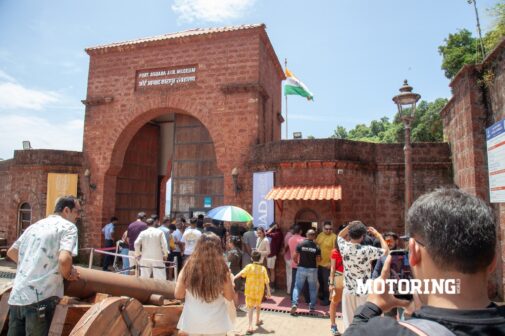
Our first destination was the Fort Aguada Jail Museum in Candolim. The fort was first constructed in 1612 by the Portuguese to defend against the Dutch. The jail within it is no historical reconstruction either; it was an actual prison and has now been converted into a museum that commemorates the sacrifices of Goan freedom fighters.
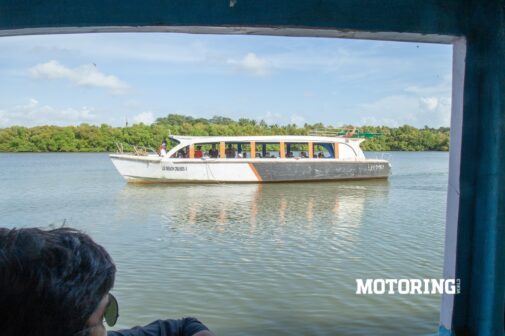
After the visit, we climbed back into our cars and headed towards Nerul for a little boating on its backwaters and river. The stated mission was to find crocodiles. The crocodiles, unfortunately, had other plans and remained elusive. That hardly mattered. The boat ride offered a peaceful view of the Nerul River and a glimpse into one of the more upmarket corners of Goa, away from the beaches and the usual tourist traffic.
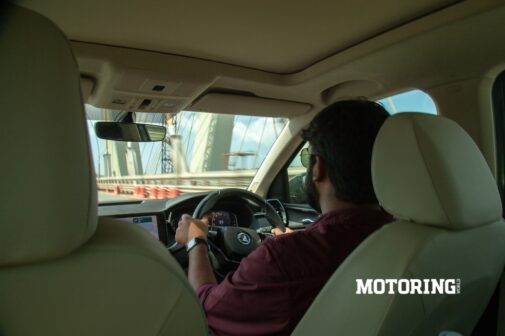
By the time we had finished, the first day was already beginning to wind down. We had covered plenty of ground, visited Fort Aguada and spent time on and around the water. I was also becoming rather attached to my Kushaq. The 1.5-litre TSI EVO and 7-speed DSG combination had made such a strong impression that parking it for the night felt slightly premature. Unfortunately, the next day was going to require some energy of my own, so the car and I had to call it a day.
Sea, Sand, Spice & Everything Nice
We set off again from The Westin the following morning, heading towards Cabo de Rama Beach. It is one of Goa’s better-known beaches, although it remains surprisingly quiet. When we arrived, the Fans of Škoda group seemed to account for most of the activity around us.
After the first day, the pace had settled into a comfortable rhythm. There was enough driving to make getting behind the wheel worthwhile, but enough time at each stop to forget about the schedule for a while. That balance is difficult to achieve on a group trip, where there is always the temptation to pack every available hour with another activity. Here, the drive itself was allowed to be part of the experience.
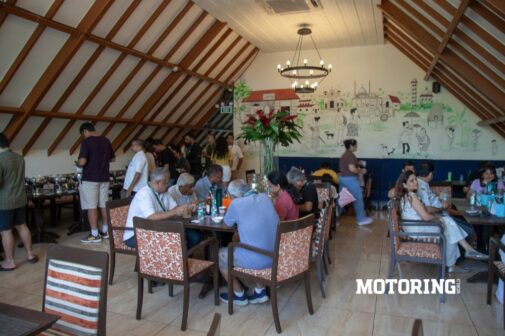
The itinerary wasn’t about rushing from one tourist attraction to another. At Cabo de Rama, the idea was simply to take off our shoes, get our feet into the sand and enjoy the surroundings. There was a kayaking session waiting for us too, organised in the lagoon behind the beach. The heat was fierce, but nobody seemed particularly interested in complaining about it. Most of the participants were too busy enjoying the waves and the sea or paddling around the lagoon.
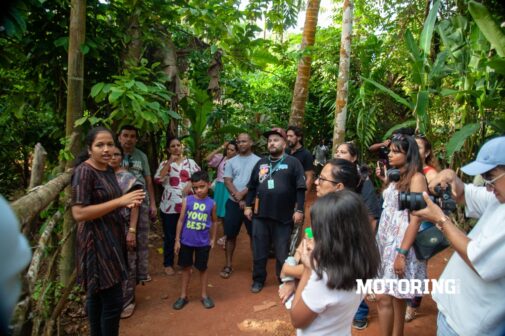
From there, we headed to a spice plantation for a closer look at how some of Goa’s indigenous spices are grown and cultivated. It was an interesting change of pace after spending so much time behind the wheel. We also learnt about the process of fermenting Feni, Goa’s traditional spirit, and naturally there was plenty of interest in that part of the tour.
Beyond the Journey
One of the nicest things about the expedition was that there was no need to manufacture excitement. It came naturally from the combination of the cars, the roads and the people in them. Even the quieter stretches had their own charm because you knew another stop, another conversation or another change of scenery was waiting around the corner. The group also had enough time together for the initial introductions to disappear, replaced by the sort of easy banter that develops when people have spent hours travelling in the same direction. By the second day, the radios were less about instructions and more about keeping everyone in touch. It felt less like an organised automotive event and more like a group of friends who happened to have turned up in a fleet of Škodas. That, perhaps, was what made the whole thing work so well.
The Home Run
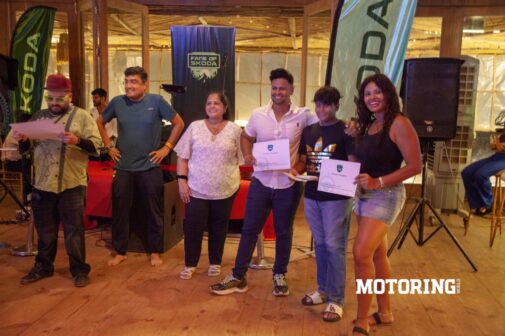
The hardest part was realising that the route was nearly over, just when everyone had settled comfortably into the rhythm of travelling together and enjoying every mile. By now, the end of the expedition was approaching far too quickly. Eventually it was time to say Sbohem to the trip, although Fans of Škoda had one final surprise planned. Instead of finishing with a conventional dinner, the organisers took us to a beach for an evening meal, complete with a live band and a dance performance. It was a suitably lively way to finish a couple of days that had already packed in a fair amount of driving, sightseeing and general mischief.
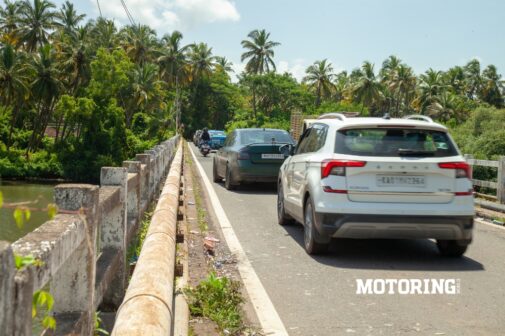
I may not have been able to recreate the exact journey that Akash, Sid or Sameer made in Dil Chahta Hai, but I did manage to make my own version of it. There were cars, winding roads, beaches, a group of friends and just enough time spent behind the wheel to make the journey as memorable as the destinations. And really, that’s about as close to the Goa road-trip fantasy as you could ask for.
No alcohol was served or consumed during the Fans of Škoda drive. The Feni reference solely pertains to the fermentation process at the spice plantation and the learnings from it.