

It was warm right until 4,000 rpm. Beyond that, the night turned cold.
At 10 pm in Pune, the roads were still a bit chaotic. The usual impatient commuters, cabs threading through gaps, and scooters moving in loose formation through traffic were very much there. Somewhere between the first empty flyover and the silence that follows midnight, the city changed. And so did the BMW S 1000 RR M Sport.
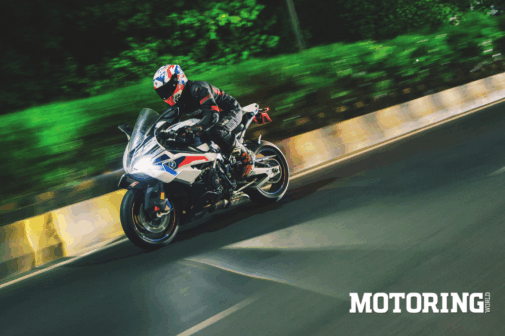
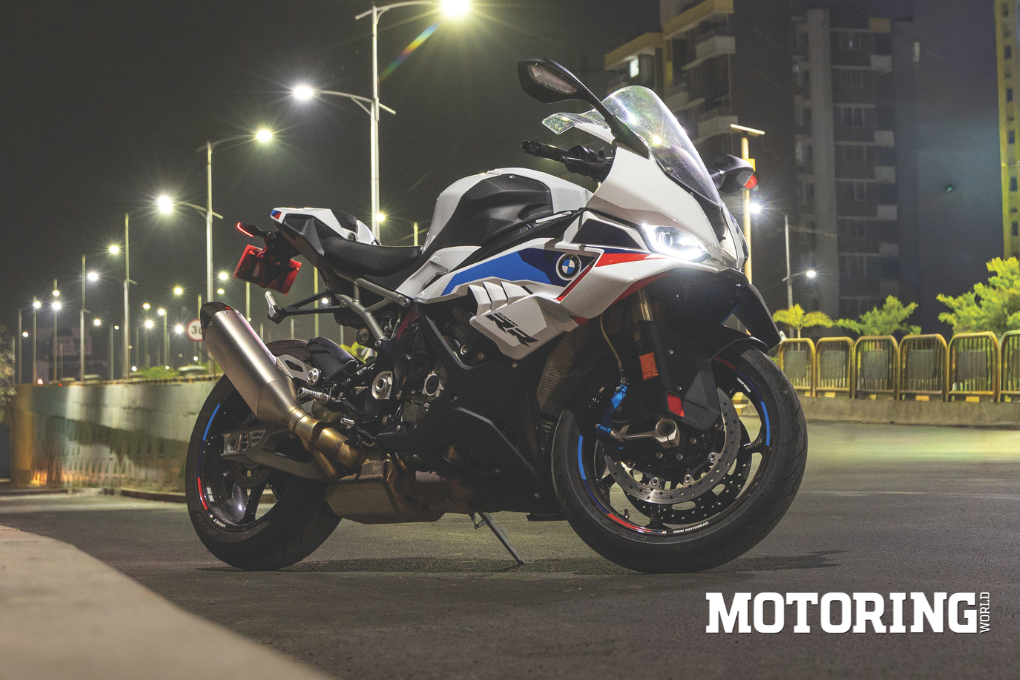
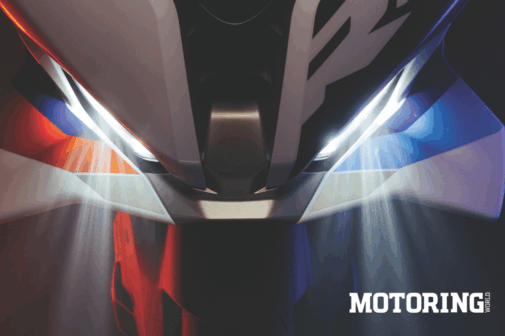
I first saw it under street lights, which is probably the right way to see one. The S 1000 RR M-Sport belongs on a racetrack or a derestricted autobahn, but under artificial light, something changes. The Light White and M Motorsport paintwork — clinical enough in daylight — takes on a different quality. The blue brake calipers catch and hold the passing light. The carbon fibre wheels collect fragments of neon and throw them back intothe dark. The new M 1000 RR inspired winglets give the front end an authority; drivers ahead would move aside when the BMW appeared in their mirrors, some slowing to look. One rolled his window down to shout something complimentary over the exhaust note, which takes a specific kind of motivation.
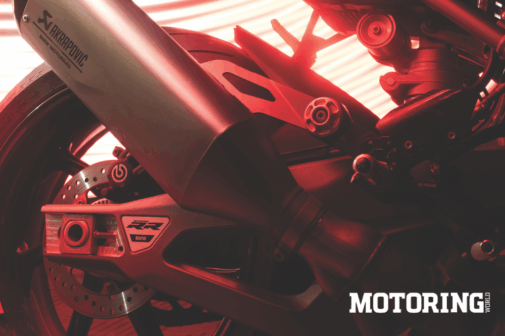
The M Titan Akrapovicˇ is responsible for that. At idle it’s controlled in the way a well-built thing is. Switch to Race Pro mode and every downshift becomes a major event, with hard cracks and deep pops that bounce off everything and leave surrounding traffic with no doubt about what just went past. Tunnels were thus an irresistible test. The first run through one felt like genuinely waking something up. The exhaust found and filled the concrete space, building into a mechanical roar that seemed far larger than the motorcycle producing it. You absorb this glorious soundtrack through the seat, and the bars, and the soles of your boots.
By midnight, the city had cleared, and this is when the RR began making real sense. A 210 bhp supersport on Indian roads is already a ludicrous idea. Riding one in peak summer borders on poor judgement, so taking it out after midnight felt like the closest approximation of a sensible decision.
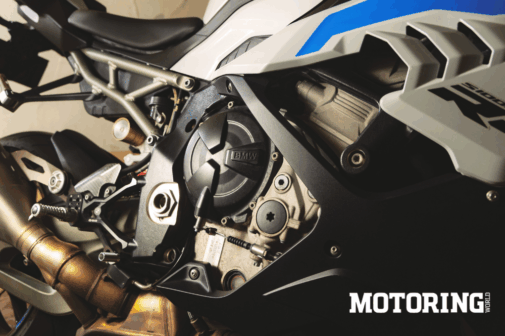
The genuinely terrifying thing about modern litre-class machines isn’t their brutality — it’s how refined they’ve become. The first warning arrives at around 4,000 rpm, when the 999cc inline-four changes character. The bike coils up, and the horizon begins arriving faster than your brain is prepared for. Keep the throttle pinned and the world compresses into peripheral blur.
What struck me wasn’t the acceleration itself, but how matter of-fact the BMW was about it, how casually it carried speed that would be considered reckless anywhere. Tucked behind the screen, though, the violence recedes. Wind-blast drops away, and the bike seems to shrink beneath you. There’s no drama unless you specifically request it, which is precisely what makes it unsettling.
At one signal, I found myself staring down a completely empty road stretching into nothing, and I did what no responsible adult should. The RR covered the distance with such urgency that the next signal arrived almost immediately, and it scrubbed off every bit of that speed with such composure that rolling to a halt, it barely felt like anything serious had happened. Almost.
The quick-shifter sharpened this further. Every upshift landed with absolute precision; the gearbox didn’t feel like it was changing gears so much as racking another round. And yet for all this, the S 1000 RR never felt genuinely intimidating to ride.
The electronics are the reason behind this. Traction control, wheelie control, cornering ABS, all of it working constantly in the background, calculating grip and power delivery faster than any rider can. Race Pro 3 mode felt right for the night; it was sharp enough to let the bike breathe, but measured enough to keep the evening from becoming tomorrow’s headline. You only understand how much the system is doing when you switch it off. I did, once. The front wheel came up with an immediacy that made the wheelie control’s previous quiet contribution entirely clear. It went back on.
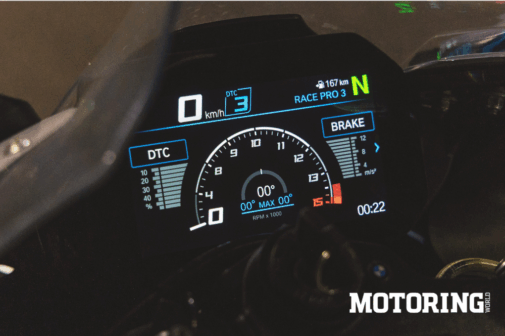
The TFT display deserves a mention, not for the data it presents but for how it recalibrates your sense of what riding involves. Things like lean angles, brake pressure, traction intervention are all rendered in sharp detail against the dark. On a good stretch, those numbers are deeply satisfying. On a less considered moment, they’re a precise and mildly humiliating record of exactly what happened.
The ergonomics are a known compromise, with this machine. The position is cramped, and after enough time your wrists begin making their feelings known. The adjustable footpegs help, and on the move the bike shrinks around you, which may be the most dangerous thing about it. The S 1000 RR generates a persistent, convincing sense of control. It encourages later braking, harder acceleration, and more trust through corners. There were stretches of road that night where I knew the bike had considerably more available than I was using, and that knowledge sat there, pulling.
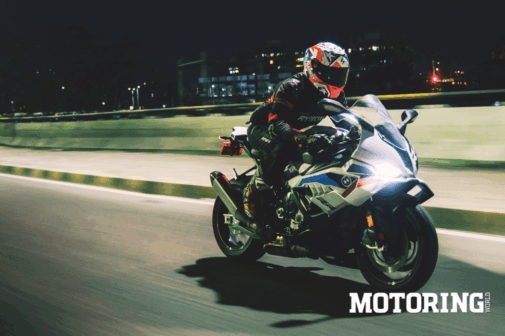
Streets are still streets, even empty ones. By 5 am, the city was beginning to wake. Delivery vans appeared. Tea stalls flickered back to life. Birds slowly replaced the Akrapovicˇ as the prevailing soundtrack. I parked, removed my helmet, and looked back at the bike for a while.
Motorcycles like this leave something behind after the engine stops. It’s not fear, and not quite excitement either; it’s something closer to disbelief. That a machine this precise and this fast exists at all, and that it’s available to ride on ordinary roads, through an ordinary city, on an ordinary night, feels like information the world hasn’t fully processed yet. The S 1000 RR M-Sport certainly hasn’t.