

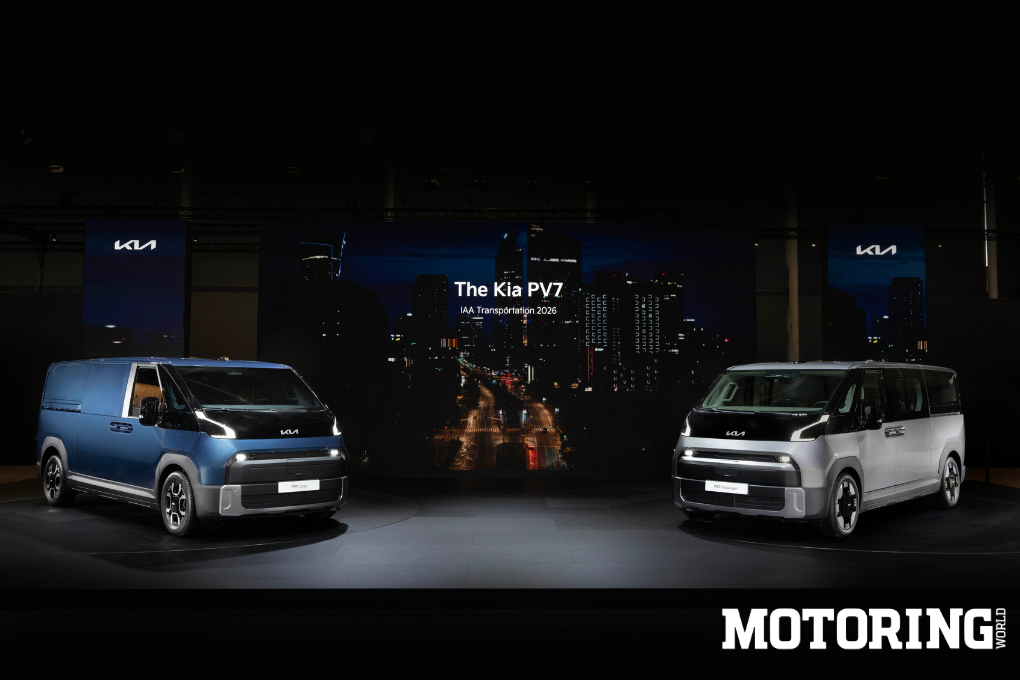
 Kia has built a van for people who have places to be and things to carry, then added 420 Nm, 800 V charging and enough technology to make the average office look prehistoric.
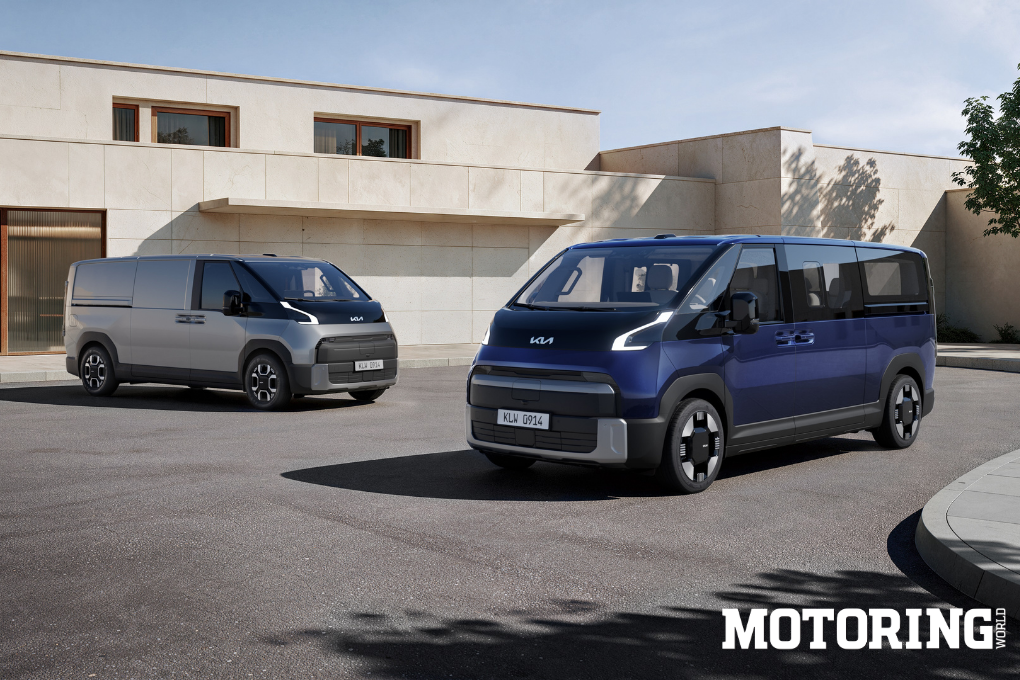
Kia has unveiled the PV7, the second model in its dedicated all-electric Platform Beyond Vehicle, or PBV, range. Revealed at IAA Transportation 2026 in Hannover, the PV7 is designed to sit above the PV5 and bring more space, payload capacity and flexibility to commercial and passenger transport applications. The PV7 will be offered in both Cargo and Passenger forms, with Kia planning to launch the model in Korea and Europe in the second half of 2027. More derivatives and markets will follow.
Built to be more than just a van
Kia is positioning the PV7 as a business tool rather than simply another electric van. It is based on the company’s dedicated E-GMP.S architecture and uses a flat-floor layout to maximise interior space, while its Flexible Body System allows the platform to support different body styles and conversion models. The company is also putting considerable emphasis on software and connected services. Its Business Solutions Portal brings together fleet management, charging, maintenance and operational data, while dedicated Uptime services use real-time monitoring and predictive diagnostics to help reduce downtime. Because apparently even vans now need to be better at checking their own health than most of us are.
Up to 420 Nm and 460 km of range
The PV7 will be offered with 71.5 kWh and 96.2 kWh NCM battery packs. Depending on the configuration and market, its electric powertrain produces up to 200 kW, or roughly 268 bhp, and 420 Nm of torque. Front-wheel drive is standard, while an all-wheel-drive version is planned for later. The Long Range Cargo variant is expected to deliver more than 460 km of WLTP range. Kia has also equipped the PV7 with an 800 V electrical architecture, allowing a 10 to 80 per cent charge in the mid-20-minute range when connected to a 350 kW DC fast charger.
There are even two charging ports, with a front AC/DC port and an optional rear-side AC charging port. The PV7 also gets Vehicle-to-Load capability, allowing it to power tools, equipment and other devices through interior and exterior outlets. A dedicated heavy-load driving mode adjusts the vehicle’s behaviour according to payload conditions.
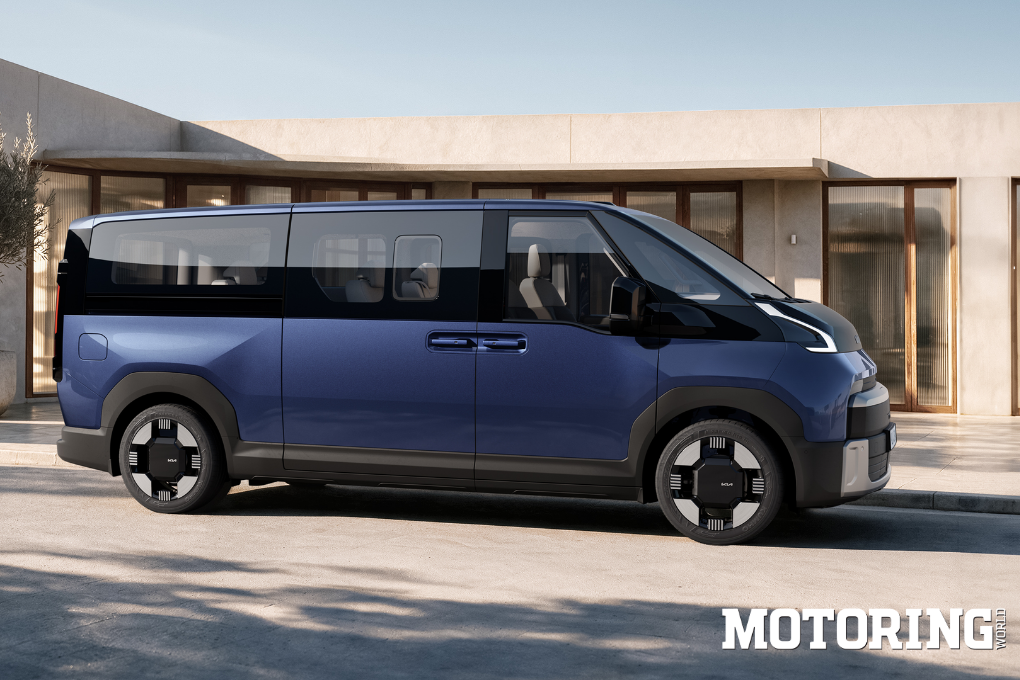
Cargo or Passenger? Take your pick
The PV7 Cargo is designed for logistics, delivery and fleet operations. It will be available in two- and three-seat configurations, with the Cargo Long offering up to 6.1 cubic metres of cargo space and the High Roof version increasing this to 8.0 cubic metres. Payload capacity goes up to 1,165 kg for the Long and 1,200 kg for the Compact variant. The Long model also has a 550 mm loading height and can carry up to three Euro pallets. The Passenger version takes a rather different approach. It can accommodate up to nine occupants globally, or 11 in Korea, with flexible seating configurations. The seven-seat version gets Long-Rail Easy Remove Seats, while the nine-seat model can be specified with or without a fourth row. Rear climate controls, power-sliding doors and 100 W USB-C ports are also available.
Big van, big technology
The PV7 follows Kia’s Opposites United design philosophy, but translates it into a large, upright commercial vehicle. It gets a squared-off cab-forward silhouette, flat roofline, distinctive lighting and a black bonnet treatment shared with the PV5. Inside, the dashboard gets 12.9-inch and 14.6-inch displays, while physical controls remain for frequently used functions. The Cargo model follows a Mobile Workspace concept with open storage and a fold-down centre seatback, whereas the Passenger version focuses more heavily on comfort, with lounge-inspired finishes, ambient lighting and an optional centre console that doubles as a table. Connectivity comes courtesy of Pleos Connect, based on Android Automotive OS, with connected navigation, over-the-air updates and an app marketplace. Kia’s Gleo AI voice assistant can also handle vehicle, navigation and messaging functions using natural-language commands.
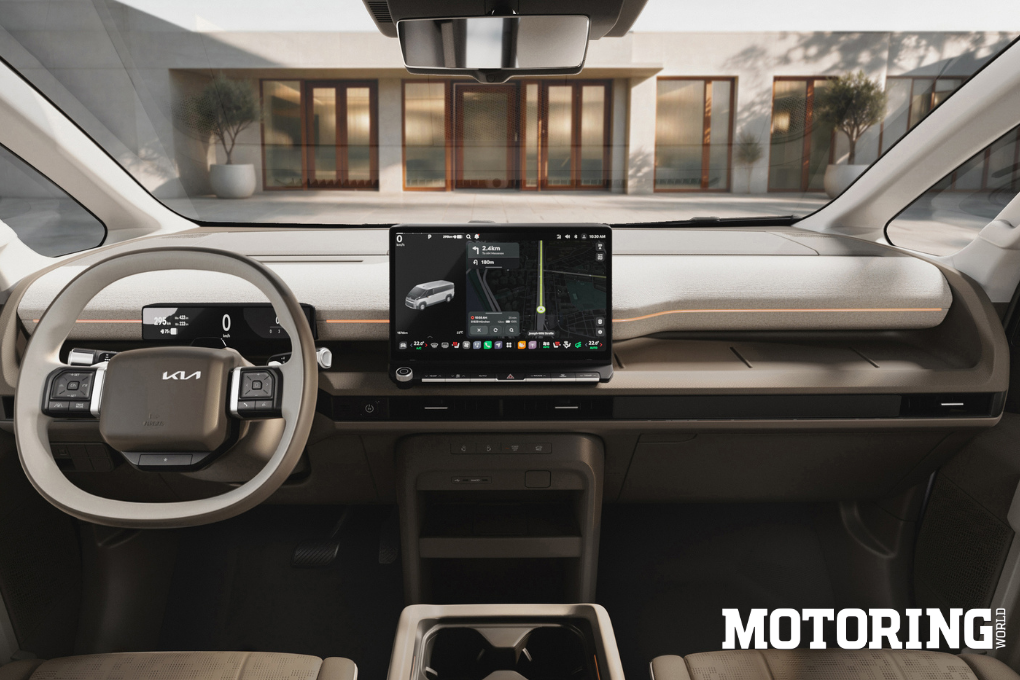
Kia wants 23 PV7 variants
Kia plans to expand the PV7 family to 23 variants, including Cargo Compact, Long and High Roof versions, Passenger Compact and Long versions, a Chassis Cab and a range of conversion models. The PV7 measures 5,350 mm long, 1,995 mm wide and 1,990 mm tall, with a 3,500 mm wheelbase. The preliminary specification lists a 200 kW electric motor and 420 Nm, although Kia notes that final specifications may vary following testing and certification. For now, the PV7 remains a 2027 proposition for Korea and Europe. But Kia’s broader PBV strategy is clear: commercial vehicles are becoming rolling workspaces, connected platforms and increasingly sophisticated electric tools. And judging by the PV7, the humble van is about to get considerably more interesting.