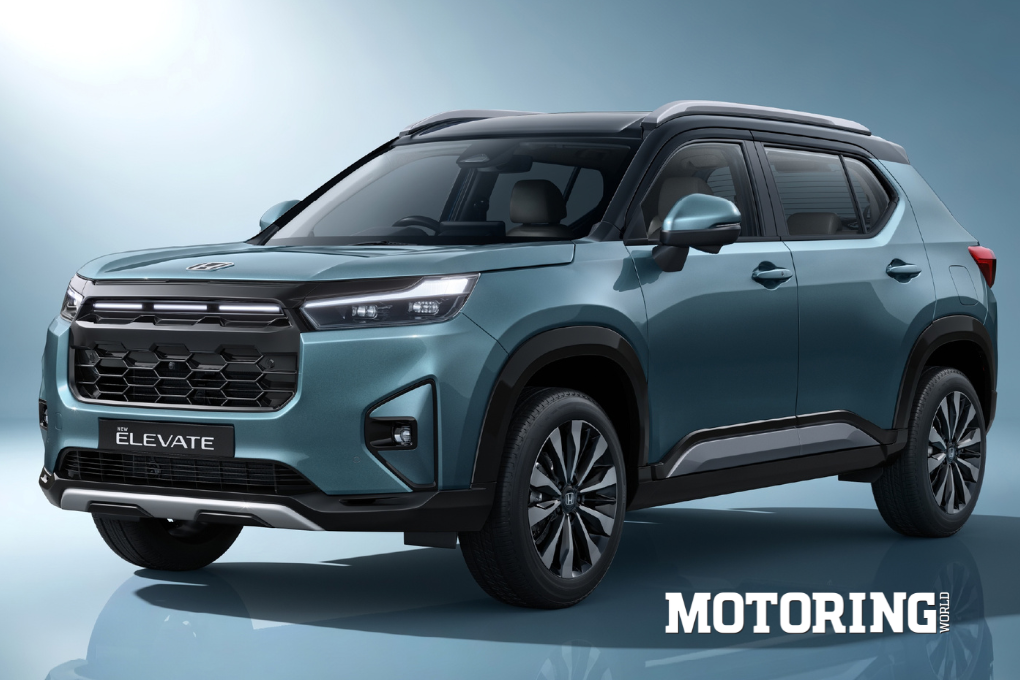


The Honda Elevate was never the SUV shouting for attention in a crowded room. It had a good engine, sensible proportions and enough ground clearance to deal with Indian roads without needing an expedition vehicle. Now Honda has decided to give it a little more presence.
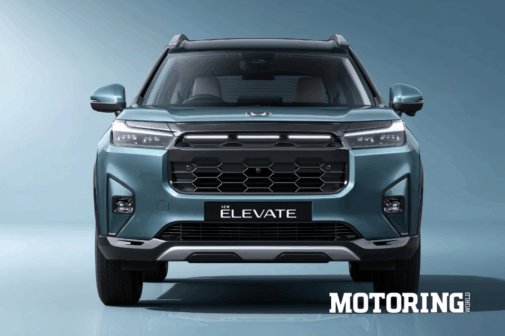
Most of the changes are on the outside. The front gets an all-new Bold Mesh Grille with gloss-black upper moulding and lower garnish, while the Honda ‘H’ has been repositioned. New Rugged Tri-Bar Signature LED Position Lights give the Elevate a more distinctive face, and there is more gloss black across the lower front garnish, side and fender garnishes.
The rear gets a more noticeable makeover. A new full-width Connected Signature LED Tail Lamp stretches visually across the tailgate and gives the SUV a wider stance. There is also a gloss-black rear lower bumper garnish and updated roof rails, all of which push the Elevate a little further towards the rugged end of the SUV spectrum.
The 17-inch dual-tone milling alloy wheels are finished in Berlina Black and Dark Clear. They suit the updated look rather well, even if the Elevate is still far more likely to spend its Friday evening crawling through city traffic than disappearing down a mountain road.
The dimensions haven’t changed. The Elevate remains 4,312mm long, 1,790mm wide and 1,650mm tall, with a 2,650mm wheelbase. Ground clearance remains a useful 220mm, which should continue to be one of its more convincing arguments on Indian roads.
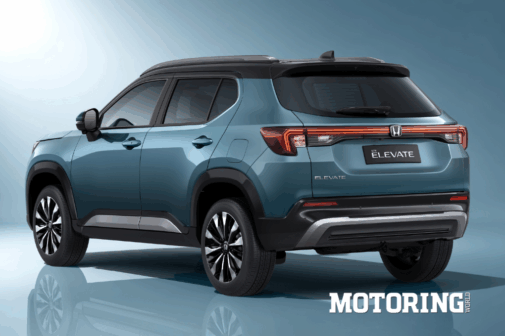
There is also a new Nordic Forest Pearl paint option. You can have it in a single tone or with a Crystal Black Pearl roof.
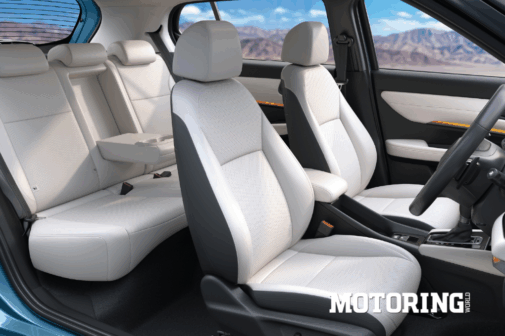
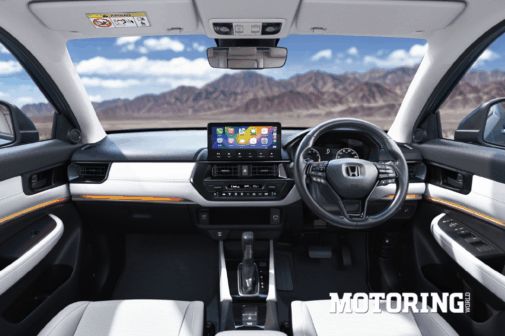
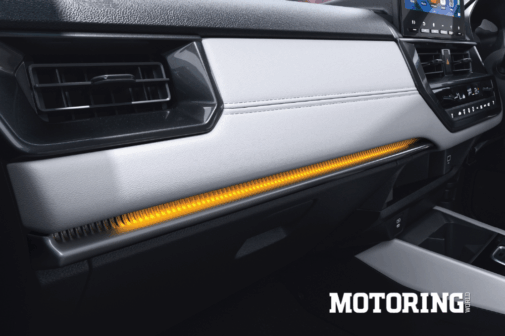
Inside, Honda has given the cabin a more substantial makeover. The new dual-tone Ivory-Black interior gets soft-touch finishes, Active Orange ambient lighting that wraps around the cabin, new interior deco garnishes and Piano Black air vents. There are premium cabin lights too, along with an illuminated passenger-side vanity mirror. Your co-driver can now inspect the damage before taking that questionable selfie.
The more useful changes are to the seats. The Elevate now gets ventilation for both the front and rear seats, along with premium leather upholstery. The driver gets an eight-way power-adjustable seat, while the front passenger gets four-way electric adjustment. There is also a one-touch electric sunroof.
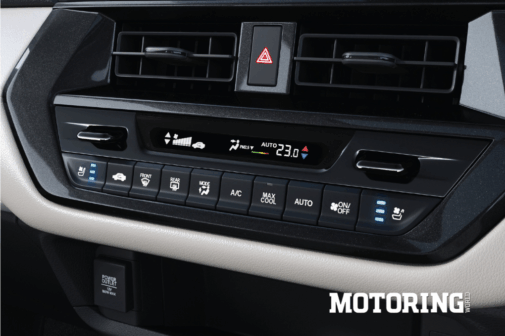
That should make the Elevate a more pleasant place to spend time, particularly during an Indian summer when the temperature seems determined to test the limits of both your patience and your air-conditioning.
The technology package has also grown considerably. A new 360-degree Surround Vision Camera joins the front and rear parking sensors. The 17.78cm digital-analogue instrument cluster now gets a 7-inch HD TFT display, with information covering fuel consumption, trip data, outside temperature, G-Meter readings and Honda SENSING settings.
The centre of the dashboard gets a 10.25-inch floating IPS HD touchscreen. It brings wireless Apple CarPlay and Android Auto, Bluetooth and USB connectivity, along with multiple camera views.
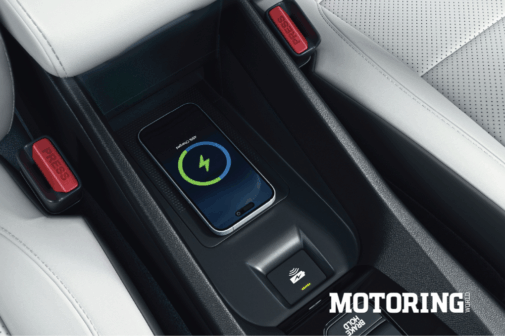
There are USB Type-C ports front and rear, a PM2.5 air-quality display with an auto clean-air function and an eight-speaker premium surround sound system. In short, Honda has brought the Elevate’s cabin much closer to what buyers now expect from a modern SUV.
Under the bonnet, however, Honda has resisted the temptation to start fiddling with something that already works.
The New Elevate continues with the 1.5-litre i-VTEC DOHC petrol engine, producing 119 bhp and 145 Nm. You can have it with either a six-speed manual or a CVT with Sporty 7-Speed Paddle Shift. Claimed fuel efficiency stands at 15.31 kpl for the manual and 16.61 kpl for the CVT.
So there is no turbocharger and no hybrid system. Honda has stuck with its naturally aspirated petrol engine, which remains a straightforward proposition in a segment increasingly populated by more complicated powertrains.
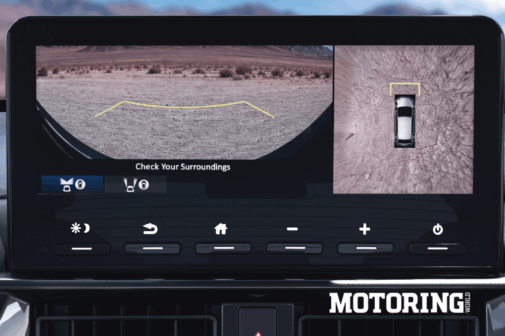
Safety equipment remains comprehensive. The Elevate gets six airbags, ABS with EBD, Brake Assist, Vehicle Stability Assist, Hill Start Assist, an electric parking brake with Auto Brake Hold and the new 360-degree camera.
Honda SENSING adds Collision Mitigation Braking, Adaptive Cruise Control, Road Departure Mitigation, Lane Keeping Assist, Lead Car Departure Notification and Auto High-Beam. CVT versions also get Low Speed Follow.
The range consists of five manual grades and four CVT variants. Prices start at ₹11.80 lakh for the SV manual and go up to ₹18.40 lakh for the ZX+ Black CVT, ex-showroom Delhi.
The changes leave the Elevate in a slightly more interesting position than before. Honda hasn’t tried to turn it into something radically different. Instead, the company has concentrated on the areas where the original car was beginning to feel behind the times.The styling has more attitude, the cabin has picked up some much-needed richness and the equipment list is considerably longer. Crucially, the basic formula remains intact. You still get the naturally aspirated 1.5-litre petrol, a choice of manual or CVT and 220mm of ground clearance.
That makes the updated Elevate a fairly straightforward proposition. If you liked the original for its uncomplicated mechanical package and sensible dimensions, there is little here to put you off. If you thought the earlier car looked and felt a little too plain next to newer rivals, Honda has addressed that too. The result is an Elevate with a bit more swagger without losing the sensible character that made it appealing in the first place.