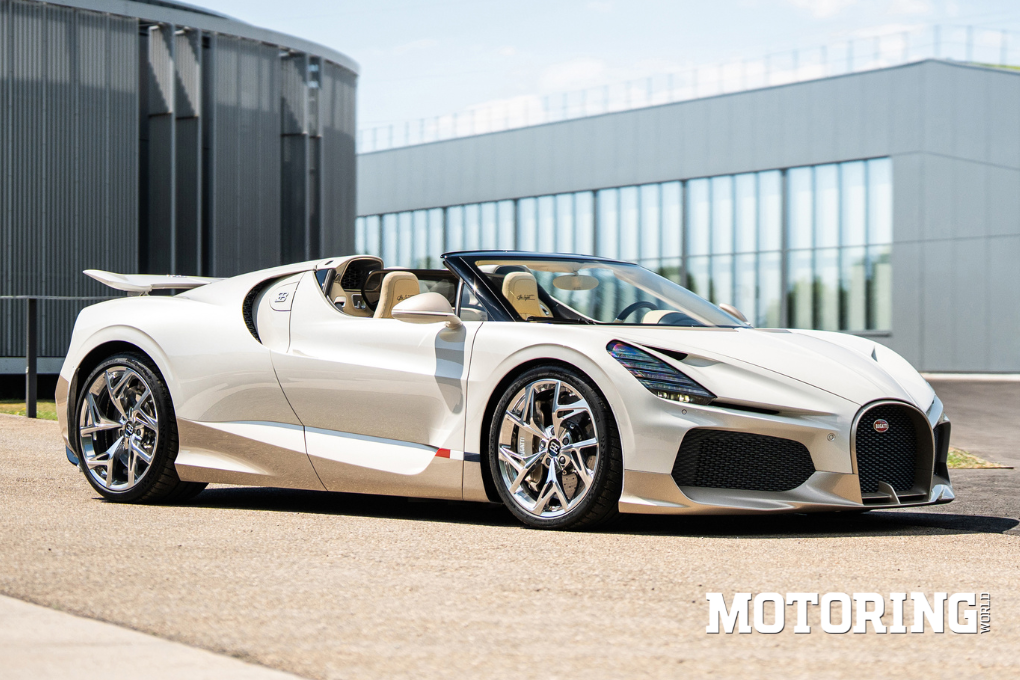


Bugatti has officially closed one of the most remarkable chapters in modern automotive history. The final W16 Mistral has left the company’s Atelier in Molsheim, marking not only the end of production for the open-top hypercar but also the conclusion of the legendary road-going W16 engine that has defined the brand for the past two decades.
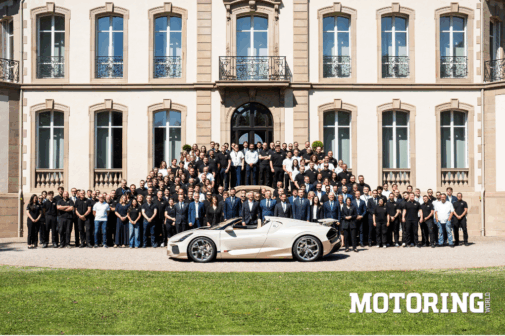
The moment arrives just days after Bugatti inaugurated La Manufacture, its new production facility that will build the forthcoming Tourbillon. Symbolically, the two events represent the passing of the torch. As production begins for Bugatti’s next generation of hypercars, the engine that powered icons such as the Veyron, Chiron and W16 Mistral has now reached the end of its production journey.
First revealed during Monterey Car Week in 2022, the W16 Mistral was conceived as the ultimate open-top celebration of Bugatti’s extraordinary 8.0-litre quad-turbocharged W16 engine. It quickly became one of the company’s most sought-after models, with all 99 examples spoken for long before customer deliveries commenced. Over the following years, the roadster toured the globe, appearing at exclusive showcases across Japan, Singapore, Riyadh, Dubai and several other markets before entering production in early 2025.
The model’s defining moment arrived in November 2024, when Bugatti test driver Andy Wallace piloted the one-off W16 Mistral World Record Car to a staggering 453.91 kmph at the ATP Automotive Testing facility in Papenburg, Germany. That achievement secured its place as the world’s fastest open-top production car and provided a fitting final accolade for an engine that has repeatedly rewritten the limits of performance throughout its lifetime.
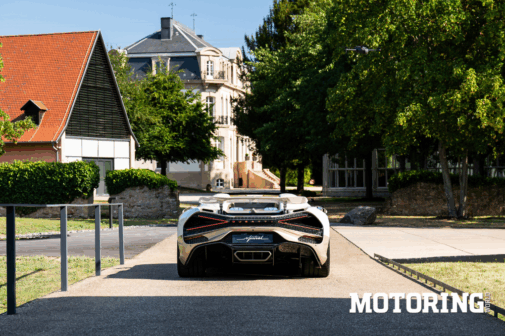
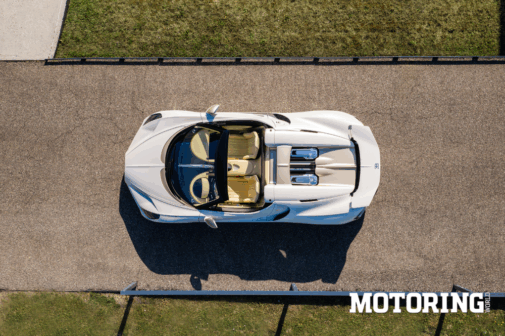
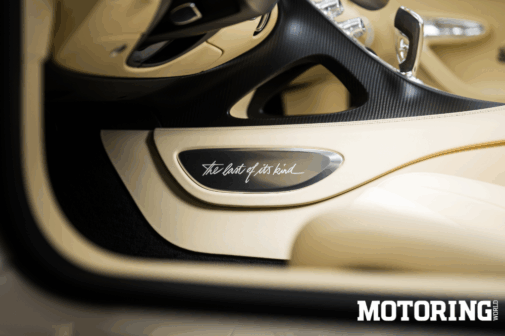
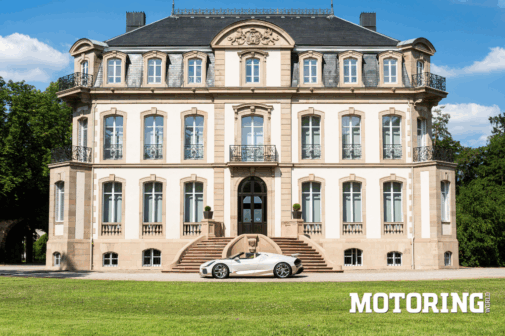
The final production example itself has been finished in an elegant combination of Pearl and Sparkle paintwork, paired with a Magnolia and Grey Carbon Matt interior. While understated at first glance, every detail has been chosen to celebrate the significance of the occasion. Inside the cabin, a dedicated plaque carrying the words “The last of its kind” sits alongside a silhouette of the W16 Mistral, acknowledging its role as the final road-going Bugatti to feature the iconic sixteen-cylinder engine.
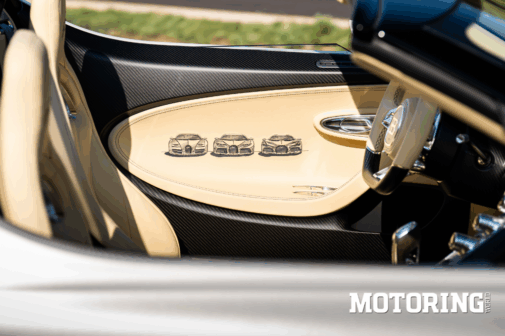
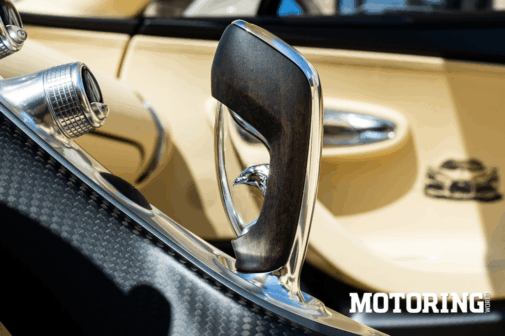
The bespoke touches continue throughout the car. Ettore Bugatti’s signature appears embroidered into the headrests, integrated into the aluminium door sills and even replaces the traditional Bugatti signature on the engine cover’s inner trim. The centre armrest features a crystal artwork titled Spirit of the Wind, created in partnership with Lalique, continuing a relationship that dates back to Ettore Bugatti and renowned French glassmaker René Lalique. Meanwhile, the owner requested a falcon sculpture in place of Bugatti’s traditional elephant gear selector, reflecting the cultural significance of the bird in the Middle East, where the car will eventually reside.
Throughout the W16 Mistral’s production run, Bugatti’s Sur Mesure division worked closely with each customer to create individually tailored examples, ensuring no two cars were identical. Earlier this month, the marque unveiled the one-off Blanc Éternel, inspired by the craftsmanship of Königliche Porzellan-Manufaktur Berlin, highlighting the extraordinary level of personalisation available to owners.
For Bugatti, however, the W16 Mistral represents something far greater than a limited-production roadster. It is the final expression of an engine that transformed the automotive world when it debuted in the Veyron in 2005. The sixteen-cylinder powerplant went on to underpin every modern Bugatti flagship, delivering unprecedented levels of performance while simultaneously redefining expectations of refinement, engineering and luxury.
With production now complete after just 99 examples, the W16 Mistral brings that remarkable story to a close. Future Bugatti models will enter a new electrified era with the Tourbillon, but the legacy of the W16 will remain inseparable from the brand’s modern identity. The last W16 Mistral is more than another collector’s hypercar. It is a tribute to one of the most extraordinary engines ever fitted to a road car, and a fitting finale to a chapter that is unlikely to be repeated.