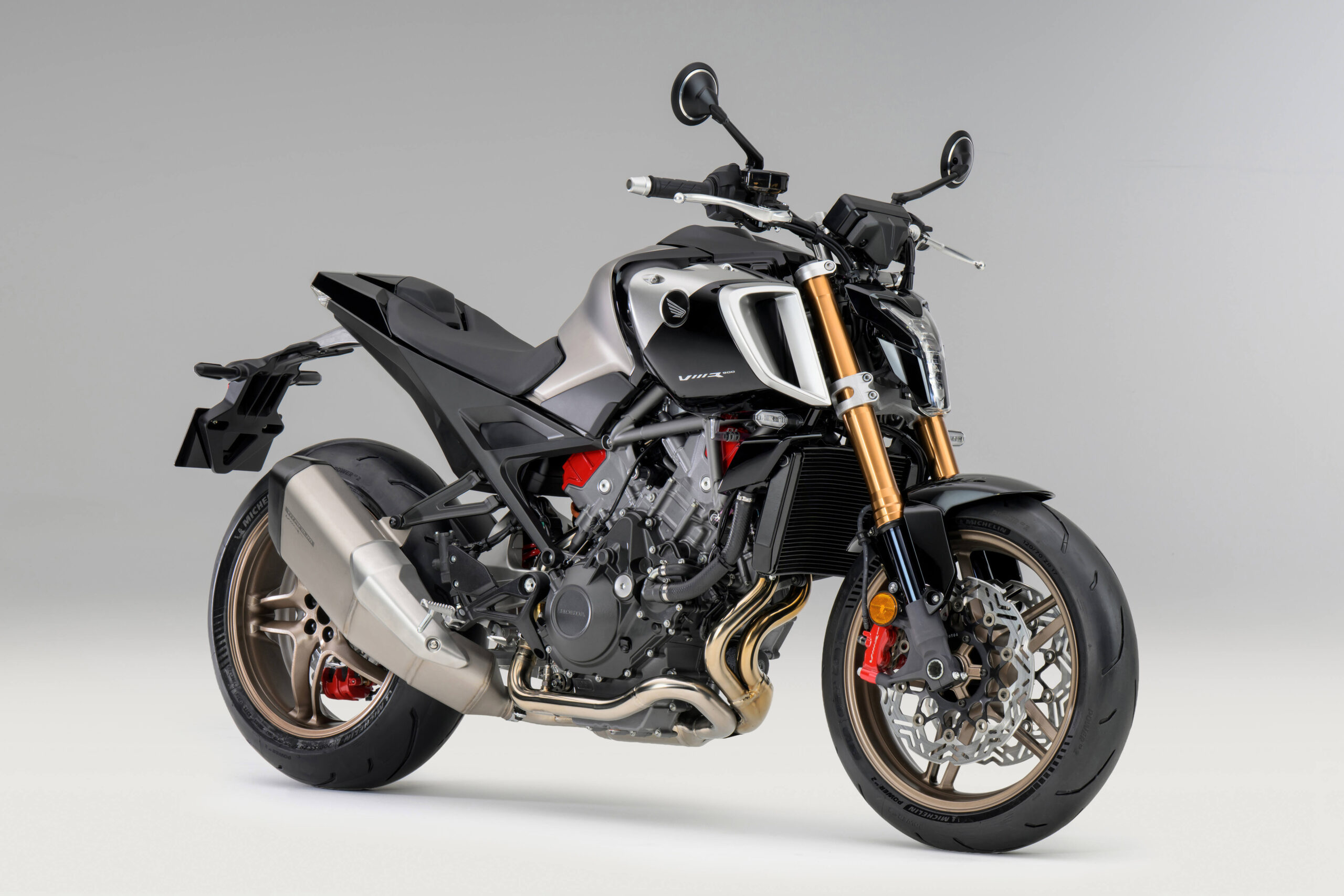


Honda has taken one of its most ambitious motorcycle-engineering projects a significant step closer to reality. The V3R 900 E-Compressor, which first appeared as a prototype at EICMA 2025, has now been presented as a planned production model at EICMA 2026. At its heart is a 900cc, 75-degree V3 engine equipped with what Honda claims is the world’s first electronically controlled compressor for a motorcycle. The technology aims to deliver the performance of a considerably larger engine without the weight and packaging compromises traditionally associated with forced induction.
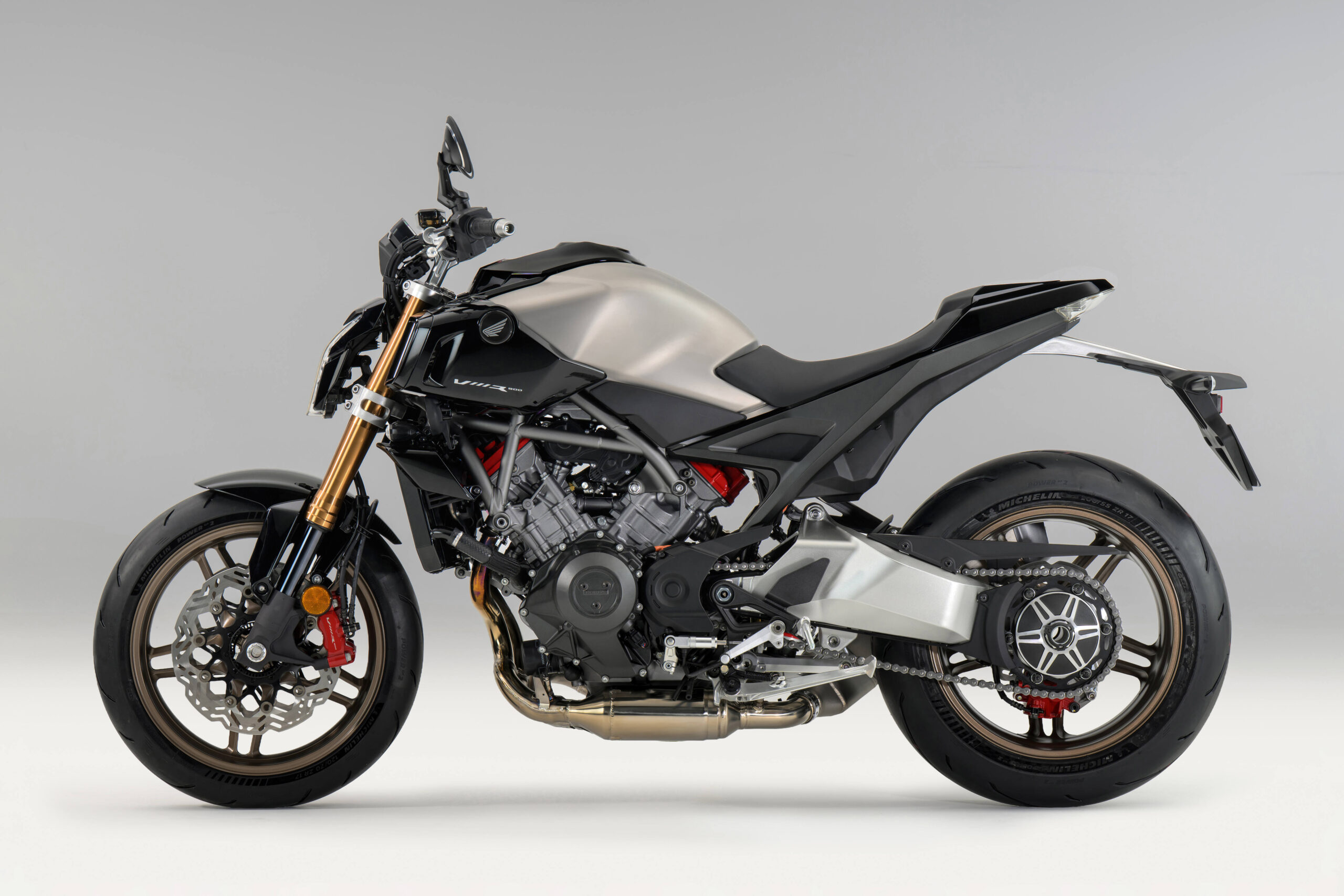
The V3R’s engine is based on the 75-degree V3 architecture Honda first showcased at EICMA 2024. The liquid-cooled, 900cc unit has been developed to be particularly slim and compact, an important consideration when packaging a forced-induction system within the confines of a motorcycle.
Honda’s development target is performance comparable to that of a 1,200cc engine, while retaining the compact dimensions and balanced characteristics of a 900cc motorcycle. The manufacturer is also pursuing improved environmental performance alongside its performance objectives.
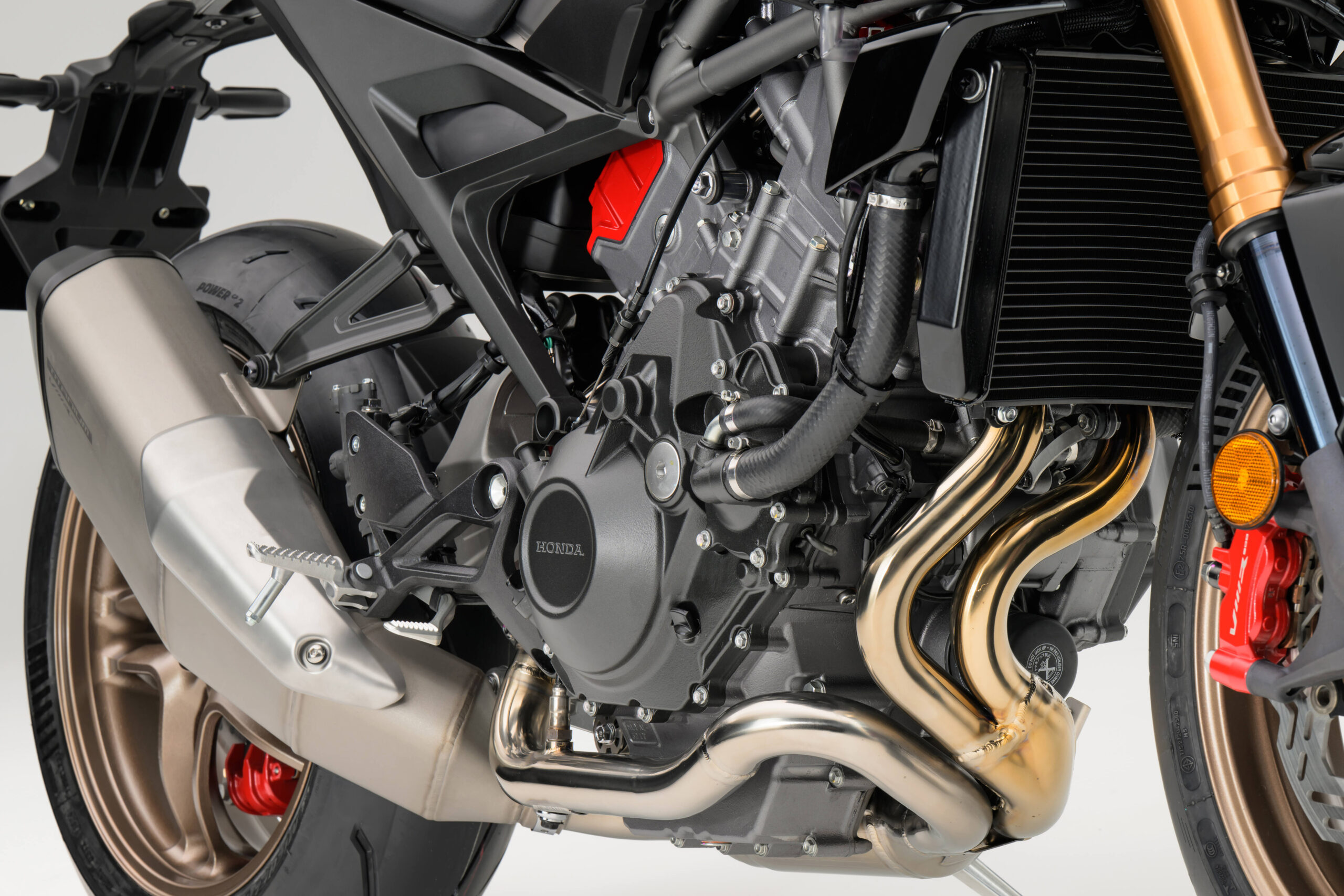
One of the biggest advantages of the electronically controlled compressor is the freedom it offers engineers when positioning engine components. Since the system does not need to be mechanically driven by the crankshaft, Honda has greater flexibility in arranging the compressor and associated components. This helps with mass centralisation and allows the engine to remain relatively compact. Honda has also confirmed that the system does not require an intercooler, further simplifying packaging and reducing the number of components.
Importantly, Honda has not yet disclosed the engine’s final power and torque figures, nor has it announced the compressor’s operating parameters. The 1,200cc comparison is therefore a development target rather than a confirmed output figure.

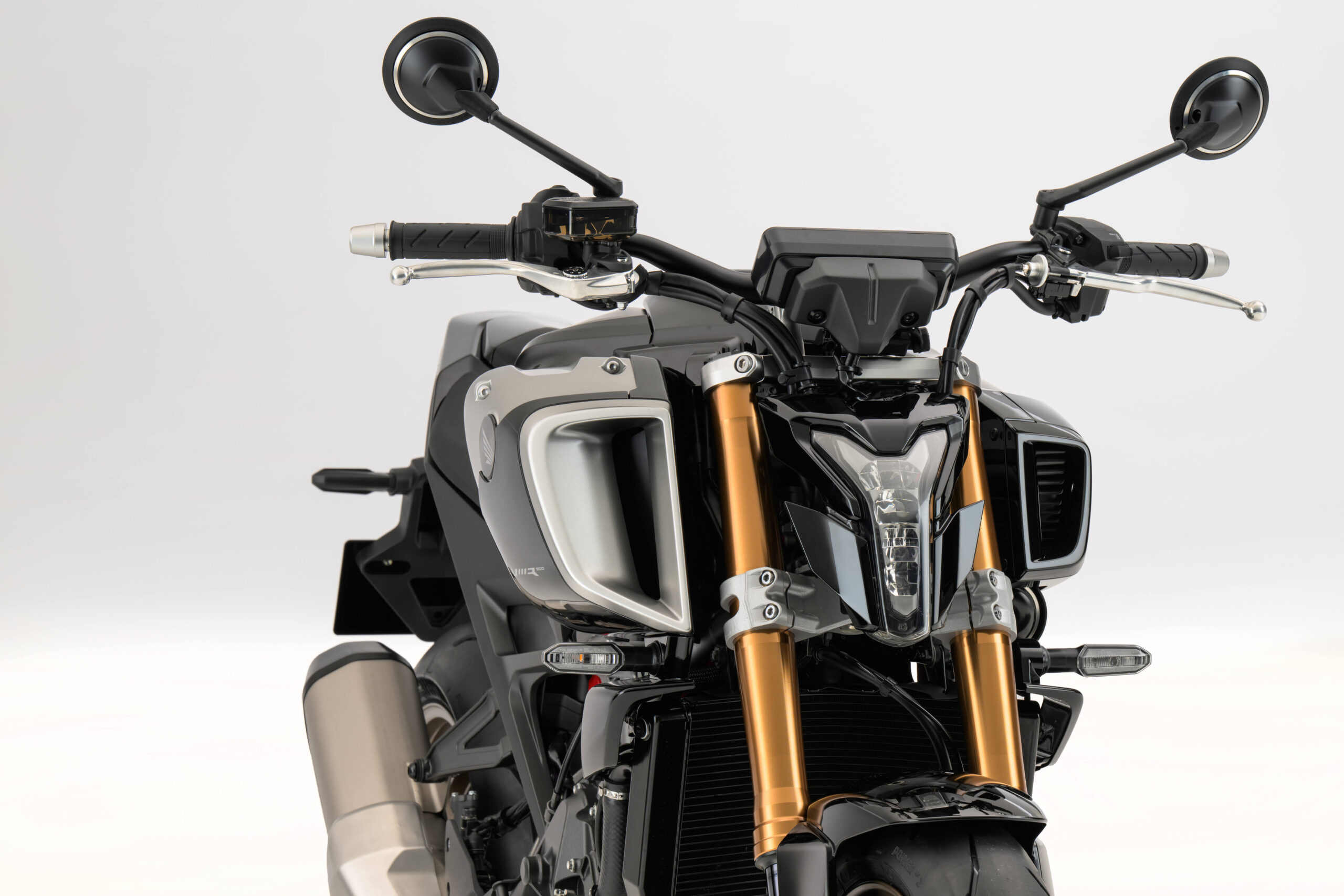
The V3R 900 E-Compressor looks quite unlike a conventional Honda naked motorcycle. Its design is deliberately stripped back, allowing the unusual engine configuration and its associated hardware to become the visual centrepiece.
One of its most distinctive features is the asymmetrical bodywork. The side ducts on either side of the tank are deliberately different, creating an unconventional profile that draws attention to the motorcycle’s induction and cooling architecture. Rather than concealing the engineering beneath extensive bodywork, Honda has made it part of the motorcycle’s visual identity.
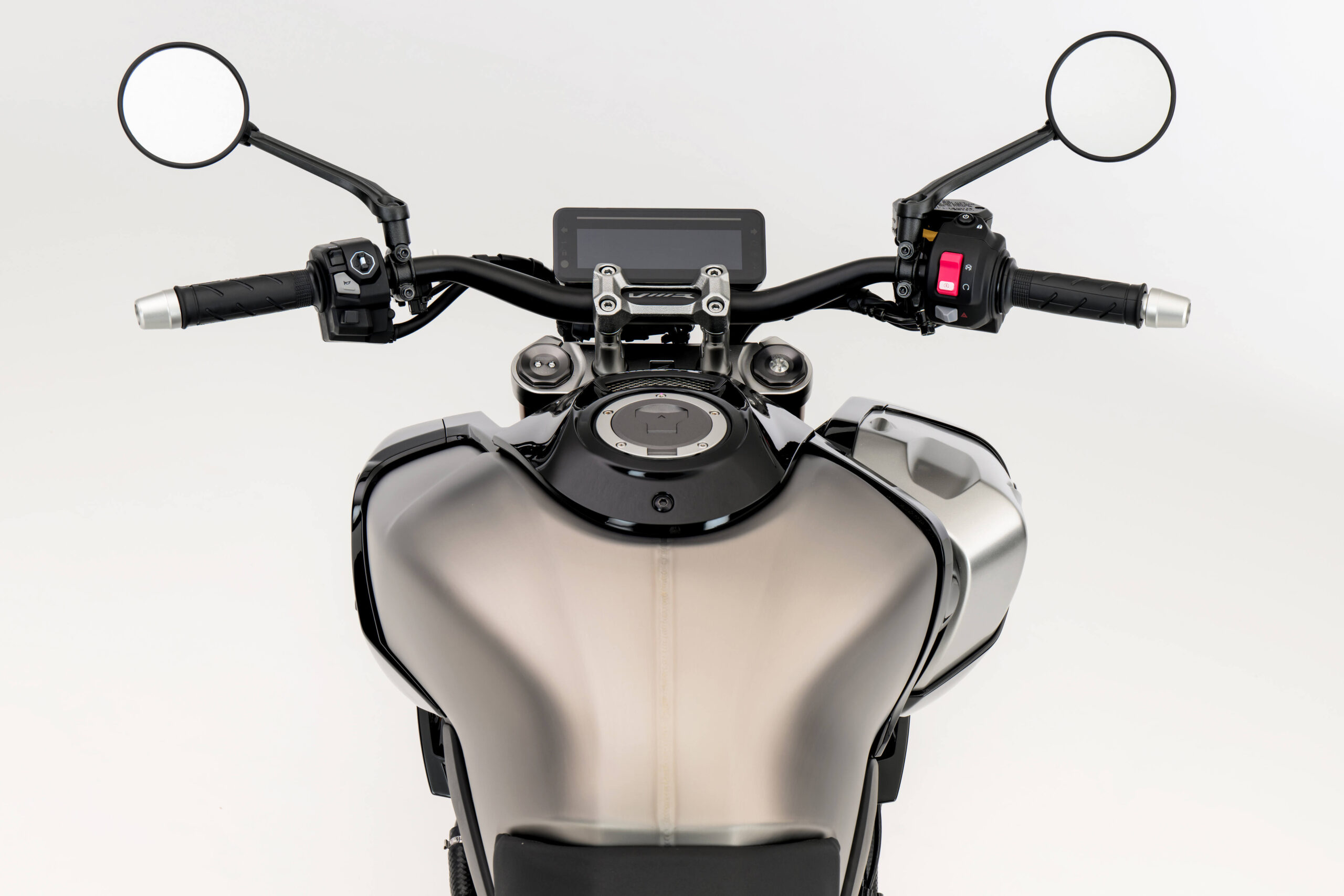
The motorcycle also features a single-sided Pro-Arm swingarm, giving the rear wheel a more exposed appearance while adding to its premium mechanical appeal. The fuel tank, exhaust pipes and muffler are made from titanium, an unusual material choice that highlights the model’s flagship positioning. The use of titanium also offers weight-saving benefits compared with conventional steel components.
Another important detail is the new Honda Flagship Wing emblem on the tank. First shown on the earlier V3R prototype, this emblem is intended to distinguish Honda’s future top-tier motorcycles and will gradually be introduced across its flagship range.
The V3R’s technology package also includes an enhanced version of Honda RoadSync. The updated system features an improved human-machine interface designed to make operation more intuitive, along with AI-powered voice controls. Honda has not yet detailed the full range of connected functions or the extent of voice-assistant integration.
The motorcycle’s development is guided by Honda’s ‘Non-Rail Roller Coaster’ concept. The unusual name describes the two contrasting characteristics the company wants to achieve: the excitement and thrill of strong performance, combined with the reassurance and predictability of a well-controlled motorcycle. In other words, Honda is not simply chasing a big power figure; it wants the new engine technology to deliver accessible, manageable performance.
The V3R 900 E-Compressor was first introduced as an engine concept at EICMA 2024, followed by a complete prototype at EICMA 2025. Its appearance as a planned production model at EICMA 2026 marks a substantial step forward in the project. Honda says development is continuing towards mass production, although it has not announced a production date, final specifications, pricing or the markets in which the motorcycle will be sold.
For Honda, the V3R represents an unusual but significant investment in the future of the internal-combustion motorcycle. At a time when manufacturers are increasingly exploring electrification, Honda is attempting to rethink what a conventional petrol engine can achieve. And instead of adding another cylinder, increasing displacement or relying on a traditional turbocharger, it has developed an entirely new way of forcing air into a motorcycle engine. Whether the V3R ultimately lives up to its ambitious performance target remains to be seen, but the engineering behind it is already one of the more interesting developments in modern motorcycling.