

The Mercedes-Benz GLC is a giant screen with a 94 kWh battery and four wheels. There, I said it.
This is not meant as an insult (at least not entirely). I spent a day driving the new electric GLC around the countryside outside Stuttgart, beginning at the Mercedes-Benz Museum, and by the time I returned to the museum, I had reached the uncomfortable conclusion that the Germans have built an extremely good automobile around what appears to be the cockpit of a luxury television.
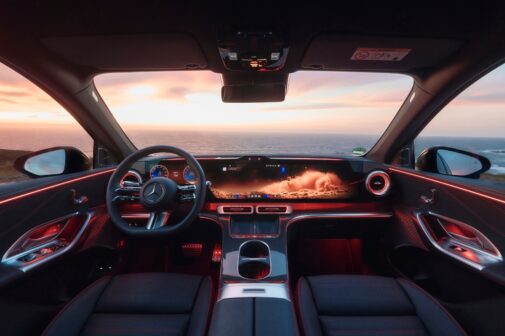
You can’t escape the screen, because it’s the dashboard. There is a very large section in the middle, another one in front of the driver and various other digital surfaces that seem to be waiting patiently for their opportunity to tell you something. There is so much tech in this cabin that I began to feel like the least qualified person in the vehicle. I’ve been driving cars for a long time, yet somewhere between the ambient lighting settings and all the touchscreen menus, I started wondering whether Mercedes might eventually ask me to complete a software certification course before allowing me to select Drive.
I don’t like screens in cars, if that hasn’t become obvious by now. This is becoming a problem, because car companies have decided that I am wrong. My ideal dashboard contains a steering wheel, some instruments, a few switches and a physical knob for anything involving air-conditioning. If I want to swipe, pinch, scroll or summon a digital assistant, I have a phone. It’s already in my pocket, where it can ruin my attention span without requiring a wheel, four tyres and a monthly charging strategy. Mercedes has other ideas, of course.

The new GLC Electric is a rolling declaration that the automobile has entered the electronics era and is never coming back. The combustion engine, which once represented the pinnacle of automotive sophistication, has been replaced by a large battery and a computer that knows more about your preferences than some members of your family. The thing is, after several hours behind the wheel, I found myself rather liking the GLC. This was somewhat annoying.
The day began at the Mercedes-Benz Museum, which is perhaps the worst possible place to start driving an electric Mercedes if you are fond of old cars. The museum is filled with machines from an era when automotive progress involved pistons, enormous amounts of metal and engineers who likely went home smelling of oil. There are cars in there that look like they were designed by people who believed a machine should have visible evidence of its machinery. You can see the mechanical bits. You can imagine what they do. Then you walk outside and get into the GLC Electric, and the first thing you notice is the screen. The second thing you notice is the screen, and so on.
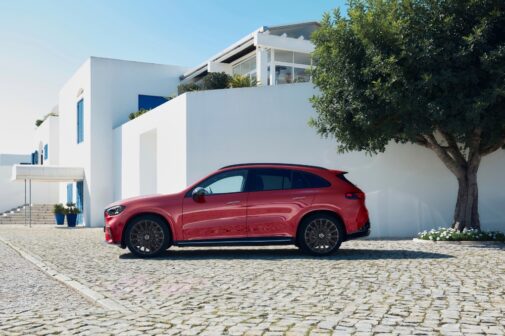
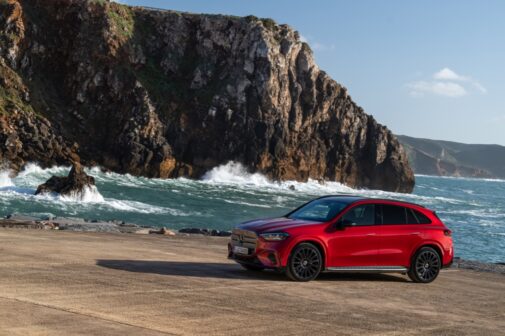
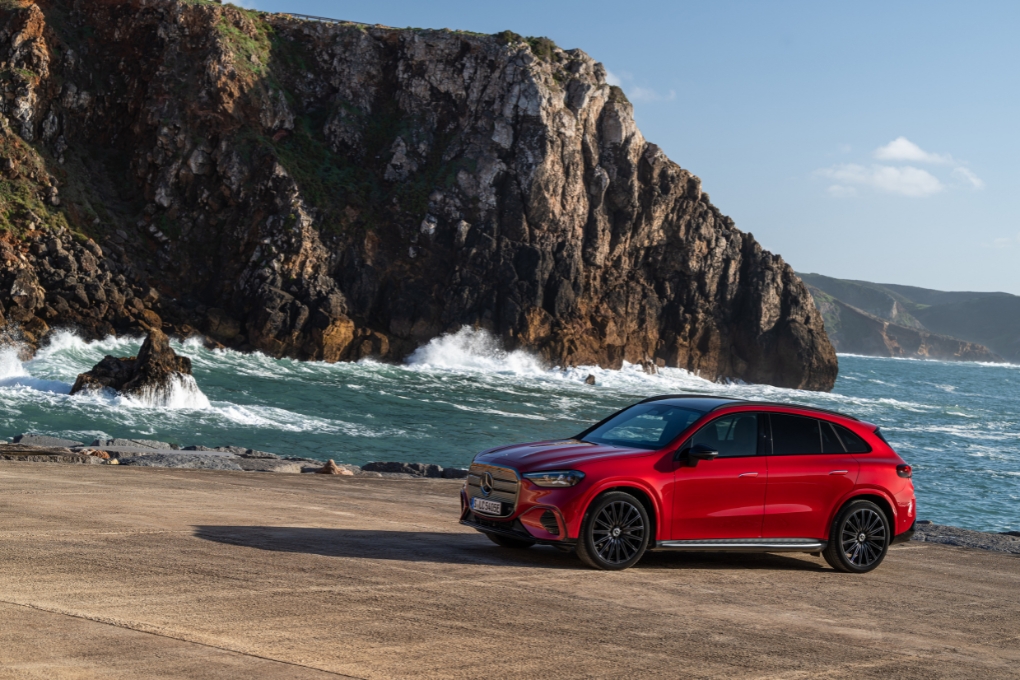
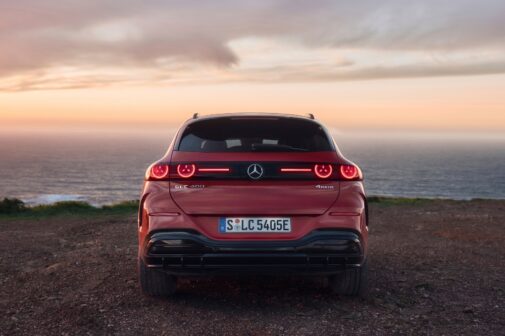
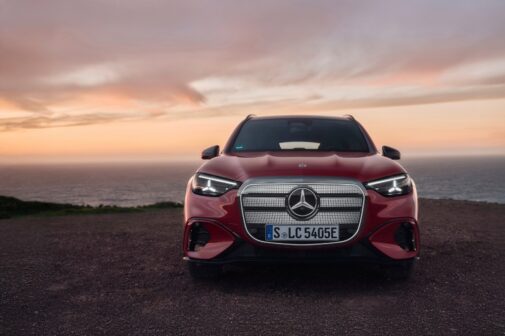
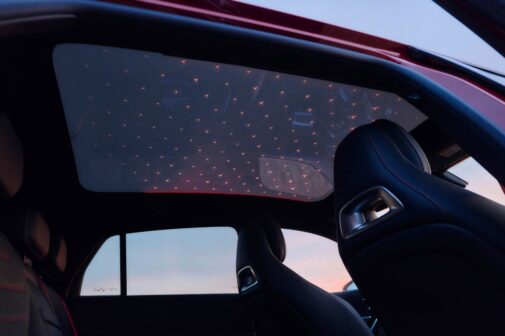
The GLC itself is handsome enough, although ‘handsome’ has become an increasingly complicated proposition in the electric-SUV age. Without a conventional grille, designers have to find other ways of making a large object travelling at considerable speed look purposeful. Mercedes has done a decent job of this. The front is smooth and enclosed, the lighting is elaborate without becoming completely ridiculous and the familiar three-pointed star remains firmly in charge of proceedings. There are lots of illuminated details, because we now live in an age when a luxury car needs to glow. I’m waiting for the day someone buys a Mercedes and complains to the dealer that the badge isn’t sufficiently visible from space.
Still, the GLC manages to avoid looking like a science-fiction prop. It retains enough of the visual identity of the conventional GLC to remain recognisable, while the smoother surfaces and cleaner detailing tell you that something rather different is happening underneath — and what is happening underneath is extremely quiet.
The electric powertrain gets to work without any of the theatrical fuss associated with an ICE engine. You have 490 bhp and 800 Nm at your disposal, with a claimed 0-100 kph time of a very handy 4.3 seconds. There is no starter motor grinding into life, no mechanical tremor through the body and no transmission deciding whether it would prefer 5th or 6th gear (mainly because the GLC has a two-speed transmission). You simply press the accelerator and the GLC moves — very quickly. This is one of the things electric cars have become extremely good at. They make enormous power available with the casual indifference of a vending machine dispensing a packet of chips.
The cabin is where Mercedes really lets the digital age loose. The 39.1-inch Hyperscreen stretches across the dashboard with the confidence of something that knows nobody is going to remove it. It is bright, very sharp and extremely impressive. It also contains enough functions to keep a reasonably intelligent person occupied for several hours, which is useful if you happen to be parked somewhere. While moving, however, I would rather concentrate on the road. This makes me something of a dinosaur in modern automotive circles, and I gladly accept this. I am increasingly comfortable with my status as a man who would like a switch to perform the task for which switches were invented.
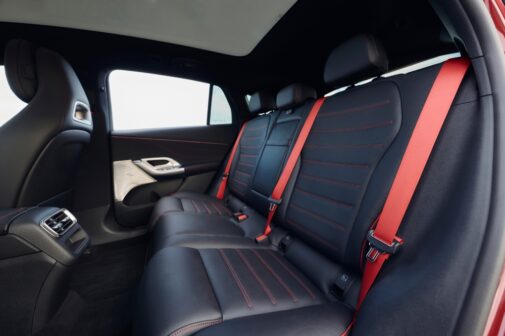
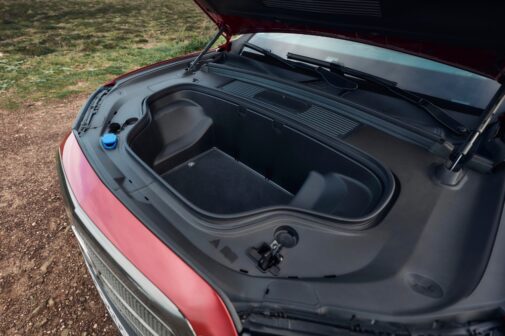
The irony is that the Mercedes system is actually very good. The graphics are crisp, responses are quick and the menus are reasonably logical. You can configure a remarkable amount of the car, which is both useful and slightly exhausting. The seats are excellent, as they damn well should be. The driving position is comfortable and commanding, without giving you the sensation that you are piloting a small apartment block. There is plenty of space in the back, and the cabin has the quiet, insulated quality that makes long-distance travel in a Mercedes so appealing. The boot is huge, and I’m reliably informed that the frunk will take over 2000 golf balls, should that particular desire seize you.
The electric powertrain helps enormously with the driving experience. Without an internal-combustion engine sitting somewhere in front of you, the cabin becomes a much calmer place. There is less mechanical noise and vibration, and the GLC moves through the landscape with the slightly eerie serenity of a well-funded ghost. The countryside around Stuttgart is almost offensively picturesque. The roads curl through green hills and tidy villages, with bends arriving often enough to make you forget about the enormous touchscreen in front of you. This is where the GLC Electric becomes more interesting.
Electric SUVs have a built-in advantage when it comes to weight distribution. Put a large battery low in the floor and the centre of gravity drops. The GLC feels planted as a result, with a reassuring sense of stability through faster corners, even though the steering wheel isn’t as talkative as it should be. It’s still a very heavy vehicle, and physics has not yet been persuaded to make an exception for German engineering. You know there is a lot of mass underneath you, particularly when you ask the car to change direction quickly, but the chassis keeps it under control, with the AWD system and rear-wheel steering helping things considerably.
The steering is accurate rather than theatrical; Mercedes hasn’t tried to turn the GLC into a giant sports car, which is sensible. There are already plenty of SUVs pretending to be racing cars while carrying enough luggage to relocate a small family. The GLC has other priorities. It wants to be quiet, comfortable and effortlessly quick. It wants to make long distances feel short. It wants to isolate you from the unpleasant bits of the road, while providing enough information to convince you that you are still driving a car rather than sitting in an airport lounge. It succeeds.
The ride is especially impressive. The mass of the battery can make electric cars challenging to tune, because suspension engineers are effectively being asked to persuade several hundred kilograms of chemistry to behave itself. The GLC generally manages it, and rides with the sort of composure you expect from a large Mercedes. Broken surfaces don’t turn into cabin events. The body remains controlled, and the occupants are spared the sort of violent vertical rearrangement that some performance-oriented SUVs seem to consider a feature.
This will matter in India, because the Indian luxury-car buyer has become considerably more demanding. A car costing serious money is expected to be comfortable, sophisticated and technologically impressive, but it also has to survive roads that were designed during negotiations between civil engineers and geological forces. The GLC Electric should do very well here. It has the right size, the right badge and the sort of quiet, effortless performance that suits an urban luxury SUV. The cabin will appeal to buyers who enjoy technology, particularly those who regard a large touchscreen as evidence that they have spent their money wisely. People like me will complain about it, and will then use it. Oh, and its WLTP figure of 715 km means that you’ll easily be able to squeeze 600+ km out of it on a single charge.
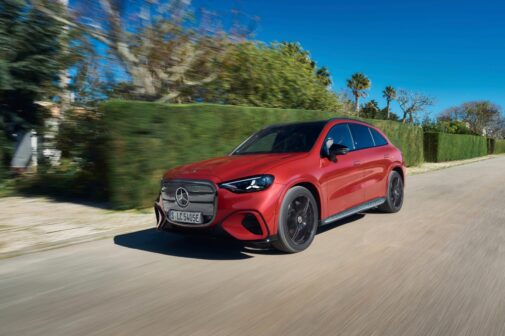
There is a larger question, of course, about whether the electric GLC is actually better than the combustion-engined version. I arrived in Germany expecting the answer to be complicated, but it isn’t — the electric GLC is better. I don’t particularly enjoy admitting this, since I like engines. I like the sensation of machinery doing something mechanical. There is something satisfying about knowing that thousands of tiny explosions are taking place a few feet in front of you and that somebody, somewhere, spent years figuring out how to make those explosions happen in exactly the right order.
The GLC Electric doesn’t care about this, and just goes. The response is pinned-to-your-seat instant, the power delivery is smooth and freight-train-like and the entire experience feels more effortless than the ICE versions. There is no waiting for a gearbox (even though this car has two cogs), no engine noise and none of the mechanical fuss that comes with moving a large combustion engine through its operating range, and the result is a better luxury car.
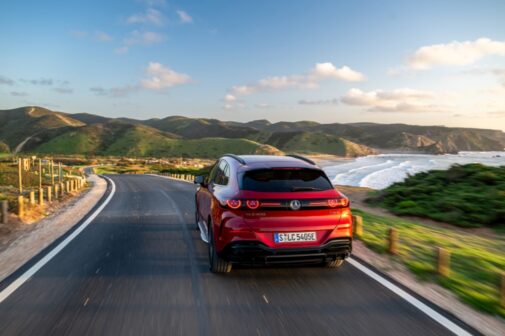
That doesn’t mean I have suddenly become an evangelist for electric vehicles. I still like engines, and I still distrust cars that need software engineers to explain their menus, but I also have to acknowledge when a machine defeats my prejudices, which the GLC comprehensively does. By the time I returned to the Mercedes-Benz Museum, the enormous screen had become almost invisible. I had stopped thinking about it, because the rest of the car was doing its job so effectively. The GLC Electric feels like a Mercedes first and an electric car second.
And so I found myself standing outside the museum, looking lovingly at the old Mercedes cars parked right outside, waiting to be driven (yes, Merc had lined them up for us as well) and wondering what someone from 1960s would have made of the GLC. Probably nothing good. They would see the absence of an engine, the glowing badge, the enormous displays and the silent acceleration. They might reasonably conclude that the automobile had gone insane, and they might have a point – but they’d also have to admit that it drives beautifully. The Mercedes-Benz GLC Electric is, indeed, a giant screen with a battery and four wheels. I still don’t like screens, but I have no choice except to admit that I rather like the car.
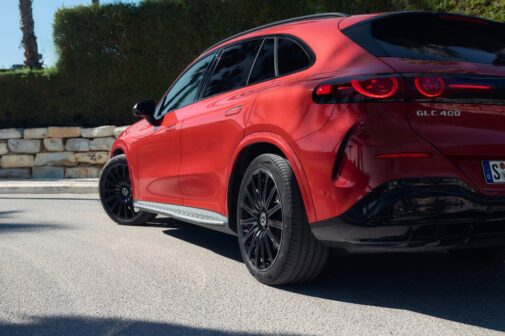
AUTODATA: Mercedes-Benz GLC 400 4MATIC
POWERTRAIN:
Battery: 94 kWh
Max power: 490 bhp
Max torque: 800 Nm
Range: 715 km WLTP
Tyres: F/R: 235/45 R21/265/40 R21
DIMENSIONS:
L/W/H(mm): 4845/1913/1644
Wheelbase: 2972 mm
Ground clearance: 159 mm – 220 mm (Airmatic)
Kerb weight: 2535 kg
PRICE:
Rs 85 lakh (estimated, ex-showroom)