

I’ve said this in the past, and I’ll say it again: electric scooters are probably the best mode of transport for our ever-growing cities. The running costs, the ease of use, the increasingly impressive technology and, most importantly, the fact that you don’t have to visit a petrol pump every few days all make a rather compelling case. Our market has seen a shift towards electrification, and that is a great thing. However, the spectrum has predominantly inclined itself towards the performance and sporty side of things.
I get where the idea comes from. The younger generation wants to be part of a cool revolution. They want acceleration figures, fancy screens and enough torque to make their mates question their life choices. However, somewhere in the mix, manufacturers almost forgot about the real investors in these machines: parents. And convincing parents to buy an electric scooter requires a very different sales pitch. Range anxiety, charging infrastructure and reliability are all concerns, but so is the much simpler question of whether the thing is practical enough to replace the family’s existing scooter.
Enter the family electric scooter. They’ve been around for a good minute now. The Ather Rizta, TVS iQube, Bajaj Chetak, Ather’s 450X-based family offerings and many more have shown that there is a sizeable audience that doesn’t want their scooter to look like it escaped from a science-fiction film. They want something comfortable, useful, dependable and preferably capable of carrying two people, three bags of vegetables and a child who has somehow brought home a cricket kit. Now there’s another contender — the Simple Wave.
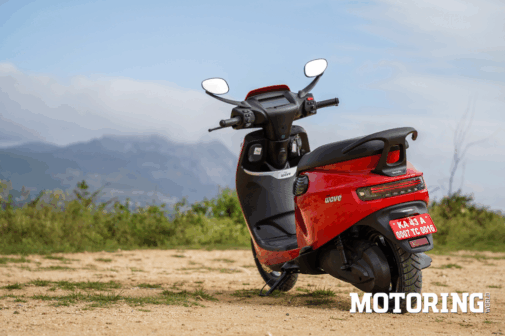
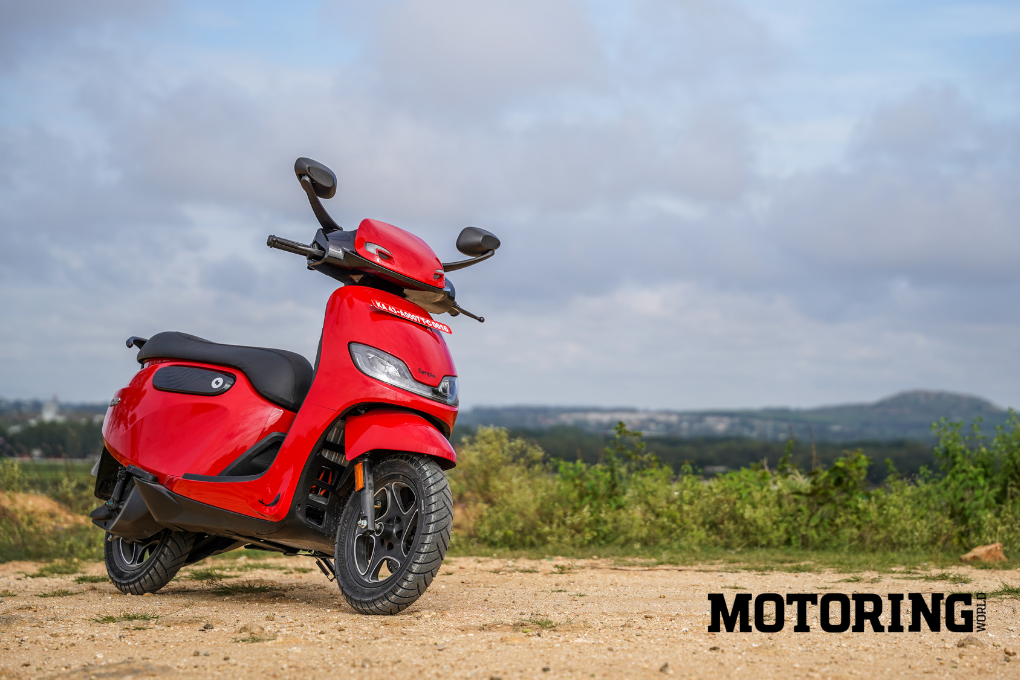
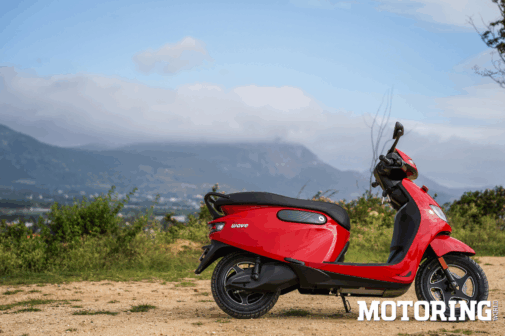
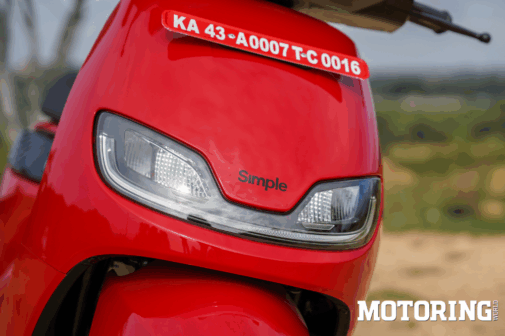
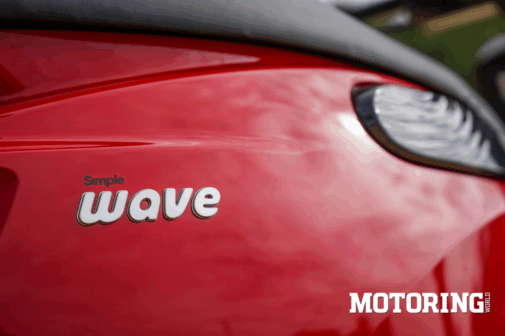
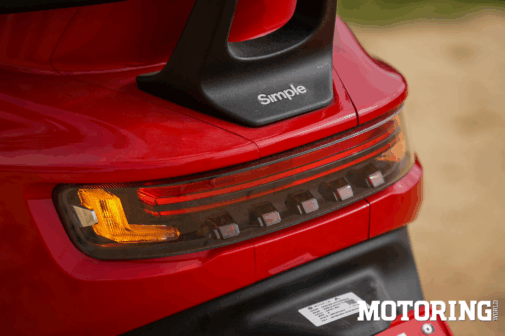
In terms of looks, the Wave is rather conventional. Nothing too crazy, and that is actually a good thing. There’s a well-rounded front apron, an LED DRL setup that smiles, quite literally, and the overall silhouette almost feels like an ICE scooter. That familiarity works in its favour. A fair bit of retro inspiration has gone into the construction of the Wave, too. A tiny ‘pill’ storage compartment on the side almost feels like a storage cubby from the old Chetaks, which is rather cool. The rear is minimal as well, with no unnecessary visual shouting. It’s a scooter that seems to understand that you don’t necessarily need to look like a Transformer to be interesting.
Build quality, however, is one area where Simple could have done better. The plastics don’t feel particularly premium, and some of the surfaces and panels could certainly benefit from a little more attention. It isn’t disastrous by any stretch, but in a segment where buyers are becoming increasingly demanding, the Wave should have felt more substantial. Mind you, the family-scooter credentials for the Wave haven’t come purely from the design lens. Take a glance at the seat. At 920 mm long, it definitely feels longer than a one-room kitchen in Colaba. There’s enough real estate here for two adults to sit without having to negotiate elbow room like they’re sharing an airline seat.
The boot is another party trick. At 63 litres, it is properly cavernous. Big enough for a month’s worth of groceries, approximately one full-face and one half-face helmet, or several things you absolutely did not intend to buy when you left home. Seat height is also set at just 775 mm, which is extremely accessible for the average Indian rider. You can get both feet down without performing a yoga pose at every traffic light, and that matters enormously when you’re talking about a scooter designed to be ridden by a family rather than a single enthusiastic owner.
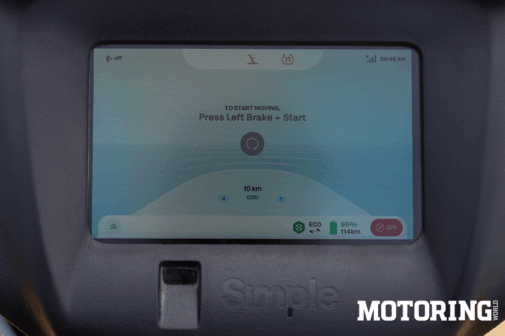
Reserved for the higher-end version of the Wave line-up, the 7-inch display unit feels quite sorted. It isn’t cluttered, or loaded with tiny fonts that require the eyesight of a hawk. There’s one big speedometer, trip and odometer information below it, and everything else is neatly arranged around the screen. It also gets turn-by-turn navigation, geofencing and the sort of connected technology we’ve become accustomed to seeing in modern cars. It’s a lot of equipment for something whose primary purpose is still getting you from A to B without causing a family WhatsApp argument.
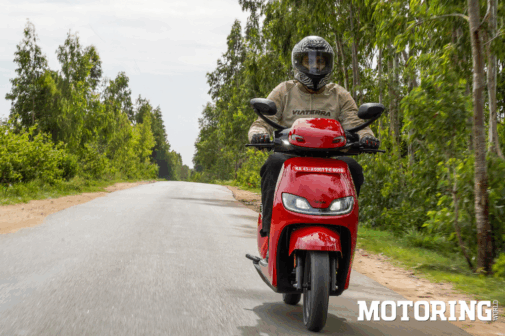
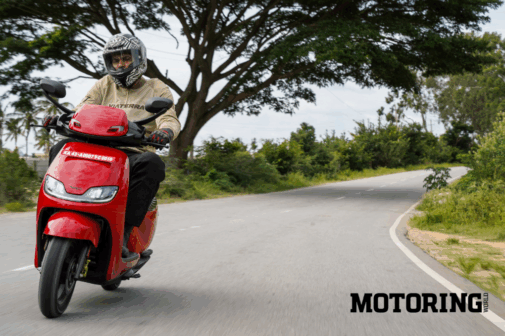
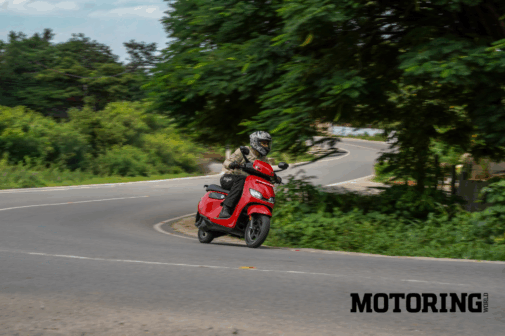
After swinging a leg over, the first thing that strikes you about the Wave is how easy it is to ride. The motor produces 8.6 bhp of peak power and 52 Nm of constant torque. On paper, those numbers sound like they belong to something considerably more serious. In reality, the Wave is about as threatening as a Labrador. The power delivery is beautifully linear. There is no sudden surge, and certainly no need to hang on for dear life when the lights turn green. Twist the throttle and it simply moves smoothly, predictably and with very little fuss. That makes it particularly well suited to the sort of riding it is designed for. Around town, where you are constantly dealing with traffic, pedestrians, badly parked cars and that one gentleman who believes indicators are an optional accessory, the Wave feels easy to place.
Simple offers a fairly broad range of battery options, too. The range starts with a 2.2 kWh battery offering a claimed 110 km of IDC range and stretches all the way to a 5 kWh pack, with more than 240 km of claimed range. The scooter we rode was equipped with the 3.7 kWh battery, which is claimed to deliver 174 km. Here, though, things got a little confusing. With 96 per cent charge showing on the dash, the scooter indicated just 119 km of remaining range. We rode roughly 50 km and were left with around 45 per cent battery and 45 km of indicated range. I’m not particularly good at mathematics, but even I know that something isn’t quite adding up here. Of course, claimed range figures are exactly that: claimed. Real-world range depends on speed, riding conditions, rider weight, temperature and several other variables. But the disparity between what is claimed and what the scooter appeared to be calculating during our ride is worth keeping an eye on. For a family scooter, where range and predictability are likely to be high on the buying checklist, consistency will be key.
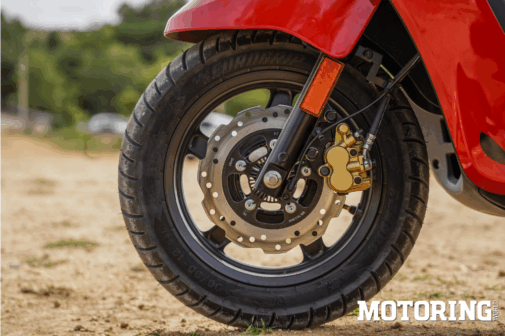
The brakes, unfortunately, are another area where the Wave isn’t quite up to scratch. The front brake has very little initial bite and even less progression, which means you find yourself leaning heavily on the rear brake to bring the scooter to a halt. It works, eventually, but it doesn’t inspire a huge amount of confidence when you need to stop quickly. The suspension is a slightly confusing affair as well. The front is tuned rather nicely. It deals with urban roads reasonably well and gives the scooter a composed feel.
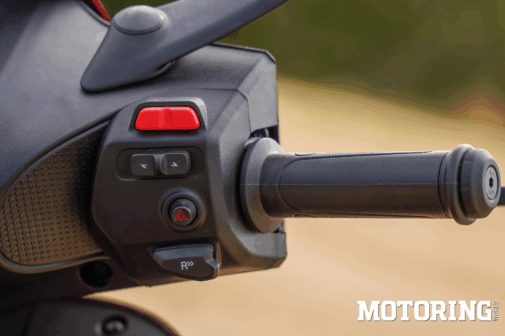
The rear, however, seems to have a rather peculiar preference: it likes company.Ride the Wave solo and the rear can feel a little unsettled over rougher surfaces. Put a pillion on the back and the scooter seems to settle down. So if your Wave feels uncomfortable, perhaps the solution is simply to call your mother. Ergonomically, however, the Wave gets most things right. The riding position is comfortable, the seat height is approachable and there is enough room for two adults. The mirrors, however, are maddening. You can adjust them, move your head, squint, pray to the automotive gods and consult Google Maps, but seeing what is actually behind you remains something of an achievement. That is a problem, because good mirrors are not a luxury.
Then there is the question of price. The Simple Wave starts at ₹ 1.09 lakh and stretches all the way to ₹ 1.89 lakh, giving Simple a healthy spread across the market. More importantly, it puts the Wave directly into one of the most fiercely contested parts of India’s electric two-wheeler market. That is perhaps the biggest question hanging over the Wave. We simply haven’t seen enough Simple scooters on Indian roads yet. The competition has already established itself in homes, offices, apartment parking lots and, inevitably, outside cafés where someone is discussing cryptocurrency. Ather, TVS, Bajaj and others have built considerable familiarity with buyers, and convincing someone to put their family’s money behind a relatively newer name is never easy.
Still, the electric scooter market doesn’t need every new product to be the fastest, sharpest or most technologically outrageous thing on two wheels. It needs scooters that normal people can understand, live with and eventually trust. The Wave appears to understand that brief, imperfect as it is. The brakes need work, the mirrors need immediate intervention, the suspension could be better sorted and the real-world range deserves closer scrutiny. Beneath all of that is a scooter that is fundamentally easy to ride, practical, spacious and approachable. Sometimes the future arrives with a 63-litre boot, a long seat, a smiling DRL and enough space for your mother’s shopping bags.