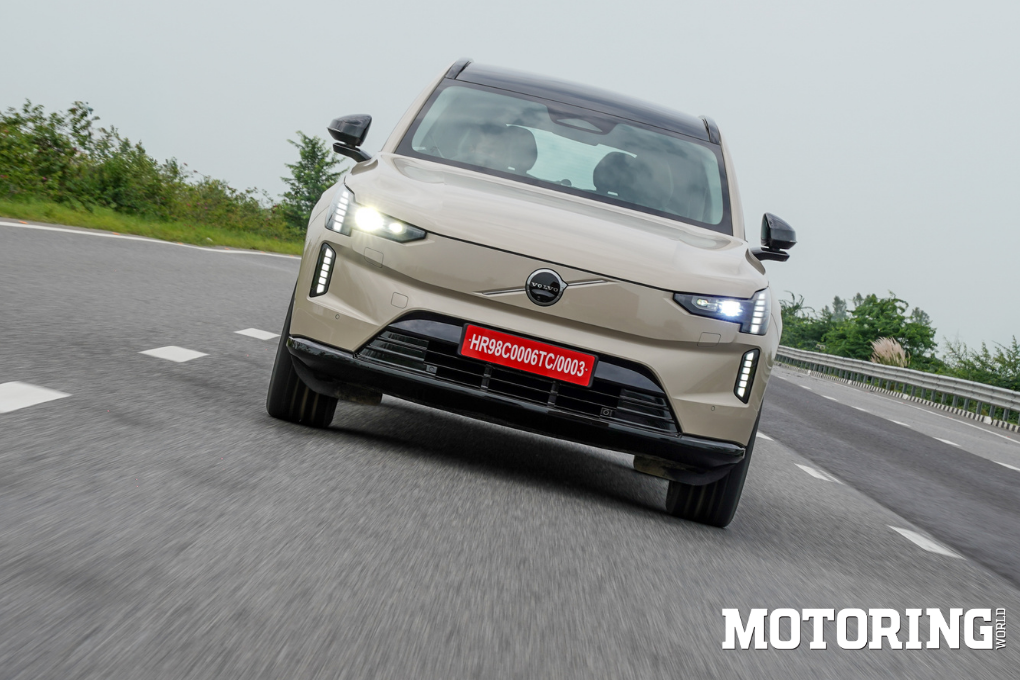


The first thing that strikes you about the Volvo EX90 is how little it feels like a five-metre-long, 2.7-tonne SUV from behind the wheel. The upright bonnet makes the front corners easy to place, the mirrors give you a good view around the car and the steering is light enough to make low-speed manoeuvring painless. There isn’t much feel through the wheel, even in its heavier setting, but after a few kilometres, you stop thinking about the EX90’s bulk.
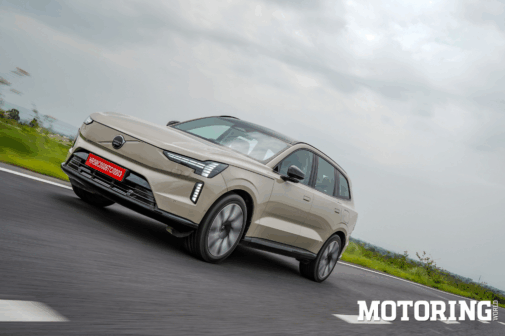
Then there’s the throttle, and this is where Volvo has really nailed it. The power delivery is beautifully progressive, with the twin-motor setup giving you 450 bhp and 670 Nm without the initial shove that can make powerful EVs feel clumsy in traffic. Select Performance mode and the EX90 is properly quick, but it builds speed in one long surge rather than delivering a violent kick. Given its size, the pace is faintly ridiculous. Yet this isn’t an SUV that encourages you to chase lap times. The steering remains vague when you push, the body leans noticeably and the limits of the chassis arrive sooner than you’d expect. Even with the air suspension firmed up, the EX90 is happier being driven smoothly.
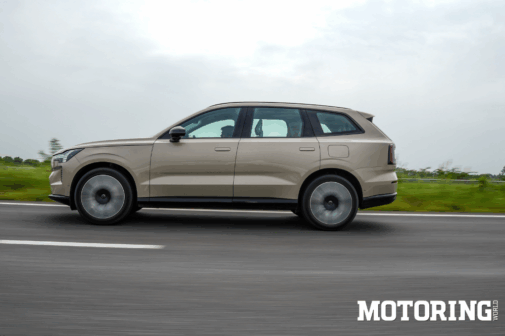
That’s fine, because ride quality is where this Volvo really comes alive. In its softest setting, the air suspension deals with potholes, broken surfaces and the assorted indignities of Indian roads with composure. Small ripples disappear, larger imperfections are rounded off and high-speed undulations are handled without fuss. The front seats are plush but supportive, while the second-row captain’s chairs offer plenty of space. The third row is a different matter, with small, upright seats and limited under-thigh support making it better suited to children. The EX90 may technically be a six-seater in this specification, but the rearmost pair are best regarded as occasional-use seats. That tells you what the EX90 is about; it is a luxury SUV designed to make distance feel easy. The brakes fit the brief, with plenty of stopping power and a progressive pedal. Regenerative braking is equally well judged, including the one-pedal mode, so the car feels cohesive in everyday use.
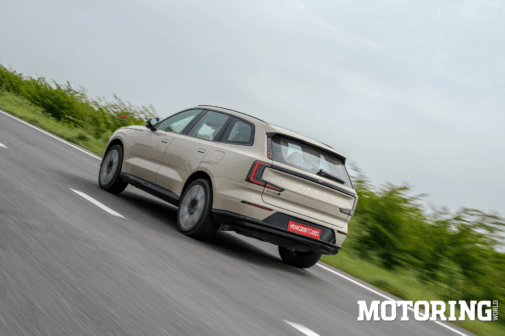
Only after driving it does the rest of the EX90 start to make sense. Volvo was missing a proper full-size electric SUV from its Indian range, and this is the car that fills that gap. The EX90 uses SPA2 architecture and an 800-volt electrical system, and comes only in Twin Motor Ultra specification for the Indian market. Its 106 kWh battery supports a claimed WLTP range of 625 km, while Volvo says a sufficiently powerful DC charger can replenish it in around 30 minutes. A 0 to 100 kph time of 5.5 seconds and a 180 kph top speed complete the headline numbers.
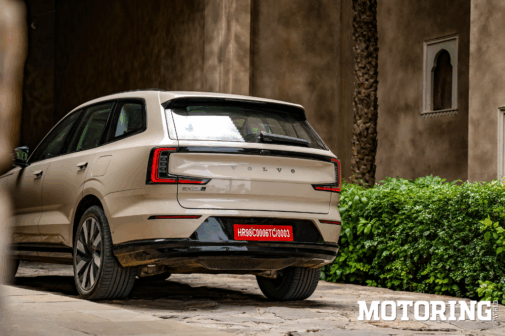
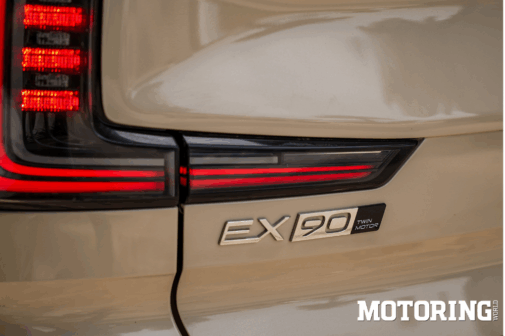
Volvo has resisted making the exterior look like a rolling advert for its technology. The EX90 is handsome and restrained, particularly from the rear three-quarter. Chunky haunches and wraparound tail-lights give it real presence. Up front, the Thor’s Hammer lights conceal a neat trick: the daytime running lights open to reveal the main headlamp units, which is about as close as modern cars get to pop-up headlights. The blanked-off grille, hidden wipers and flush-fitting door handles keep the design clean. I also like the fact that the Indian car is the newer 2026 version, which does away with the awkward LiDAR hump fitted to earlier EX90s. At 2.11m wide and over five metres long, it remains imposing, but avoids the visual noise of some rivals. It has presence without shouting for attention, which feels appropriate for a Volvo.
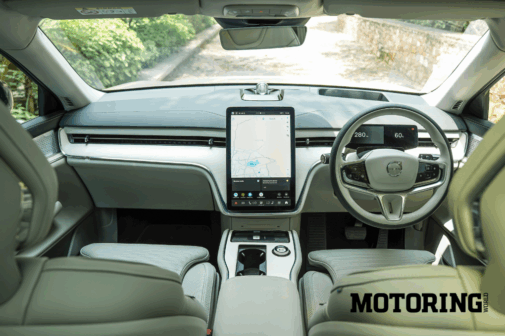
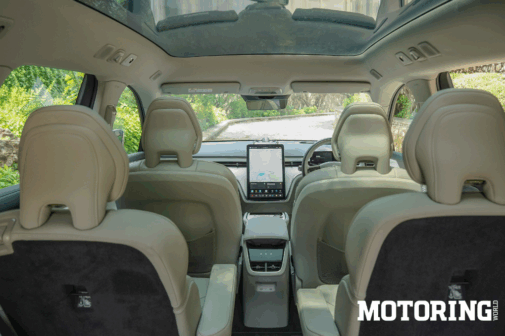
Inside, that restraint continues. The dashboard is clean and largely free of physical controls, with almost everything routed through the 14.5-inch portrait touchscreen. The system is quick, with Google built-in, over-the-air updates and strong graphics, but Volvo has perhaps taken minimalism too far. Air-conditioning, mirror adjustment, drive modes and suspension settings all live within the screen, and even opening the glovebox requires a tap. It can become very irritating when you’re trying to perform a basic task. The interface itself is good, with a responsive display, but too many everyday functions are buried inside it. I found myself wishing for proper controls for the air-conditioning and a few other frequently used functions. Minimalism looks great in a brochure, but when you’re driving, a button is better.
Cabin quality is easier to appreciate. Nappa leather, wood trim and beautifully finished seats give the EX90 an expensive feel, while the nine-inch driver display presents the essentials without drowning you in information. The 25-speaker, 1,610-watt Bowers & Wilkins system is exceptional, with Dolby Atmos and speakers built into the headrests. I would have liked rear-door sunblinds, though, and the electrochromic panoramic roof doesn’t do enough to keep India’s fierce sunshine at bay.
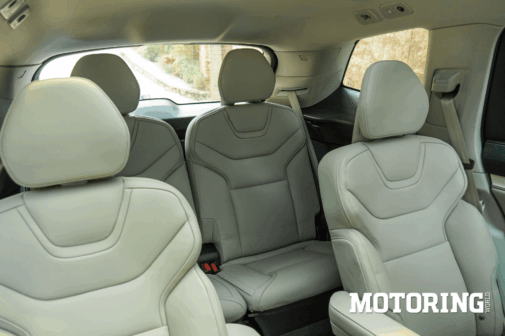
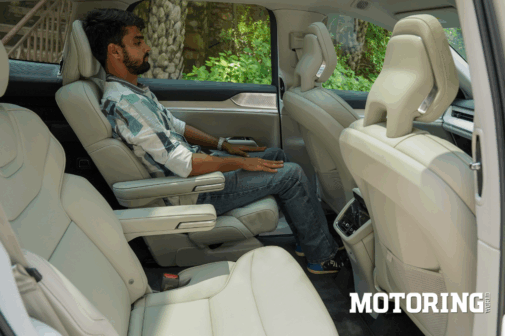
Volvo has always made a point of putting safety at the centre of its cars, and the EX90 takes that philosophy to another level. There is an enormous amount of hardware and software watching the road, processing information and assisting the driver, although the important thing is that the technology doesn’t overwhelm the experience from behind the wheel. Most of the time, you can simply get on with driving, while the car quietly keeps an eye on what is happening around you. There are plenty of details that make the cabin a lovely place to spend time. The seats are among the best I’ve experienced in an SUV, with a combination of softness and support that works particularly well on long drives. The second row follows the same philosophy. The captain’s chairs aren’t powered, but they slide and recline, and the built-in cup holders are a thoughtful touch. With the panoramic roof and large windows, the middle row feels airy and luxurious. The third row, as mentioned earlier, is much less convincing. It is usable, but adults won’t want to spend hours back there.
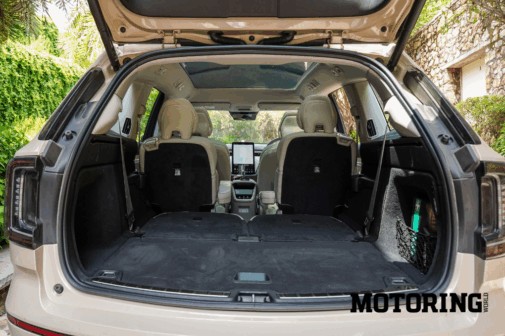
There is plenty of room for luggage, and the powered tailgate makes loading straightforward. Visibility is generally good from the driver’s seat, although the third-row headrests compromise the view through the rear glass. The 360-degree camera and parking assistance systems are therefore useful rather than gimmicky, particularly when you’re trying to place a car this large in a tight space. The EX90 may be enormous by Indian standards, but its cameras, sensors and light steering make it surprisingly manageable around town.
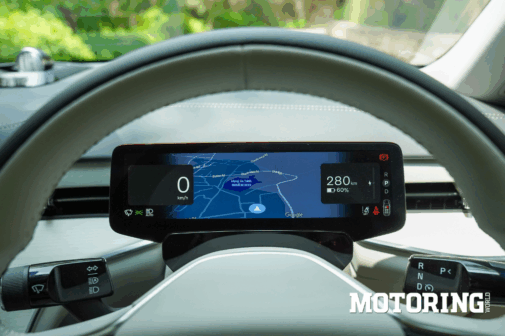
Then there is the question of charging. The 106 kWh battery gives the EX90 a claimed 625 km WLTP range, which should make long-distance travel relatively straightforward provided the charging network cooperates. Volvo says a sufficiently powerful DC charger can take the battery from low to a useful state of charge in around 30 minutes. The real-world experience will depend on the charger and conditions, but the hardware gives the EX90 a solid foundation for long-distance EV use. With 800-volt architecture, fast charging is clearly part of the car’s design rather than an afterthought.
What impressed me most was the way all of this comes together on the road. The EX90 doesn’t constantly remind you that you’re driving something huge and heavy. It simply glides along, quietly and with very little drama. The powertrain is strong enough to make overtaking effortless, the suspension takes the sting out of poor roads and the seats make long hours behind the wheel remarkably easy. There are shortcomings. The touchscreen demands too much attention for some functions, the steering could communicate more and the third row is compromised. The EX90 is also no sports SUV, despite the considerable performance available from its twin motors. Push it hard and its weight becomes impossible to ignore, with body movement and a vague front end reminding you that this is a luxury cruiser rather than a giant hot hatch. You can have some fun with it, but the car never feels particularly interested in being hurried. I don’t think that matters much. Nobody is going to buy an EX90 because they want to attack a series of corners. They will buy it because they want to travel in comfort, carry their family and arrive feeling fresher than they did when they left. That is where the Volvo makes its strongest argument. It has the performance to make quick progress when required, but its real talent lies in making that progress feel effortless.
At an estimated Rs 1.3 crore, the EX90 sits firmly in luxury-car territory, but it also brings the sort of specification you’d expect at this price. It has the performance, range, cabin quality, technology and safety equipment to go toe-to-toe with established electric luxury SUVs, while its understated design gives it a character of its own. Its appeal is quieter, and perhaps more lasting. After a day with it, the word that kept coming back to me was serenity. The EX90 is fast when you want it to be, but speed isn’t its defining quality. It is quiet, exceptionally comfortable and easy to drive for something of this size. Volvo has built an electric flagship that feels mature rather than experimental, and that may be its biggest achievement. For buyers looking for a full-size luxury EV in India, the EX90 offers a compelling combination of comfort, refinement and effortless performance, wrapped in a package that feels distinctly Volvo.