

Do us a favour: go to YouTube and watch Stefan Roser belting a RUF CTR Yellowbird around the Nurburgring. It is one of the greatest displays of car control ever caught on camera. The yellow 911 is sideways through seemingly every corner, the rear stepping out with alarming enthusiasm, while Roser makes lightning-fast corrections at the wheel and somehow looks completely unfazed. He’s even doing it in jeans, a T-shirt and slip-on shoes.
The RUF CTR is THE machine that turned RUF from a relatively obscure Porsche specialist into a legend. Revealed in 1987, the CTR was based on the narrow-bodied Porsche 911 Carrera 3.2, but RUF transformed virtually everything that mattered. It got a 3.4-litre twin-turbo flat-six making around 469 bhp (well, that’s what RUF says, but those who have driven one certainly feel that’s an understated figure), a five-speed manual gearbox and a lightweight construction that helped it weigh around 1150 kg. Yes, just 1150 kg in a near-500 bhp 911 that had its engine hanging off its rear.
At a top-speed test organised by Road & Track at Volkswagen’s Ehra-Lessien proving ground, the CTR reached 340 kph, beating the Ferrari F40 and becoming the fastest production car in the world at the time. Its bright yellow paint stood out against the gloomy conditions, earning it the Yellowbird nickname from the photographers present. And now, nearly four decades later, RUF has returned to Ehra for inspiration with its latest creation: the Ehra.
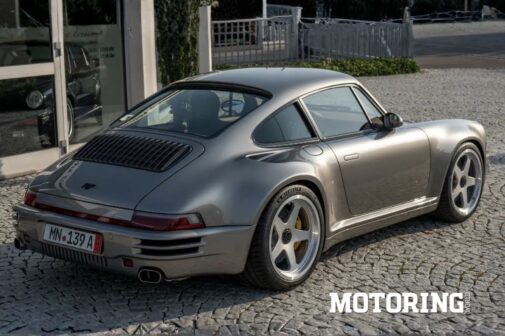
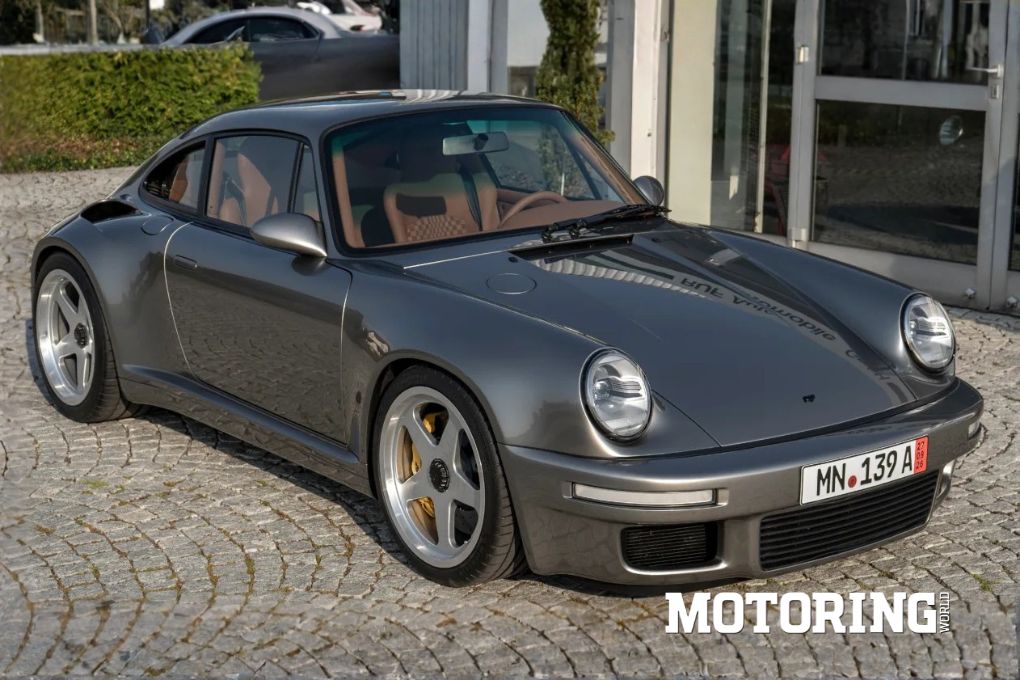
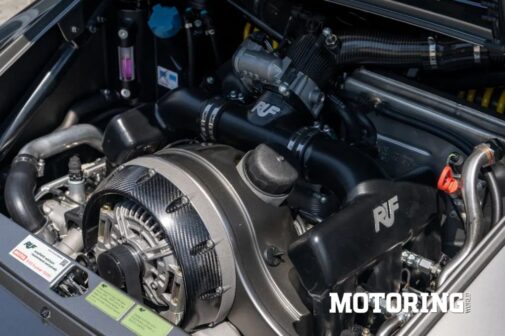
Revealed at The Quail during Monterey Car Week, the Ehra might look like yet another resto-modded 911 at first glance, but underneath it is very much a RUF. Like the company’s modern creations, it rides on RUF’s own carbonfibre monocoque rather than a Porsche chassis. The entire body is carbonfibre, while its proportions are considerably wider than those of the original CTR, with an extra 58mm at the front and 54mm at the rear.
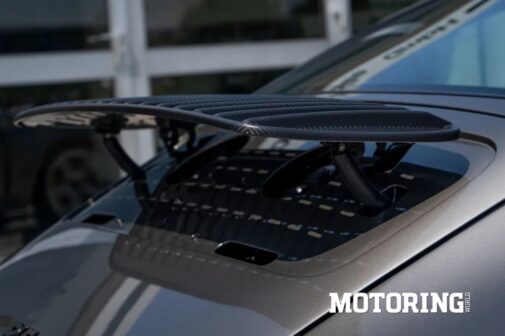
There is also a deliberate restraint to its design. Instead of a giant whale-tail spoiler or outrageous aerodynamic appendages, the Ehra gets a relatively discrete deployable carbon panel over the engine. Look closer, though, and you’ll spot air intakes above the rear haunches and in the quarter windows, along with huge 325-section rear Michelin Pilot Sport 4S tyres.
It is powered by a 3.6-litre twin-turbo flat-six producing 641 bhp and 900 Nm. Unlike the rear-drive Yellowbird, the Ehra sends its power to all four wheels through a fully variable all-wheel-drive system, a rear limited-slip differential and, thankfully, a seven-speed manual gearbox. On the suspension front, it has double wishbones front and rear and pushrod-style adaptive dampers.
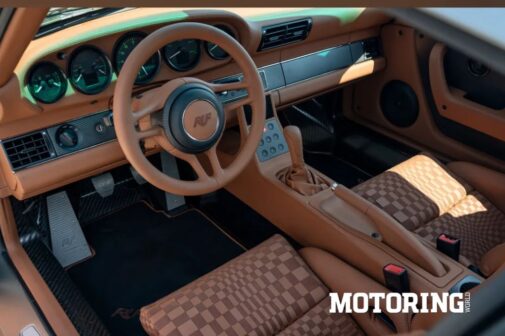
Inside, things are considerably more luxurious than the stripped-back cabin of the original Yellowbird. The Ehra gets a brown-and-tan interior, with distinctive carbonfibre bucket seats finished in RUF’s Pasha chequered pattern. There are titanium pedals, green RUF dials and Ehra branding dotted around the cabin. It manages to blend the old-school charm of a classic Porsche with the craftsmanship you’d expect from a modern RUF.
The name itself is the real connection to the past. Ehra refers to Ehra-Lessien, the German proving ground where the Yellowbird hit 339 kph and where legends such as the McLaren F1 and Bugatti Veyron later set their own top-speed records. The Ruf Ehra is a special car, honouring a legend, and that makes it one of the best resto-modded 911s of our times. What next, RUF? Maybe a 959-esque modern-day hyper-911? That will be crazy.