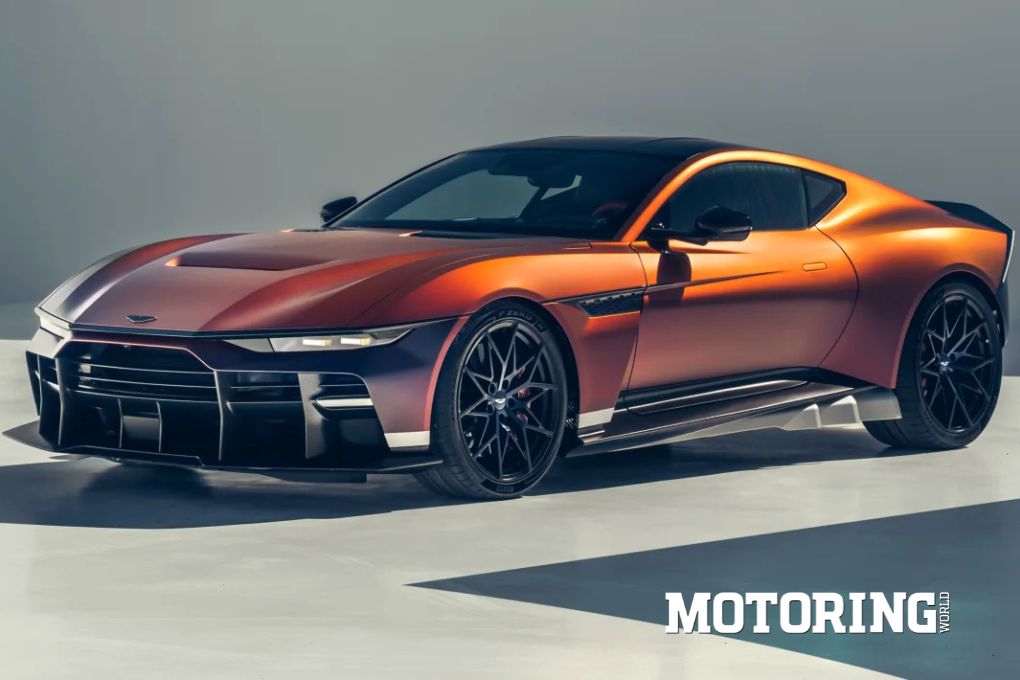


Aston Martin has built another V12 special, and this one isn’t interested in being subtle. Meet the Valen, the most powerful front-engined V12 production car ever built, and the latest creation from Aston Martin’s Q division. With 838bhp, a carbonfibre body, a heavily reworked chassis and enough visual drama to stop traffic, it is Aston Martin letting its designers off the leash.
Limited to just 150 examples, the Valen is a two-seat V12 special built for the marque’s most committed customers. It costs £1.5 million (Rs 12 crore) before further personalisation, can sprint from 0 t0 100 kph in 3.1sec and has a claimed top speed of 340 kph.
Underneath the carbonfibre body is a lightened version of the Vanquish’s chassis. Aston Martin has used aluminium, titanium, magnesium and carbonfibre to shed 110kg from the car’s core, while optional machined-from-solid aluminium suspension arms and knuckles, along with titanium chassis bolts, can save another 16.9kg. With those fitted, the Valen should weigh less than 1800 kg.
Power comes from the most powerful version yet of Aston Martin’s 5.2-litre V12. It produces 838 bhp at 6500 rpm, 14 bhp more than the Vanquish, while torque remains at a colossal 1000 Nm from 2500 to 5000 rpm. There is no manual gearbox, either. Instead, the V12 sends its power through the same eight-speed ZF automatic used in the Vanquish, but Aston has adapted the shift strategy using lessons from the Vantage GT4 race car.
Aston says that the engine’s responses have also been sharpened. Sport and Sport+ modes deliver a more immediate throttle response, while Track mode softens the initial response for greater control at high speeds. Plus, it also has a new titanium exhaust system, complete with 3D-printed titanium tailpipe finishers.
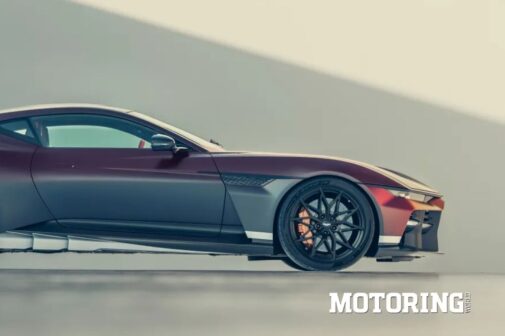
The chassis has received plenty of attention, too. The steering, Bilstein DTX semi-active dampers, carbon-ceramic brakes, ESP and camber settings have all been recalibrated for the Valen. Roll and pitch have been reduced, the rear subframe is solid-mounted and the springs and helper springs are unique to the car. It has bespoke 21-inch magnesium wheels, wrapped in Pirelli P Zero R tyres.
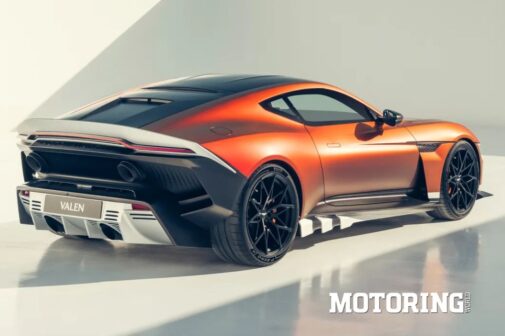
Then there is the aero. At the front, the Valen gets a bonnet intakes that feed the V12, while elongated side strakes that channel air through vents behind the front wheels. That air is then directed along the sides of the car and combined with airflow from underneath before exiting through the sawtooth sections of the side sills. The aim is to reduce lift and generate downforce without covering the car in conventional wings and add-on aero.
The rear is even more dramatic. Much of the bodywork beneath the large Gurney flap is carbonfibre, with perforations allowing heat from the high-mounted twin exhausts to escape. Two more exhausts sit lower down in the diffuser, while the conventional rear window and bootlid have been replaced by a solid tailgate. The cut-away rear wheel arches add another dose of race-car attitude.
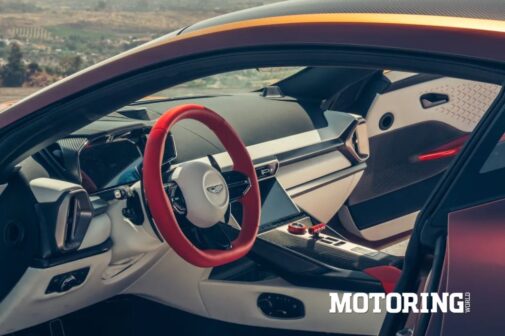
Inside, Aston has given the Valen a similarly bespoke treatment. A 3D-printed slimline centre console, a larger start-stop button, a new drive-mode controller and a T-bar gear selector sit alongside switchgear borrowed from the Valhalla. There are also new sports seats and a differently angled HMI screen.
The Valen is unlikely to solve Aston Martin’s larger financial problems, nor is it supposed to. What it does provide is something its regular production cars cannot: freedom. Like Ferrari’s Icona cars, Aston’s Q specials give its designers a canvas on which they can experiment with ideas and create something that simply wouldn’t make sense on a mainstream model.