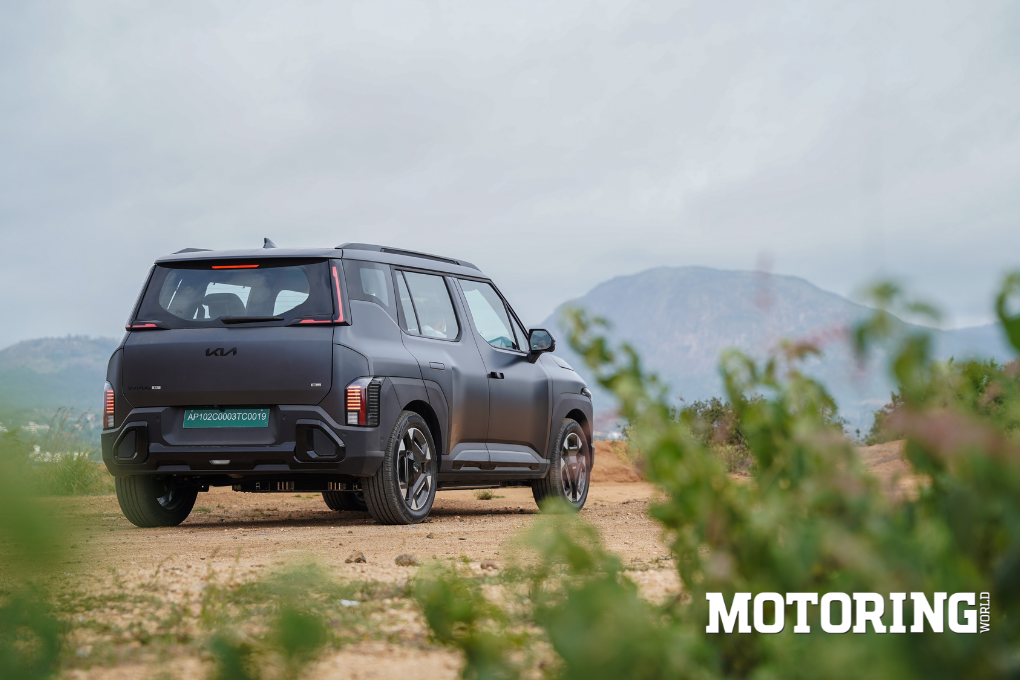


After driving many cars over the years, very little catches you off guard anymore. Fast ones, practical ones, luxurious ones, awkward ones; sooner or later they all begin to blur together. Very occasionally, though, a car gives you a genuine sense of déjà vu. Rarer still is when that feeling leaves you thinking, ‘This is how it should’ve been from day one.’ That’s exactly what happened with the Kia Syros EV.
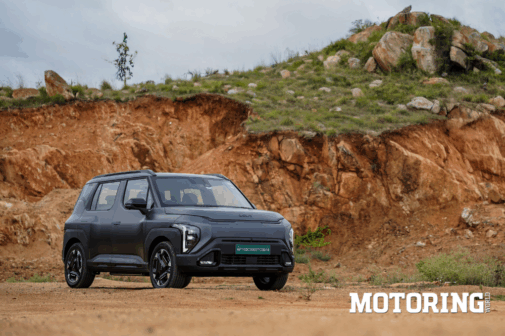
When the Syros first arrived in 2025, it wasn’t exactly welcomed with open arms. It offered one of the roomiest cabins in its class, an excellent rear seat and enough technology to embarrass cars from a segment above. Yet it never quite found its footing. Some couldn’t warm to the styling, others criticised the confused ride quality, and before long the market had quietly moved on. Fast forward to 2026, and Kia has brought electricity into the equation. Suddenly, the Syros makes a lot more sense.
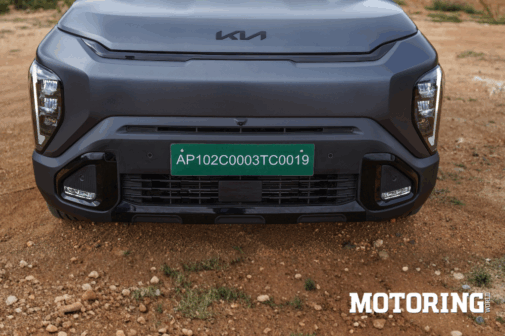
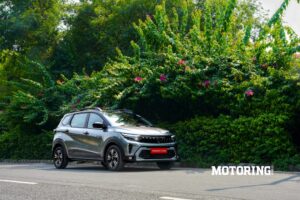
For starters, it looks almost identical to its petrol sibling, and I genuinely think that’s one of its biggest strengths. Plenty of manufacturers still seem convinced that buying an EV also means buying into a design experiment, complete with blanked-off grilles, blue highlights, questionable aerodynamics and enough futuristic detailing to make your neighbours wonder if NASA has started building crossovers. Kia has resisted that temptation.
The Syros already looked like it had skipped ahead a generation when it first arrived. Turning it into an EV simply meant removing the engine and letting the design continue doing what it already did well. It’s almost as if someone in the design studio quietly muttered, ‘See? Told you it’d become electric eventually.’ Thankfully, electrification wasn’t just a copy-and-paste exercise.
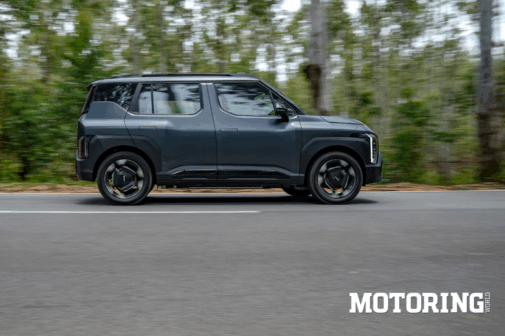
Packaging the battery has raised the floor by 10mm, but Kia has cleverly clawed back most of that by increasing the ground clearance by 7mm through suspension revisions. It doesn’t sound like much, but on Indian roads every millimetre counts. It’s often the difference between driving confidently over a speed breaker and instinctively lifting off, while hoping you don’t hear an expensive scraping noise from underneath.
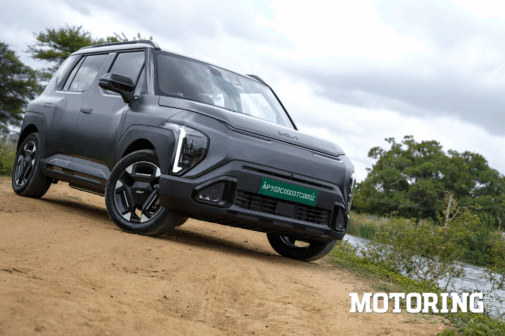
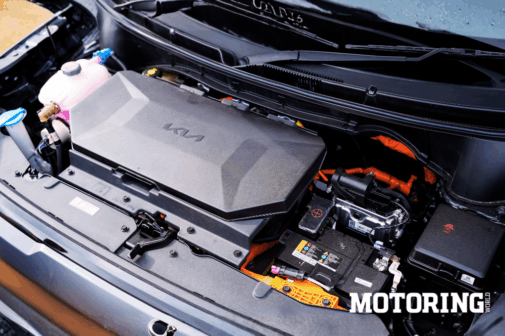
Under the floor sits either a 51.4 kWh battery producing 173 bhp and 255 Nm, with a claimed range of 526 km, or a smaller 42 kWh pack producing 147 bhp while delivering the same 255 Nm and a claimed 443 km of range. If those figures sound familiar, that’s because the Syros shares its electric underpinnings with both the Creta Electric and the Clavis EV. Some might dismiss this as parts sharing, but I prefer to call it common sense. Developing three different electric platforms to achieve the same result would hardly have been a sensible use of resources.
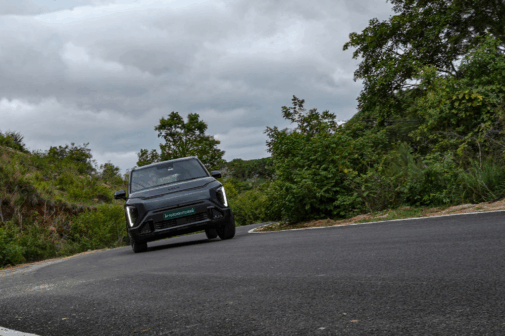
More importantly, it works. Power delivery is beautifully linear. There’s no neck-snapping surge, no tyre-smoking theatrics and no attempt to convince you this is secretly a performance SUV. The Syros knows exactly what it is, and it plays that role exceptionally well. Most of your driving will happen in Normal mode anyway, and that’s exactly where the Syros feels happiest. It’s smooth in traffic, effortlessly gathers speed for overtakes and settles into highway cruising with an easy-going composure that suits its character perfectly. Should your inner teenager decide to make an appearance, Sport mode sharpens the throttle and adds a little welcome weight to the steering. It doesn’t suddenly transform into a hot hatch, but it does feel noticeably keener to respond.
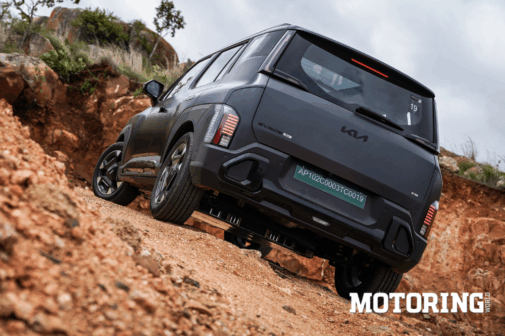
The biggest surprise, however, comes from somewhere completely unexpected — the ride quality. If there was one aspect of the ICE Syros that disappointed me, it was the suspension. Somehow, Kia had managed to create a car that floated over smooth roads while simultaneously crashing into potholes and sharp edges. It was a rather unusual achievement, though perhaps not the sort engineers proudly frame and hang on an office wall. Thankfully, that’s all been sorted.
The damping has been comprehensively reworked, and the difference is immediately obvious. The Syros EV feels noticeably calmer over broken roads and considerably more composed as speeds rise. Yes, it’s around 250 kg heavier than the petrol car, and you can feel that extra mass if you start changing direction quickly. Oddly enough, though, the additional weight works in its favour. The Syros now feels more planted and reassuring than the ICE version ever quite managed.
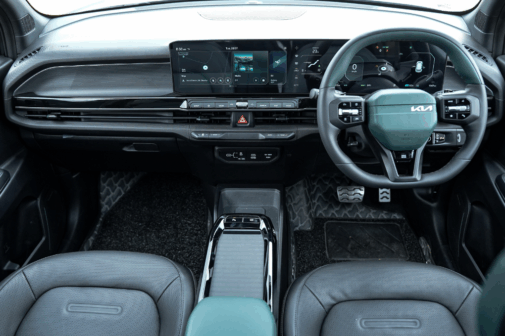
Inside, very little has changed, and that’s no bad thing. The Syros already had one of the best cabins in the segment. The dashboard still feels modern, the twin-screen setup remains crisp and intuitive, and the revised steering wheel, new textures and fresh colour schemes lift the ambience just enough to make the cabin feel a touch more premium without reinventing it.
As you’d expect from a Kia, the equipment list is generous. Wireless Apple CarPlay and Android Auto work seamlessly, the displays are sharp and responsive, and the ADAS suite continues to be just a little more cautious than I am. Now and then it feels as though the car is more concerned about my driving than my mother ever was.
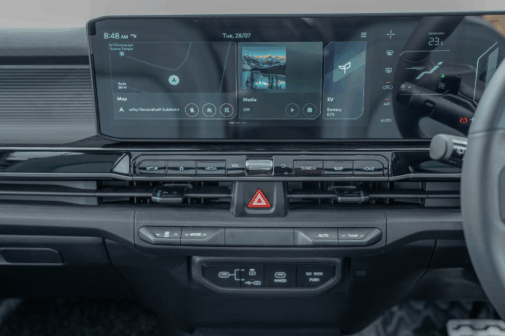
My only real gripe is the climate control interface. Having to glance away from the road just to check the temperature still feels unnecessarily distracting, particularly when a few physical controls would have made life much simpler. Thankfully, the ventilated seats go a long way towards making up for it. Both rows get ventilation; they cool quickly, and mercifully Kia seems to have silenced the tiny leaf blower that accompanied some of its earlier systems. It’s one of those small improvements you notice almost immediately, especially on a humid afternoon.
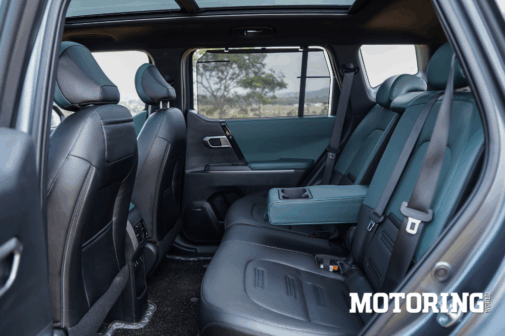
At 6ft 1in, I’ve become accustomed to accepting that anyone sitting behind me is probably going to spend the journey negotiating for knee room. Not here. Pablo, who’s hardly short himself, climbed into the rear seat behind my driving position, and had absolutely no complaints. The sliding and reclining rear bench only adds to what was already one of the Syros’ biggest strengths.
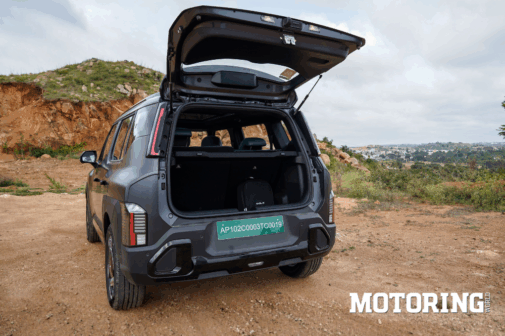
Practicality has clearly been given just as much attention. Storage spaces seem to appear everywhere you look. There are cubbies for wallets, phones, charging cables, sunglasses, bottles and all the other bits and pieces that somehow accumulate during daily life. You could probably own the car for weeks before discovering every storage compartment it has to offer. Out back, the 465-litre boot is usefully square, generously sized and more than capable of swallowing the luggage for a family holiday or the inevitable airport run.
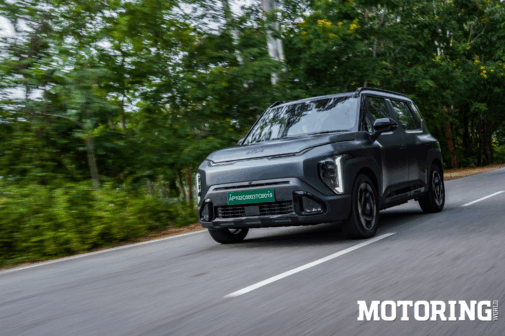
Which brings me back to that feeling of déjà vu. The more time I spent with the Syros EV, the more convinced I became that this is the version Kia should have launched in the first place. The styling, which divided opinion when the petrol model arrived, suddenly feels entirely at home with an electric powertrain. The revised suspension addresses one of the ICE car’s biggest shortcomings, while the battery and motor complement the Syros’ relaxed, comfortable personality far better than the petrol engine ever did. Rather than feeling like an existing model adapted to suit electrification, the Syros EV comes across as though this was the plan all along.
Priced from ₹13.49 lakh and rising to ₹19.99 lakh (both ex-showroom) for the fully loaded version you see here, it enters an electric SUV segment that’s becoming increasingly competitive. Rivals continue to arrive with longer ranges, bigger batteries and increasingly ambitious technology, so standing out isn’t getting any easier. The Syros, however, doesn’t try to win you over with gimmicks. It simply focusses on getting the fundamentals right. It’s spacious, comfortable, practical, and now rides with the composure the original car always deserved. The electric powertrain feels perfectly matched to its character, and that cohesion changes the way you perceive the entire package.
Spend enough time with the Syros EV and something interesting happens. You stop thinking of it as the electric version of the Syros. Instead, the petrol model begins to feel like the stepping stone that led here. That’s perhaps the biggest compliment I can pay Kia — the Syros EV finally completes the car.