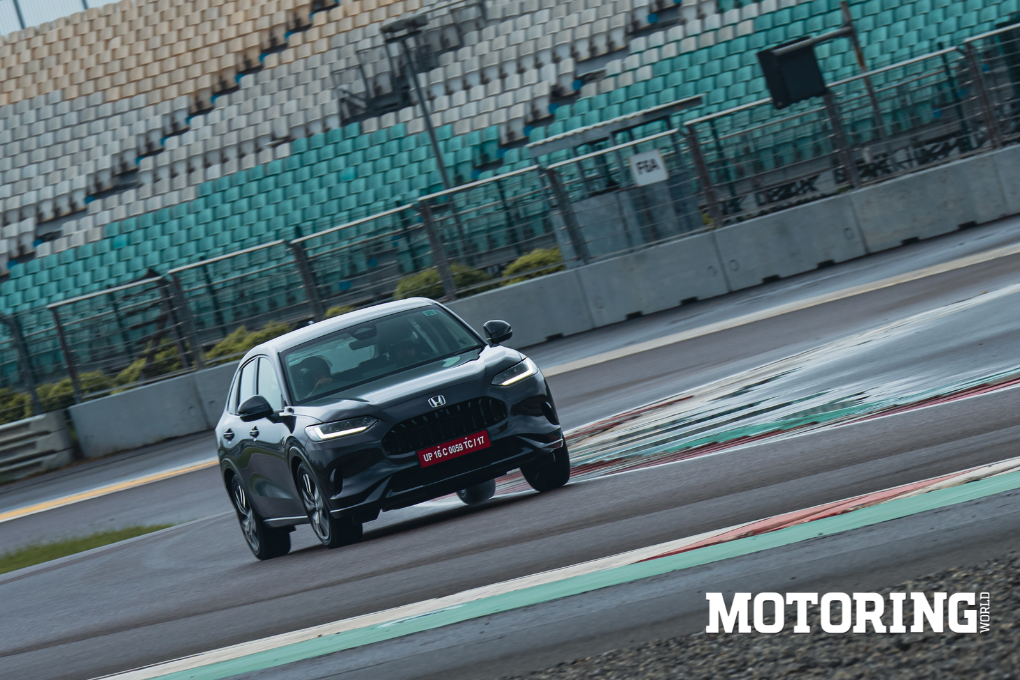


What exactly am I doing at the Buddh International Circuit behind the wheel of Honda’s new ZR-V? For most owners, a race track will probably be the furthest thing from their minds. Yet Honda insisted this was the right place to introduce its new flagship SUV because, despite its family-car brief, the company believes the ZR-V has a sporting streak worth exploring. After a day circulating India’s fastest circuit, I could see what Honda was getting at. The ZR-V may not be a performance SUV in the traditional sense, but it’s a surprisingly polished machine with a very clear idea of what it wants to be.
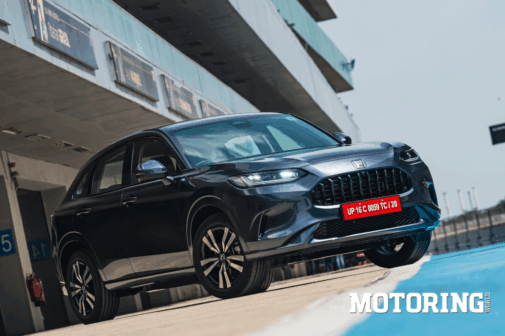
The ZR-V has already established itself in overseas markets, selling more than eight lakh units since its global debut, and now arrives in India as a fully imported model sitting at the top of Honda’s SUV range. That inevitably makes it expensive. At ₹47.99 lakh (ex-showroom), it enters a segment where buyers expect generous equipment, spacious cabins and, increasingly, all-wheel drive. On paper, several rivals appear to offer more for the money. Spend some time behind the wheel, however, and it becomes obvious that Honda is playing a slightly different game.
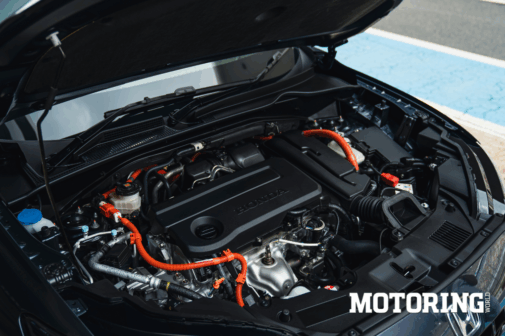
Under the bonnet sits a 2.0-litre naturally aspirated petrol engine working alongside two electric motors to produce a combined 181 bhp and 315 Nm. Like the City e:HEV, the system switches between electric and petrol power depending on conditions, and the transition is so smooth that most of the time you simply stop noticing it. Around town, the ZR-V spends much of its time running silently on electric power before the petrol engine joins in almost imperceptibly. The refinement is outstanding. Even with the engine running, very little finds its way into the cabin unless you’re asking for maximum performance.
The electric motor’s instant torque gives the ZR-V an effortless feel that figures on a specification sheet struggle to convey. Responses are immediate, making the SUV feel lighter and more eager than you’d expect from something of this size. Whether you’re easing away from traffic lights or overtaking slower traffic on the highway, there’s always enough performance in reserve. Honda claims a 0-100 kph time of 7.8 seconds, and with four people on board I managed to match that figure on the circuit’s long straight. More impressive than outright acceleration, though, is the way the ZR-V builds speed. It gathers momentum progressively, and you often find yourself travelling considerably quicker than you realise.
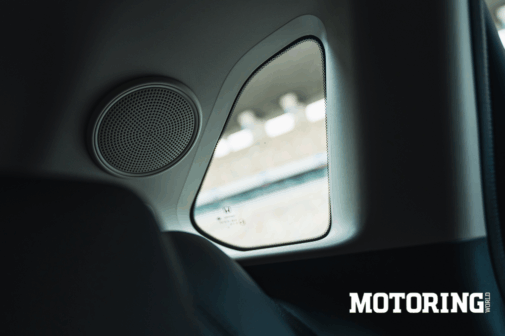
Push harder and the hybrid system reveals its one weakness. Like most eCVTs, heavy throttle inputs cause the engine to settle at higher revs while the drivetrain delivers its performance, creating the familiar elastic sensation associated with this type of transmission. It’s noticeable, but hardly intrusive, and disappears the moment you return to a more relaxed driving style. At a cruise, the ZR-V settles into a very refined rhythm. Wind noise remains impressively subdued until well beyond legal highway speeds, while the excellent 12-speaker Bose audio system masks what little does make its way into the cabin.
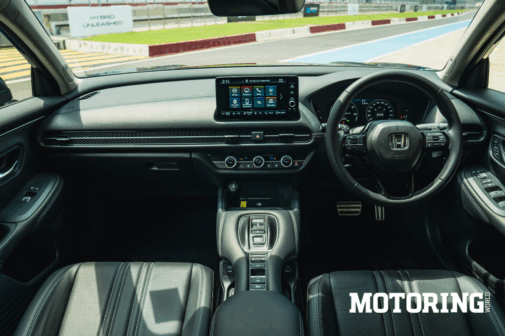
The steering deserves praise. It’s accurately weighted, and avoids the artificial heaviness that afflicts many modern SUVs. The wheel itself is well proportioned, with tactile switchgear and neatly integrated regenerative braking paddles adding a welcome touch of quality. It immediately gives you confidence, which is perhaps why Honda felt comfortable letting us loose on a racing circuit in the first place.
To demonstrate the chassis, Honda laid out a high-speed slalom that had us weaving between cones at close to 100 kph. Unsurprisingly, this is where the ZR-V begins to reveal its priorities. There’s a little more body movement than you’ll find in something like the Volkswagen Tiguan R-Line, and quick changes of direction expose a hint of softness in the suspension. None of it ever feels untidy or unsettled, though. The body remains well controlled, and the chassis communicates clearly enough that you’re never left wondering what the front tyres are doing. If anything, that slight softness suggests the ZR-V will be the more comfortable companion on real Indian roads, although I’ll reserve final judgement until I’ve had the opportunity to drive it away from the smooth tarmac of the Buddh circuit.
The brakes deserve a brief mention too, because they performed faultlessly throughout the day. Repeated heavy stops produced no noticeable fade, pedal feel remained reassuringly consistent and the ZR-V scrubbed off speed with impressive stability. It’s easy to forget that this is a family SUV rather than something wearing a Type R badge, and that perhaps sums up the ZR-V rather well. It isn’t trying to set lap records or masquerade as a hot hatch on stilts. Instead, it delivers exactly the sort of composed, confidence-inspiring driving experience that is essential in this class.
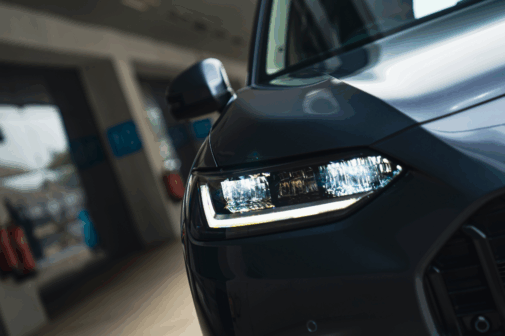
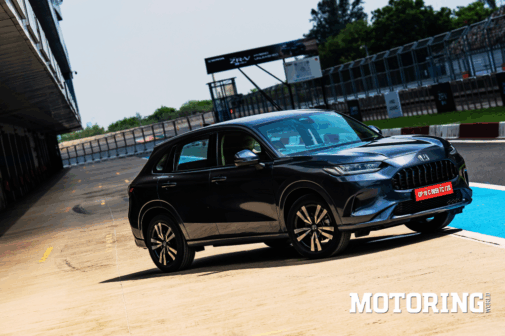
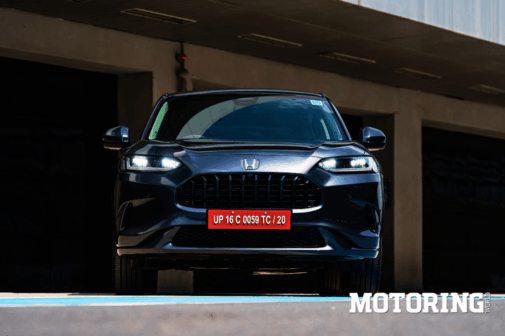
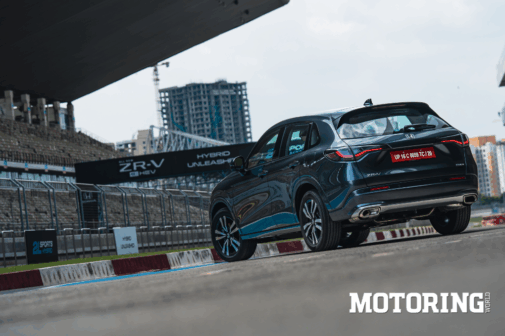
That same sense of understated confidence continues once you stop looking at the way it drives and start paying attention to the car itself. The styling is clean, restrained and refreshingly free of unnecessary drama. Slim LED lighting, crisp surfacing and muscular rear haunches give it a quietly premium appearance without relying on oversized grilles or exaggerated bodywork (although the grille does look Maserati-inspired). It won’t demand attention in traffic, but it has the sort of design that’s likely to age gracefully.
The same philosophy carries over into the cabin. Rather than chasing gimmicks or filling every available surface with screens, Honda has concentrated on making the ZR-V feel solid, intuitive and impeccably assembled. The dashboard layout is clean, visibility is excellent thanks to the generous glasshouse, and almost every surface you touch has a great sense of quality. The leather upholstery feels suitably premium, the switchgear operates with the precision you’d expect from a Honda, and there isn’t a single part of the cabin that feels like it has been designed simply to impress during a showroom visit.
The driving position reinforces that impression. Although you’re sitting in an SUV, the seat is mounted lower than many rivals, giving the ZR-V a more car-like feel without sacrificing the commanding view buyers expect from this class. The front seats strike an excellent balance between comfort and support, while the large door mirrors and slim pillars make placing the car quite easy despite its size. It doesn’t feel intimidating to drive, whether you’re threading through city traffic or cruising at motorway speeds.
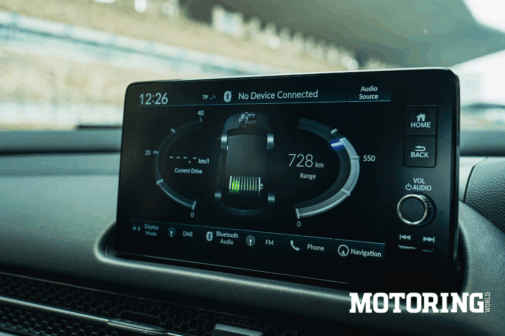
The technology is competent rather than cutting-edge. The 10.25-inch digital instrument display is crisp and easy to read, while the 9-inch infotainment system is straightforward to use, even if it lacks the visual polish of some newer rivals. Wireless Apple CarPlay and Android Auto come as standard, along with a wireless charging pad, electrically adjustable front seats, dual-zone climate control, a 360-degree camera and that superb Bose audio system, which remains one of the highlights of the car. If there are omissions, they’re fairly obvious ones. Ventilated front seats would be far more useful than heated seats in our climate, while the absence of a panoramic sunroof may disappoint buyers shopping in this price bracket.
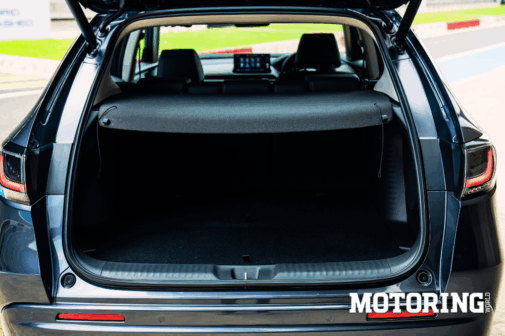
Space, meanwhile, is better than appearances suggest. Although the ZR-V has one of the shorter wheelbases in its class, the cabin never feels cramped. Four adults can travel in genuine comfort, headroom is generous in both rows and rear-seat passengers have enough knee room for long journeys. My only criticism concerns under-thigh support in the back, which could have been better. Luggage space is equally generous, easily swallowing a couple of large suitcases with room to spare.
That brings us back to the question I found myself asking at the Buddh International Circuit. Who exactly is the ZR-V for? Buyers looking for the biggest SUV, the longest feature list or an all-wheel-drive system will almost certainly find more compelling alternatives. The Volkswagen Tiguan R-Line feels sharper through corners, the Skoda Kodiaq offers considerably more space, while the Jeep Meridian appeals to those who venture beyond tarmac. Viewed purely through a specification sheet, Honda’s flagship doesn’t appear to make the strongest case — but that’s before you spend time with it.
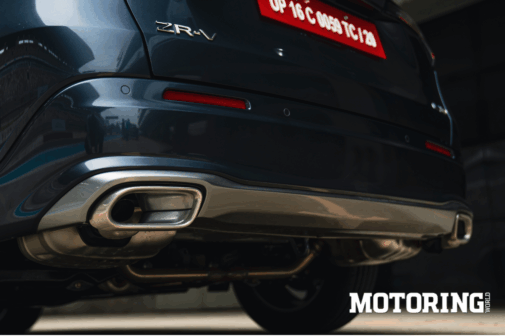
The ZR-V gradually wins you over through the way everything works together. The hybrid system is exceptionally smooth, the cabin remains hushed at speed, the controls feel beautifully judged and every interaction has a polish that’s becoming increasingly rare. It feels like a car that has been engineered by people who cared less about chasing headlines and more about refining the ownership experience. Honda complements that approach with generous warranty cover, including long-term protection for the hybrid battery, providing the sort of reassurance buyers spending this kind of money are likely to appreciate.
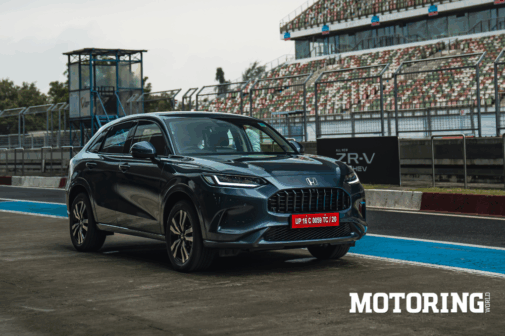
The ZR-V will never be the obvious choice in its segment, and that’s fine. Its impeccable level of engineering is what will appeal to the discerning buyer; I certainly came away convinced that its greatest strength isn’t how quickly it laps a circuit, but how well it’ll handle everything that comes afterwards.