

I was sitting in an industrial transportation design school studio when the original BMW X6, internally designated the E71, first broke cover globally. It was one of those rare vehicles that instantly divided public opinion. Some loved it, some loathed it, and most could not comprehend why it even existed.
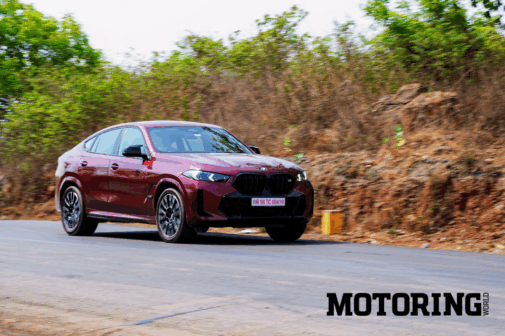
Here was a vehicle that defied every automotive taxonomy. It had the high-riding stance of a premium SUV, the sloping roofline of a sports coupé, and the design compromises of both. It looked unusual and was utterly unlike anything else on the road.
Around that time, I attended a design masterclass hosted by the man responsible for bringing such controversial ideas to life – Chris Bangle. BMW had organised a session for design students from across India. For a young aspiring designer, sitting in that room felt like a privilege.
Bangle was already a polarising figure by the mid-2000s. As Design Director, reshaping BMW’s visual identity, he had attracted fierce criticism from traditionalists. His work on the E65 7 Series, particularly the infamous ‘Bangle Butt,’ had sparked endless debates. Yet during his presentation, he seemed entirely unfazed and welcoming of criticism.
One core message from that masterclass has stayed with me: if you want to create something truly memorable, you must be willing to be bold. Safe design rarely changes industries. True innovation almost always requires upsetting a few people.
The BMW X6 was the ultimate expression of that philosophy. At launch, BMW coined the phrase ‘Sports Activity Coupé’, a clunky descriptor, but nearly two decades later, that odd idea has matured into a self-sustaining global segment. Mercedes followed with the GLE Coupé, Audi with the Q8, and Porsche with the Cayenne Coupé. Even mainstream Indian manufacturers have adopted the sloping SUV-coupé silhouette. The X6 created a segment from scratch.
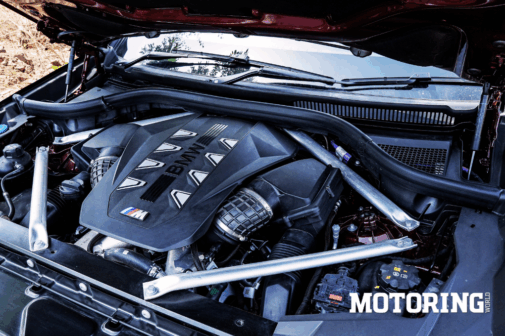
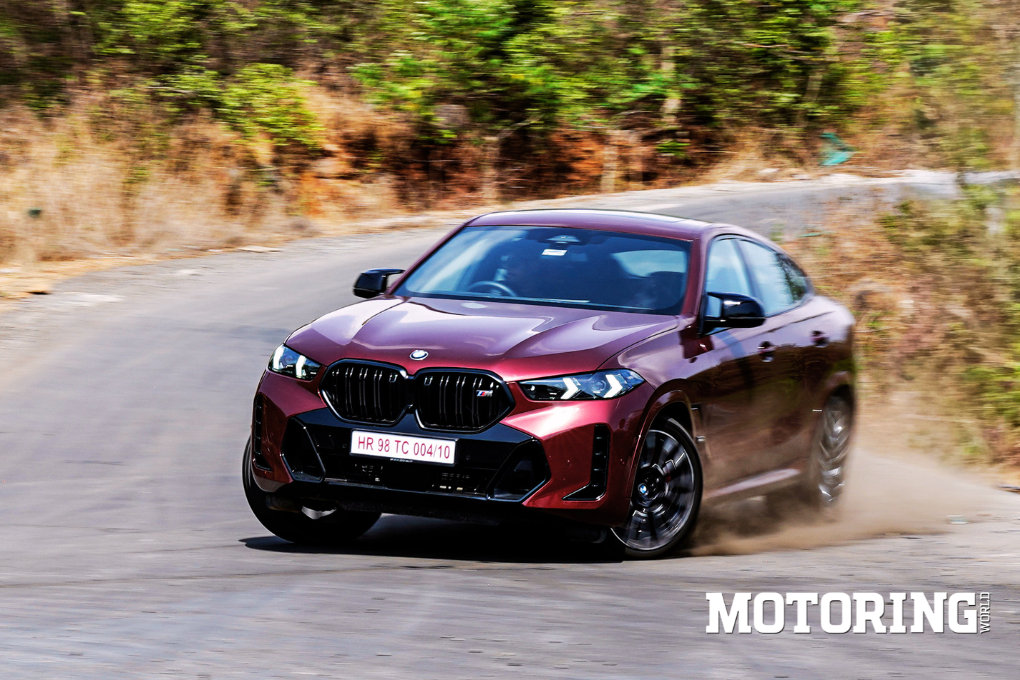
Cut to the present day, and we have the refreshed interpretation: the BMW X6 M60i. It comes equipped with a mechanical heart that is becoming very rare, a proper large-displacement V8 engine. That engineering choice alone makes it feel like it means business.
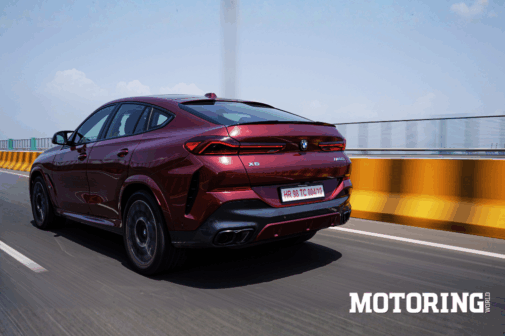
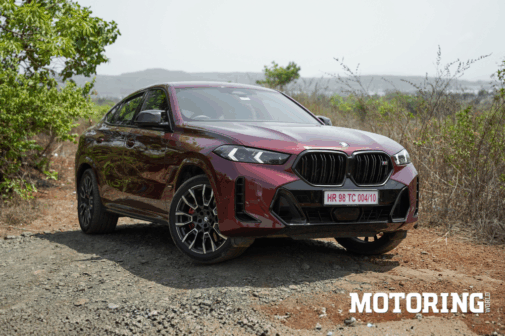
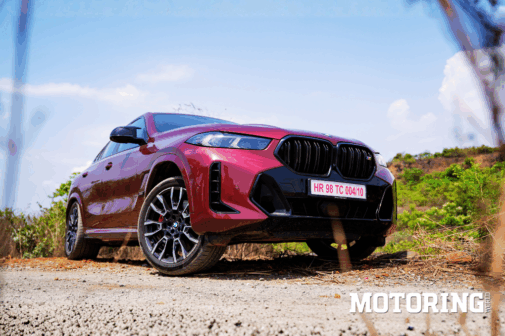
Before you even push the start button, the X6 M60i makes an unapologetic statement. Almost 20 years after the original silhouette arrived, the visual formula still works. This latest generation looks sharper, and more muscular than its predecessors. The proportions remain unmistakably X6; a long bonnet, flared rear arches, towering ride height, and that sweeping roofline that continues to divide opinions.
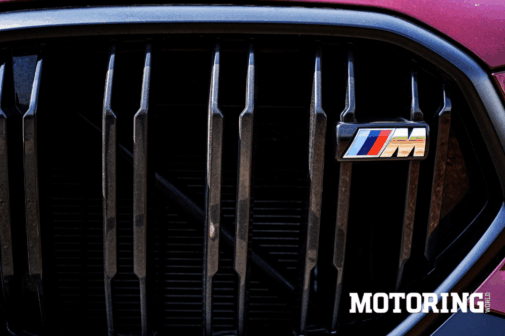
The front is dominated by BMW’s illuminated kidney grille, flanked by razor-thin matrix LED lights that give it a predatory face. Oversized lower intakes, sculpted surfaces, and M-specific mirrors ensure the M60i never blends into traffic. In India, where large luxury SUVs are the default choice for elite buyers, the X6 stands apart from boxy alternatives. Whether you like the avant-garde design or not becomes irrelevant; what matters is that it possesses loads of character.
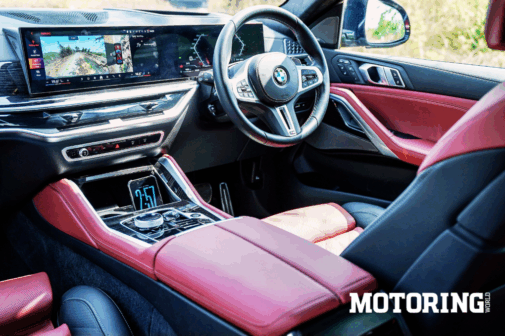
Once inside, the cabin continues that sense of mechanical occasion. BMW has modernised its interiors without making them feel overly digital. The centrepiece is the curved display setup, merging a 12.3-inch instrument cluster and a 14.9-inch infotainment screen into a single glass unit. It looks clean, sophisticated, and premium.
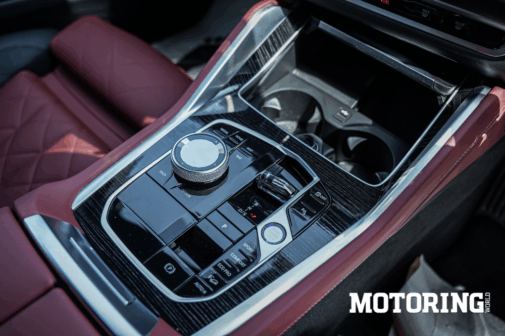
Material quality is exactly what you expect at this price point. Ultra-soft Merino leather covers nearly every surface, while carbon fibre inserts, aluminium trim, and ambient lighting elevate the experience. The front M-multifunction seats offer superb lateral support and long-distance comfort, with ventilation, heating, massage, and memory functions. Finding the perfect driving position takes seconds.
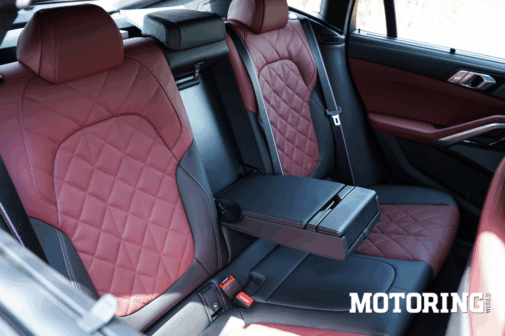
The rear seats remain surprisingly comfortable despite the sweeping roofline. Yes, the more practical X5 offers more headroom and cargo capacity, but viewing this car through a utility lens misses the point entirely. Technology is abundant: BMW’s latest operating system, wireless smartphone integration, an audiophile-grade sound system, connected-car telematics, a heads-up display, and active driver assistance systems. But nobody spends this kind of money on an X6 M60i for its infotainment software. They buy it for the mechanical symphony waiting under the bonnet.
What sits under that long bonnet is glorious. The X6 M60i is powered by BMW’s legendary 4.4-litre twin-turbocharged V8, assisted by a 48-volt mild-hybrid system. Combined output stands at 522 bhp and a monumental 76.47 kgm of torque, available from incredibly low in the rev range.
Those numbers look impressive on paper; experiencing them on tarmac is infinitely better. Press the start button, and the V8 wakes with a deep, chest-thumping growl that reminds you why enthusiasts cherish internal combustion engines. In an era where high-output EVs deliver performance with clinical efficiency, there is something visceral about a big-capacity V8 clearing its throat.
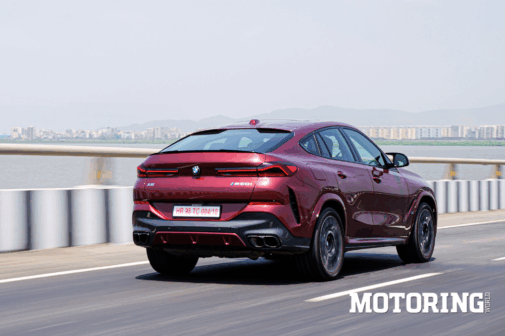
Leaving Mumbai behind, the X6 M60i revealed its dual personality. The first thing that strikes you is how effortless the performance is. You don’t need to hunt through gears to access its power. The twin-scroll turbochargers produce such an immediate wave of torque that overtaking happens almost instantly, with just a slight flex of your right foot.

The sheer rate of acceleration is astonishing. Despite weighing over two tonnes, the X6 blasts forward with the urgency of a lightweight sports car. The 8-speed Steptronic transmission deserves praise too, seamless and imperceptible in comfort modes, and brutally sharp in Sport.
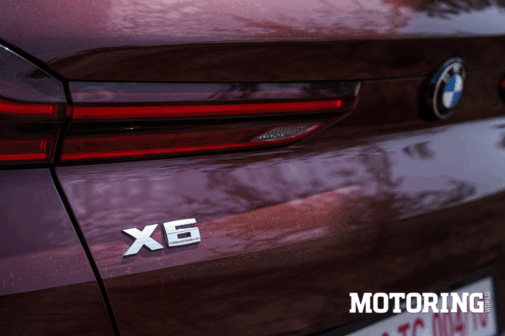
Straight-line speed is only part of the story. The real surprise comes when the road begins to twist. Historically, heavy SUV-coupés have often felt clumsy when pushed hard. The X6 remains an exception.
BMW’s chassis engineers have defied physics, disguising the vehicle’s massive footprint and high centre of gravity. Through sweeping corners and tight bends, it feels composed and balanced. The steering is precise and confidence-inspiring; body roll is controlled by active anti-roll bars, and the adaptive M suspension balances sporting stiffness with executive ride quality. You find yourself carrying far more speed through corners than any logical thought suggests a high-riding vehicle of this mass should manage.
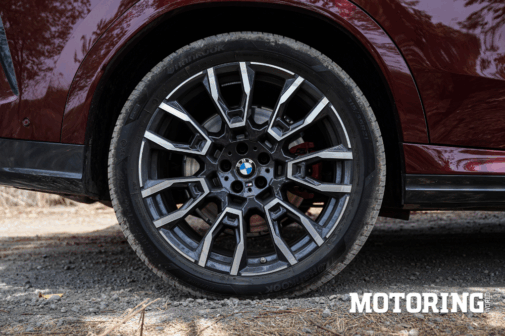
What impressed me most was the real-world ride quality over broken roads. Performance-focussed luxury SUVs often ride too firmly, sacrificing daily usability. The X6 avoids that trap. Even on large alloy wheels and low-profile rubber, it remains sophisticated. Broken surfaces, expansion joints, and rough patches are absorbed with excellent damping control. This dual personality is the X6’s greatest achievement. It cruises silently like a grand tourer when you want to relax, and transforms into a loud, engaging driver’s car the moment the road opens up.
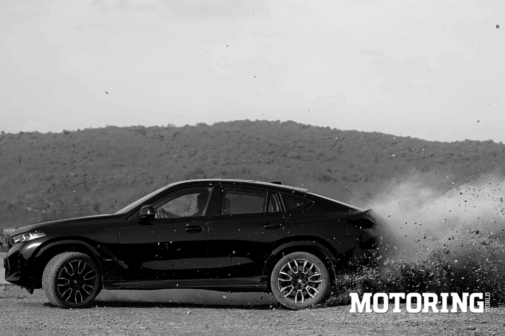
Cars like this are becoming increasingly rare. Electrification is no longer a distant possibility; it is our present reality. Downsized engines, hybrid packs, and silent electric powertrains are rapidly becoming the norm, and there are good environmental reasons for that shift. Still, cars like the X6 M60i remind us that there must still be room for passion, sound, and theatre in the automotive world. The traditional V8 remains one of the greatest mechanical experiences ever conceived. The intake sound, the throttle response, the endless reserves of effortless power, it all combines to create an experience that feels special and emotional. BMW deserves credit for continuing to offer this engine to those who appreciate it.
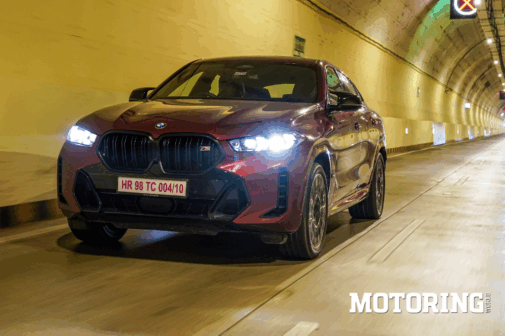
The X6 itself deserves credit, too. What began as a controversial design experiment by Chris Bangle’s team has evolved into one of the most recognisable and influential luxury vehicles on the global market. That said, the X6 M60i is not a car for everyone, and it is not trying to be. The roofline limits rear headroom. The running costs are substantial. The divided opinion that greeted the original E71 has never entirely gone away, and if anything the illuminated grille has added fresh grounds for it. If you want space efficiency, the X5 makes more sense. If you want engagement and presence in a large luxury vehicle, the X6 M60i makes a case that is hard to dismiss after a day behind the wheel. What began as a controversial design exercise has spent nearly two decades proving its point. The X6 is still here, still divisive, and still fast enough to make that argument difficult to argue with.