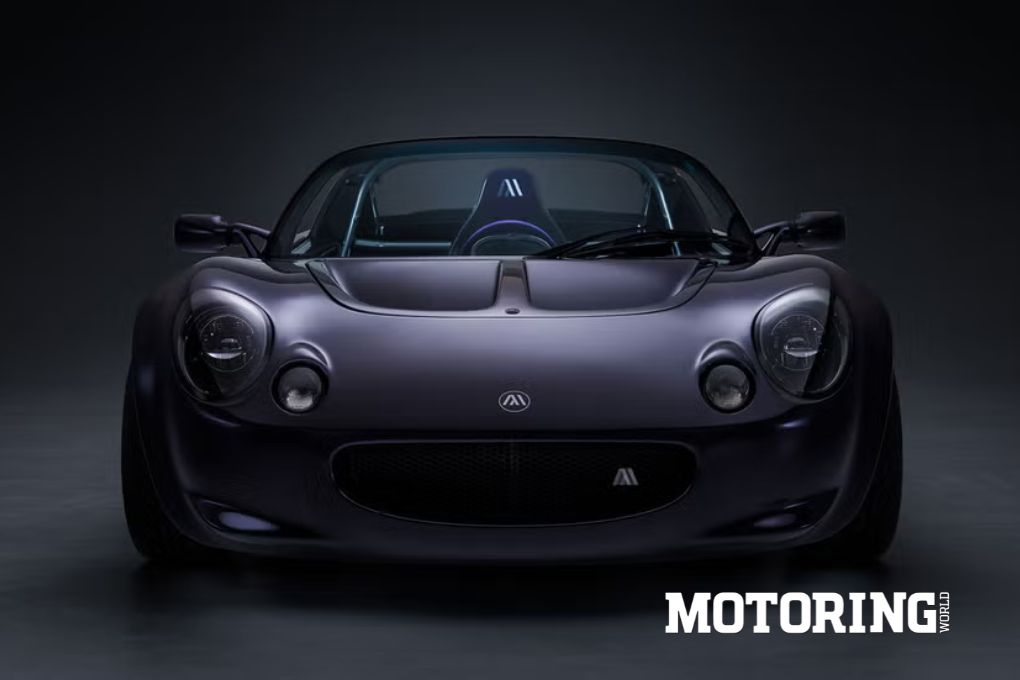


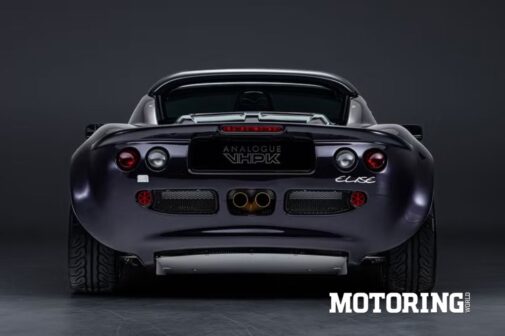
The original Lotus Elise was never about having the biggest engine or the most equipment. When it arrived in 1996, it followed Colin Chapman’s famous philosophy of keeping things light, using a bonded aluminium chassis and a tiny footprint to deliver a driving experience that made modest power feel genuinely exciting. Now, Analogue Automotive has taken that philosophy to an almost ridiculous extreme with the VHPK — a radically reworked Series 1 Elise with a central driving position, carbon-fibre bodywork and a kerb weight of just 600 kg.
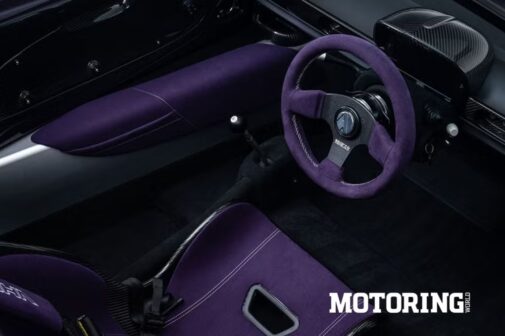
The VHPK is essentially what happens when you take an already lightweight Elise and ask what would happen if absolutely everything that wasn’t necessary was removed. There is only one seat, positioned in the centre of the cabin in true McLaren F1 fashion. The passenger seat is gone, along with much of the standard Elise’s weight, while extensive use of carbonfibre helps push the numbers even lower. Analogue Automotive says the VHPK weighs around 600 kg with all fluids topped up.
And then there is the engine. Rather than replacing the Elise’s characterful Rover K-Series with a modern turbocharged unit, Analogue has heavily reworked the 1.9-litre naturally aspirated four-cylinder. It now produces around 247 bhp, which doesn’t sound outrageous until you remember there is only about 600 kg for it to haul around. That works out at roughly 412 bhp per tonne.
Power is sent to the rear wheels through a five-speed sequential gearbox, while a limited-slip differential helps make use of the available grip. The engine also gets bespoke internals and motorsport-focused electronics, keeping the VHPK firmly rooted in the analogue spirit of the original Elise. The chassis has received an equally thorough makeover. Carbonfibre body panels help cut weight, while the suspension can be specified with a fully active system. Carbonfibre wheels are also available, saving a further 10 kg. There are lightweight brakes, motorsport-derived components and a cabin stripped back to the essentials.
There is, however, one rather large catch. The VHPK isn’t cheap. Analogue Automotive plans to build just 35 examples, each made to order, with prices starting at around $470,000 (Rs 4.3 crore). For context, that’s Ferrari money for a car with less power than many modern hot hatches.
But that’s missing the point. The VHPK isn’t trying to compete with a Ferrari on power or performance. It is chasing something modern supercars have largely forgotten: the sensation of being connected to a tiny, lightweight machine. And with the driver sitting in the middle, 600 kg to move and a naturally aspirated K-Series screaming behind them, this might be one of the most extreme interpretations yet of what a Lotus should be.