

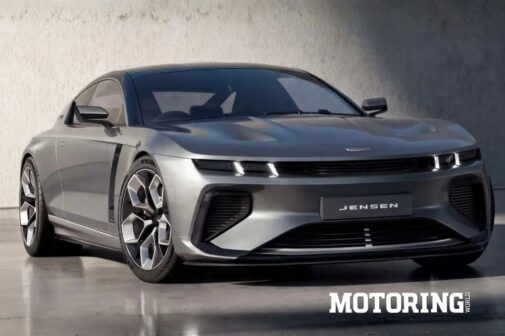
The Jensen Interceptor was never a conventional British Grand Tourer. Built between 1966 and 1976, it combined Italian styling, British craftsmanship and big American V8 power, creating one of the most distinctive grand tourers of its era. The original car used Chrysler V8s, with engines growing from 6.3 to 7.2 litres, while the related Jensen FF even brought four-wheel-drive and anti-lock brakes to the luxury GT long before they became commonplace.
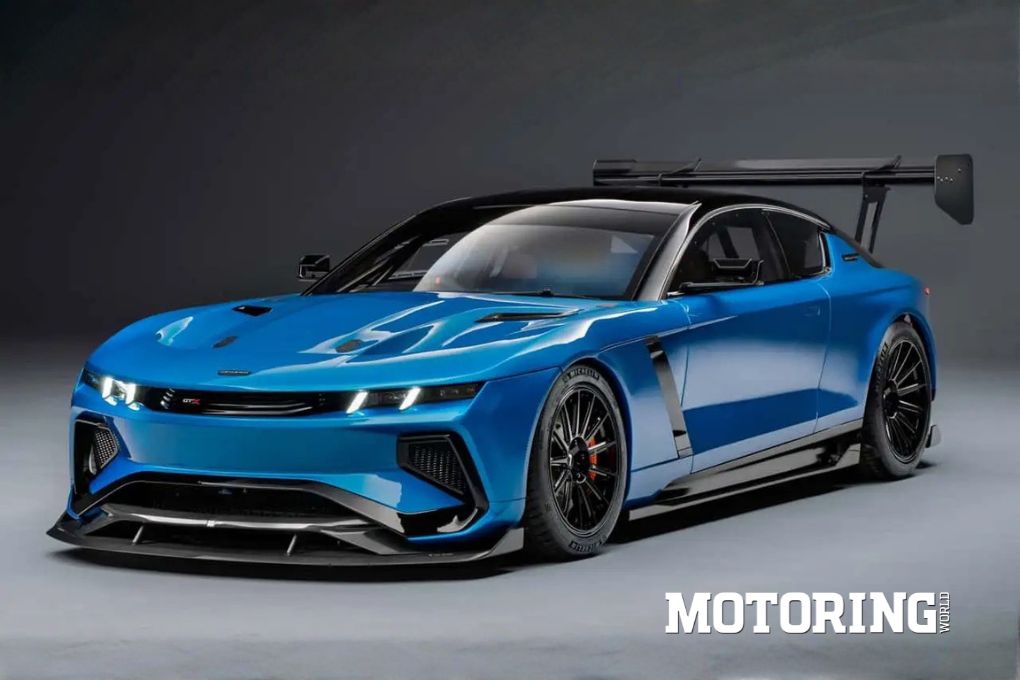
Now, the Interceptor name is back, but this time it has been attached to something considerably more extreme. Meet the Jensen Interceptor GTX, a track-only prototype with a supercharged 6.8-litre V8 producing 960 bhp and more than 1350 Nm. It is a completely new car rather than a restomod, but its long bonnet, fastback roofline and large glass rear section clearly pay tribute to the original.
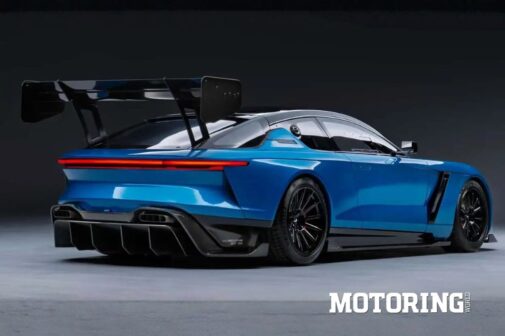
The GTX has been created by Jensen International Automotive as a demonstration of what a modern Interceptor can become. Underneath its retro-inspired shape is a new aluminium chassis, while the hand-built body uses aluminium and carbonfibre. The car has been developed in the UK and is intended to prove the engineering before Jensen turns its attention to road-going versions.
The engine is perhaps the most outrageous part of the package. It is a heavily reworked General Motors-based 6.8-litre V8 developed by Texas-based Late Model Engines. Jensen says fewer than 20 per cent of the original GM components remain, with the engine receiving CNC-machined cylinder heads, titanium valves, revised variable valve timing and direct injection systems, along with a 2.7-litre Roots-type supercharger.
For the GTX, the engine produces 960 bhp and is capable of revving to 7000 rpm. Jensen says the same engine can produce as much as 1200 bhp and more than 1490 Nm. All of that power is sent exclusively to the rear wheels through a carbonfibre driveshaft and a six-speed sequential transaxle from Samsonas Motorsport. The gearbox uses straight-cut dog-leg gears and can be operated using steering-mounted paddles or a conventional sequential lever. Jensen has also suggested that future road-going cars could be offered with either a manual or automatic gearbox.
The chassis has been designed to cope with the enormous output. The GTX uses an aluminium structure with unequal-length control arms at both ends and three-way adjustable dampers. Hydraulic power-assisted steering has been retained, while forged 20-inch aluminium wheels are wrapped in Michelin Pilot Sport 4S tyres. Then there is the aerodynamics. The GTX gets a large front splitter, side skirts with aerodynamic fins, a substantial rear diffuser and a massive adjustable rear wing. Jensen says the wing alone can generate more than 350 kg of downforce. It gives the new Interceptor a far more aggressive stance than the elegant GT that inspired it.
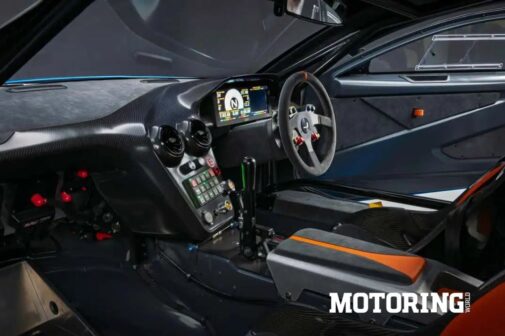
The interior makes it clear that this particular Interceptor is built for the circuit. There are Tillett carbonfibre racing seats, six-point harnesses, an FIA-approved roll cage and a fire-extinguisher system.
Jensen is planning two road-going versions: the Interceptor GTR, which will take the GTX’s performance-focused approach and make it road legal, and the Interceptor GT, which will be a more luxurious grand tourer closer in spirit to the original. The GTR will retain much of the aggressive styling, while the GT will have cleaner bodywork and a more comfortable cabin.
For now, the GTX remains a single prototype, with no production date or price announced. But it is an interesting way to revive a name that has always stood for excess. The original Interceptor paired British craftsmanship with Italian design and American V8 muscle. The new one takes exactly the same basic idea and turns every element up several notches.