


Ferrari has taken the 296 GT3 Evo, stripped away its racing restrictions and created an ultra-limited track special. Called the 296 GT Modificata, it packs a twin-turbo V6 producing around 720 bhp, weighs just 1330 kg dry and is claimed to lap Ferrari’s Fiorano test track three seconds quicker than the GT3 racer on which it is based.
The new car follows the same formula as the 488 GT Modificata that Ferrari launched in 2020. That car was essentially an unrestricted version of the 488 GT3, designed for customers who wanted to experience Ferrari’s racing technology without the limitations imposed by a competition rulebook. The 296 GT Modificata takes that idea and applies it to Ferrari’s latest generation of GT racing hardware. At its heart is the familiar 3-litre twin-turbocharged V6 from the 296 family. Unlike the road-going 296 GTB, however, there is no hybrid system here. There is also no GT3 rulebook holding the engine back. Ferrari has reworked the camshafts, intercoolers and turbochargers, while the turbo internals themselves use technology derived from the 499P Le Mans programme. The fuel system has also been revised to cope with the engine’s higher output. Put it all together and the Modificata develops 720 bhp and 800 Nm of peak torque.
Power reaches the rear wheels through a six-speed sequential gearbox. Ferrari has revised the ratios for the Modificata and added a low-pressure fuel pump to improve reliability during sustained track use. The absence of the hybrid hardware also keeps the car considerably lighter than the road-going 296 GTB.
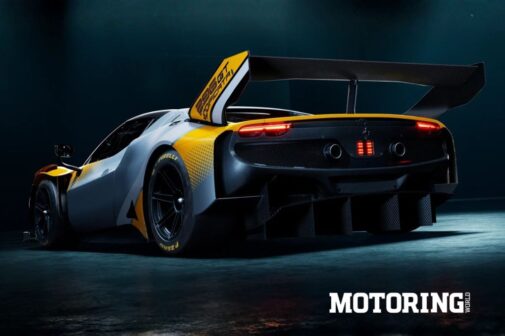
At 1330 kg dry, the Modificata is 140 kg lighter than a 296 GTB, although it is around 80 kg heavier than the 296 GT3 Evo. The aerodynamics have been heavily reworked, too. The most obvious change is the large centre-mounted rear wing, complete with structural endplates inspired by the 499P. Ferrari has also fitted a new slotted front splitter and a redesigned bonnet aimed at improving cooling. Additional ducts feed air towards the brakes, which have been upgraded with steel discs designed for the demands of repeated track use.
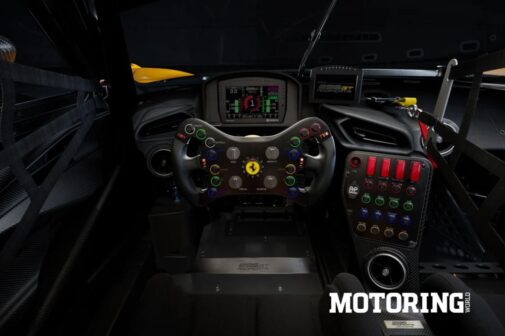
The cabin is every bit as serious. It is stripped back compared with a road-going Ferrari, but unlike a pure race car, there is a passenger seat. That means owners can take an instructor along or share the experience with a friend. An intercom system keeps both occupants connected, while additional sensors monitor parameters such as air speed and brake temperatures, giving drivers more information to analyse after a session.
Ferrari has even made a rear radar system available as an option. It can warn the driver of faster cars approaching from behind — a useful addition when the Modificata is being driven alongside other track machinery. And then there is the performance claim. Ferrari says the 296 GT Modificata can lap Fiorano three seconds quicker than the 296 GT3 in the right hands. That is quite a statement considering the GT3 is a purpose-built racing car developed for some of the world’s toughest endurance championships.

The Modificata was shown publicly for the first time at Ferrari Racing Days in Budapest and joins the 499P Modificata in Ferrari’s growing collection of cars that bring racing technology to private customers without the restrictions of competition regulations. For enthusiasts, that might be the most interesting thing about the 296 GT Modificata. The road-going 296 GTB is already one of Ferrari’s most technically advanced sports cars, but this car shows just how much potential is still hiding underneath when the hybrid system, road-car compromises and racing regulations are taken out of the equation.