

Mumbai is a city that doesn’t wake up gently; in fact, some even call it a city that never sleeps. Horns replace alarm clocks, the smell of tea and coffee is infused with the aromas of petrol fumes, and the city is already in sprint mode while most other places are still planning to get up. In short, Mumbai’s rhythm teaches you one very important thing: miss a beat, and you’ll be left behind.
That’s why cars in Mumbai are more than just machines. They’re survival tools, and if they don’t adapt to the city, they’ll exhaust you. A car in Mumbai needs to be dependable, and that’s why my chariot for this story had to be one that felt up to the task too: the new Maruti Suzuki Victoris.
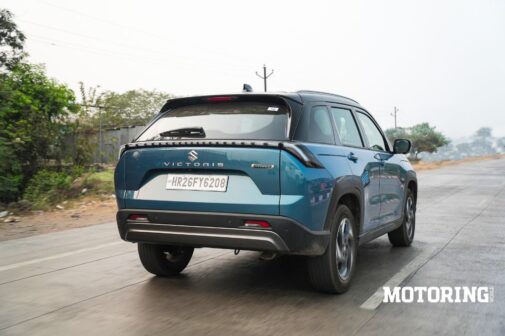
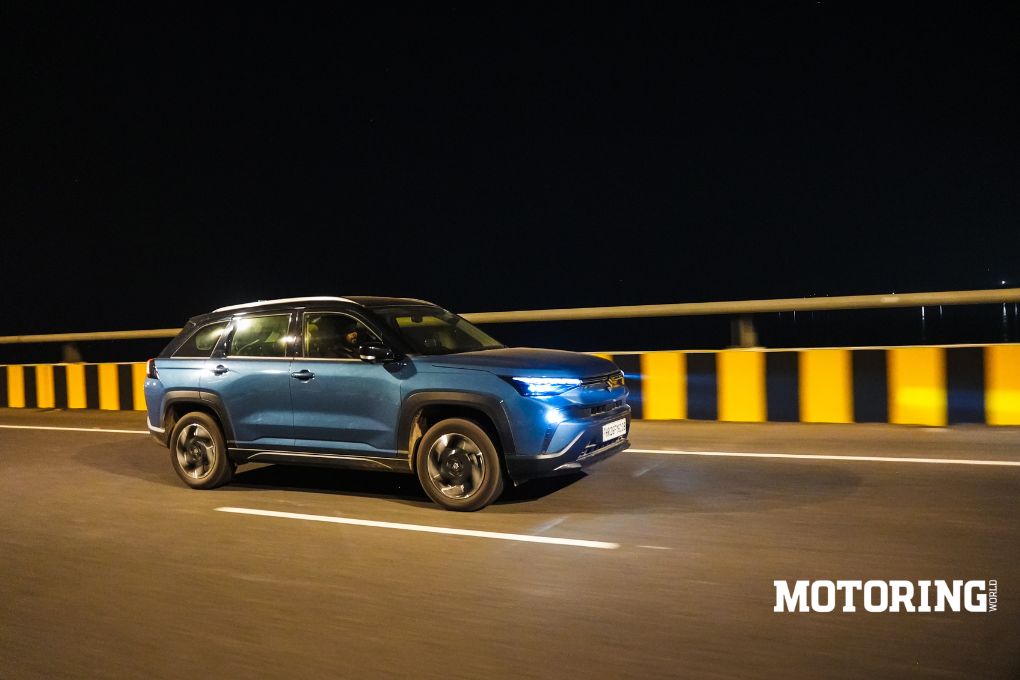
The day began like any other, with me behind the wheel, surrounded by impatience, purpose, and loads of steel, glass, and plastic. The Victoris rolled through early-morning Mumbai, slicing cleanly as the city awakened. On the outside, it looked composed but understated. Inside, it felt ready for the day and aware of what it was going to demand. The Victoris isn’t trying to shout, because it doesn’t need to. In a city where everything is loud, it stands out by maintaining composure.
There’s a certain confidence that comes with a car designed for young Indians, especially those who live in big cities like Mumbai and New Delhi. It’s not about being flashy, but about understated finesse. You want tech that understands you, works with you intuitively, comfort that doesn’t beg for attention, and efficiency that quietly pays dividends over time.
But Mumbai traffic is the ultimate stress test for a driver and the car. Stop-start crawls, sudden bursts of speed, and long bouts of simply standing still in traffic. The Victoris hybrid glides through this chaos with an effortlessness that feels natural. The best part comes when it switches into EV mode the moment traffic slows. No emissions, no noise, just pure electric mobility that’s easy on the planet, the ears, and the wallet. It’s the kind of calm you don’t realise you need until you experience it.
Sometimes, the chaos of Mumbai can overwhelm you. And to feel a bit rejuvenated, I decided to head out of the city in search of adventure. Adventure doesn’t have to mean anything extreme. Sometimes, it simply means putting the city in your rear-view mirror.
I did exactly that by heading to Alibaug for the day. To be honest, I didn’t really have a plan when I set off. The only thing I knew was that I needed a break from the city, a rush of blood that was different from the constant hustle of Mumbai. Alibaug seemed like the best option.

But before I began this escapade, I wanted to test out the efficiency of the Maruti Suzuki Victoris hybrid. I didn’t need to fill up, but it was an exercise in gathering data — and perhaps an eventual flex of both my fuel-efficient driving and the car’s frugal nature. With the trip meter set to zero, it became a journey of understanding how the Victoris behaves when asked to do a bit of everything.
Long drives tell you a lot about how a car behaves. They expose weaknesses like road noise, seat comfort, and power delivery. It wasn’t surprising that the Victoris aced these tests without fuss. The cabin remained a bubble away from the blaring noise of traffic, the seats ensured I stayed relaxed throughout the journey, and the Infinity by Harman sound system with Dolby Atmos played a crucial role in keeping things enjoyable.
The journey began with a simple roll on to the Ro-Ro (roll-on, roll-off) ferry from Mumbai, which took me to Mandhwa, at the tip of Alibaug. It has always been an escape valve for Mumbai — not so far away that it requires weeks of planning, yet far enough for it to feel completely different from city life. The roads start clearing up, the air starts to feel different, and the constant rush of Mumbai begins to soften into something calmer.
The Victoris adapts to your lifestyle in ways that can surprise you. I felt that when I got off the ferry in Mandhwa. I was pleasantly surprised to see it managing the narrow lanes of Alibaug with poise, ease, and comfort.
Alibaug is known for its beaches, but I wasn’t here to relax on one. My idea of relaxation involved adventure, and I decided to fly high. The plan was parasailing — an activity I had never done before, but one that had long piqued my interest.

Watching parachutes lift off and soar is equal parts calming and thrilling, and enticing enough to keep you excited for your turn. Safety is crucial in parasailing. Your harness needs to be tight yet comfortable, the ropes need to be faultless, and the person handling everything in the boat needs to be an expert. It’s no joke, because if one point falters, the experience can turn out very differently from what you expected. The adrenaline rush kicks in when you’re up in the air and everything below suddenly feels smaller.
Back in the Victoris, the sense of security returns. Six airbags, electronic stability control, electronic parking brake with brake hold, and other important safety features ensure that the Victoris always has your back. There’s another safety net on board too: Level 2 ADAS (available on certain variants). Just like the parasailing gear, these systems exist so you can focus on the joy rather than worry about safety. That peace of mind is a saving grace in cities like Mumbai.
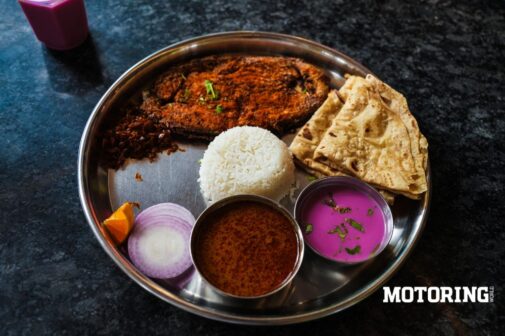
A trip to Alibaug is incomplete without visiting a Konkan restaurant to gorge on some delicious fish. I ordered a surmai thali that came with fried surmai, solkadhi, rice, and everything that screams comfort food.
Which then reminded me of how comfortable and soul-refreshing the Victoris’ cabin feels. Every panel seems thoughtfully designed. Each material feels crafted to make you feel at home. The seats offer armchair-like comfort, and the cabin exudes a premium feel.
Satiated from the heavy lunch, I decided to calm myself with a relaxing drive through the ghats near Mumbai before reaching my halt for the night in the northern suburbs.
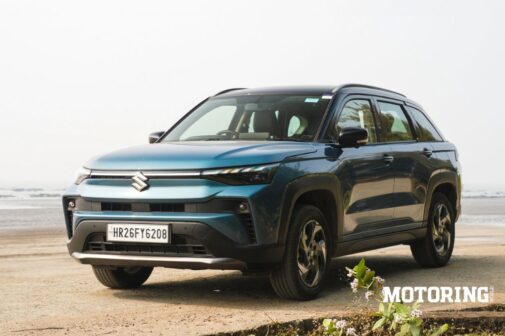
The drive through the lush green ghats gave me a Eureka moment. The Victoris has been designed with young Indians in mind, which is refreshing to see in this segment. Its design feels different from what anyone else offers, and it instinctively comes across as youthful. The bold-cut LED DRLs merging into the chrome strip up front create a pleasing effect, and the crafted wheel arches suggest the Victoris means business.
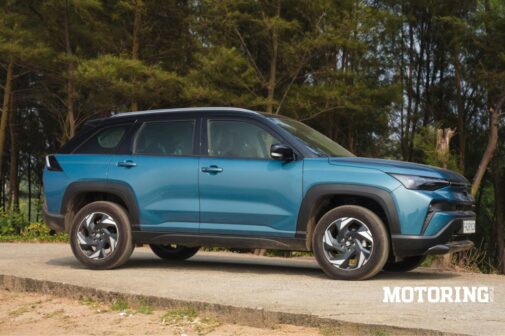
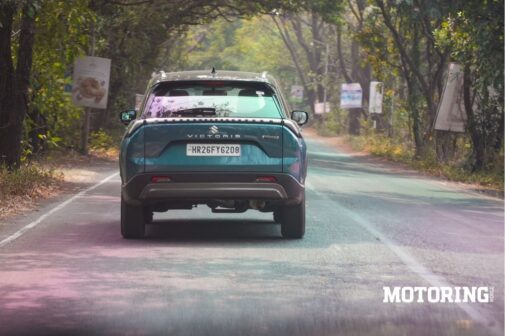
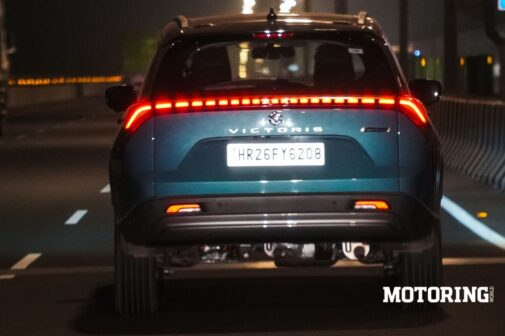
Even the rear has an out-of-the-box look, with a clean tailgate and a segmented pattern for the connected LED tail-lamps. There’s a clear minimalist theme running through the design, visible in the alloy wheels, the character lines on the sides, and the tapering roofline.
The hybrid powertrain makes ample power for anything the Victoris needs to handle. Out on the highways, it feels right at home. Even in the ghats, it remained supple and relaxed. What’s impressive is the three drive modes on offer — Eco, Normal, and Sport — each with a distinct character.
I was so engrossed in enjoying the Victoris hybrid in the ghats that I nearly forgot about my next adventure. One that most people dread: peak evening rush-hour traffic back into Mumbai.
Since I had taken the ferry to Alibaug, I decided to return via the old road route instead. Any logical person might have driven back to Mandhwa and taken the ferry again, but I wanted a challenge. Peak rush-hour traffic from South Mumbai to the northern suburbs.
It was smooth until Atal Setu, but as soon as I hit the Eastern Expressway, I remembered why people either leave office early or very late. Bumper-to-bumper, nerve-wracking traffic that isn’t meant for amateurs.
Much to my surprise, I didn’t care a wee bit about the chaos outside the Victoris. There were two reasons for that. First, the cabin insulation meant the Infinity speakers didn’t have to work overtime to calm my nerves. Second, the ventilated front seats were a boon in Mumbai’s humid weather. Paired with the strong air-conditioning system, it felt like a summer breeze by the shore.
By the time I reached Mumbai, it was already dark, which made it the perfect moment to experience the ambient lighting inside. It strikes a lovely balance: subdued but noticeable. There are 42 V-shaped elements for the ambient lighting in front of the passenger seat, adding a touch of elegance. The 64 colours for it also give you a chance to customise the interior as per your choice.
In slow-moving traffic, the hybrid system once again comes into its own. The car slips into EV mode seamlessly, creating pockets of calm in the chaos. The steering remains light, and managing traffic doesn’t feel like a chore.
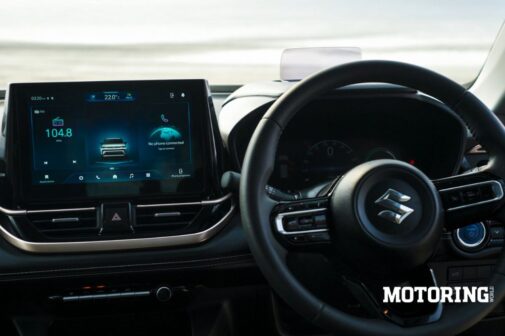
Since the Victoris was so easy to drive, I barely checked maps for traffic updates. But if that’s something you rely on, the 10.1-inch infotainment touchscreen is crisp, clear, and angled well enough to minimise glare.
The head-up display also helps, offering turn-by-turn navigation along with essential driving information.
Overall, the Victoris felt capable of every kind of task it was asked to do. Motivating me to head out of the city? Check. Rolling on and off the ferry? Check. Navigating Alibaug’s narrow lanes? Check. Keeping me safe? Check. Making long highway stretches feel easy? Absolutely. And then there’s the best part: efficiency.
The whole trip was 156.4 km, and the Victoris used just 7.43 litres of petrol. That works out to a fuel efficiency of 21.05 km/l, which is impressive considering the amount of Mumbai traffic involved.

Fun fact: the new Maruti Suzuki Victoris is also the 2026 Indian Car of the Year, a well-deserved title for the brand’s latest SUV. It didn’t win by chasing extremes. It won because it understands its consumers well. It has everything a young Indian needs, juggling ambition, adventure, and chaos without breaking a sweat.
And as I parked the Victoris at the end of the day, it was clear that I wasn’t exhausted or dreading the drive. I was yearning for more — more adventures, longer journeys, more places to explore. I don’t know where the next one will take me, but I do know the Victoris won’t feel out of place wherever I go.
Clearly, the Maruti Suzuki Victoris has got it all.