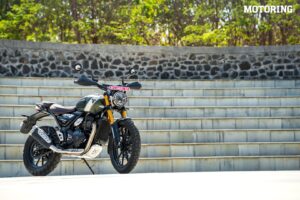


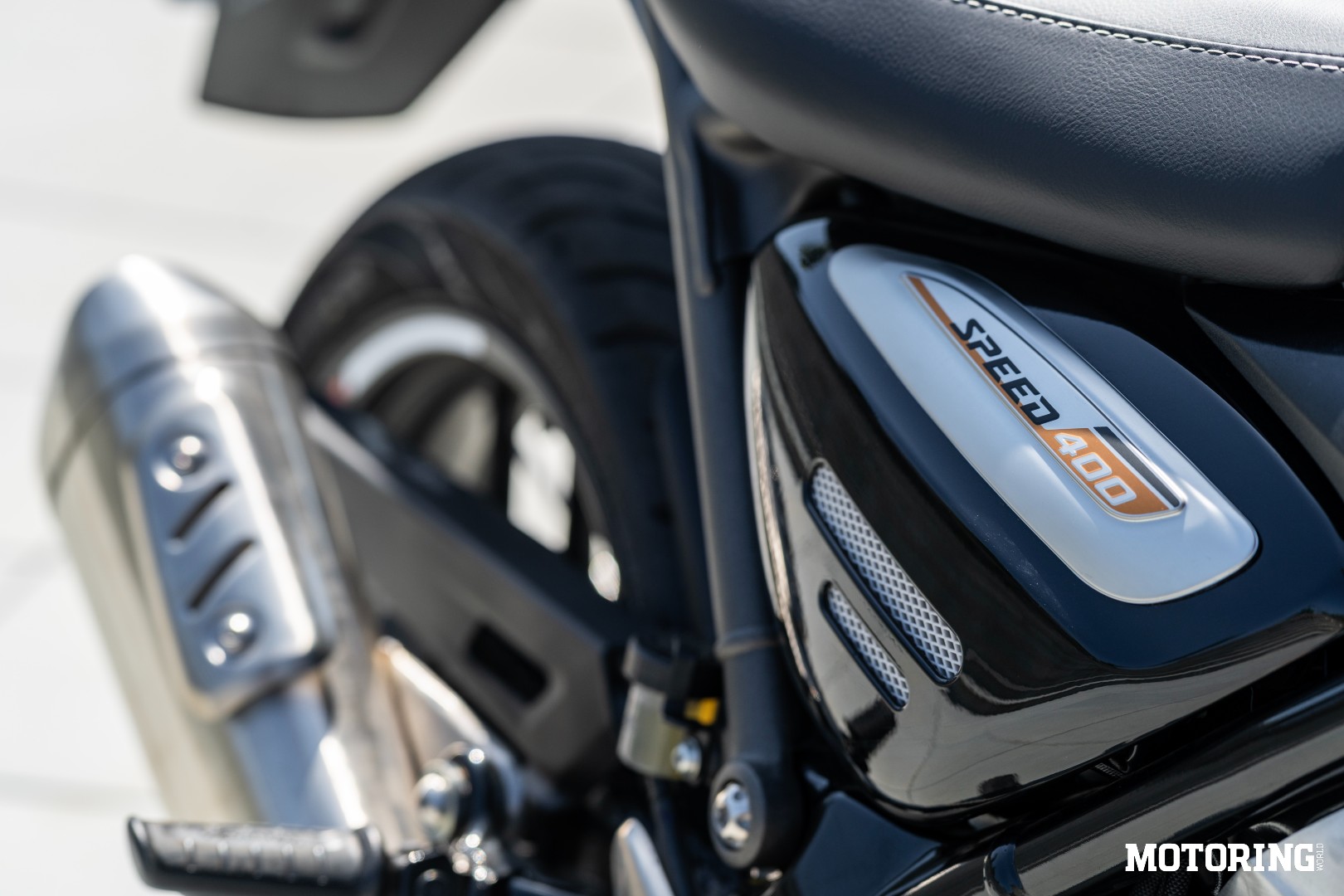
There’s an elephant in the room and it’s wearing a rather confusing badge. The bike still says ‘400’, but the engine now displaces 349cc. Before you sharpen your pitchforks, the explanation is less scandalous than it sounds. In India, motorcycles above 350cc attract 40 per cent GST, while those below fall into the far friendlier 18 per cent bracket. So Bajaj simply shortened the stroke of the engine to sneak the Triumph Speed 400 under the tax line. So, yes, the capacity has dropped but thankfully, the character hasn’t.
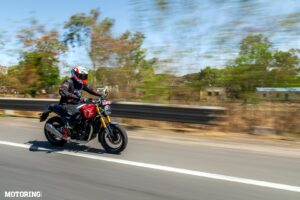
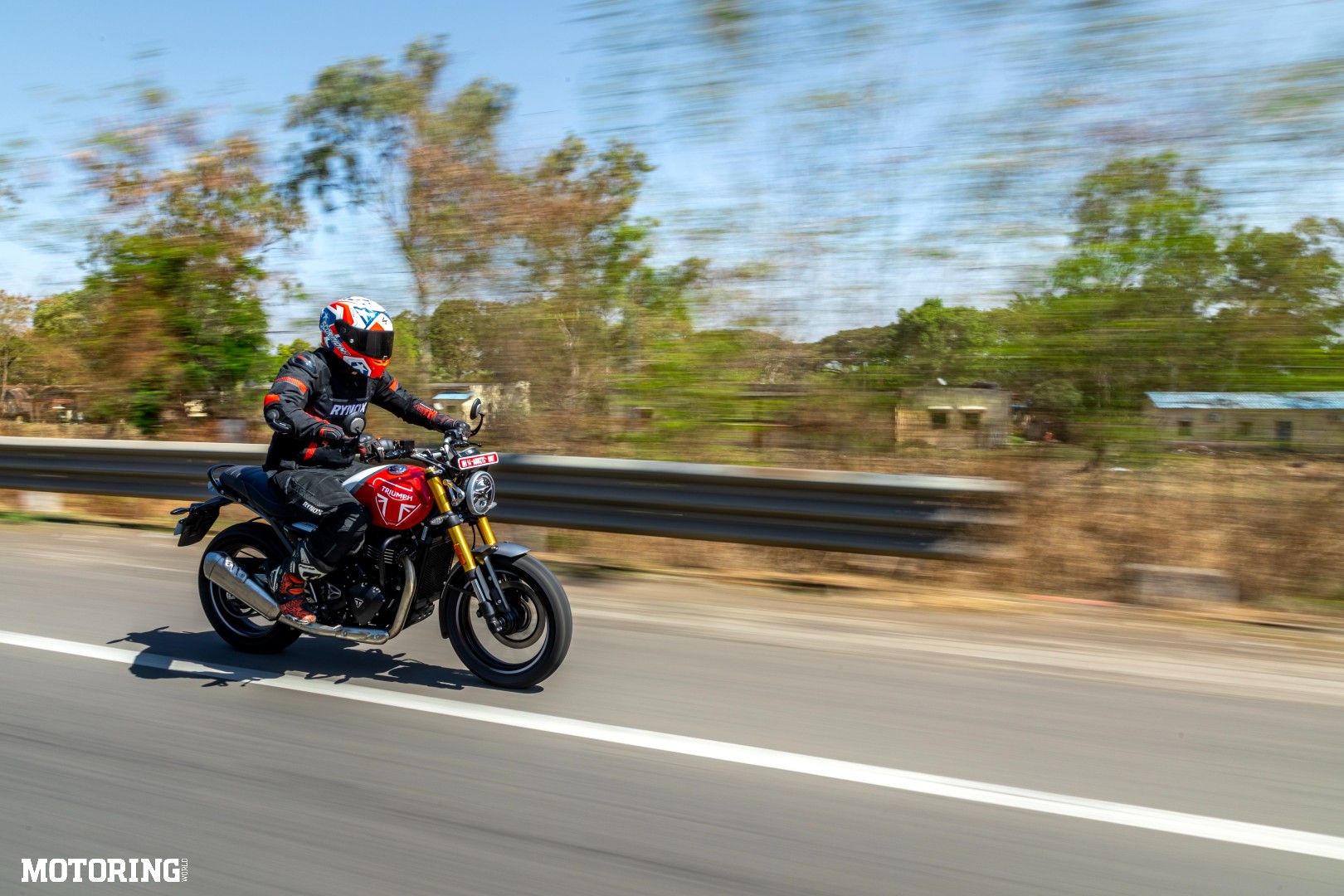
If you were to ride the earlier 398cc bike and the new 349cc version back-to-back, you’d notice the difference. But if you weren’t told about it beforehand, chances are you’d ride away blissfully unaware. Despite the reduction in displacement — and a noticeable dip in torque on paper — the Speed retains its playful nature. It still feels eager, still pulls cleanly, and amusingly, it still tries to lift its front wheel every chance it gets. That mischievous streak clearly survived the surgery.
The numbers tell a different story. The earlier motor produced 39.5 bhp at 8000 rpm and 3.82 kgm at 6500 rpm. Now, the figures stand at 36.49 bhp at 8500 rpm and 3.26 kgm at 7000 rpm. In other words, slightly less muscle, delivered slightly higher in the rev range. Out on the road, though, the difference isn’t dramatic. The engine still feels lively and responsive in typical city riding and remains relaxed enough on the highway.
Importantly, the gearbox and final gearing remain unchanged. There are no sneaky tweaks to mask the reduced displacement, which makes the performance feel reassuringly familiar if you’ve ridden the earlier bike.

Where the riding experience has evolved slightly is in the tyres. Last year, Triumph switched to taller tyres with a flatter profile, and this bike continues with those. The Vredestein Centauro STs offer reassuring grip, but they aren’t quite as eager to flick into corners as the earlier MRF Steel Brace or Apollo H1 tyres. The upside is that the bike now feels more stable and less twitchy, particularly for newer riders. Direction changes require a touch more input, but the overall feel is calmer and more predictable.
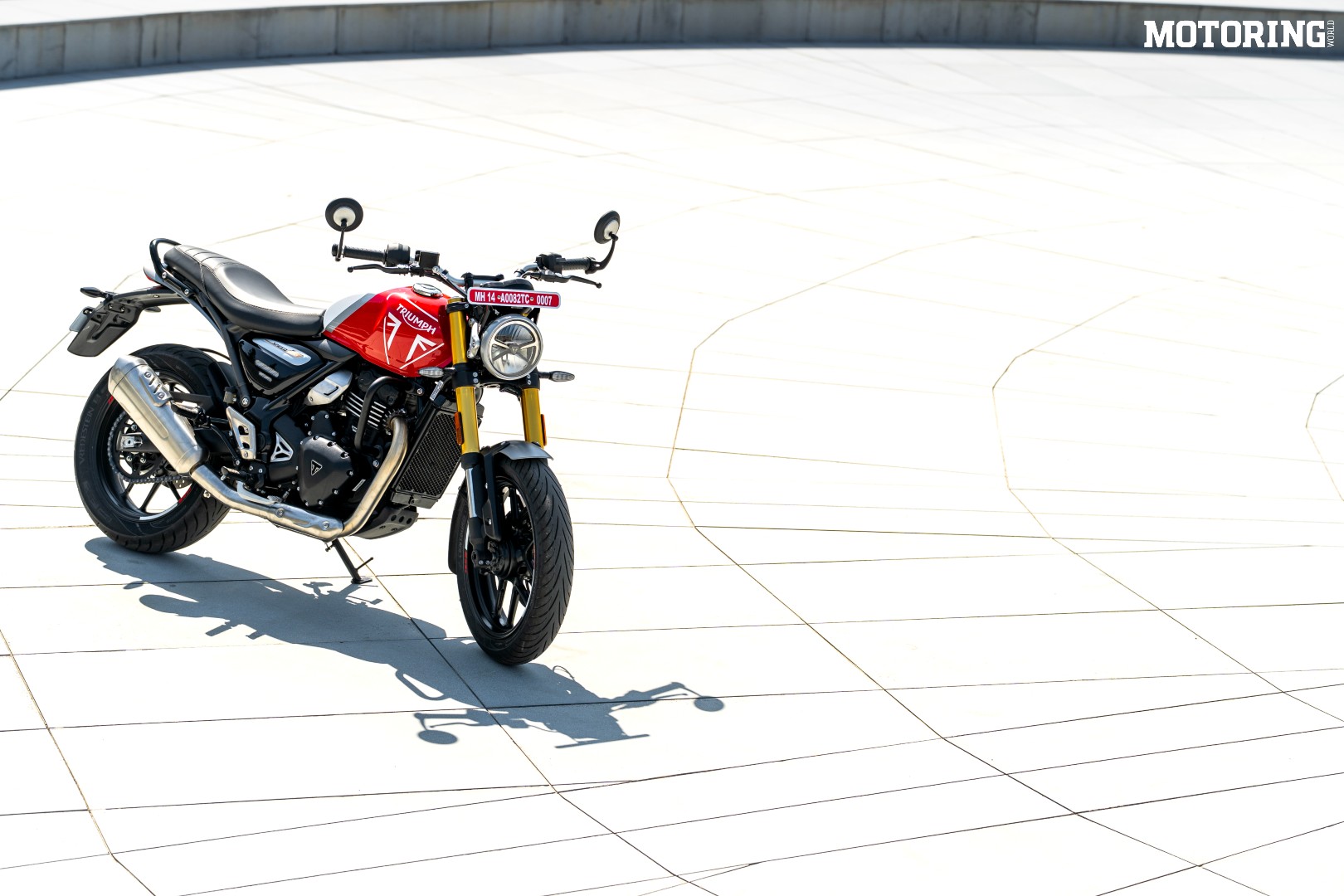
Through city traffic and open highway stretches, the chassis continues to impress. The Speed still feels balanced, friendly, and unintimidating — exactly the traits that made it such a strong entry point into the Triumph brand in the first place.
Which brings us back to that badge. A ‘400’ with a 349cc engine might sound odd, but context matters. Globally, this engine is still a 400. The smaller displacement is purely an India-specific tweak to slip under the tax threshold.
And frankly, if that tweak saves you over ₹17,000 on the price tag, are you really going to sit there counting cubic centimetres?
More importantly, with the way the bike performs, no one riding behind you will know it’s technically a 350 anyway. The Speed still feels every bit like the spirited roadster it always was — just with a slightly cheekier tax strategy tucked inside its engine case.