

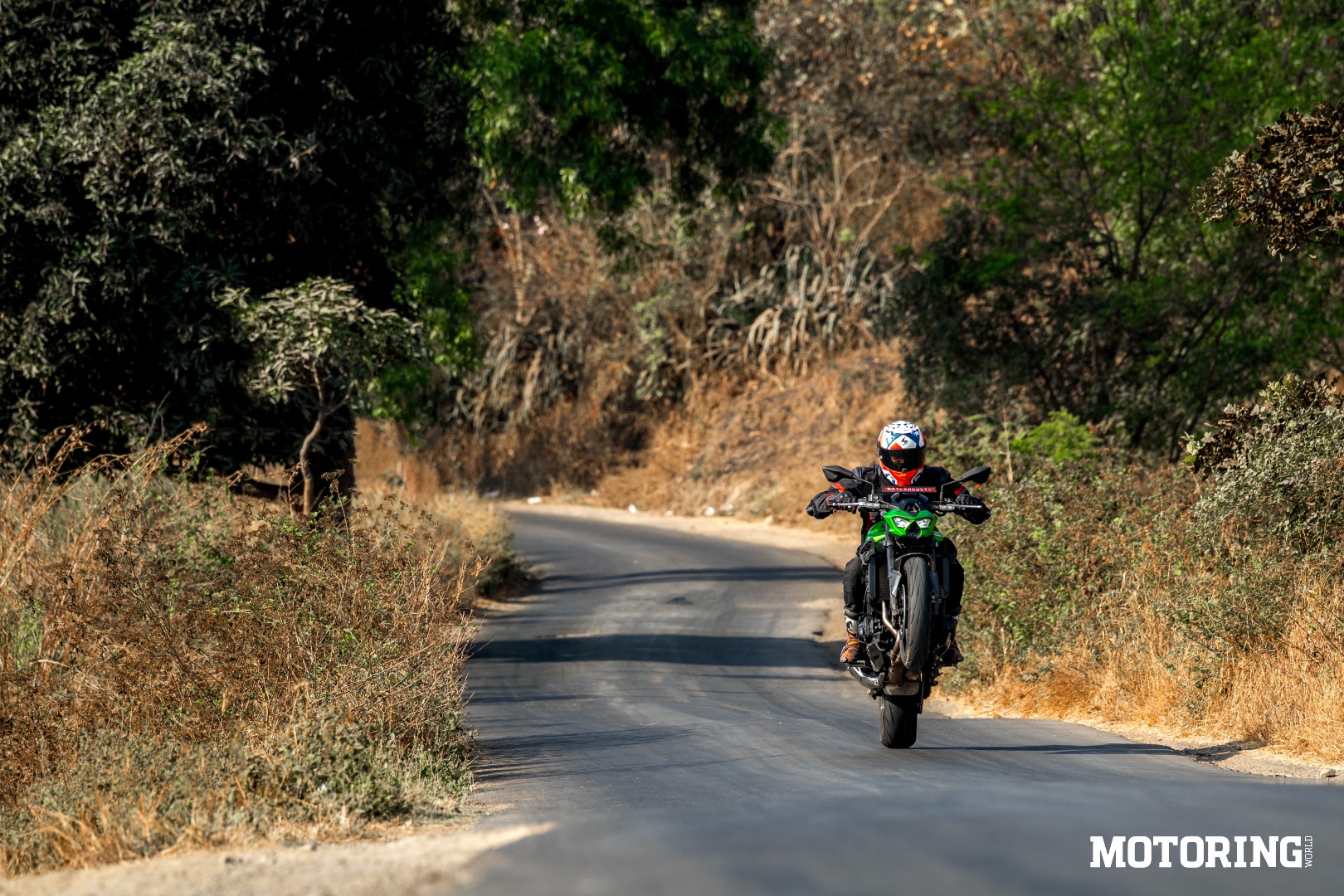
The throttle opens hard on an empty stretch. I’m expecting the usual response — a shove forward, a deep intake growl, maybe even the briefest suggestion that the front wheel might leave the ground. Instead, the 2026 Kawasaki Z900 hoists itself skyward as if gravity was out for a lunch break. The horizon disappears. The handlebars go light. For a fleeting moment, all I can see through the visor is a slice of impossibly clear blue sky. It feels as though the bike is pointing me straight towards The Maker. Then, just as gracefully as it rose, the front wheel settles back onto the tarmac. And I’m left laughing inside my helmet. Because this isn’t how my memories of the Z900 begin.
The previous Z900 never quite stirred the hooligan in me. Sure, it was quick, smooth, and brutally competent, but it always felt a bit… polite. The design didn’t help either. It reminded me of a gentleman trying very hard to look intimidating by growing a bit of stubble. Tough on the surface, but still carrying a certain civility underneath. This new one shatters that image before you even thumb the starter.
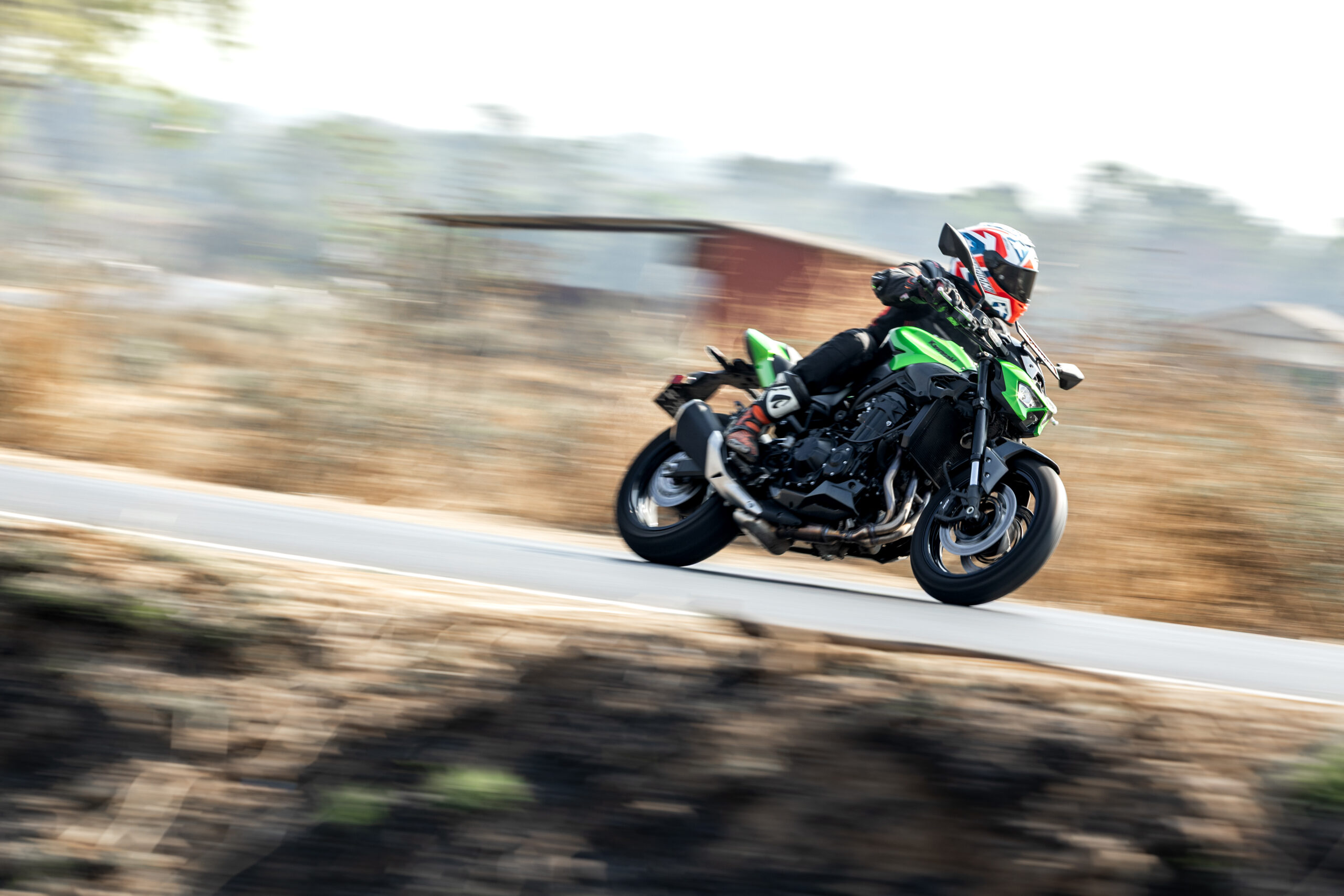
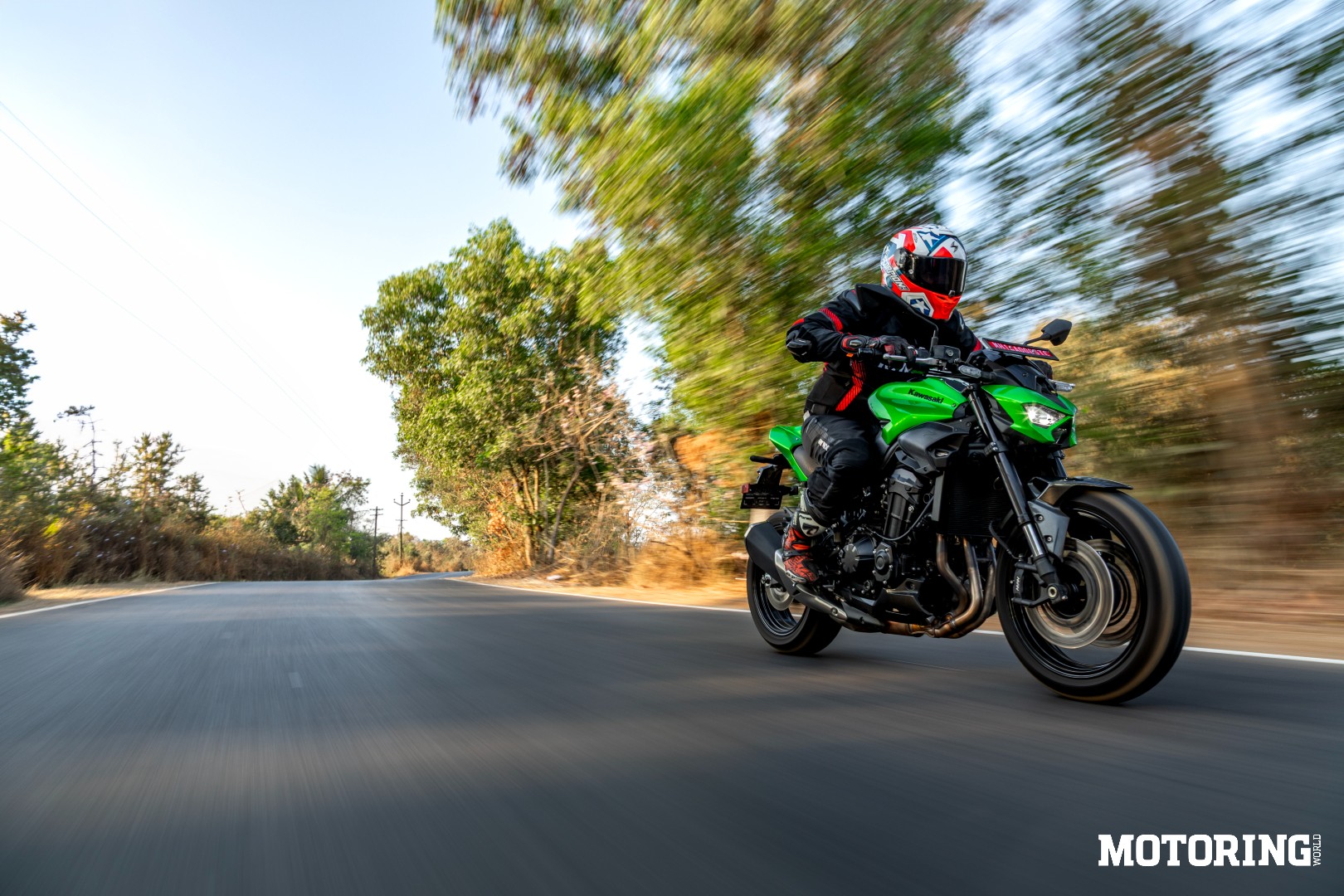
From the moment I saw it, all I could think of was wheelies, corners and generally being an absolute nuisance to society. The new headlight looks like it can see straight through you, like it knows the version of you that appears the moment the visor goes down. The version that doesn’t care about behaving.
And that old ‘Z’-pattern taillight? Gone. In its place sits a pair of sharp red streaks that look suspiciously like devil’s horns. Which is fitting, considering that’s probably what people will picture when this thing storms past them. But styling alone doesn’t explain what happened over the next few kilometres. Because after riding the previous Z900, I never expected this one to feel like a completely different experience. Yet that’s exactly what happened.
I was pulling wheelies more often than I ever had on the old bike. I was braking harder, trusting the front end more, and attacking corner entries with far greater confidence. The bike felt eager — like it was constantly nudging me to ride it a little more aggressively. On the straights, it was an absolute riot. Corners, though, were where the illusion cracked slightly.
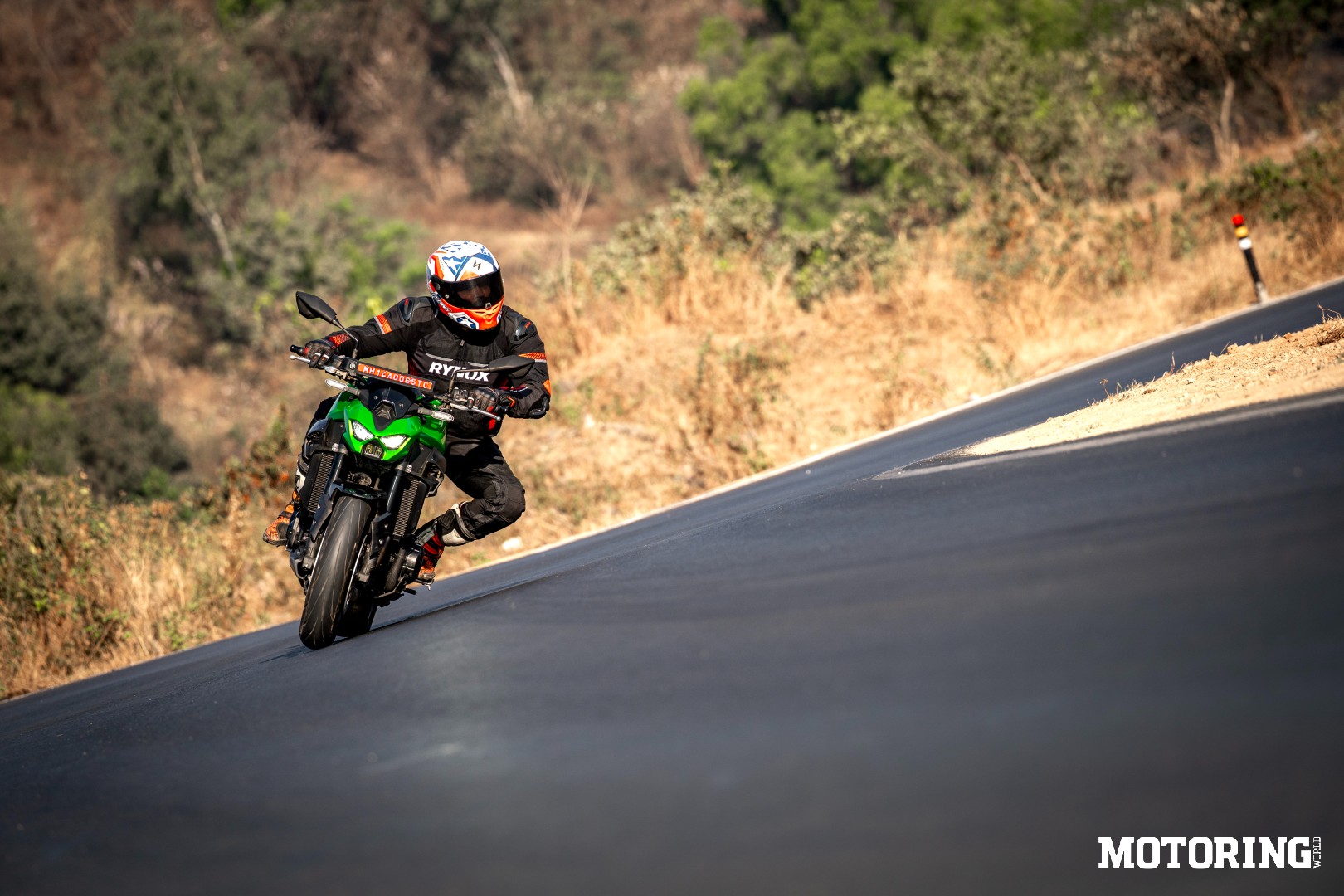
The new Dunlop Sportmax Q5A tyres are marginally better than before, but still not quite what you’d expect on a machine of this calibre. It doesn’t take much before they begin to protest, and a few times they did exactly that — sliding just enough to remind me that enthusiasm needs boundaries. But everything else? That was flawless.
The Z900 has always been fast, but I had forgotten just how fast it really is. The way it storms past the 200-kph mark had me crack up like a maniac. There’s a loud, intoxicating intake growl that builds as the revs climb, and once the tachometer begins sweeping toward the redline, the in-line four screams with the kind of urgency that makes you push harder than you probably should. Every surge of acceleration only encouraged more throttle. And this time, there were new electronic guardians watching quietly in the background.
The Z900 finally gets ride-by-wire, which brings with it an IMU-assisted traction control system and dual-channel ABS. Road mode works perfectly in traffic — predictable, smooth, civilised. But that’s not where I spent most of my time.
Instead, I kept returning to Rider mode, toggling between minimal traction control and switching it off altogether. With TC dialled down, the bike felt alive but manageable. Switch it off entirely, though, and the Z reveals a side of itself that feels mischievous. Like it’s been waiting years to misbehave.
The new radial brake calipers also deserve credit here. They add a layer of confidence the previous bike never quite offered. The braking itself still feels very Japanese — reliable, consistent, predictable. It lacks that razor-sharp bite European machines often boast about, but the trade-off is absolute trust. You know exactly what the brakes will do every single time.
And somewhere along the ride, it finally clicked. The moment came right after that first wheelie. Not the one I deliberately chased later, but the one that happened completely by accident. I rolled off the throttle, slowed down, and replayed the previous hundred kilometres in my head.
I had been riding this bike far harder than I ever rode the previous Z900. More wheelies. Later braking. Faster corner entries. So naturally, I began wondering why. Because the truth is, not much has actually changed.
The 948cc in-line four now produces slightly less power and torque than before. The weight hasn’t dropped either. Mechanically, the motorcycle remains fundamentally the same beast I rode a few years ago. The updates are modest — ride-by-wire throttle, an IMU-based electronics suite, improved brakes and better tyres.
Important changes, yes — but hardly the kind that should transform the riding experience so dramatically. Which left only one explanation: The way it looks. The sharper, more sinister styling had convinced my brain that this Z900 was lighter, faster and far more aggressive than the one that came before it. Before I even rode it, the design had already rewritten the story in my head. And subconsciously, I rode it that way.
We often say we shouldn’t judge a book by its cover. But sometimes, that cover quietly changes the way we read the entire story.