

‘Please, could you wait a moment?’ I had just pulled on my gloves when the voice stopped me.
‘My son loves Harleys,’ the man said, waving frantically towards a taxi parked nearby.
A boy of about nine jumped out and hurried over, trying his best to look cool as he approached the motorcycle. He failed spectacularly. The grin stretching across his face and the excitement in his eyes gave him away immediately.
With one arm in a cast, he carefully climbed onto the Harley-Davidson Breakout while his father shot photographs from every conceivable angle. From inside the cab, the rest of the family watched, laughed and cheered him on.
In that moment, I realised something. The boy wasn’t old enough to ride. His father probably wasn’t in the market for a Harley-Davidson, either. Yet here they were, treating the Breakout like a celebrity. And that’s the thing about certain motorcycles — long before they become prized possessions, they become dreams.
Most of us grew up with poster vehicles. For some, it was an Italian supercar. For others, a Japanese grand tourer sliding sideways through a mountain pass. But for generations of motorcyclists, the dream arrived draped in chrome, and powered by a thundering V-twin, proudly wearing the Bar and Shield.
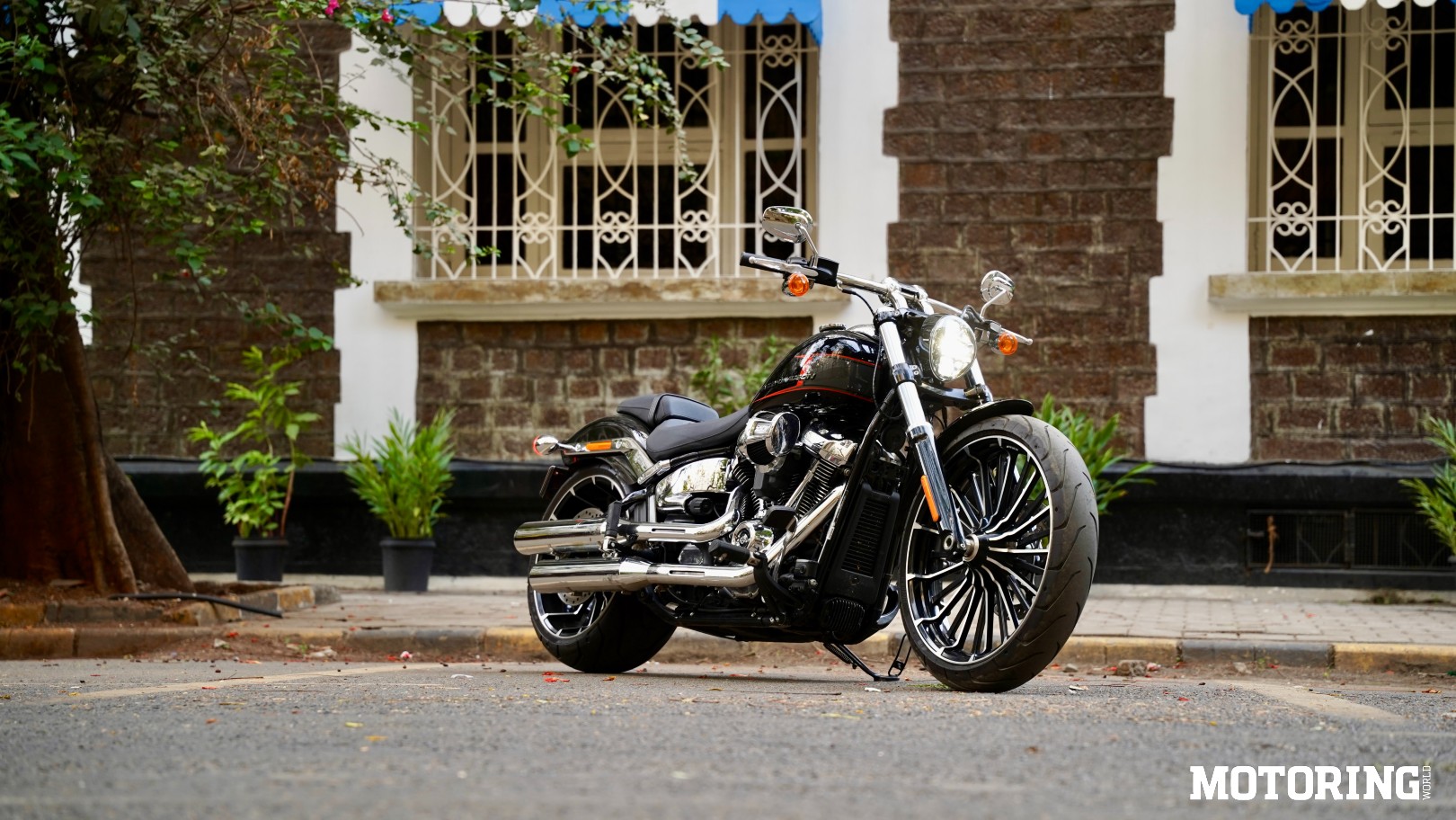
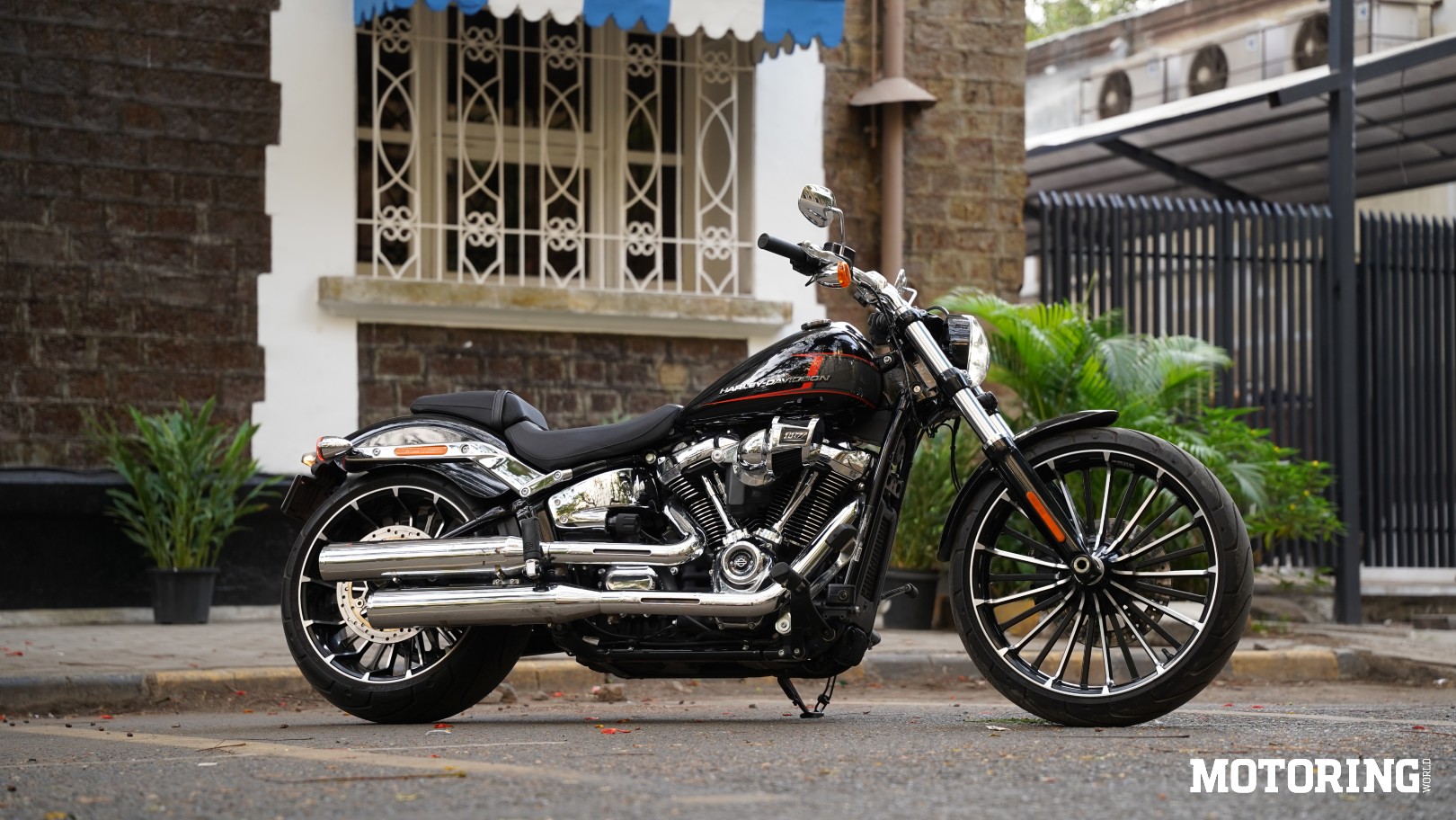
And if Harley-Davidson has spent over a century selling dreams, the Breakout might just be its most unapologetic one. There is nothing subtle about it. The rear tyre is wider than reason. The wheelbase stretches towards the horizon. Chrome catches sunlight from every angle. Even parked, the Breakout looks like it is trying to make a statement. Yet what struck me wasn’t how outrageous it appeared, but how familiar it felt. Because this is exactly what dreams look like.
They aren’t shaped by practicality or common sense. They are exaggerated, romanticised. If you asked a child to sketch the ultimate motorcycle, chances are it would look remarkably similar to the Breakout — impossibly long, impossibly muscular and impossible to ignore.
Perhaps that’s why people are drawn to it. Not because it promises to be the fastest, the lightest or the most capable motorcycle on the road, but because it doesn’t concern itself with any of that. The Breakout isn’t trying to win a comparison test. It isn’t trying to be all things to all riders. It exists for a far simpler reason — to make you want it.
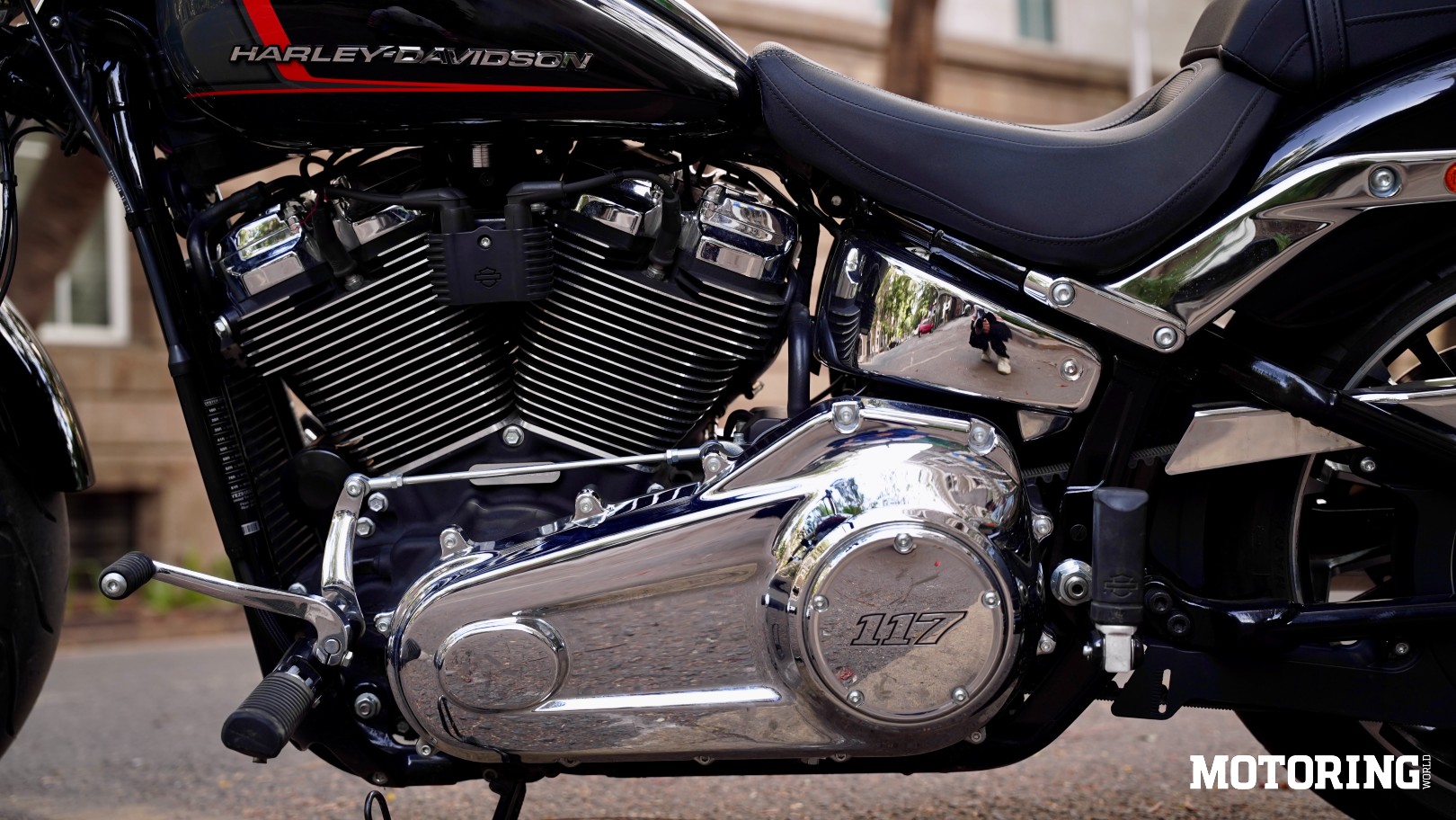
A loud ‘thank you’ brought me back to my senses as the family drove past, still waving. I thumbed the starter and the Milwaukee-Eight 117 came to life like an announcement. Yes, the dream the boy who’d pasted cut-outs of Harleys had grown up with was finally coming true — but that also meant facing the obvious question. Would reality live up to the fantasy?
One twist of the throttle answered it. The nine-year-old me hadn’t been far wrong. Back then, an engine that big surely meant performance, but nothing — no number, no description — could have prepared me for the shove as I pulled away. At 100 kph, that motor wasn’t even touching 3,000 rpm.
At nine, I didn’t care about numbers. Neither did the father and son I’d just met, and as it turned out, neither did anyone else I encountered during my time with the Breakout. Was it because I was sitting up there like I owned the road? Or was it the Heavy Breather jutting out from the right side of that big V-twin, drawing puzzled stares at every junction?
I should have been worried about its colossal weight, or simply the sheer size of manoeuvring something like this through Mumbai. But that’s the thing about dreams; they aren’t supposed to make sense or be rational — if they were, we’d call them plans. Dreams run on emotion. They are immune to reason, comparison and logic.
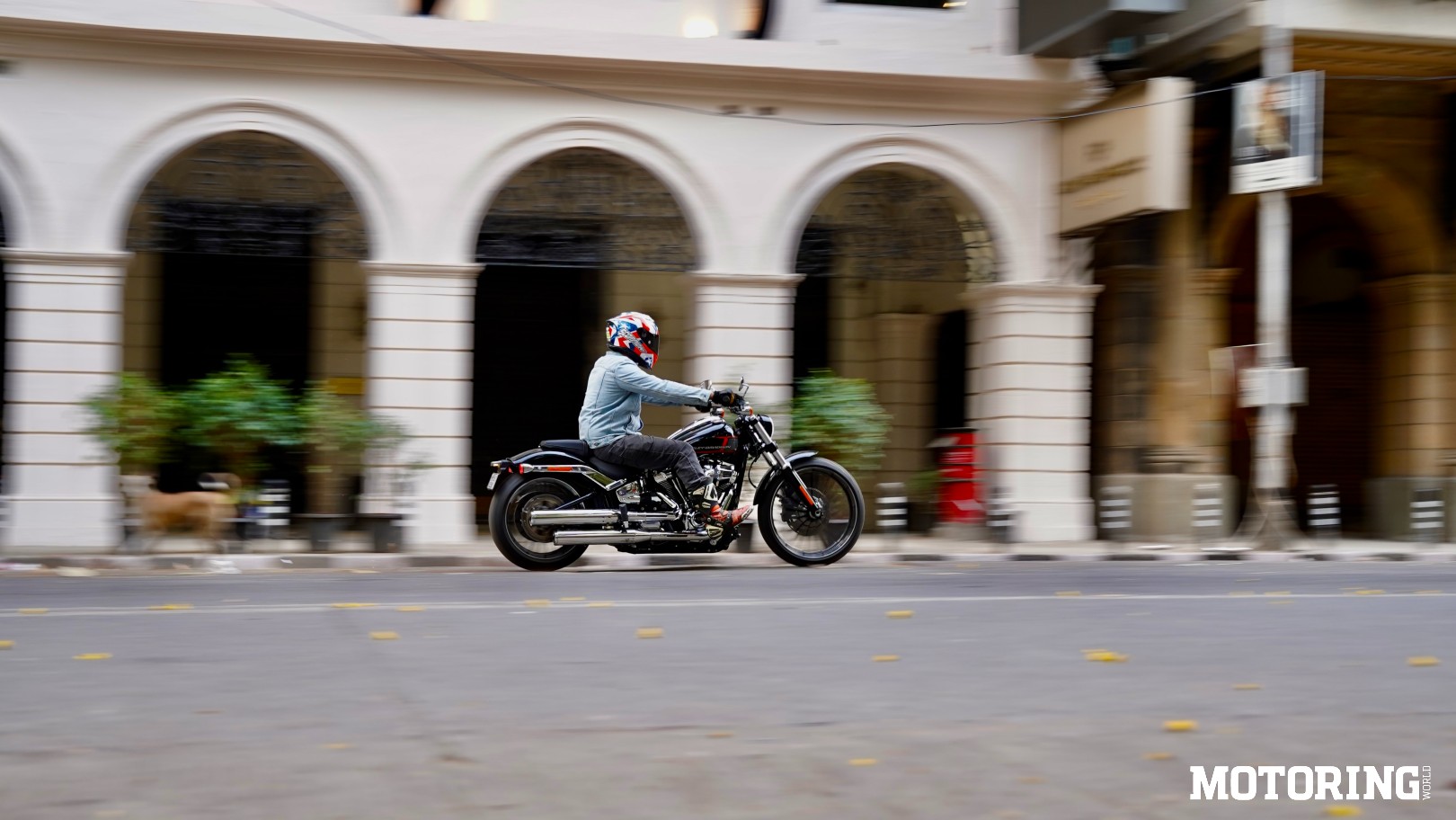
How else would you explain the fact that something as long as the Breakout handles everyday city riding at all? The stretched-out rake and long wheelbase keep it planted in a straight line — setting aside a brief moment of wheelspin and a slight side-step on take-off — but what about corners? With that much rubber on the road, there is so much grip that you can actually use up all the available cornering clearance. All 28.5 degrees of it.
Almost everything about the Breakout is about as practical as that cornering clearance. Something as routine as a U-turn becomes an event requiring planning several metres in advance. Speed bumps demand the same forward thinking, and on most occasions still manage to leave a scratch on the Breakout‘s belly, and on your conscience.
Reality makes the occasional appearance, of course. The rear suspension seems to have taken Mumbai’s broken roads as a personal challenge, transmitting every sharp edge directly into your spine. The heat from the big V-twin can turn a summer traffic jam into a slow-cooked ordeal, and the fuel bills have a way of influencing your financial decisions long after you’ve handed back the keys. And yet none of it feels like a disappointment, because the dream never accounted for any of it.
As children, we don’t dream about suspension travel, fuel economy or heat management. We dream about the way a motorcycle looks, the sound it makes and how it makes us feel. The Breakout delivers on those promises with such conviction that its shortcomings end up feeling less like flaws and more like part of the admission price.
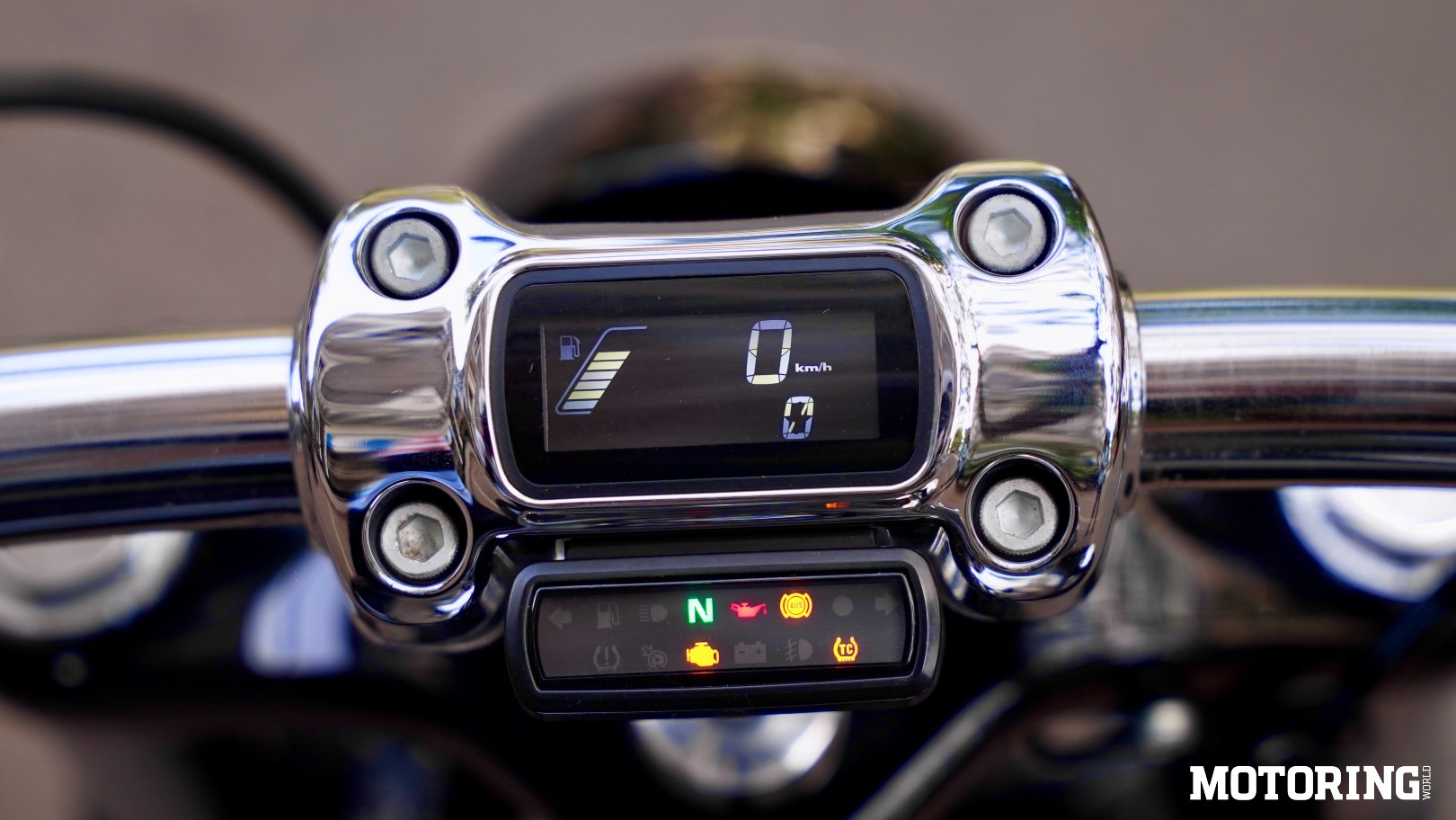
Even the details that ought to matter somehow fade into the background. For something built around excess, the 2.4-inch LCD console feels almost refreshingly restrained. Would a flashy TFT screen make more sense on a motorcycle at this price? Perhaps. Would it make the Breakout any more desirable? Not really. It isn’t interested in justifying itself to anyone other than the person on it. Besides, you will spend far more time catching your reflection in shop windows than glancing at the instrument cluster.
The same goes for the brakes. The 300 mm front disc looks faintly comical against that enormous 240-section rear tyre and 21-inch front wheel, as though someone forgot to scale it up with everything else. Yet it does its job with reassuring confidence. The rear plays its part too, though the Heavy Breather occasionally turns reaching the brake pedal into a minor negotiation.
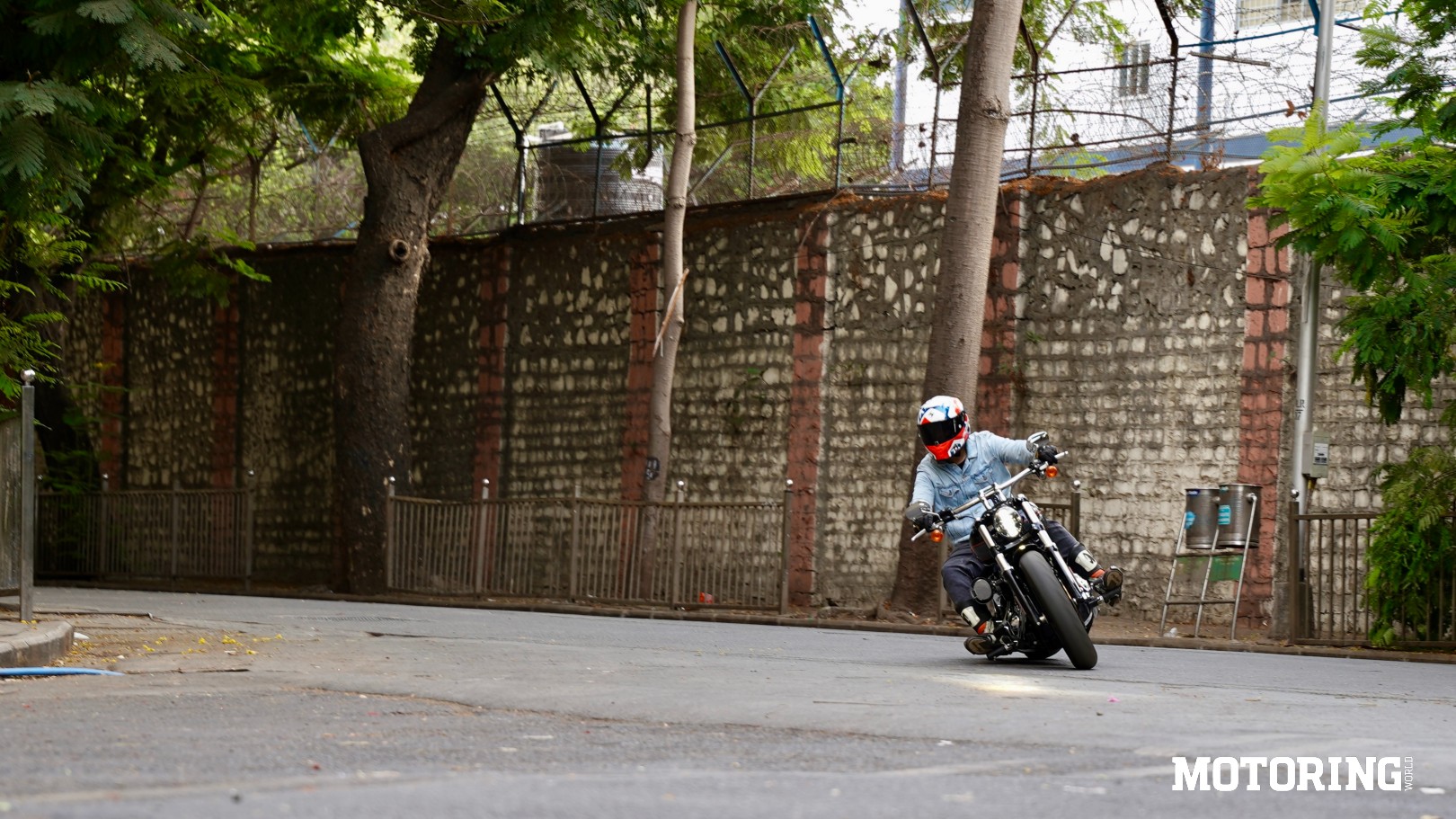
What surprised me most wasn’t the performance, the attention or the sense of occasion that accompanied me every time I swung a leg over it. It was what happened every time I climbed off.
With most motorcycles, there is a ritual. You park, take a moment to look back at it, then walk away. The Breakout changed that ritual. I’d turn around once. Then twice. Then a third time. Sometimes a fourth. Not because I was checking whether I’d parked it straight, but because there was something genuinely satisfying about seeing it sitting there — impossibly long, unapologetically excessive. For all its chrome, noise and theatre, the feeling it left behind wasn’t rebellion. It was something closer to accomplishment.
Which brought me back to the boy, his father and that taxi.
Maybe the father had once pinned a Harley-Davidson poster to his bedroom wall. Maybe he’d doodled one in the margins of a school notebook. Maybe years from now, his son will come across those photographs and remember the evening he sat on a Harley-Davidson Breakout for the first time.
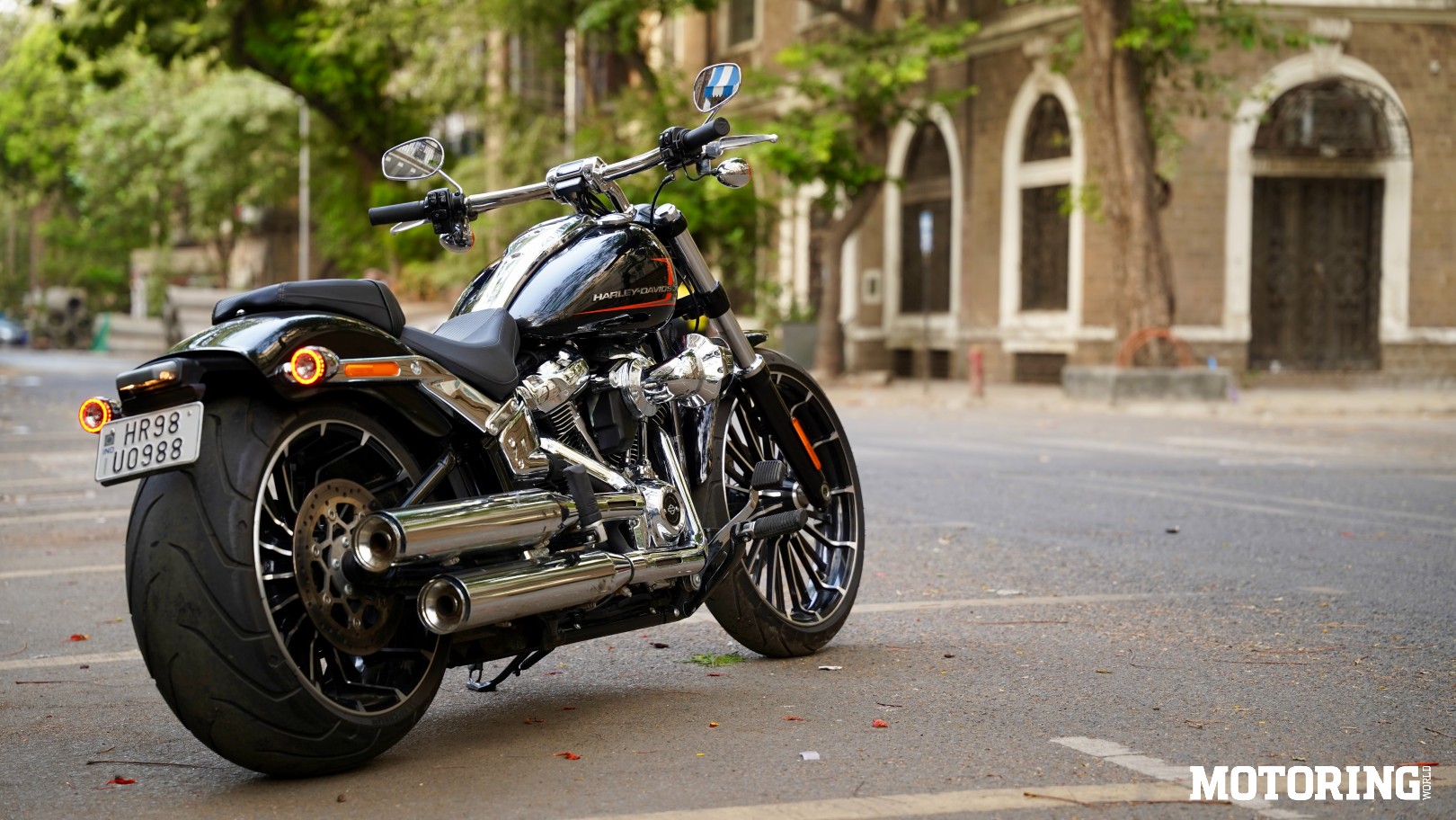
And perhaps that’s why the moment felt so familiar.
Because the three of us were living the same dream, just at different stages of it. The boy was discovering it. The father was reliving it. And for a brief while, I was living it.
The Harley-Davidson Breakout is a motorcycle built around excess. Excessive proportions. Excessive presence. Excessive torque. Yet beneath all of that lies something surprisingly simple — validation. Proof that some dreams are worth holding onto. And proof that every once in a while, the nine-year-old version of yourself gets it absolutely right.