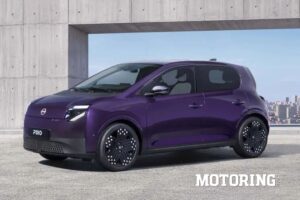
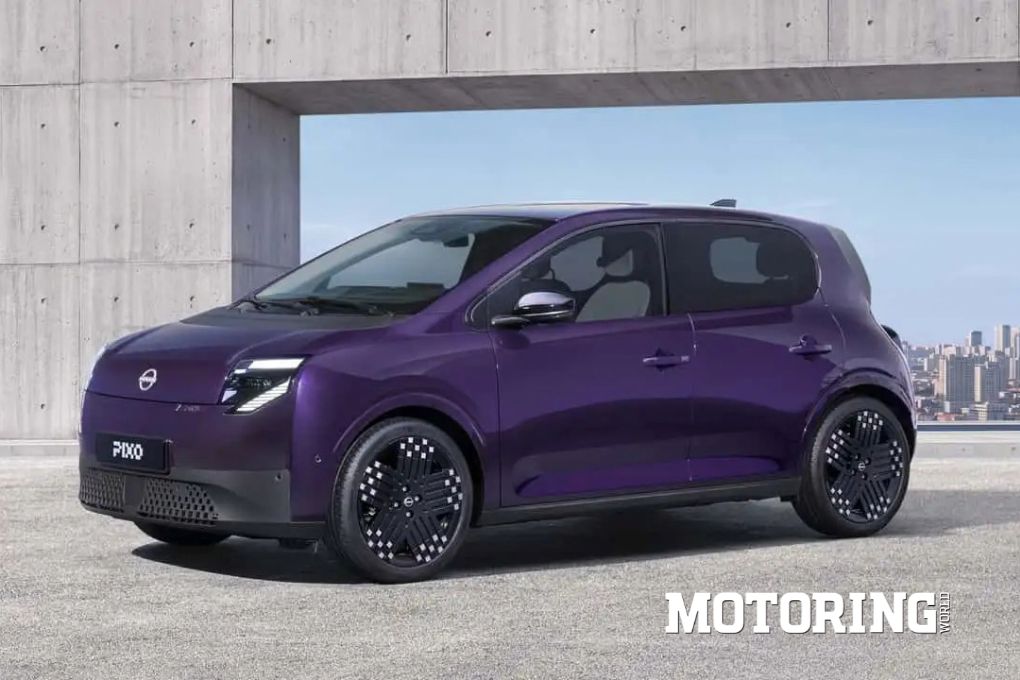


Nissan has revived the Pixo name, but the new one has very little in common with the tiny hatchback that once wore the badge. The original Pixo was essentially a rebadged Suzuki Alto sold in Europe. The new one is a small electric city car developed with Renault and built in Slovenia.
Designed specifically for European cities, the new Pixo is an A-segment EV that measures 3796 mm long, 1790 mm wide and 1512 mm tall. It may be small, but Nissan has tried to make the most of every millimetre. There are four seats, individually sliding rear seats and a 356-litre boot, while folding the rear seats increases luggage capacity to 1221 litres.
Underneath, however, the Pixo shares its bones with the new Renault Twingo and Dacia Spring. It is developed as part of the Renault-Nissan partnership and will be built at Renault’s Novo Mesto plant in Slovenia. Nissan has given it its own styling, though, with a chunky, upright silhouette and pixel-inspired lighting details that give it a distinctly Japanese face.
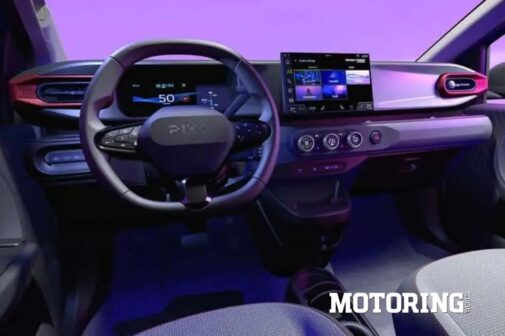
The cabin is similarly modern. There is a 7-inch digital driver’s display and a 10-inch touchscreen, while Google built-in brings navigation and connectivity features to the car. Nissan is also offering Google’s Gemini AI assistant, along with the MyNissan app and Face ID, which can recognise different drivers and load their personalised settings.
The Pixo is powered by a single electric motor producing 82 bhp, driving the front wheels. It gets a relatively small 27.5 kWh lithium-iron-phosphate battery, but Nissan claims up to 259 km of WLTP range. That might not sound like much compared with larger EVs, but for a car designed primarily for urban use, the smaller battery keeps the Pixo compact and should also make charging easier. Speaking of which, the Pixo gets 50 kW DC fast charging as standard. Nissan says a 15 to 80 per cent charge takes around 28 minutes. There is also 11 kW AC charging with bidirectional capability, allowing the car to send power back out when required.
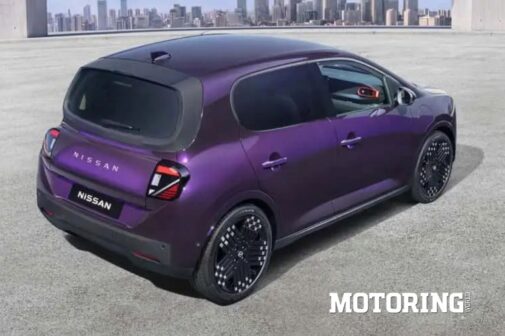
Nissan has also packed plenty of technology into the little EV. Depending on the spec, there is adaptive cruise control, lane-departure warning, automated emergency braking and hands-free parking. One-pedal driving is also available to make stop-start city traffic a little easier.
The new Pixo is part of Nissan’s growing European EV line-up, sitting below the electric Micra. It joins the larger Leaf as the company looks to cover different parts of the market with electric cars rather than simply replacing its existing models with EV equivalents. European deliveries are scheduled to begin in early 2027, while Nissan will reveal pricing, market-specific specifications and pre-order details from December. There is currently no word on an India launch. This Pixo is clearly playing a very different game. The old one was about being cheap and tiny. This one, with its funky design and interior, is all about proving that an affordable city EV doesn’t have to be boring.