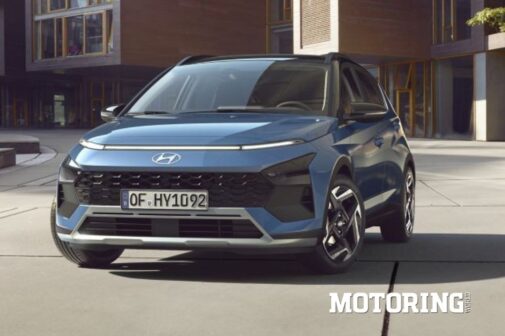
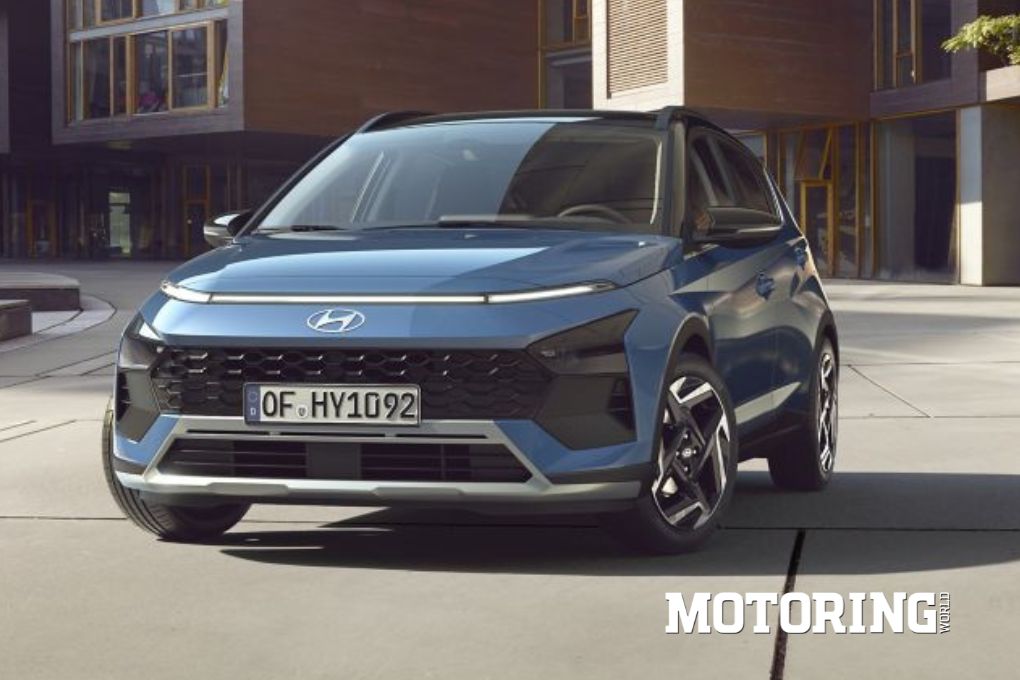


Hyundai has officially confirmed that its next new SUV for India will be called the Bayon. The announcement ends months of speculation around the identity of the camouflaged SUV being tested on Indian roads and confirms that Hyundai will add another model to its SUV range. The Bayon is expected to make its Indian debut around the festive season, with more details likely to be announced shortly
The India-spec Bayon will be based on the same underpinnings as the global crossover, but it is expected to be tailored specifically for our market. At around 4.18 metres long, it will sit below the Creta and give Hyundai a rival to the likes of the Maruti Suzuki Fronx and Toyota Urban Cruiser Taisor. It will effectively fill the space between Hyundai’s smaller Venue and the larger Creta.
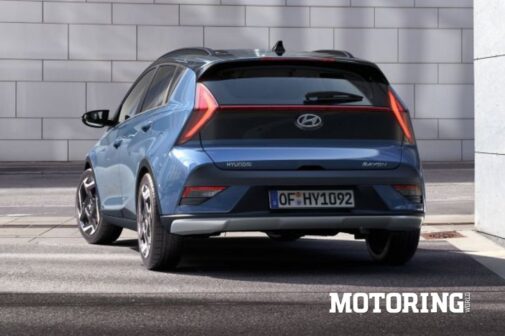
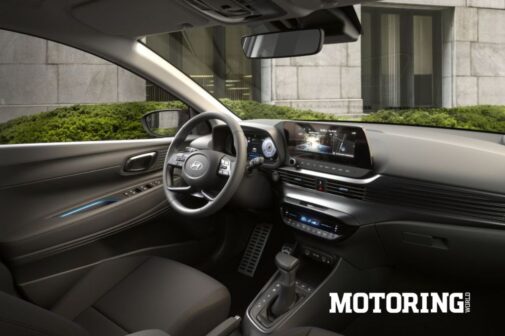
Images used of previous-gen car for representation purposes!
The biggest difference between the Indian Bayon and the model sold overseas could be under the bonnet. The global Bayon has been offered with a range of small petrol engines. When it was launched in Europe, the line-up consisted of a 1.2-litre naturally aspirated petrol engine producing 82 bhp and a 1-litre three-cylinder turbo-petrol in 99 bhp and 118 bhp forms. The 1-litre engine was also available with a 48V mild-hybrid system. Depending on the engine, international versions have been offered with a five-speed manual, six-speed manual, Hyundai’s six-speed intelligent manual transmission or a seven-speed dual-clutch automatic. The 1.0-litre turbo with 48V mild-hybrid technology could be paired with either the six-speed iMT or seven-speed DCT.

The India-spec Bayon, however, is likely to launch with a 1.5-litre naturally aspirated petrol engine, paired with manual and CVT options, followed by a CNG version using the same engine. That would give the Bayon a distinctly different powertrain strategy from its European namesake. The global car was developed as a small crossover based on the i20, with an emphasis on compact turbocharged engines and mild-hybrid technology. The Indian model, meanwhile, is expected to be adapted around local demand for naturally aspirated petrol and CNG options, although Hyundai has not yet released its final engine specifications
Design-wise, spy shots show that the Indian SUV will have a more upright stance than the original European Bayon. It is expected to feature split LED lighting, a prominent grille, chunky body cladding and a crossover-like profile. Inside, Hyundai is expected to offer a digital instrument cluster and large touchscreen, along with features such as connected technology, wireless charging, USB-C ports and ADAS on higher variants. The global Bayon also offers a 411-litre boot, while its 2580 mm wheelbase is shared with the i20. The international model is front-wheel drive only, so there is no expectation of an all-wheel-drive version for India either
Hyundai has now confirmed the Bayon name, but prices, variants, dimensions and the final India-spec engine line-up are still to be announced. With the SUV expected to arrive around the festive season, it could become Hyundai’s answer to one of the most competitive parts of India’s SUV market.