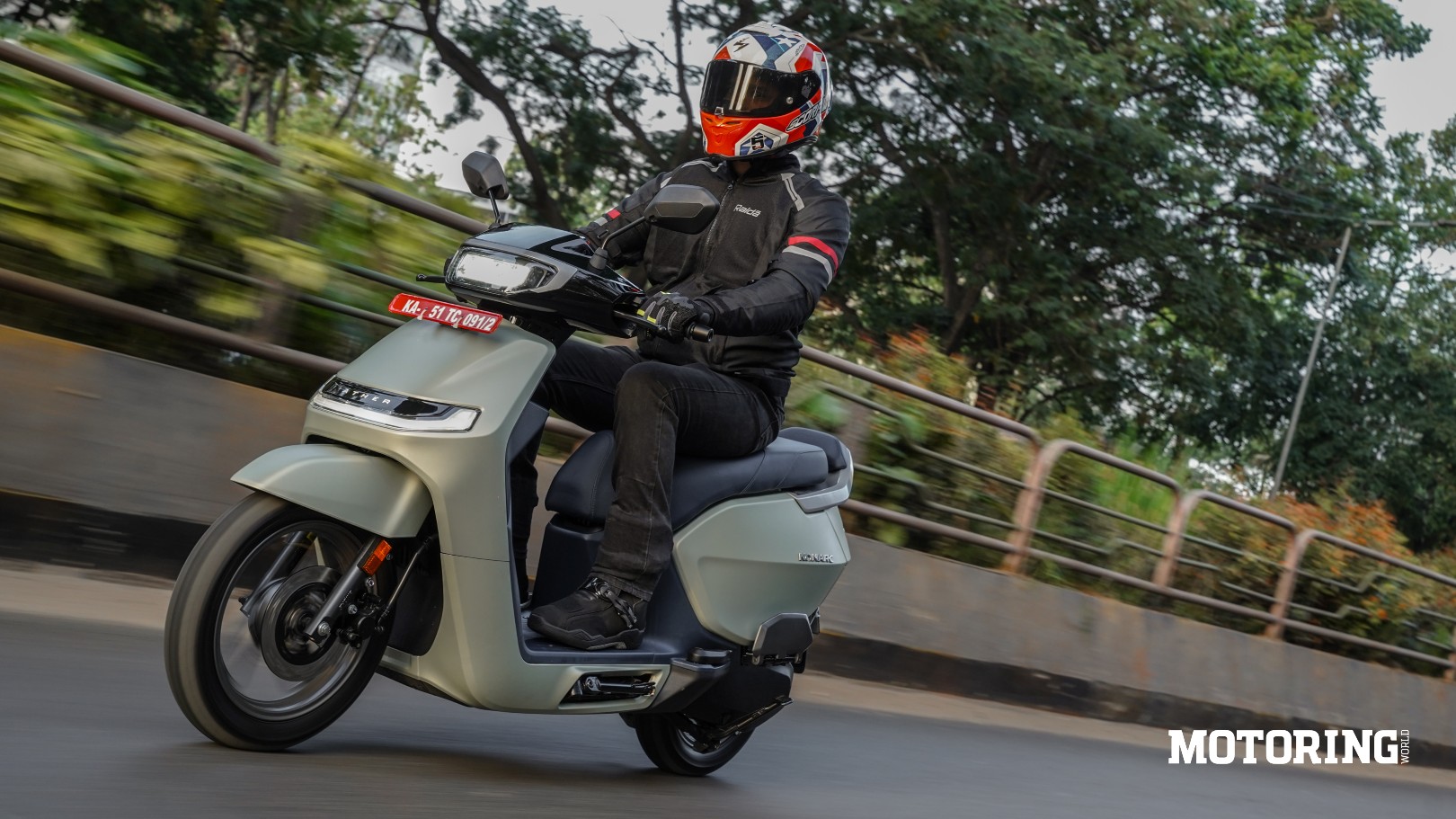


Family scooters are a nut to crack. They need to look cool enough for the youngsters to use them without feeling embarrassed, but also appear mature enough for the older people in the family. Even the performance should be peppy enough to keep the young ones entertained, yet sufficiently predictable that someone’s father can ride it without immediately developing a complicated relationship with the front brake.
This, broadly speaking, is what Ather has attempted with the Konarc. And, rather impressively, it seems to have started by asking the people who actually buy scooters what they wanted. The answer, apparently, was not another sleek, aggressively styled electric missile. People wanted something big, spacious and comfortable. Something that could accommodate the entire family without making anyone feel that they had accidentally bought a spaceship.
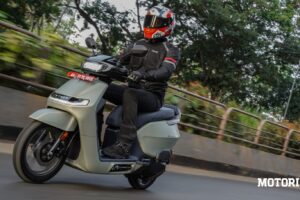
At Rs 1 lakh, the Konarc is also Ather’s most affordable electric scooter. More importantly, it is built on a completely new platform, and you can tell. It looks nothing like the Rizta or the 450X, either in styling or proportion. In fact, my first reaction upon seeing it in the flesh was that it was considerably bigger than I had expected.
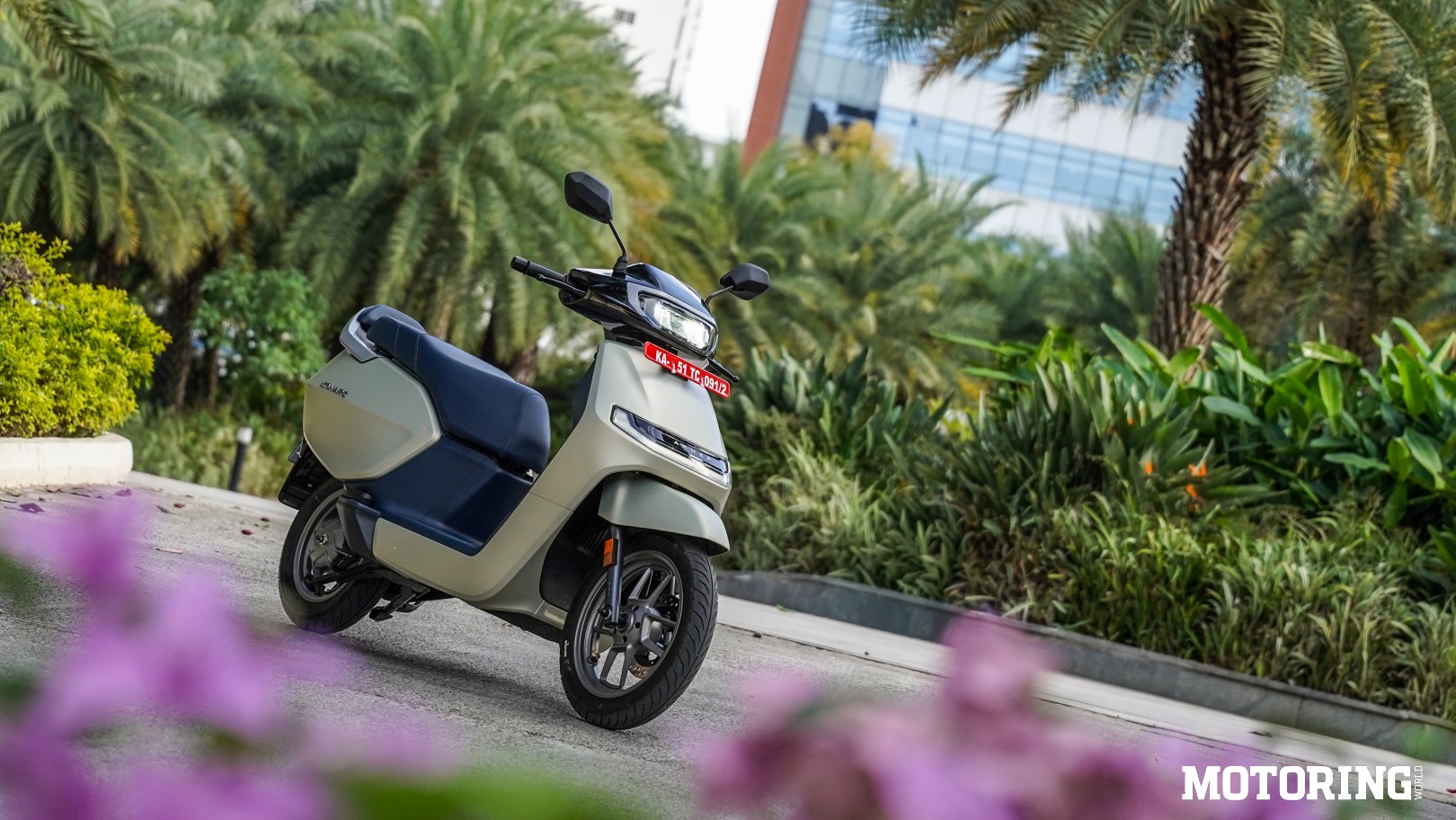
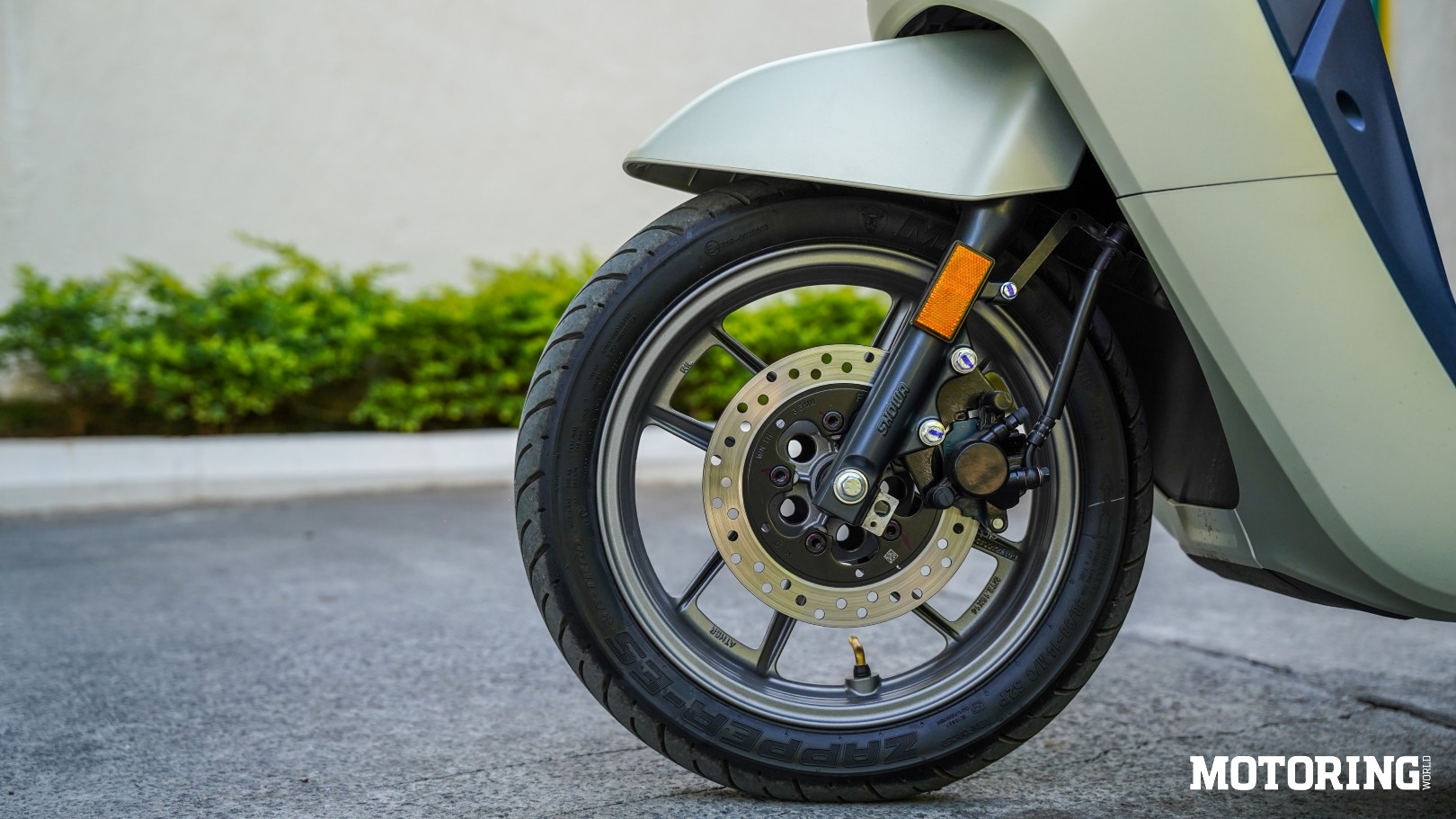
The proportions help. A 14-inch front wheel, long-travel suspension and a fairly substantial body give it a handsome stance. There is a black handlebar, a broad front apron and an LED DRL that runs across it, lighting up sequentially because apparently even family scooters are allowed a little theatre. The overall design, though, is remarkably sober. There are no gratuitous graphics, no angry lines and no collection of creases that suggest the scooter is perpetually preparing to fight somebody.
It is a particularly difficult balance to achieve, but Ather has managed it. The Konarc looks youthful without looking childish, and mature without looking like something your uncle would buy after being told by his doctor to stop riding motorcycles.
The sense of quality is encouraging, too. There is a metal side panel — Ather’s first — along with excellent paint quality and switchgear that feels good to operate. I particularly liked the white version with its deep-blue seat and inner panels. It has just enough visual interest without shouting about it.
Then you sit on it, and the Konarc’s size starts making even more sense. The riding position is wonderfully upright, and there is enough room to move backwards on the long seat. The 31-litre boot is another indication that Ather has been paying attention to what people actually do with scooters. There is enough room for groceries and the assorted daily clutter that mysteriously accumulates in every household. And because the Konarc gets a 450W onboard charger, you don’t have to sacrifice a chunk of that storage space to carry a large charging unit around.
There is even an adjustable backrest for some variants, which can be set at two different heights. The S variant I rode gets a fixed one, but it is another small indication that Ather has thought about the scooter as a family object rather than simply a vehicle with somewhere to put your feet. The surprising bit, however, is what happens when you twist the throttle.
The Konarc may look like a sensible family scooter, but underneath there is a faint whiff of the 450X. I rode the S variant with the 3.5 kWh battery and 4.7 kW motor, and the acceleration is properly brisk. It gets to its 70kph top speed easily, and even when you get there, it feels as though there is considerably more motor lurking underneath, being politely restrained by software. This is exactly the sort of performance a family scooter needs. It is quick when you want it to be, but it doesn’t constantly try to prove a point.
Put it into Smart Eco or Eco and the throttle becomes softer. But importantly, it doesn’t become dull. You can still keep up with traffic comfortably, without becoming the automotive equivalent of a rolling roadblock and having every car behind you reconsider its life choices.
The throttle response itself is precise and predictable, with a smooth delivery. Even at crawling speeds, the Konarc feels light and manageable, which makes it considerably easier to thread through traffic or manoeuvre around a parking lot. And then there is the ride.
Over undulations, the Konarc’s suspension is almost absurdly good. It glides over them with the sort of composure that makes you wonder if Ather has secretly replaced the road beneath you with a conveyor belt. Call it the magic-carpet effect.
Unfortunately, the magic carpet has a few knots in it. Sharper bumps and potholes make their presence felt rather enthusiastically when you’re riding solo, particularly through the rear. You get a proper thump through your back, followed occasionally by a small upward journey that you did not book.
Oddly enough, add a pillion and things improve considerably. With two people aboard, the suspension feels more settled and composed. This is perhaps appropriate for a family scooter, although it does mean that the solo rider gets the less polished version of the experience.
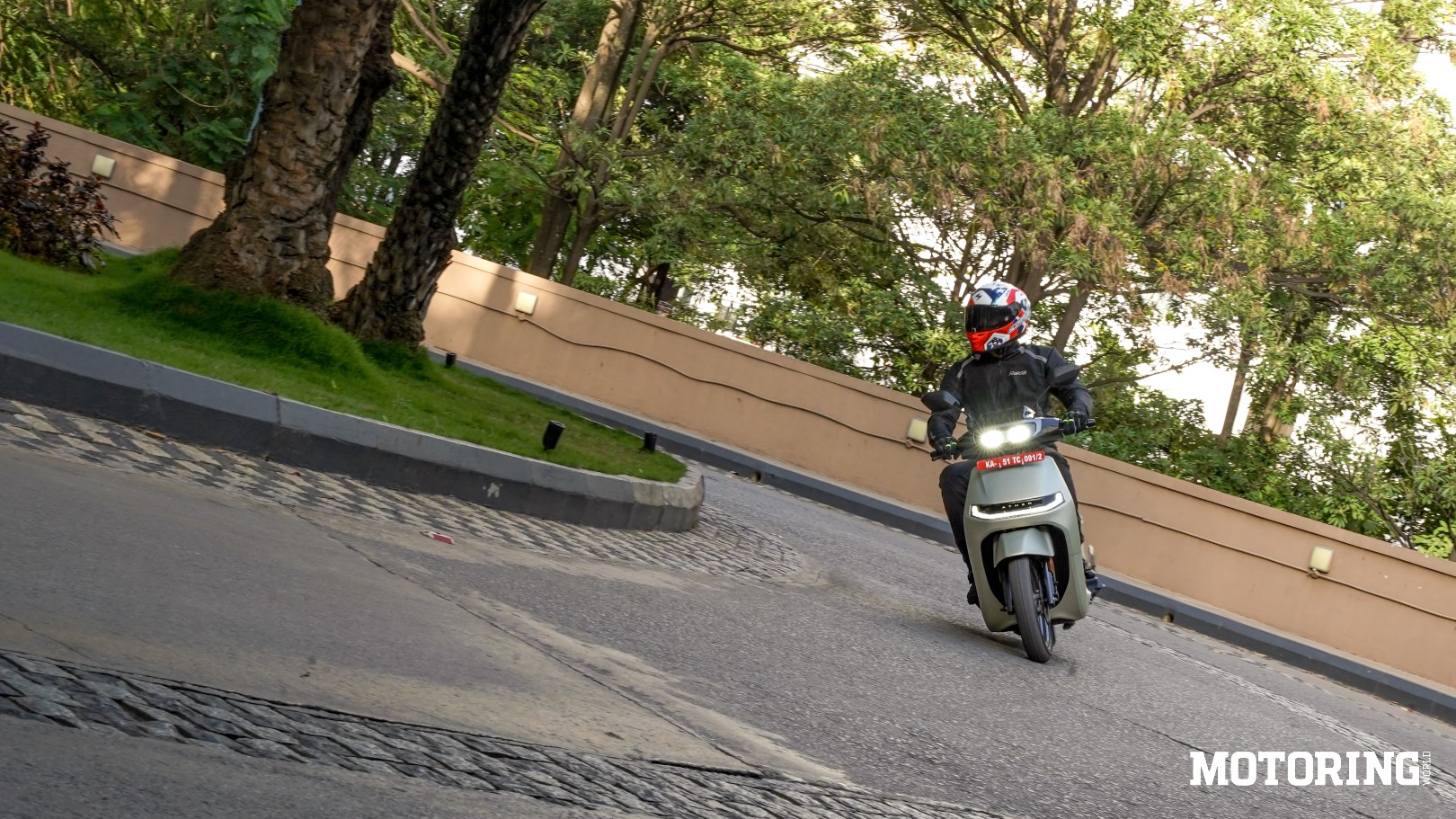
Handling, meanwhile, is one of Konarc’s pleasant surprises. The 14-inch front wheel gives it a distinctly motorcycle-like feel. The front end feels planted and, more importantly, communicative. You get useful feedback when cornering, but also when simply picking your way through traffic.
That matters on a scooter intended for an entire family. A machine that feels predictable inspires confidence, and the Konarc generally does.
The brakes follow the same philosophy. The front brake has good progression and feedback, rather than delivering one enormous bite and leaving you to work out what just happened. The rear brake also activates the front through combined braking, and the additional stopping power is noticeable. Again, it feels appropriate for something that could be ridden by people with wildly different levels of experience.
Range shouldn’t be a major source of anxiety either. Having previously ridden the Rizta and 450X, I’ve found Ather’s real-world range claims to be reasonably close to reality. The Konarc has an IDC figure of 161 km and a claimed real-world range of 130 km. We didn’t have the opportunity to conduct a full range test during this ride, but the indicated range and kilometres covered appeared to tally quite convincingly.
Charging gets an interesting little trick, too. In addition to the 450W onboard charger, you can opt for a 450W home charger. Ather’s combined charging technology can then deliver a total of 900W, which should make topping up considerably quicker.
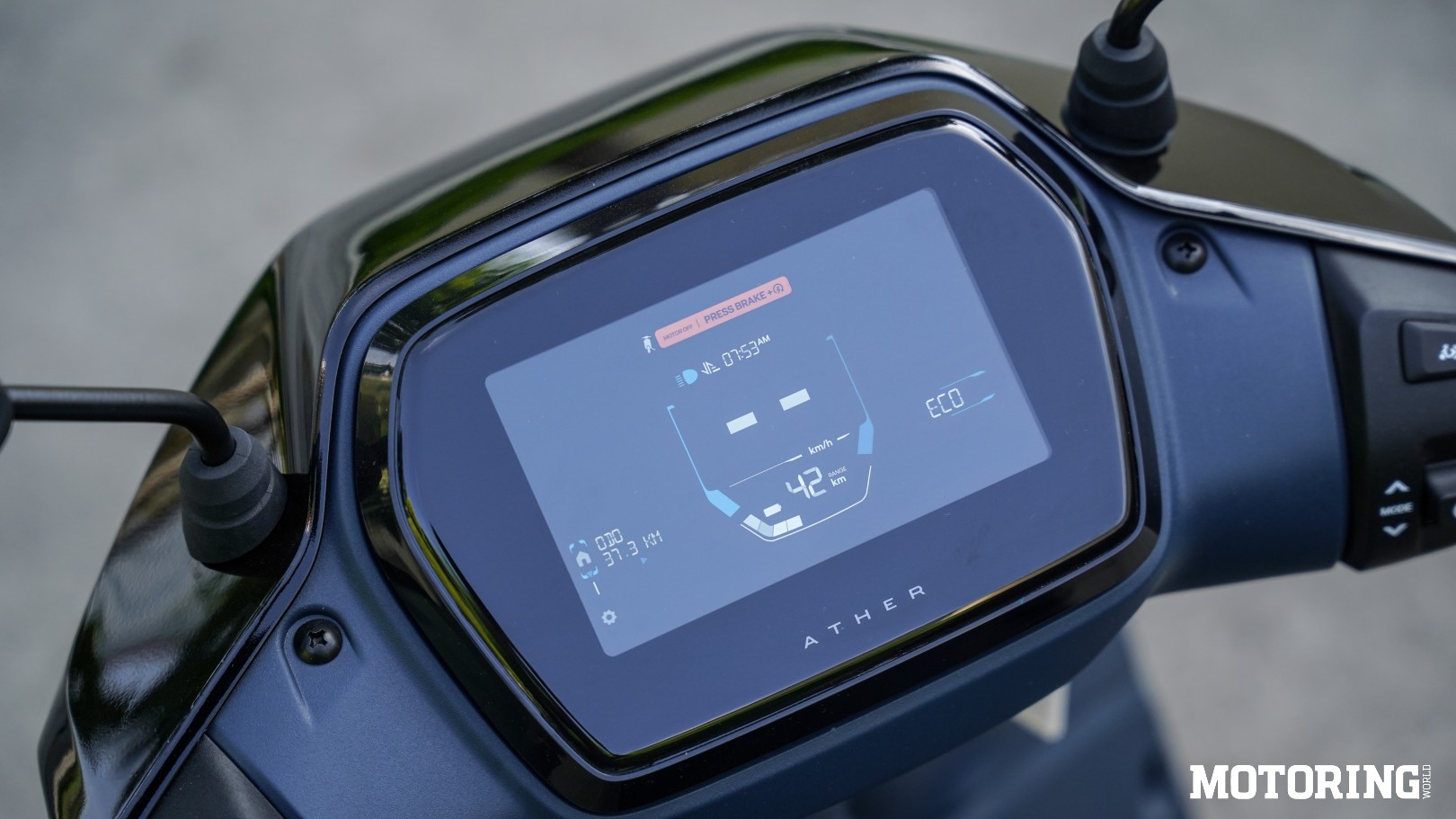
The 7-inch LCD console is refreshingly uncomplicated. It is easy to read and simple to operate, which is precisely what you want from something that will probably be used by everyone from a teenager who thinks Bluetooth connectivity is a human right to a parent who would prefer the scooter simply tell them how fast they are going.
There is also AirWalk, which may be one of the more genuinely useful little features. The scooter detects when you’re trying to move it around without using the throttle and assists by engaging the motor, making it easier to manoeuvre. It is the sort of thing you don’t appreciate until you have to push a heavy scooter backwards in a cramped parking space.
And perhaps that is the Konarc’s greatest strength. It doesn’t seem obsessed with impressing you. It just keeps doing things. It has enough range for the daily hustle, enough performance to avoid becoming a nuisance in traffic, enough space for the things families inevitably carry around, and features that are useful without requiring a degree in electrical engineering to operate. It looks good, but doesn’t demand attention. It rides well, although the rear suspension could certainly do with some attention when you’re riding solo.
So, has Ather cracked the family-scooter formula? I think it has. The Konarc is that one nephew or niece at a family function who spends the entire afternoon running around helping everyone with everything. They carry the bags, find the missing charger, fetch the extra chair, take somebody to the shop and somehow still have enough energy left to ask if anyone needs anything else. You don’t invite them because they’re the most exciting person at the party. You invite them because everything is easier when they’re around.