

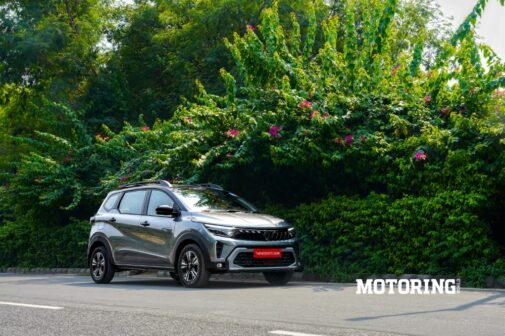
The first sign that you’re slipping out of your everyday life isn’t the mountains rising in the distance. It’s quieter than that; your phone, once restless with notifications, begins to fall silent. You glance at the blank bars once or twice, out of habit more than concern, and then you stop checking; there’s something oddly liberating about it. Ahead, the road stretches for nearly 500 kilometres, climbing steadily from the plains of Punjab into the high Himalayas, and as the mountains begin to gather on the horizon, the rest of your life feels like it’s receding in the rear-view mirror.
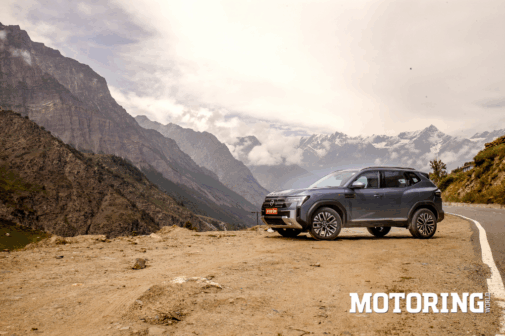
There’s a reason this drive lingers in the imagination of Indian motorists. The slow build of anticipation, the changing air, the way the landscape reshapes itself kilometre by kilometre — It’s a journey people dream abouT, on motorcycles, in sports cars, in anything that promises a sense of escape. So when Nissan invited us to take its new Tekton along this route, it felt less like an invitation to experience something larger. The road would tell us what the SUV was capable of, but it would also (hopefully) remind us why we drive in the first place.
Nissan isn’t new to difficult terrain. Long before SUVs became lifestyle statements, its machines were working in places like these. The Jonga, built for the Indian Armed Forces, carved its reputation in landscapes not unlike the ones we were heading towards. And as we drove north, sharing the road with olive-green trucks moving with unhurried purpose, that lineage provided context.
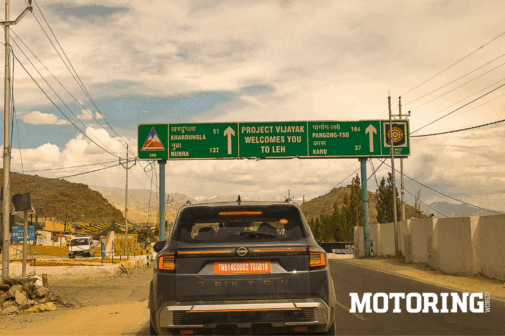
We left Chandigarh before the sun had properly risen, the city still half-asleep as we slipped onto wide, empty roads. My Tekton for this first stretch came with the 1.0-litre turbo-petrol engine and a six-speed manual gearbox. On paper, that’s modest, but out here, numbers often lose their importance; what matters is how a car settles into your rhythm.
The Tekton did just that. The clutch was light, the gearshift had a mechanical precision, and the engine responded without fuss. It encouraged a calm, measured progress, one that suited the unfolding journey. You found yourself easing into it, letting the kilometres pass without urgency, watching the landscape slowly rearrange itself outside the windows.
As the road began to trace the Beas River towards Manali, the world grew denser, more textured. Forests pressed closer to the roadside. Small cafés appeared at bends, their hand-painted boards promising chai and Maggi to anyone willing to stop. Army convoys rolled past, their presence a reminder of where you were headed. And always, ahead of you, the mountains grew—first as distant silhouettes, then as looming walls that seemed to rise straight out of the earth.
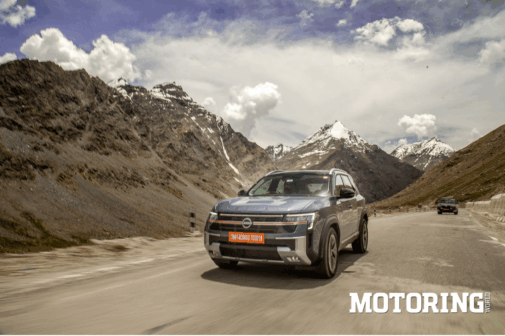
The climbs demanded more from the little turbo engine. You could feel it working harder now, asking for a downshift here, a bit more patience there. Overtakes needed to be planned, timed carefully between bends and oncoming traffic, but there was a satisfaction in that involvement. The manual gearbox kept you engaged, made you part of the process rather than a passive observer. And despite the effort, the Tekton never felt too strained.
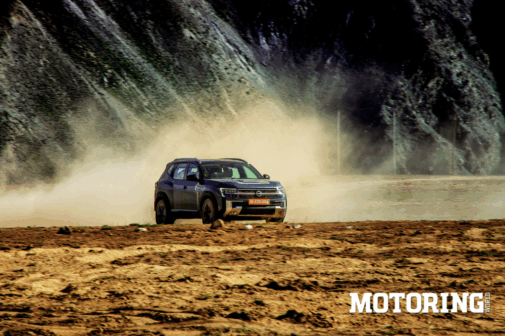
By the time Manali slipped behind us, the journey had already begun to change. The lush greens started to thin out, replaced by rock and dust. The air felt different—lighter, sharper—and every breath carried a hint of altitude. It was as if the mountains were slowly stripping away everything unnecessary, leaving only the essentials.
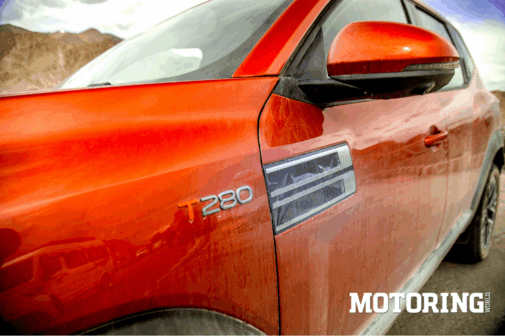
The next morning, with the landscape already transformed, I switched to the 1.3-litre turbo-petrol paired with a six-speed dual-clutch transmission. The difference wasn’t dramatic—it was more like the car had taken a deeper breath. There was more strength in reserve now, more ease in the way it gathered speed. Overtakes that once required calculation now happened with more confidence. Steep climbs felt more like part of the flow. The gearbox, too, seemed to understand the rhythm of these roads. It shifted smoothly, rarely caught off guard by sudden inputs. And when you chose to take control, the paddles responded quickly, giving you just enough involvement without breaking the sense of effortlessness. Even as the altitude increased and the air thinned, the engine held onto its composure, delivering its performance without complaint.
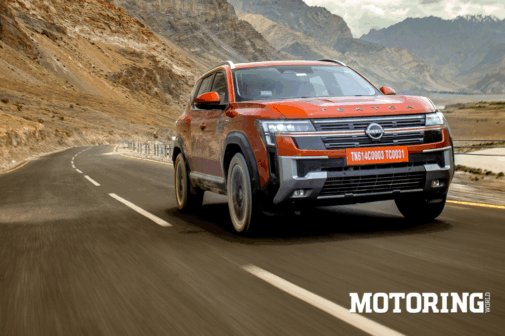
Then came the Atal Tunnel. You enter it surrounded by life—trees, streams, the scattered signs of habitation—and emerge into something entirely different. The transition is abrupt, almost surreal. One moment there is green, the next there is none. The mountains on the other side are bare, their surfaces etched with time and weather, stretching endlessly into the distance. The colours drain into muted browns and greys, and the silence feels deep.
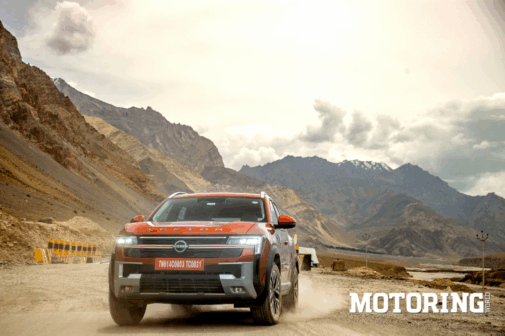
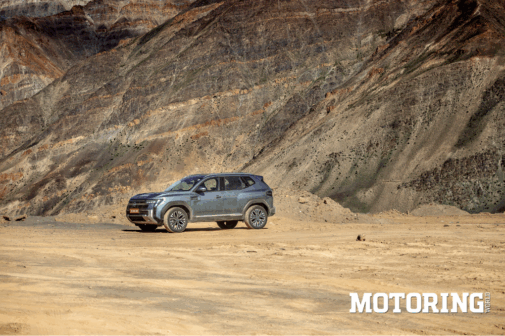
Beyond the tunnel, the road feels lonelier, and the landscape opens up in a way that makes you feel small. The tarmac is unpredictable—smooth in places, broken in others. Streams cut across the road without warning, forcing you to slow, to pay attention. Hairpins climb steadily, each turn revealing another stretch of road that seems to disappear into the mountains. Out here, the Tekton fades into the background in the best possible way. It doesn’t demand attention or distract from the experience. It simply does its job—absorbing the rough patches, maintaining its composure, carrying you forward.
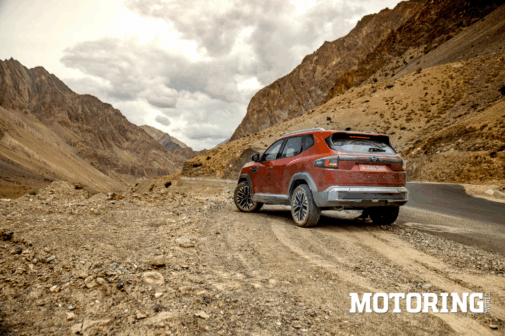
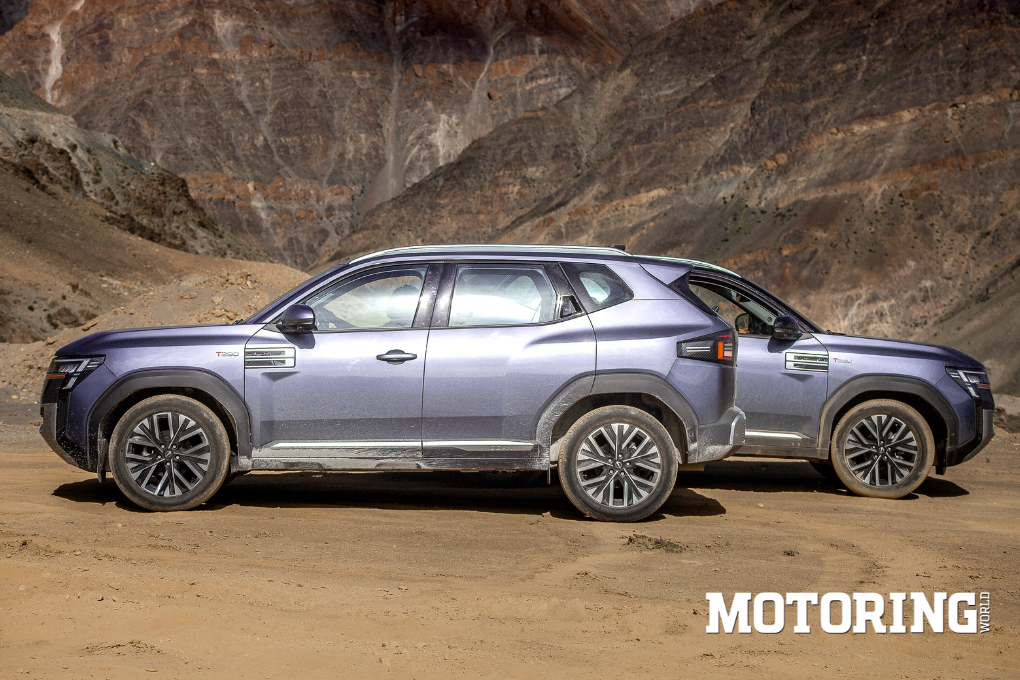
The Himalayas have a way of reminding you that they operate on their own terms. Distances that appear insignificant on a map can take hours to cover, weather changes without warning and your body begins to protest as the road climbs higher. We were reminded of that approaching Shinkula, more than 16,000 feet above sea level. Stepping out to photograph the cars became unexpectedly tiring, every short walk leaving you breathing harder. Our photographer, who was seeing this part of the country for the first time, initially dismissed the headache creeping across his forehead as fatigue. It wasn’t until his oxygen saturation began dropping that the reality of the altitude caught up with him. After a spell on supplemental oxygen and a little rest, he was smiling again, camera back in hand, but the mountains had delivered an important reminder; they don’t care how experienced you are.
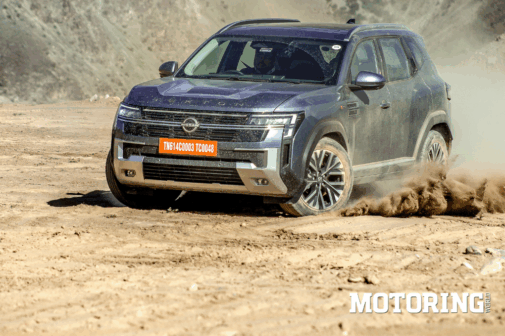
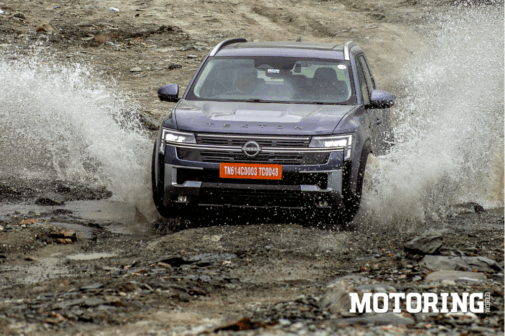
By then, the road itself had become the biggest test of the Tekton. The immaculate highways of the previous day were long behind us, replaced by broken tarmac, loose gravel and stretches where glacial streams flowed across the road as though it wasn’t there. It’s easy to engineer a suspension that feels supple on smooth roads or one that corners flat on perfect tarmac. Achieving both on roads like these is considerably harder, but the Tekton gets quite close. Sharp-edged potholes are absorbed without crashing into the cabin, larger undulations don’t unsettle the body and there remains enough composure through fast bends that you don’t find yourself constantly correcting the steering. Hours behind the wheel passed without the fatigue that poorly judged suspension inevitably creates.
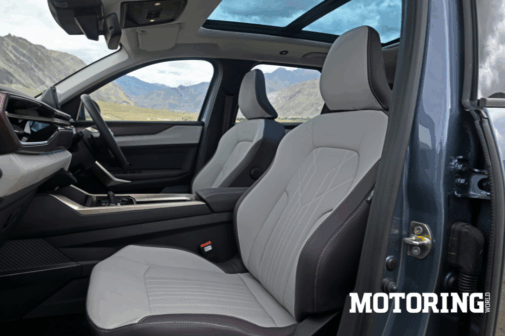
Those long days also revealed another strength. The front seats, with their unusual hollow-backed design, remained supportive after eight and nine-hour stints behind the wheel, while the airy cabin never began to feel claustrophobic despite carrying passengers, camera equipment and luggage. Normally, this is where I’d start listing screen sizes, connected technology and feature counts, but after several days in the Himalayas, I found myself appreciating the things that actually mattered. The built-in navigation continued working long after our phones had lost signal, the 360-degree cameras proved genuinely useful when squeezing past trucks on narrow roads and the ventilated seats were welcome every time the sun broke through at lower altitudes. The rest simply faded into the background, exactly as good technology should.
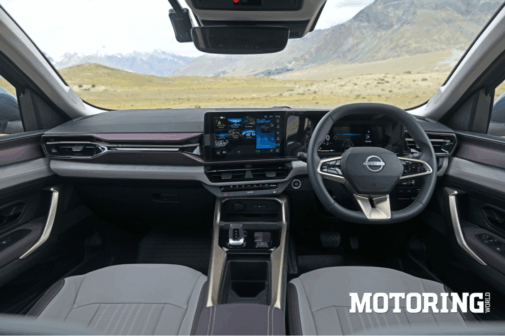
Driving in Ladakh also gives you plenty of time to notice the people who make journeys like this possible. Every few kilometres, another yellow Border Roads Organisation sign appeared, with its familiar mixture of humour and gentle warning, while bulldozers and road crews quietly battled landslides, loose rock and streams that seemed determined to reclaim the tarmac. Army convoys moved steadily through the valleys, often pulling aside to let faster traffic pass before continuing their journey towards remote posts tucked high into the mountains. You quickly realise these roads aren’t just tourist attractions.
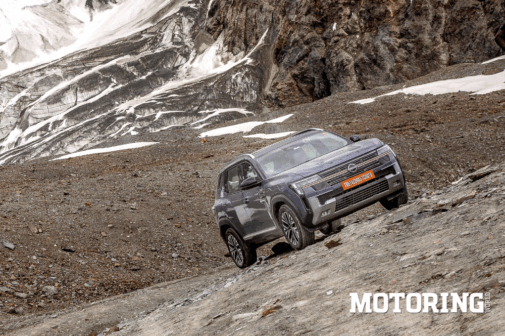
That perspective changes the way you drive. The temptation to hurry disappears because there’s very little point. You’re no longer trying to beat the nav’s estimated arrival time, or chasing the next overtaking opportunity. Instead, you find yourself stopping simply because the light has changed across a mountainside, or because a river has carved another impossible path through the rock. You pull over for tea in places that barely qualify as villages, chat to fellow travellers heading in the opposite direction and inevitably compare road conditions over cups of <I>chai<I> before climbing back into the car.
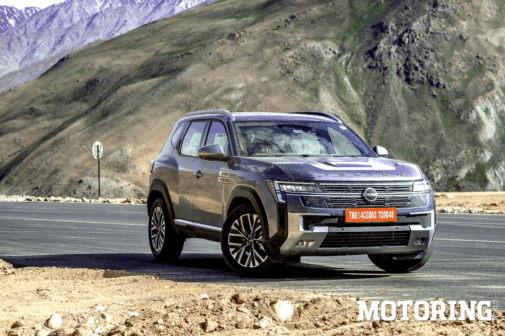
By the time Leh finally appeared ahead of us, arriving almost casually after climbing through some of the country’s most spectacular landscapes, I realised I hadn’t thought about the Tekton for quite some time. That’s meant as praise rather than criticism. A good road-trip car should quietly remove itself from the equation, allowing your attention to remain on the road, the scenery and the people travelling with you. Over the course of three demanding days, Nissan’s new SUV had dealt with changing altitudes, rough roads and long hours behind the wheel without feeling out of its depth. More importantly, it had done so without constantly reminding us that we were evaluating a new car.
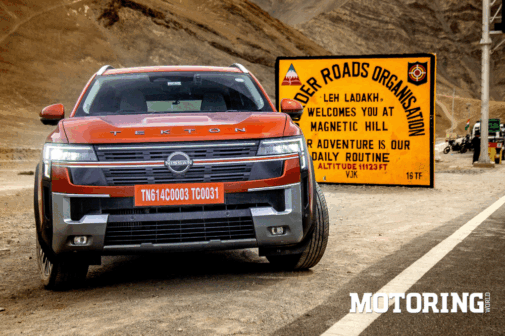
Ask anyone who’s driven to Leh what they remember most, and you’ll rarely hear them talk about horsepower or touchscreen graphics. They’ll remember the first glimpse of snow on a distant ridge, the silence that settles over a valley after sunset, the taste of impossibly hot Maggi at a roadside shack or the relief of finally reaching the top of a pass. Cars become woven into those memories rather than defining them.
Perhaps that’s why this road has become such a pilgrimage for Indian motorists. It asks more of both driver and machine than almost anywhere else in the country, but it gives back far more in return. You arrive home with a layer of dust that takes minutes to wash away and memories that take far longer to fade. Up here, the Tekton proved itself to be a thoroughly capable companion for the journey, and the road to Leh did the rest.