

The first thing I did after climbing into the Kodiaq RS was find an empty stretch of road and use the launch control, because if you’re going to build a seven-seat family SUV with 261 bhp, launch control feels like something that should be tried at least once.
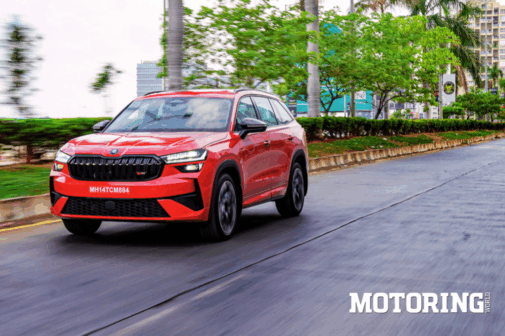
The Kodiaq RS lunges forward with far more aggression than something this practical has any right to. The EA888 2-litre turbo-petrol engine is one of the Volkswagen Group’s greatest hits, and here it produces 261bhp and 40.8 kgm, driving all four wheels through a seven-speed DSG gearbox. Skoda claims 0-100 kph in 6.3 seconds, and from behind the wheel, that figure feels entirely believable.
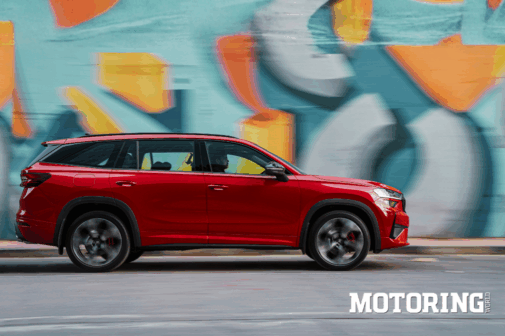
What stands out isn’t the outright pace, though; plenty of fast SUVs exist today. What makes the Kodiaq RS interesting is how naturally it carries its performance. We’ve spent plenty of time with the Octavia RS over the years, and my defining memory remains driving it on a racetrack. That’s where the RS badge has always made the most sense. The problem comes when that same low-slung performance car has to deal with Indian roads, and the Kodiaq RS feels like Skoda’s answer to that problem. You still get the performance, but wrapped in a package that can handle poor roads, carry a family, and swallow luggage without asking for sacrifices.
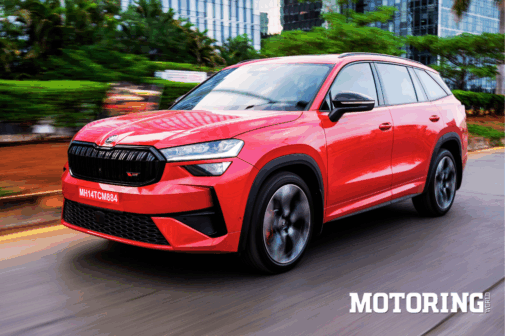
On the move, it feels noticeably sharper than the standard Kodiaq. Switch into Sport mode, and the throttle response becomes more immediate, the gearbox holds onto ratios longer, and the whole car takes on a more alert character. Find a flowing road, and the Kodiaq RS starts to make a lot of sense. The steering is direct and surprisingly accurate for a vehicle of this size. Turn into a corner, and there’s far more front-end bite than you expect from a large SUV. The progressive steering deserves much of the credit here, helping the Kodiaq disguise its size remarkably well. Physics hasn’t been completely rewritten, of course. You remain aware of the height and mass when pushing hard, and it can never match the precision of an Octavia RS. But compared to most seven-seat SUVs, the level of composure is genuinely impressive.
The ride quality is arguably the bigger achievement. Performance SUVs often arrive with suspension setups that make sense on European roads, but feel exhausting on Indian ones. The Kodiaq RS avoids that trap. Its adaptive DCC Plus suspension delivers a firmer edge than the standard car, but it never becomes uncomfortable. It settles quickly after larger bumps and deals with rough surfaces without sending unwanted shocks into the cabin. Most importantly, speed breakers stop being a source of anxiety. You don’t need to creep across them at strange angles or worry about scraping expensive bodywork. You simply drive over them and continue your journey. That ability to combine performance with everyday usability is what defines the Kodiaq RS.
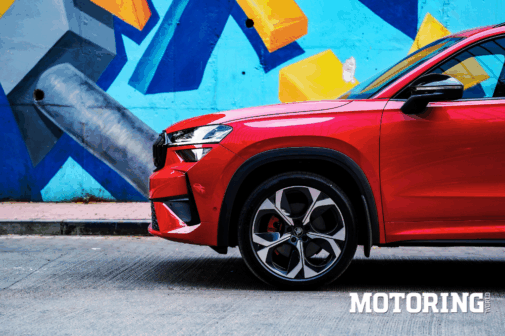
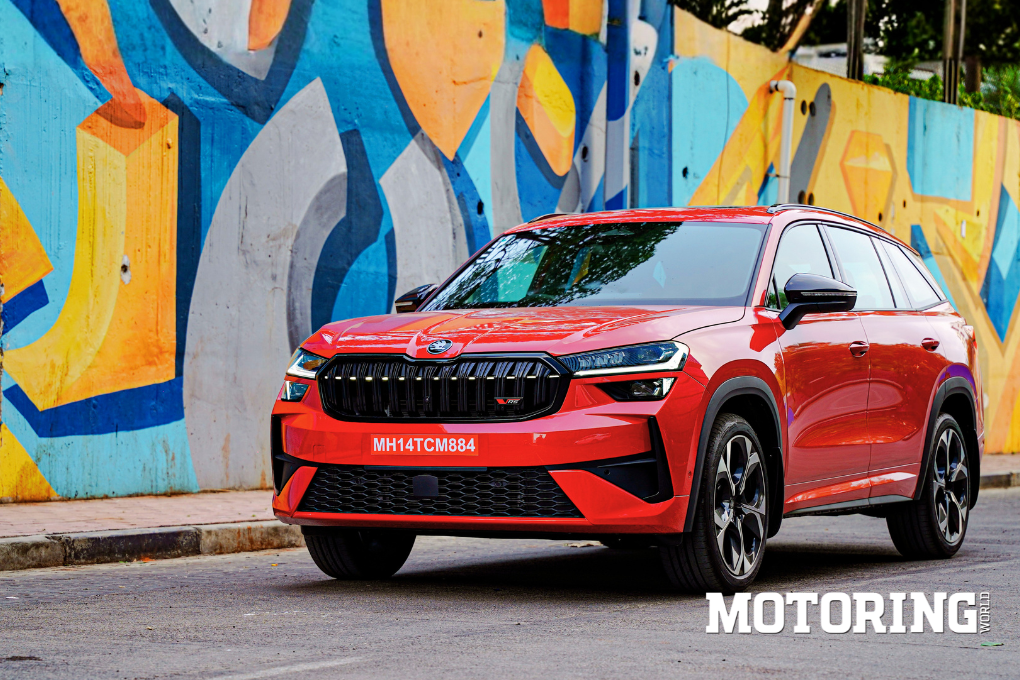
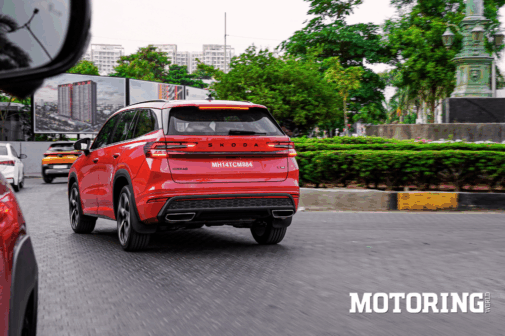
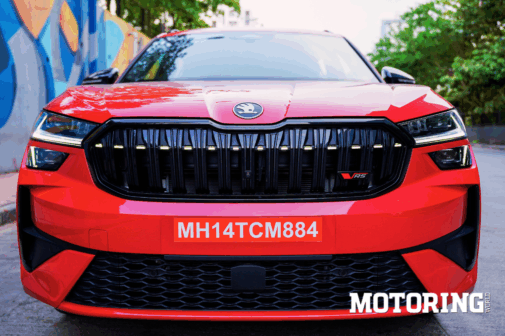
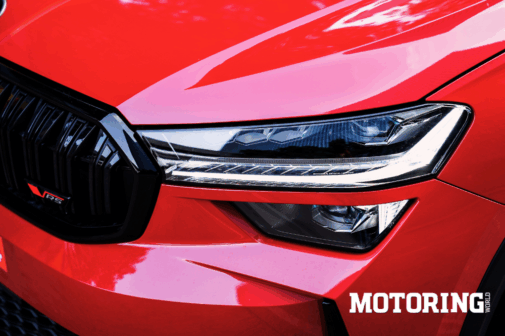
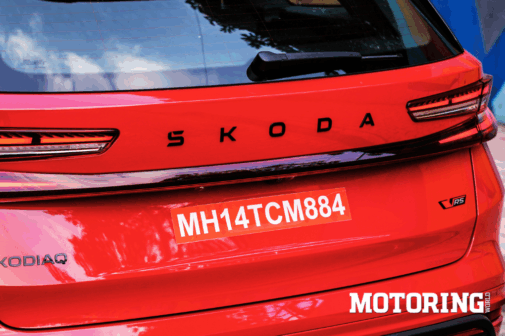
The visual changes follow the same philosophy. Finished in bright red, our test car certainly attracted attention, but the RS treatment remains relatively restrained. Gloss-black detailing on the grille, mirrors, roof rails, and window surrounds provides enough distinction without becoming excessive. Larger 20-inch wheels and red brake callipers complete the look. The best detail sits at the rear. There are actual exhaust outlets; in an age of decorative trim pieces pretending to be exhausts, the honesty is refreshing.
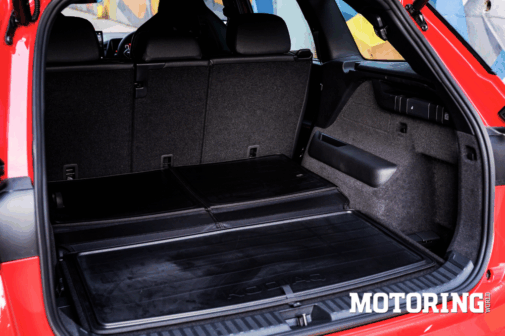
Inside, the transformation is more obvious. The sports seats are excellent, offering plenty of lateral support without becoming uncomfortable over longer distances. Integrated headrests, RS embroidery, and red contrast stitching provide the visual drama, but it’s the comfort that stands out after several hours behind the wheel. The rest of the cabin follows a familiar Kodiaq template. Build quality feels solid, space is generous, and practicality remains one of the car’s strongest assets. The second row is genuinely spacious, while the third row is best viewed as occasional seating. Adults can fit, but they won’t want to spend all day there.
A 13-inch touchscreen dominates the dashboard, accompanied by Skoda’s excellent Smart Dials. These multifunction rotary controllers remain one of the better solutions currently available, allowing quick access to climate controls and other frequently used functions without endlessly diving through touchscreen menus. Equipment levels leave little to complain about. Wireless Apple CarPlay and Android Auto, wireless charging, a Canton audio system, ventilated seats, adaptive chassis control, a 360-degree camera, and a comprehensive suite of driver assistance systems are all part of the standard equipment list.
There are a couple of shortcomings. The touchscreen still handles more functions than necessary, and like many DSG-equipped Volkswagen Group products, the gearbox can occasionally feel slightly abrupt during low-speed manoeuvres. Fuel efficiency won’t be a strong selling point either. During our drive, the trip computer hovered between 9 and 11 kpl. Still, those criticisms feel relatively minor when viewed against the overall package.
By the end of the day, the Kodiaq RS felt less like a faster Kodiaq and more like the RS model that makes the most sense in India. It delivers performance, retains the practicality expected from a large SUV, and rides with enough sophistication to cope with real roads rather than idealised ones. For enthusiasts who admired the Octavia RS but struggled with the compromises that came with a low-slung performance sedan, this is an appealing alternative. It may not be quite as pure, but it is unquestionably easier to live with.