

Maruti Suzuki first pulled the covers off the e Vitara back in January 2025. That feels like a lifetime ago, in the fast-moving world of India’s automotive market. We spent the entire year watching competitors launch update after update, while India’s largest carmaker remained relatively quiet. Now, with the car finally here, its strategy becomes clearer. It was not stalling so much as preparing.
You see, Maruti Suzuki does not do things by halves. Launching an electric car without a robust support network would have been rather sub-optimal for a brand built on trust and ubiquity. The firm spent 2025 ensuring that its charging infrastructure could handle an influx of new owners, and after driving the car in the UK late last year, I can see why it was so careful. The e Vitara is far too important to mess up, because it’s the most significant car the company has built in ages. I had a go at the European-spec model on a mix of British motorways and twisting country lanes, and while the cars reaching Indian showrooms have minor tweaks, the DNA is identical. This is the car that will define Maruti’s electric future, and after logging substantial India-spec kilometres behind the wheel, I can tell you that the future looks solid.
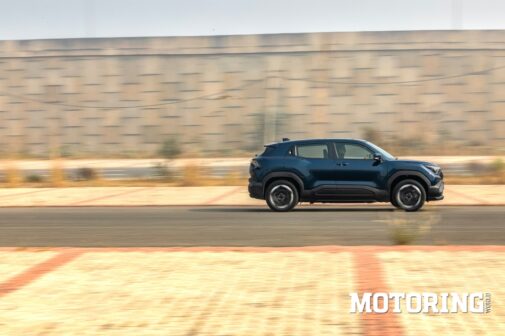
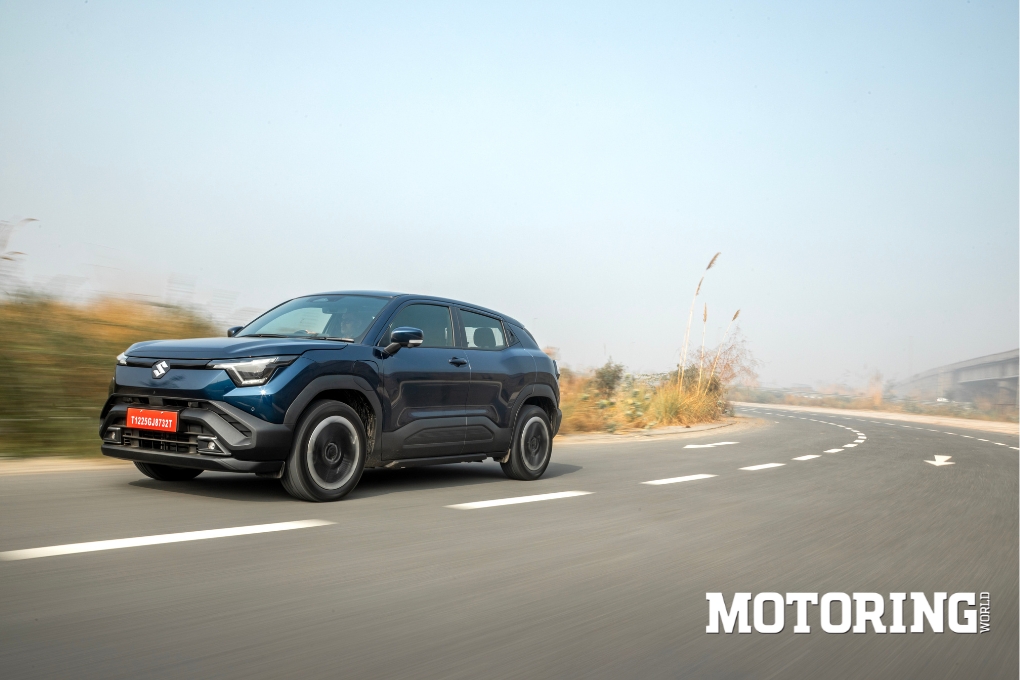
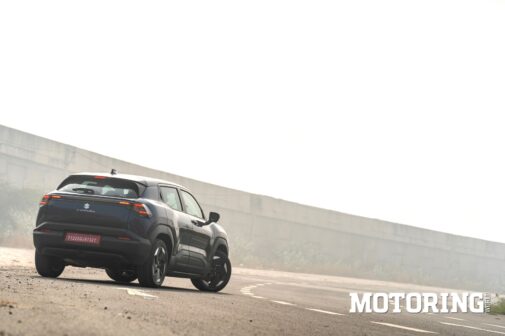
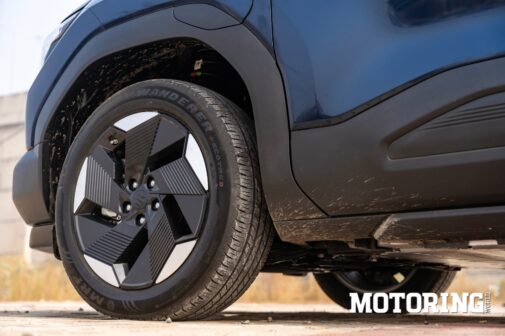
Walking up to the e Vitara, the first thing you notice is its presence. It’s very far removed from the Marutis of old. There is a density to the design, which carries a solidity that usually belongs to German or Korean manufacturers. The styling is much more aggressive than any other Maruti, with sharp creases running along the flanks, catching the light and breaking up the visual mass of the doors. It looks rugged but in a modern, urban way. The wheel arches are squared off and filled with 18-inch alloy wheels featuring aerodynamic slats, which are functional, helping to smooth out airflow and eke out a few extra kilometres of range. This is an SUV with proper presence, even though it’s not conventionally beautiful. My only real complaint with the exterior is the colour palette. For a car with muscular surfacing, the colours feel a little safe. This design is crying out for a bright solar yellow or a fiery red.
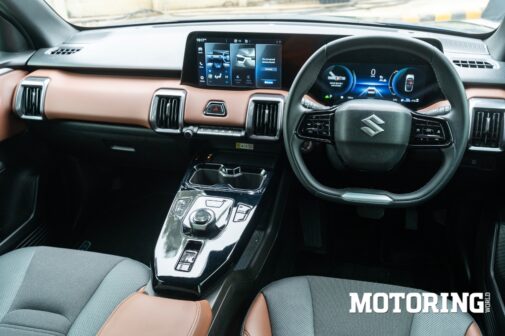
Open the door and the sense of quality continues; the ‘thud’ as it closes is satisfyingly heavy. You drop into seats that are supportive and well-bolstered, with a driving position that is spot on. You sit high enough to get that commanding SUV view, but you feel integrated into the car rather than perched on top of it. The dashboard is dominated by two screens housed in a single glass panel, and it looks slick. The graphics are crisp, and the response times are snappy. Everything you expect is there, from wireless phone mirroring and ventilated front seats to a detailed energy flow monitor and a 360-degree camera . The top-spec Zeta trim has a Level 2 ADAS suite, and I tried the lane-keep assist and adaptive cruise control briefly on the Delhi-Mumbai Expressway. They worked unobtrusively, which is the highest praise you can give to semi-autonomous tech. All variants come with seven airbags as standard, and the e Vitara has a 5-star BNCAP rating, so it’s great to see Maruti Suzuki taking safety seriously.
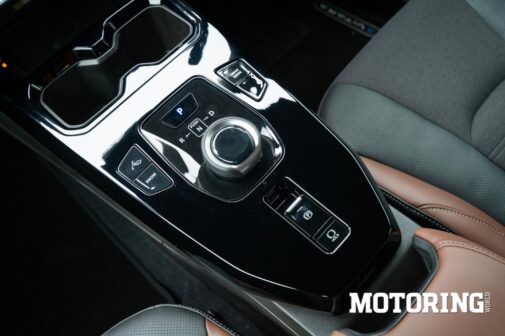
However, the cabin is not perfect. The design team opted for a floating centre console, which looks futuristic and creates a sense of airiness, but introduces a practical problem. The console flares out right where your left knee naturally rests, and on a long drive, this contact point becomes annoying. The door-mounted armrest also intrudes into the cabin space more than necessary, resulting in a driver’s seat that feels somewhat snug. Larger drivers might find it bordering on tight. There is another quirk with the console. The USB ports are located underneath the bridge section, which means that plugging a cable in requires contorting your wrist (and body) in unnatural ways. You will eventually find the port, but you will probably let loose some colourful language during the process.
Rear seat space is decent, but not generous. There’s enough legroom for average adults, but the floor is slightly high to accommodate the battery pack, which raises your knees, reducing under-thigh support. Headroom is also at a premium for anyone over six feet tall, largely due to the sloping roofline that gives the exterior its sporty look. The boot isn’t exactly cavernous either; there’s only 238 litres of space with the rear seats slid back, and 306 litres with them slid forward. You’ll have to fold the second row in order to access a claimed 562 litres, and this isn’t ideal for a family car. You do, however, get a full-sized spare alloy wheel.
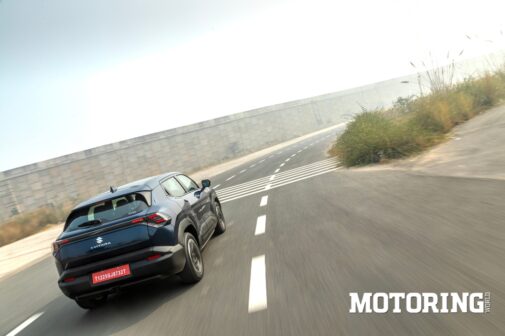
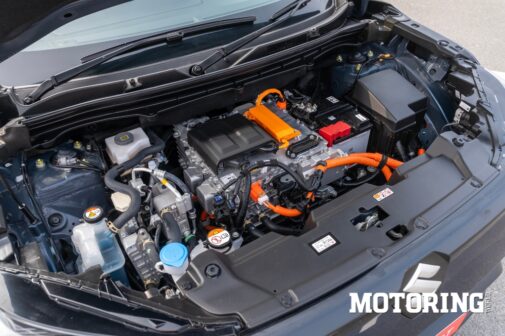
Press the start button, select Drive, and the e Vitara moves off with characteristic electric (near) silence. I was driving the variant equipped with a 61 kWh battery and a motor producing 171 bhp and 19.6 kgm; on paper, those numbers look quite healthy, and they are in reality too. Electric oomph hits differently, and once you get used to instant torque, it’s a bit difficult to go back to rpm bands. You put your foot down, and the car just goes. Acceleration is linear and strong, and it doesn’t have the violent, neck-snapping jolt of a Porsche Taycan, which is a good thing for most people The e Vitara feels measured and grown up, but also very lively; I hit the speed limit with plenty of reserve power left. I was expecting some torque steer under hard acceleration, but it was completely absent. There’s a drive mode selector, and switching to Sport sharpens the throttle response noticeably.
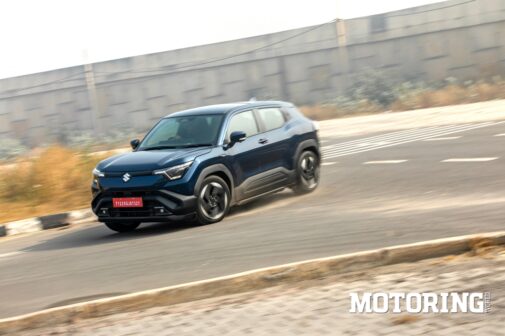
Where the e Vitara truly surprised me was in its ride and handling department. Electric SUVs often suffer from their own weight, feeling heavy and clumsy in corners, but the e Vitara feels agile. The battery pack is mounted low in the chassis, keeping its centre of gravity near the tarmac, and this pays dividends when the corners appear; you can carry surprising speed through them without the body rolling excessively. The steering is on the heavier side, which I personally prefer. It gives you a good sense of what the front wheels are doing, and feels solid and reassuring. The brakes could use more pedal feel, but they bite firmly enough, blending regenerative braking with the mechanical friction brakes quite seamlessly.
The ride quality on offer is not as firm as the European-spec car I drove in the UK, where I could feel the imperfections in the road surface. It’s still firm for a Maruti, however, which is something I rather enjoyed; it remains to be seen how the average buyer here reacts to this. The India-spec car gets 18-inch wheels and tyres more suited to our roads, which go towards providing some extra cushioning and making steering a little easier. There is, however, a fair amount of tyre/road noise that intrudes into the cabin; if you’re listening to music, you’ll need to crank up the volume to cancel out that noise, which isn’t ideal.
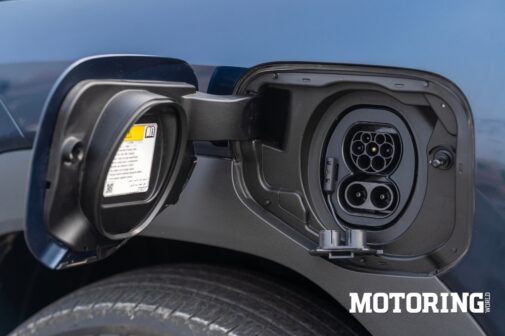
Range anxiety is the ghost that haunts every EV discussion, and the e Vitara does a good job of exorcising it. Throughout the time I spent with it, the range indicator remained trustworthy and didn’t plummet unpredictably. Based on the energy consumption I saw, a real-world range of 450 km is entirely achievable with sensible driving, and that’s a very usable number. It means you can do a week of city commuting on a single charge, or drive from Mumbai to Pune and back without sweating about the battery level. The car features a one-pedal driving mode, activated by a dedicated switch. This increases the regenerative braking level so much that you rarely need to touch the brake pedal in traffic, making it excellent for city driving; on the open road, it’s too aggressive and best dialled down.
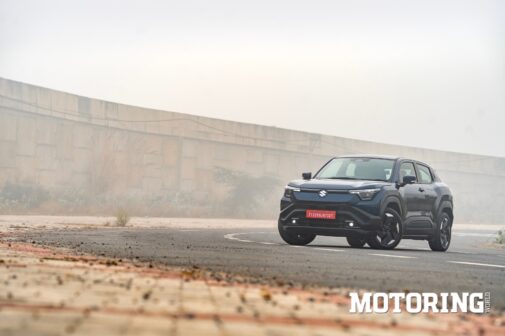
It wouldn’t be hyperbole to state that the e Vitara is a landmark product. It signals the end of Maruti Suzuki’s hesitation and the beginning of its electric era. It’s not perfect – the interior ergonomics need a rethink, the ride quality probably needs more softening for our roads, and the boot is tiny – but the fundamentals are very strong. It’s built well, it drives with sophistication, and there’s a fun factor to it that you normally don’t find in most Marutis. Maruti Suzuki has a sales network, a service reach, and a brand trust that no other manufacturer can match, and now they have an electric product to back it all up. Rivals who have had the segment to themselves for the last few years should genuinely be worried. The behemoth has finally woken up, and has brought a very good car to the fight.